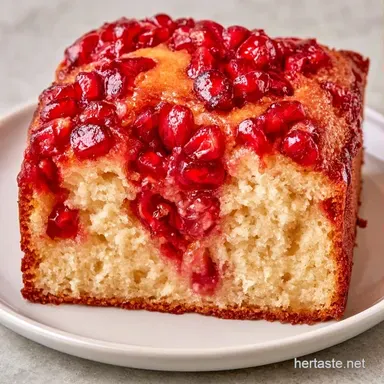
Fresh Pomegranate Cake: Tender and Buttery
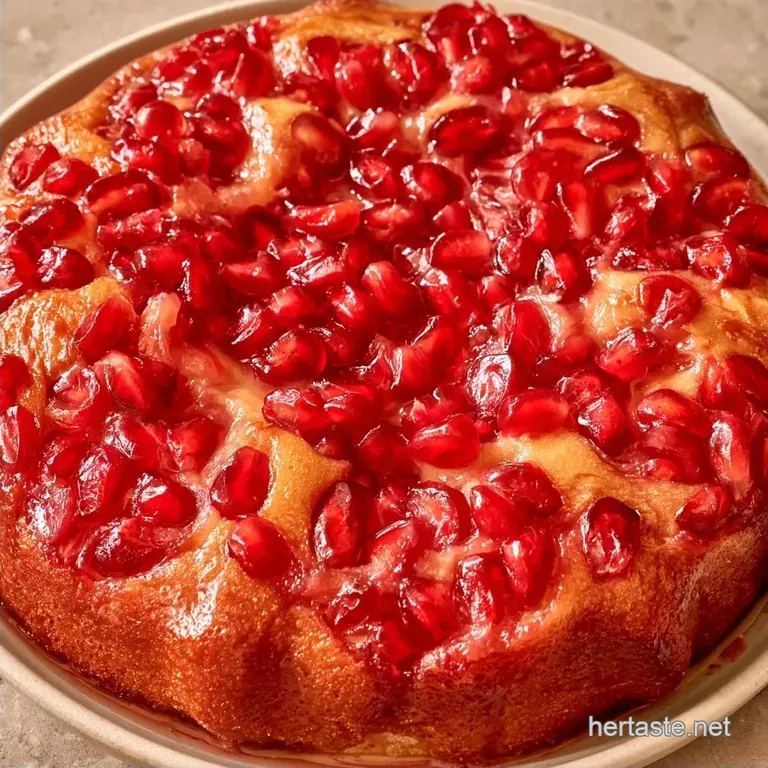
- Time: 20 min active + 40 min baking
- Flavor/Texture Hook: Tangy ruby berries in a tender, buttery crumb
- Perfect for: Winter brunch or festive family gatherings
Picture the scent of warm butter and citrus drifting through the air while cold rain taps against the window. That is the perfect moment to bring out the pomegranate arils. Something about those brilliant, jewel toned seeds makes a winter afternoon feel like a special occasion.
In my early attempts at pomegranate cakes, I made the mistake of adding the juice directly to the batter. The result was a sunken, muddy gray mess. I soon discovered that treating the juice as a concentrated syrup is the only way to keep the cake's structure intact.
Now, this Fresh Pomegranate Cake is my preferred choice for any event where I want a dessert that looks sophisticated yet tastes rustic. It achieves a wonderful balance, ensuring the sugar never masks the natural zing of the fruit.
Fresh Pomegranate Cake
The magic here comes from the contrast between the rich, dense sour cream and the sharp, acidic pomegranate. This prevents the cake from tasting like a generic vanilla sponge.
Acid Balance: The lemon zest and pomegranate juice react with the baking powder to give the cake a better lift.
Juice Reduction: Simmering the juice removes excess water, which keeps the crumb tender instead of gummy.
Seed Distribution: Folding the arils in last prevents them from bleeding too much color into the batter.
Essential Baking Tools
While you don't need professional equipment, a few tools can simplify the process. A stand mixer like a KitchenAid is helpful for creaming, though a hand mixer works perfectly well.
Must Have Tools
An 8 inch round cake pan is required for this recipe. Using a larger pan will make the cake too thin, causing it to dry out before the center is fully baked. Use a fine mesh sieve to filter the pomegranate juice and remove any remaining pulp.
Optional Helpers
A kitchen scale is recommended for measuring flour to prevent it from being packed too tightly. A silicone spatula is also useful for gently folding in dry ingredients to keep the batter light and airy.
The Ingredient List
To achieve a cozy, rustic feel, we use a combination of fats. The sour cream contributes a subtle tang that highlights the fruitiness.
| Ingredient | What It Does | Best Swap |
|---|---|---|
| All purpose flour | Forms the structure | Almond flour (denser crumb) |
| Unsalted butter | Enhances flavor and richness | Coconut oil (nuttier hint) |
| Sour cream | Maintains a moist texture | Greek yogurt (sharper tang) |
| Pomegranate juice | Adds signature tartness | Cranberry juice (more bitter) |
The reduced juice is the secret to the Fresh Pomegranate Cake's distinct taste. If you're craving more fruit based desserts, check out these Apple Dessert Recipes, which feature a similar interplay of sweet and sour.
For the Pomegranate Sponge
- 1.5 cups (190g) all purpose flour The logic: Ideal protein for a soft yet stable cake
- 1 tsp (5g) baking powder
- 0.25 tsp (1.5g) salt
- 0.5 cup (115g) unsalted butter, softened
- 0.75 cup (150g) granulated sugar
- 2 large eggs, room temperature
- 1 tsp (5ml) vanilla extract
- 0.25 cup (60ml) fresh pomegranate juice, reduced by half The logic: Concentrates the taste without adding extra liquid
- 1 tbsp (6g) lemon zest, finely grated
- 0.5 cup (120ml) sour cream
- 0.5 cup (75g) fresh pomegranate arils
For the Pomegranate Glaze
- 1 cup (120g) powdered sugar
- 2 tbsp (30ml) fresh pomegranate juice
- 0.5 tsp (2.5ml) lemon juice
Quick Recipe Stats
This cake is designed for a small gathering, yielding 8 generous slices. It's a straightforward process once you have the juice reduced.
| Method | Time | Temp |
|---|---|---|
| Prep | 20 minutes | Room Temp |
| Bake | 40 minutes | 350°F (175°C) |
| Total | 60 minutes | - |
Since this is a richer cake, it doesn't need a lot of extra frosting. The simple glaze on top is enough to bring out the pomegranate notes without making it cloying.
Step by step Baking
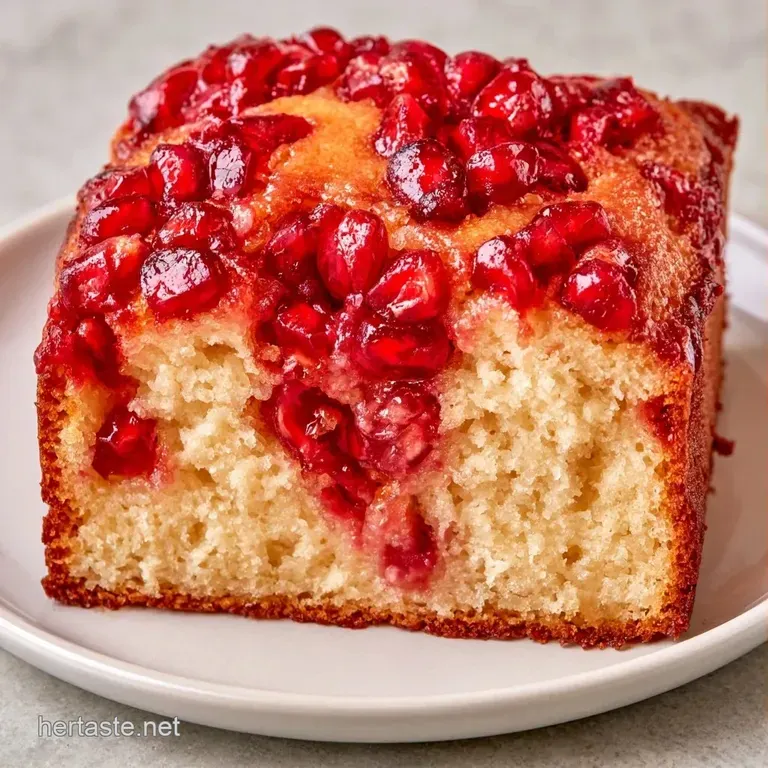
Begin by reducing your pomegranate juice. Simmer it in a small pan until it reaches half its original volume, then allow it to cool. This is the most critical step of the Fresh Pomegranate Cake process.
1. Prepping the Base
Preheat your oven to 350°F (175°C). Grease an 8 inch round cake pan and line the bottom with parchment paper. In a medium bowl, whisk together the flour, baking powder, and salt. Set this aside.
2. Mixing the Batter
Cream the softened butter and granulated sugar in a large bowl for about 3 minutes until the mixture looks pale and fluffy. Add the eggs one by one. Stir in the vanilla extract and lemon zest.
3. Adding the Color
Slowly blend in the sour cream and the pomegranate reduction. The batter should now have a soft pink tint. Note: Don't rush this step or the batter might separate.
4. Folding and Baking
Gently fold in the flour mixture using a spatula until just combined. Be careful not to overmix. Fold in the fresh pomegranate arils, then pour the batter into the pan and smooth the top.
5. The Bake
Bake for 35-40 minutes until a cake tester poked into the middle comes out clean. Let the cake cool completely in the pan before removing.
6. Finishing Touches
Whisk together the powdered sugar, pomegranate juice, and lemon juice. Pour the glaze over the cooled Fresh Pomegranate Cake and let it set for 15 minutes.
Fixing Common Issues
Even basic recipes can sometimes lead to unexpected results. These issues are typically related to mixing methods or temperature.
Seeds Sinking
If the pomegranate arils settle at the bottom, the batter was likely too thin. Properly reducing the juice and utilizing room temperature eggs helps maintain a thickness that keeps the fruit suspended.
Dense Crumb
Overmixing the flour is the most common cause of a heavy texture. Once the flour is added, cease stirring as soon as streaks disappear. Over beating the batter creates too much gluten, resulting in a tough cake.
Glaze Too Runny
If the glaze slides off the cake, you may have used too much juice. Gradually stir in extra tablespoons of powdered sugar until the consistency is thick but still pourable.
| Problem | Root Cause | Solution |
|---|---|---|
| Cake sank in middle | Underbaked or too much juice | Bake 5 mins longer or reduce juice further |
| Dry texture | Oven too hot or overbaked | Check temp with oven thermometer |
| Pale color | Not enough reduced juice | Ensure juice is reduced by half before adding |
Saving and Reheating
Because this cake contains sour cream, it retains moisture better than a typical sponge, although the fresh arils may release some liquid over time.
Keep the Fresh Pomegranate Cake under a cake dome or in a loosely covered container in the refrigerator for a maximum of 3 days. The chill actually helps the pomegranate flavor stand out more.
To freeze, wrap single slices in parchment paper and then foil. They will keep for about 2 months. To reheat, let a slice thaw in the fridge overnight, then warm it for 5 minutes in an oven set to 300°F (150°C) to restore that fresh baked feel.
Avoid waste by simmering the leftover pomegranate rinds with a little honey and cinnamon to make a tart tea. It’s a wonderful way to utilize the entire fruit.
Flavor and Diet Swaps
This Fresh Pomegranate Cake is versatile and can be adapted to suit your taste or dietary requirements. To achieve a brighter flavor, create a Lemon Pomegranate Cake by doubling the lemon zest and substituting almond extract for the vanilla.
For a dairy-free version, use a vegan butter alternative and a cashew based sour cream. While the cake's structure remains largely the same, the crumb may be slightly denser.
If you enjoy tart profiles, consider preparing this Yogurt Sauce for 4 recipe as a savory starter before serving the cake. The yogurt's tanginess mirrors the acidity of the pomegranate.
| Original Ingredient | Substitute | Why It Works |
|---|---|---|
| Granulated Sugar | Coconut Sugar | Earthier flavor, though the cake will be darker |
| All purpose Flour | Spelt Flour | Nutty taste, though it may rise slightly less |
| Sour Cream | Full fat Greek Yogurt | Similar thickness and acidity |
Quick Decision Guide
- For a firmer set: refrigerate the cake for 1 hour before glazing.
- For a richer flavor: substitute softened butter with browned butter.
- For a lighter crumb: separate the eggs and fold in the whipped whites at the end.
Best Side Pairings
This Fresh Pomegranate Cake is quite rich, so it pairs best with something light and airy. A dollop of unsweetened whipped cream is the classic choice.
The Creamy Pairing
Try serving a slice with a side of mascarpone whipped with a hint of honey. The creamy, mild flavor of the cheese balances the sharp pomegranate arils.
The Fresh Finish
A few fresh mint leaves on top of the glaze add a hit of freshness that cuts through the sugar. If you're serving this for brunch, a cup of Earl Grey tea is the way to go. The bergamot in the tea brings out the citrus notes in the cake.
Right then, that's the whole process. Once you get the hang of reducing the juice, this Fresh Pomegranate Cake becomes a seasonal staple. It's honest, rustic, and brings a bit of joy to the table during the colder months. Trust me on this, the effort of deseeded the pomegranate is worth every bite.
Recipe FAQs
What ingredients are needed for this pomegranate cake?
You'll need all-purpose flour, baking powder, salt, unsalted butter, granulated sugar, eggs, vanilla extract, reduced pomegranate juice, lemon zest, sour cream, fresh pomegranate arils, powdered sugar, and lemon juice. These ingredients combine to create a moist, tart sweet crumb.
How to prepare the baking pan?
Grease an 8 inch round cake pan. Line the bottom with parchment paper to ensure the cake releases easily after baking.
Why is reducing the pomegranate juice necessary?
Reducing the juice concentrates the flavor and prevents excess moisture from thinning the batter. If you loved mastering the flavor balance here, see how we use a similar acid technique in our blueberry bread.
Is it true that overmixing the batter makes the cake tough?
Not true. While overmixing can affect texture, the main goal is simply to incorporate the flour without developing too much gluten. Gently fold the dry ingredients until they are just combined.
Which steps create the pomegranate glaze?
Whisk together powdered sugar, pomegranate juice, and lemon juice. Pour the mixture over the cooled cake for a bright finish.
Creaming the butter for how long is ideal?
Cream the butter and sugar for approximately 3 minutes. This ensures the base is pale and fluffy for a lighter structure.
Fresh Pomegranate Cake for 8 Slices