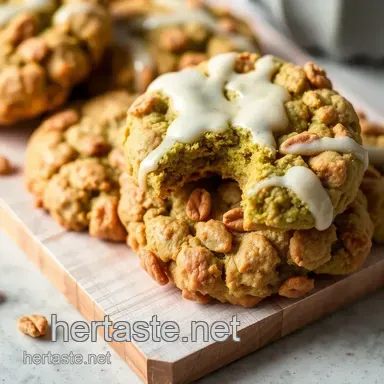
Matcha Oatmeal Cookies with Icing: Rustic Texture

- Time:15 minutes active + 10 minutes baking (55 minutes total)
- Flavor/Texture Hook: Earthy, toasted oats with a velvety sweet glaze
- Perfect for: Afternoon tea, cozy winter snacks, or a unique gift for friends
- Bake Matcha Oatmeal Cookies with Icing
- Quick Specs for Your Bake
- What Makes These Work
- Ingredients You'll Need
- Essential Baking Gear
- Bringing the Cookies Together
- What Nobody Tells You
- Fixing Common Dough Problems
- Adjusting the Batch Size
- Keeping Cookies Fresh
- Trying New Flavor Mixes
- Serving Your Green Treats
- Recipe FAQs
- 📝 Recipe Card
Bake Matcha Oatmeal Cookies with Icing
Have you noticed how some green tea desserts turn a dull brown while others stay a vivid, spring like green? The culprit is usually the oven's heat. Simply mixing in the powder without a plan often leads to dull colored cookies that taste like cardboard.
My early attempts weren't perfect. Once, I rushed and forgot to sift the tea, resulting in unpleasant, bitter clumps throughout the batch. However, learning to handle matcha with more care transformed the recipe. Now, the scent of whisking the tea into the flour reminds me of a crisp stroll through the woods.
These cookies offer a satisfying texture from the rolled oats, paired with white chocolate sweetness and a bold hit of tea. The icing on top isn't just for decoration; it provides a creamy contrast to the matcha's natural astringency.
It's a comforting, home style dessert that feels sophisticated regardless of your kitchen setup.
Quick Specs for Your Bake
Before we get our hands messy, let's look at the numbers. This recipe makes exactly 20 cookies, which is just enough to share with a few people or keep them all for yourself.
The timing is pretty straightforward. You'll spend about 15 minutes getting the dough together, and then they only need about 10 minutes in the oven. The rest of the time is mostly just waiting for them to cool so the icing doesn't melt right off.
Trust me, waiting those few minutes is the hardest part, but it's what makes the icing stay put.
The temp is a steady 350°F (175°C). If your oven runs hot, keep a close eye on them around the 9 minute mark. You want them to look just a little bit underdone in the middle. That's how you keep them chewy rather than turning them into hard biscuits.
What Makes These Work
Most people think the oats are just for health, but they're actually there for the structure. Unlike Classic Sugar Cookies, which rely on flour and fat for their snap, these use the oats to create a rustic, hearty chew.
The Sifting Trick: Matcha powder is hydrophobic and loves to clump. Sifting it with the flour ensures the color is a consistent emerald green and prevents those bitter pockets of powder that can ruin a bite.
White Chocolate Balance: The high cocoa butter content in white chocolate chips acts as a bridge between the earthy tea and the sugar. It mellows out the "grassy" notes of the matcha without overpowering the flavor.
Temperature Control: Using room temperature eggs prevents the creamed butter from curdling. When the fats and liquids are at the same temp, they emulsify better, which gives the cookie a more uniform rise.
Ingredients You'll Need
To prepare the dough, choose ingredients that create a harmonious blend of earthy notes and rich flavors. Ensure your butter is soft but not liquid, or the cookies may flatten too much during baking.
- 1/2 cup unsalted butter, softened Why this? Provides the foundational richness and encourages a slight spread
- 1/2 cup packed brown sugar Why this? Contributes a molasses like depth and ensures a chewy center
- 1/4 cup granulated sugar Why this? Helps produce those delicately crisp edges
- 1 large egg, room temperature Why this? Acts as an emulsifier to hold the dough together
- 1 tsp vanilla extract Why this? Balances the intense bitterness of the matcha
- 1 cup all purpose flour Why this? Supplies the gluten needed for a sturdy cookie
- 2 tbsp culinary grade matcha powder Why this? Delivers the signature tea taste and vibrant green hue
- 1/2 tsp baking soda Why this? Aids in the rise and helps with browning
- 1/4 tsp salt Why this? Heightens the overall flavor profile
- 1 1/2 cups Old-Fashioned rolled oats Why this? Adds a hearty, rustic feel to the texture
- 3/4 cup white chocolate chips Why this? Cuts through the astringency of the tea
The icing should be straightforward. Aim for a consistency that is stable enough to hold its shape but fluid enough to drizzle.
- 1 cup powdered sugar Why this? Forms a smooth and sweet foundation for the glaze
- 1 tsp culinary grade matcha powder Why this? Boosts the green color and tea essence
- 2 tbsp heavy cream Why this? Adds a creamy richness and adjusts the flow
- 1/4 tsp vanilla extract Why this? Gives the frosting a subtle warmth
If white chocolate chips aren't available, chopped white chocolate bars work well, creating rustic, irregular pockets of sweetness. You can swap heavy cream for whole milk; however, the resulting glaze will be less rich and slightly thinner.
| Original Ingredient | Substitute | Why It Works |
|---|---|---|
| Brown Sugar | Coconut Sugar | Similar moisture. Note: Adds a deeper caramel flavor |
| White Chocolate Chips | Dark Chocolate | Stronger contrast. Note: Makes the cookies less sweet |
| Rolled Oats | Quick Oats | Thinner texture. Note: Results in a softer, less rustic bite |
Essential Baking Gear
You only need a few basic tools to get started. A stand mixer like a KitchenAid is helpful, but a hand mixer or even a whisk and some effort will work just as well.
- Large mixing bowl (for the dough)
- Small mixing bowl (for the icing)
- Fine mesh sieve (essential for the matcha)
- Electric hand mixer or stand mixer
- Rubber spatula (for folding in the oats)
- Baking sheets
- Parchment paper or silicone mats
- Wire cooling rack
Don't skip the sieve. Matcha is notorious for clumping, even after mixing. Sifting the powder directly into your wet ingredients is the only way to ensure a smooth, professional finish.
Bringing the Cookies Together
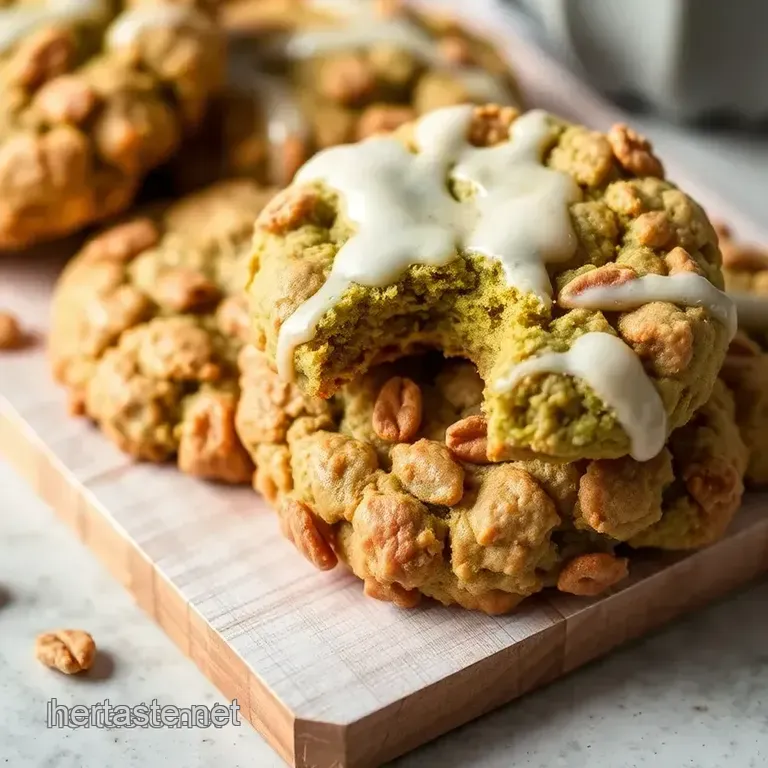
Now, let's move on to the baking process. Keep an eye on the aromas; they are the best indicator that everything is progressing perfectly.
Phase 1: Creating the Base
- Cream the softened butter with the brown and granulated sugars in a large mixing bowl. Beat for about 2-3 minutes until the mixture is light and fluffy.
- Stir in the room temperature egg and vanilla extract. Mix on medium speed until the batter is glossy and well blended.
- Using a fine mesh sieve, sift the flour, matcha powder, baking soda, and salt directly into the bowl. Note: This is the moment you'll first notice that fresh, grassy scent. Mix on low speed just until the white streaks of flour disappear. Avoid overmixing to ensure the cookies don't become tough.
Phase 2: Folding and Baking
- Using a spatula, gently fold in the white chocolate chips and rolled oats by hand. Use a light touch so you don't deflate the creamed butter.
- Form the dough into balls using approximately 2 tablespoons each, aiming for a diameter of about 1.5 inches. Arrange them on a lined baking sheet, spacing them 2 inches apart.
- Bake at 350°F (175°C) for 9-11 minutes. Remove them from the oven when the edges are firm but the centers still appear slightly soft. Your kitchen should smell like wonderfully toasted oats.
- Leave the cookies to rest on the hot pan for 5 minutes, which allows the centers to set without overbrowning the edges. Then, transfer them to a wire rack to cool.
Phase 3: Finishing with the Icing
- In a small bowl, whisk together the powdered sugar and matcha powder. Gradually stir in the vanilla and heavy cream. Continue mixing until the icing is smooth and pourable.
- Either dip the top of each cooled cookie into the glaze or use a spoon to drizzle it over them.
- Allow the icing to set for 15 minutes before moving the cookies to ensure the glaze doesn't smudge.
What Nobody Tells You
One thing that trips people up is the color. Matcha is sensitive to heat. If you bake these for too long, the bright green will fade into a dull olive brown. That's why pulling them out while the centers look "raw" is so important. They carry over enough heat to finish cooking on the pan.
Also, don't be tempted to use "ceremonial grade" matcha for the dough. It's too expensive and the flavor can actually be too delicate for a cookie. Culinary grade is the way to go - it's more robust and stands up to the butter and sugar.
For those who love other tea flavored treats, you might also enjoy Strawberry Milk Tea Cookies, which use a similar base but offer a fruitier profile.
Here is a quick look at the difference between using fresh ingredients versus shortcuts for this specific bake:
| Ingredient | Fresh/Pure Option | Shortcut Option | Result |
|---|---|---|---|
| Matcha | Pure Culinary Powder | Matcha Mix (with sugar) | Pure powder gives a cleaner, more authentic tea taste |
| Oats | Old-Fashioned Rolled | Instant Oats | Rolled oats provide the rustic chew; instant oats are too mushy |
Fixing Common Dough Problems
Even with precise steps, baking can be unpredictable. Most issues stem from incorrect temperatures or inaccurate measurements.
Cookies Spread Too Much
If your cookies turn out flat like pancakes, the butter may have been too soft during the initial mixing. When butter nears a melted state, it fails to retain the air bubbles formed during the creaming process. To prevent this, refrigerate your scooped dough balls for 30 minutes before baking.
The Flavor is Too Bitter
A bitter taste often results from using an excessive amount of matcha or a lower grade powder. If the dough feels too intense, stir in an extra tablespoon of white chocolate chips or a small pinch of salt. Salt helps neutralize bitterness, resulting in a "smoother" tea flavor.
Icing is Too Runny
If the glaze is too thin and running off the cookies, you've likely incorporated too much cream. Resolve this by whisking in powdered sugar, one tablespoon at a time, until you achieve a thick, slow dripping texture.
| Problem | Root Cause | Solution |
|---|---|---|
| Excessive Spreading | Butter too soft/Over mixed | Chill dough 30 mins before baking |
| Bitter Aftertaste | Low grade matcha/Too much powder | Use culinary grade; add pinch of salt |
| Runny Icing | Too much heavy cream | Stir in more powdered sugar |
| Dull Color | Overbaked | Remove from oven 1-2 mins earlier |
Adjusting the Batch Size
To make a smaller batch, simply halve the ingredients. For the egg, whisk one large egg separately and measure out exactly half (approximately 2 tablespoons). Switch to a smaller baking sheet and cut the baking time by about 20%, but continue to use the set edges as your primary visual guide.
If you double or triple the recipe, avoid multiplying every ingredient linearly. I suggest increasing the salt and baking soda by only 1.5x. You can also reduce the liquids by about 10% to keep the dough from getting too sticky.
When preparing big batches, it's better to set the oven to 325°F (160°C) and add a few minutes to the bake time. This ensures the centers are fully cooked before the edges brown too much, especially if the oven is full of multiple sheets.
- For [goal]
- a firmer, thicker cookie: chill dough 30 minutes before baking.
- For [goal]
- a more intense tea flavor: replace 1 tbsp of flour with 1 tbsp extra matcha.
- For [goal]
- a glossier icing: add 1 tsp of melted butter to the glaze.
Keeping Cookies Fresh
To keep that rustic chew, store your cookies in a sealed glass jar or a plastic container. Keep them in a cool, dry spot at room temperature for about 3 days. If you store them in the cooler, they'll last about 72 hours, but the texture might get a bit too firm.
If you want to freeze them, it's best to freeze the dough balls. Place them on a tray and freeze until solid, then toss them into a freezer bag. You can bake them straight from the freezer; just add 2-3 minutes to the baking time.
For zero waste, don't throw away the leftover icing. It's fantastic as a dip for fresh strawberries or sliced apples. If you have a tiny bit of matcha powder left in the bag, whisk it into your morning oatmeal or a latte to use it up.
Trying New Flavor Mixes
Once you've got the base down, you can start playing with the flavors. I love adding a teaspoon of lemon zest to the dough. The citrus cuts through the richness of the butter and makes the matcha taste even brighter.
For an added crunch, you can replace half of the rolled oats with chopped toasted almonds. The nuttiness pairs brilliantly with the green tea. If you want something more indulgent, try adding a few pieces of dried apricot; the tartness is a great contrast to the sweet icing.
If you're in the mood for something different but still want that tea vibe, my Strawberry Milk Tea Cookies are a great alternative. They use a similar approach to balancing tea flavors with sweetness.
Serving Your Green Treats
These cookies are best served at room temperature. Because of the icing, they look beautiful when stacked in a pyramid on a wooden platter, showing off those rustic, green edges.
Pair them with a drink that doesn't compete with the matcha. A simple glass of cold almond milk or a hot cup of Earl Grey tea works well. If you're serving them for a brunch, place them next to some fresh berries for a pop of color.
Trust me, these are a hit at any gathering because they look so intentional. The contrast between the deep green cookie and the pale, icing makes them look like they came from a fancy bakery, but the taste is pure home baked comfort.
Chef's Note: If you notice your matcha powder has clumped in the container before you even start, don't panic. Use a fork to break up the lumps before you sift. This makes the sifting process much faster and ensures no large chunks make it into your dough.
Recipe FAQs
Is it hard to bake matcha cookies?
It is quite simple for any home baker. You just need to sift the powder to avoid bitter clumps and bake at 350°F (175°C) for 9 11 minutes.
What is the icing on oatmeal cookies?
This specific icing is a matcha infused glaze made from powdered sugar, matcha powder, heavy cream, and vanilla. If you enjoy this smooth consistency, you can apply similar mixing logic to a vanilla buttercream for other cakes.
What does matcha do in cookies?
Matcha provides a distinct earthy flavor and a vibrant green color. It balances the sweetness of the white chocolate chips and sugars.
Is it true that Michelle Obama's favorite cookie is a matcha oatmeal cookie?
That's a myth. There is no official record of this being her favorite treat.
How to prevent green lumps in the dough?
Sift the matcha powder together with the flour, baking soda, and salt. This ensures the tea is evenly distributed before mixing with wet ingredients.
Why did my cookies spread too much?
Your butter might have been too melted instead of just softened. Ensure the butter is room temperature and the cookies rest on the pan for 5 minutes after baking.
Can I use quick oats instead of rolled oats?
You can use them, but the texture will be softer and less rustic. Old-fashioned rolled oats provide the best chew for this recipe.
How to get the icing to the right thickness?
Slowly stir in the heavy cream one teaspoon at a time. Stop when the glaze is thick enough to coat a spoon but still pourable.
Bake Matcha Oatmeal Cookies With Icing