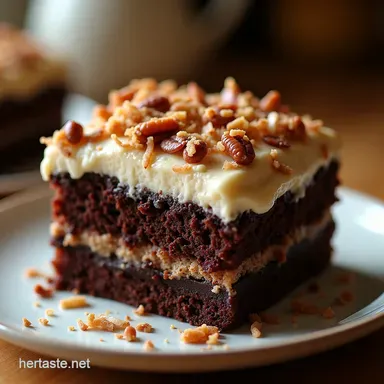
The Proper Bake Decadent Authentic German Chocolate Cake with Coconutpecan Frosting
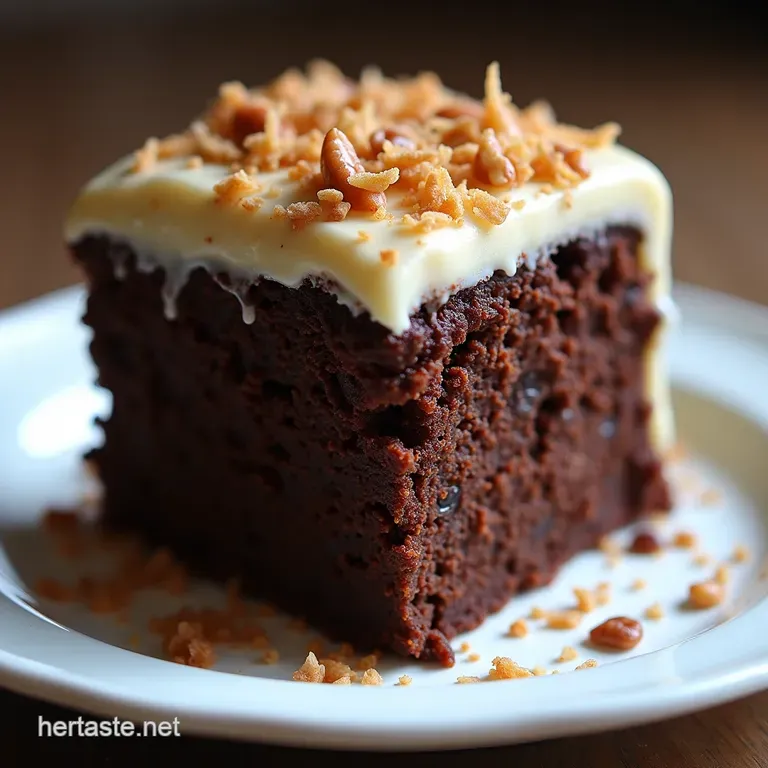
- Unveiling the Legend: Why This German Chocolate Cake Recipe Triumphs
- A Quick Dive: Separating Fact from Fiction on This Classic Dessert
- Assembling the Arsenal: What You Need for Baking Perfection
- The Baking Blueprint: Step-by-Step Construction
- Elevating Your Bake: Expert Tips and Troubleshooting
- Recipe FAQs
- 📝 Recipe Card
Unveiling the Legend: Why This German Chocolate Cake Recipe Triumphs
When you mention classic American layered desserts, few evoke the same level of nostalgic delight as the German Chocolate Cake. It’s a masterpiece of textures and complementary flavours the dark, slightly earthy chocolate base perfectly balanced by that distinctively gooey, sweet, and nutty topping.
This German Chocolate Cake Recipe isn't just about following steps; it's about honoring a culinary tradition that deserves respect. We are aiming for the Best Ever German Chocolate Cake , one that delivers on both the promise of a deeply moist crumb and that legendary cooked coconut pecan icing.
Forget dry, crumbly imitations; prepare yourself for a truly decadent experience.
A Quick Dive: Separating Fact from Fiction on This Classic Dessert
Many people are surprised to learn the origins of this beloved confection. It involves a fascinating bit of history that elevates the whole experience from mere baking to storytelling.
Understanding the context helps you appreciate the specific balance required in this Recipe For German Chocolate Cake .
The True Story Behind the Name (It's Not What You Think!)
Despite the name, this cake has absolutely nothing to do with Germany. The cake is named after an American baker, Samuel German, who worked for the Baker’s Chocolate Company.
In 1852, he developed a specific type of dark baking chocolate called "Baker’s German's Sweet Chocolate." Decades later, a recipe using this distinct chocolate appeared in a Dallas newspaper, and the name stuck, morphing over time into the now-famous German Chocolate Cake .
Knowing this reminds us that the chocolate component must be rich, as it stems from a specific sweet baking product, not just standard cocoa powder.
Why This Rich Chocolate Crumb Deserves Center Stage
The cake layers themselves are surprisingly subtle. They are not overwhelmingly sweet, nor are they aggressively dark like a devil's food cake. This slight tempering is intentional; it provides the perfect foil for the intense sweetness of the topping.
Our method for achieving a Moist German Chocolate Cake Recipe relies heavily on incorporating hot coffee and buttermilk, ingredients that bloom the cocoa and tenderize the gluten structure, resulting in a crumb that stays moist for days.
Setting Expectations: A Truly Showstopping Centerpiece
This cake is ambitious. It requires making a cooked custard frosting, which is certainly more involved than a simple buttercream. This complexity is what separates an ordinary dessert from the Decadent Layered Chocolate Cake we are creating.
The reward for your diligence is a cake that sings with depth, texture, and undeniable elegance. This truly is The Best German Chocolate Cake you can make at home.
Related Recipes Worth Trying
- The Easiest Cherry Dump Cake Ever 3Ingredient Magic Recipe — Discover the ultimate Simple Cherry Dump Cake This foolproof recipe turns canned filling and cake mix into a warm buttery dessert in minutes Perfect for...
- The Best French Silk Pie Recipe MeltinYourMouth Chocolate — Forget storebought This Homemade French Silk Pie recipe delivers a truly silky rich chocolate filling in a nobake crust Perfect for showstopping dinners
- Deconstructed Delight Strawberry Shortcake Sushi Rolls Recipe — Try these ingenious Dessert Sushi Rolls We transform classic shortcake into playful maki perfect for an illusion dessert showstopper Find the recipe here
Assembling the Arsenal: What You Need for Baking Perfection
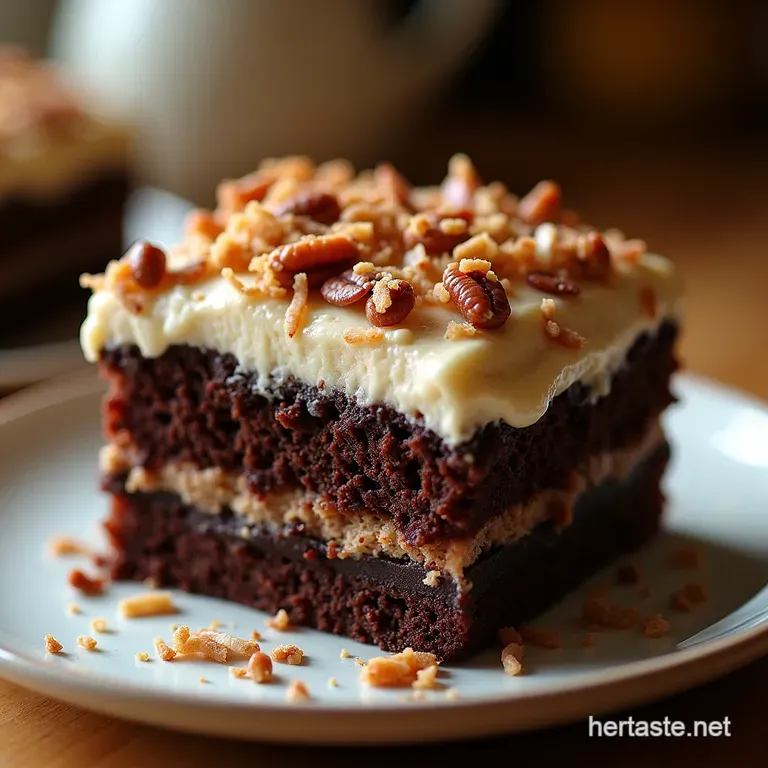
Before we dive into the construction of this masterpiece, we must ensure we have the right components. Success in this recipe, particularly with the complex German Chocolate Cake Filling , hinges on the quality of your core ingredients.
We are aiming for a rich, dark cake and a luxurious, gooey topping.
Sourcing the Finest Cocoa for Deep Chocolate Intensity
Because the chocolate flavour is integral, the type of cocoa matters. We are using 4 ounces of high-quality, unsweetened chocolate (aiming for 60-70% cocoa solids) for the batter, which melts down to provide a deep, fudgy base. This is crucial for contrast against the sweet topping.
On top of that,, the addition of hot, freshly brewed strong coffee acts as a flavour enhancer, deepening the inherent richness of the chocolate without lending a coffee flavour to the final product.
The Pecan Coconut Custard: Essential Components for the Gooey Topping
The star of the show is undoubtedly the topping. For the German Chocolate Cake Frosting Recipe , you need evaporated milk, egg yolks, butter, and the signature additions: sweetened flaked coconut and chopped pecans.
A vital step often overlooked is toasting the pecans beforehand; this simple action releases oils and elevates their nutty flavour tenfold, ensuring your Homemade German Chocolate Cake Icing has maximum impact.
Pantry Staples Checklist: Tools and Measured Goods
Beyond the specialty ingredients, ensure you have the fundamentals ready. Room temperature buttermilk and eggs are non-negotiable for a tender cake structure. Crucially, for the German Chocolate Cake Filling , you need a heavy bottomed saucepan.
This prevents scorching and ensures the custard base cooks evenly as it thickens around the egg yolks. Standard tools like parchment paper for the cake bases and a reliable wire rack for cooling are also essential preparation steps.
The Baking Blueprint: step-by-step Construction
Crafting this dessert is a three part journey: building the cake layers, cooking the iconic topping, and finally, assembly. We begin with the cake layers, which rely on a standard creaming method, slightly modified by the inclusion of melted chocolate and hot liquid.
Crafting the Iconic Gooey Coconut Pecan Frosting
We must tackle the frosting next, as it needs time to cool slightly before application. In a heavy saucepan, combine the evaporated milk, sugar, and the four reserved egg yolks, whisking until smooth. Place this mixture over medium heat. This process demands your full attention; you must whisk constantly.
As the temperature rises, the mixture will begin to thicken this is the custard forming. Continue cooking until it bubbles slowly and thickly coats the back of a spoon. Remove it immediately from the heat; whisk in the butter and vanilla until fully melted.
Finally, fold in the toasted pecans and sweetened coconut. Set this rich, sticky mass aside to cool for about 30– 45 minutes, stirring occasionally until it thickens to a perfect, spreadable consistency.
This cooked custard is what defines the German Chocolate Cake Filling .
Whipping Up the Dark, Moist Cake Layers
Preheat your oven to 350° F ( 175° C) and prepare two 9 inch cake pans by greasing, flouring, and lining the bottoms with parchment circles. Begin by gently melting your unsweetened chocolate and setting it aside to cool slightly.
In a large bowl, cream together the softened butter and sugar until fluffy. Beat in the egg yolks one by one, followed by the cooled melted chocolate and vanilla. In a separate bowl, whisk the flour, baking soda, and salt.
Alternate adding the dry ingredients and the room temperature buttermilk to the butter mixture, starting and ending with the flour, mixing only until just combined. The final step for this part of the Recipe For German Chocolate Cake is stirring in the hot coffee, which will thin the batter considerably this is correct!
Finally, beat the four reserved egg whites until stiff, glossy peaks form, and gently fold them into the chocolate batter in two stages for lightness.
Achieving the Perfect Bake Time and Temperature Balance
Divide the thin batter evenly between the prepared pans. Bake for 30 to 35 minutes. The cakes are done when a thin skewer inserted into the centre emerges with only a few moist crumbs clinging to it.
Overbaking is the enemy here, as it compromises the inherent moistness we worked so hard to achieve.
The Art of Layering and Sealing Your Masterpiece
Once the layers have cooled in their pans for about ten minutes, carefully invert them onto wire racks and allow them to cool completely this is critical; warm cake melts the custard frosting into a puddle. Once fully cool, place the first layer on your serving platter.
Spread half of the slightly cooled, thickened pecan coconut topping evenly across this layer. Place the second cake layer on top. Use the remaining frosting to generously cover the top and sides. Don't aim for sharp, professional edges; the rustic texture of this filling is part of its charm.
Pro Tips for Even Cooling Before Frosting Application
To speed up cooling without compromising the structure, place the cooling racks in a slightly breezy area, or if you are in a hurry, you can place the inverted cake layers briefly into a barely warm oven (turned off!) to ensure any residual steam dissipates before frosting.
Elevating Your Bake: Expert Tips and Troubleshooting
Even with a precise recipe, baking occasionally throws a curveball. Understanding how to adjust texture is key, especially with a non-traditional frosting like this one.
Troubleshooting Common Issues in Frosting Consistency
If your German Chocolate Cake Frosting Recipe cools too quickly and becomes too stiff to spread, do not panic! Return the bowl (or transfer a small portion) to a double boiler or microwave for just 10-15 seconds at a time, stirring constantly, until it softens just enough to spread without losing its structure.
Conversely, if it remains too runny after cooling for the recommended time, simply let it sit longer at room temperature, stirring occasionally, to allow the moisture to stabilize the custard further.
Flavor Twists: Incorporating Hints of Spices or Coffee
While the classic iteration is divine, a small enhancement can take this cake to the next level. Adding half a teaspoon of ground cinnamon or a touch of instant espresso powder directly into the dry ingredients for the cake layers boosts complexity beautifully.
For an even bolder choice, substitute the hot coffee with hot brewed chicory or a mild, dark tea.
How to Store Your Rich Cake for Maximum Freshness
Because this cake features a cooked custard topping containing eggs and dairy, proper storage is paramount. Store leftovers, tightly covered, in the refrigerator. This ensures safety and prevents the topping from weeping or becoming sticky at room temperature.
Bring slices out about 30 minutes before serving to allow the chocolate cake layers to soften slightly again for the best texture.
Pairing Suggestions: The Perfect Beverage Companion
To complement the deep chocolate and sweet nuttiness, select a drink that can cut through the richness. A high-quality, single origin dark roast coffee provides a wonderful acidic counterpoint.
For an after dinner treat, a small pour of aged tawny port or a slightly smoky Scotch harmonizes perfectly with the toasted pecans and dark cocoa notes. Enjoy this truly magnificent German Chocolate Cake !
Recipe FAQs
Why is my German Chocolate Cake frosting runny and not setting up properly?
This is usually because the custard base wasn't cooked long enough to reach the correct temperature, meaning the egg proteins didn't fully thicken. Make sure you cook it until it’s thick enough to coat the back of a spoon heavily, or ideally, hit 200°F (93°C) on a thermometer.
Remember, it thickens considerably more as it cools, so don't overcook it on the stove!
Is this cake traditionally made by Germans, or is there a story behind the name?
Believe it or not, this cake isn't actually German at all it's pure American ingenuity! It was named after an American baker named Samuel German, who developed a specific type of dark sweet baking chocolate for the Baker's Chocolate Company in 1852.
The recipe using his chocolate was published decades later, and the name stuck, leading to plenty of confusion!
Can I make the cake layers ahead of time, and how should I store them?
Absolutely, making the layers ahead of time saves a heap of stress on the day of serving. Once completely cooled, wrap each layer tightly in plastic wrap, and they will keep beautifully at room temperature for two days, or frozen for up to three months.
Just make sure they are fully thawed and at room temperature before attempting to frost them.
My cake batter was really thin after adding the hot coffee; should I be worried?
Not at all! That thin consistency is perfectly normal for this style of cake; the hot liquid blooms the cocoa powder and helps create that signature moist crumb. The key is to ensure the egg whites are beaten to stiff peaks and folded in gently at the end, as they provide most of the lift that balances out the wet ingredients.
What's the best way to store the fully frosted German Chocolate Cake?
Because that glorious coconut pecan frosting is a custard based on evaporated milk, it's best to store the assembled cake in the fridge to keep it safe and fresh. Pop it into an airtight container or cover it well with plastic wrap; it should last for about 3 4 days.
For the best flavour, allow it to sit out at room temperature for about an hour before serving so the cake softens up a bit.
Authentic German Chocolate Cake