Garlic Chicken Parmesan Pasta with Seared Bites
- Time: Active 10 minutes, Passive 15 minutes, Total 25 minutes
- Flavor/Texture Hook: Golden brown seared chicken paired with a velvety, piquant garlic infused sauce.
- Perfect for: Busy weeknight dinners where you need a high protein, comforting meal in under 30 minutes.
- Enjoying My Favorite Garlic Chicken Parmesan Pasta
- Why This Comforting Combination Works
- Analyzing the Core Flavor Components
- Essential Ingredients for Your Pantry
- Minimal Tools for Maximum Flavor
- Crafting the Meal Step by Step
- Solving Common Kitchen Sauce Hurdles
- Adapting the Dish to Your Needs
- Scaling for Every Crowd Size
- Debunking Common Italian Cooking Myths
- Storing and Repurposing Your Leftovers
- Complementary Flavors for Your Table
- High in Sodium
- Recipe FAQs
- 📝 Recipe Card
Enjoying My Favorite Garlic Chicken Parmesan Pasta
The first time I nailed this Garlic Chicken Parmesan Pasta, it wasn't because of a fancy gadget or a secret spice blend. It was the sound. I remember standing over my cast iron skillet, waiting for the avocado oil to shimmer just right.
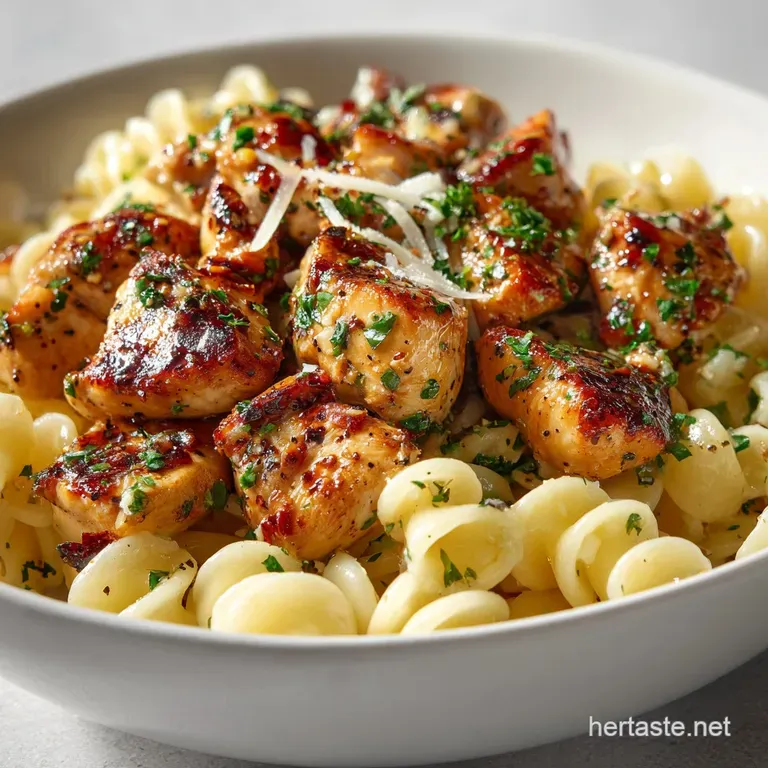
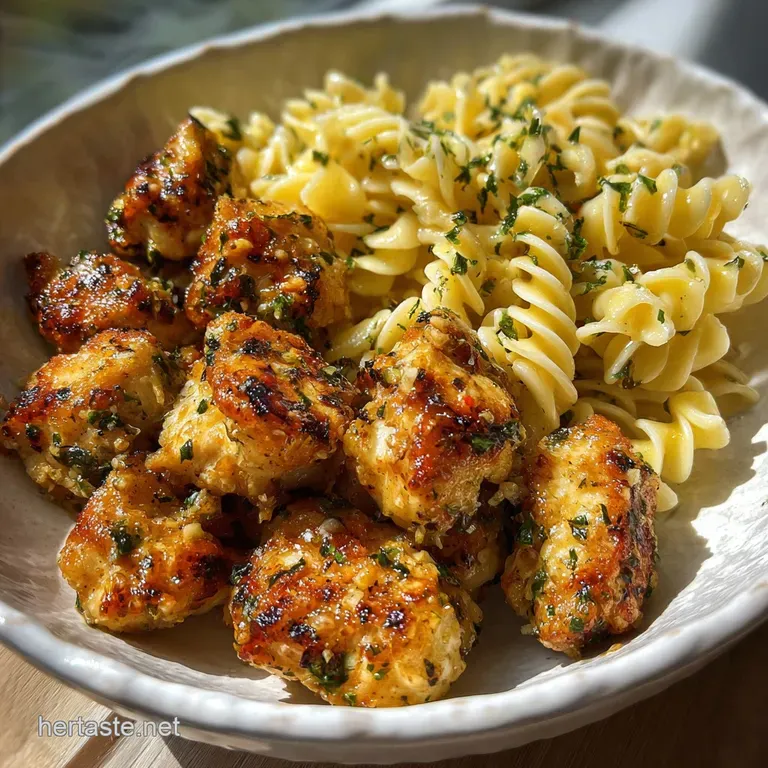
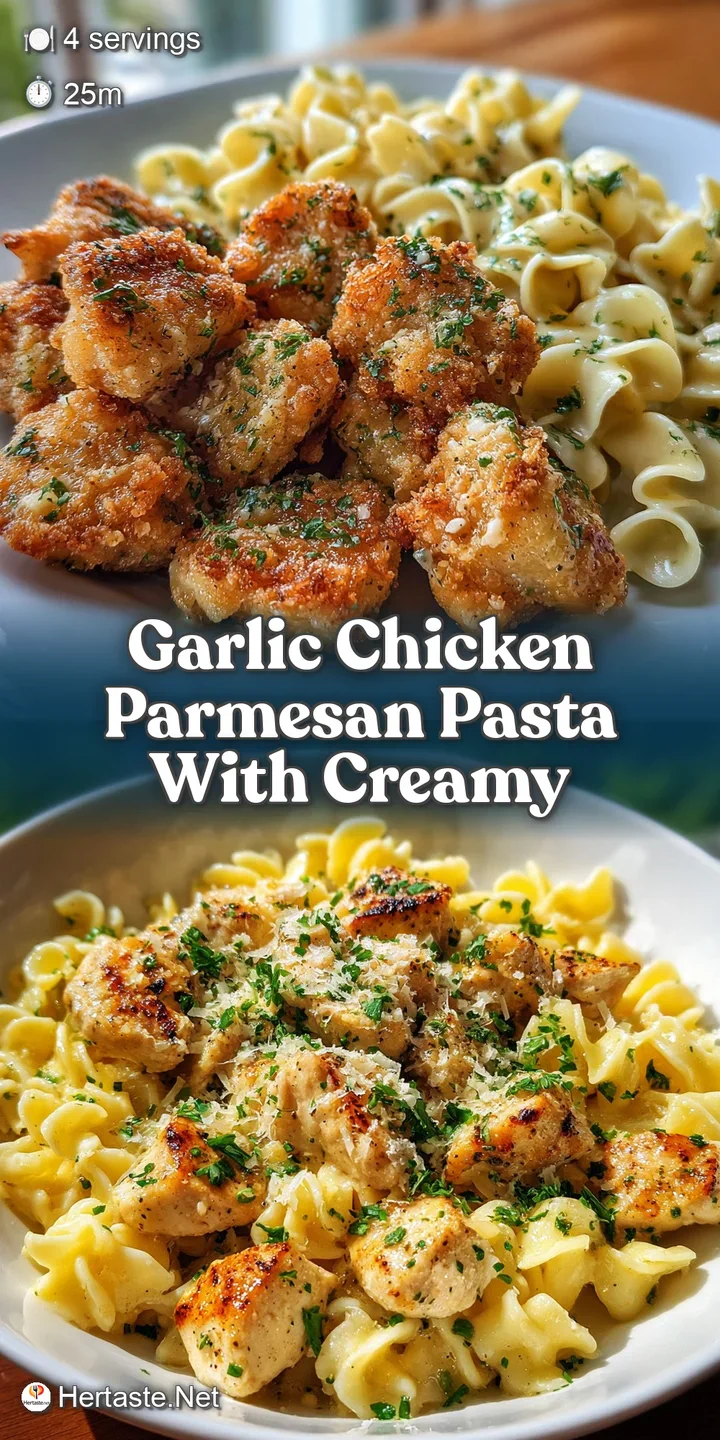
When those 1 inch cubes of chicken hit the pan, the sizzle was aggressive and rhythmic. That sound is the promise of a crust that shatters slightly before giving way to juicy, tender meat. This recipe delivers incredibly flavorful Garlic Butter Chicken Bites served alongside savory, creamy Parmesan pasta.
I used to overcomplicate things, thinking a "Parmesan pasta" needed a complex roux or hours of simmering. I was wrong. The real magic happens in the frantic, beautiful three minutes after the pasta is drained.
It’s about that specific moment when the cold heavy cream meets the residual heat of the butter and garlic, creating a sauce that isn't just a liquid, but a coating. It’s the kind of meal that makes you want to scrape the bottom of the pan with a piece of crusty bread just to catch the last golden drop.
We’ve all been there staring at a pack of chicken breasts and a box of linguine, wondering how to make them feel special without spending two hours in the kitchen. This dish is my answer to that Tuesday night slump.
It’s reliable, it’s punchy, and it relies on techniques that actually work in a real home kitchen, not just on a cooking show. You’re going to love how the red pepper flakes provide a tiny hum of heat that cuts right through the richness of the cheese.
Why This Comforting Combination Works
- The Maillard Reaction: Searing the chicken cubes at high heat in avocado oil creates a complex, savory crust through the Maillard reaction, which adds layers of flavor that a simple simmer cannot achieve.
- Fat Based Infusion: Mincing 6 cloves of garlic and gently sautéing them in unsalted butter allows the allicin to bloom and infuse the fat, ensuring the garlic flavor is distributed evenly throughout the entire sauce.
- Starch Cheese Emulsion: The combination of heavy cream and freshly grated Parmesan cheese creates a stable emulsion that clings to the linguine, preventing the sauce from breaking or becoming oily.
- Acidity and Heat Balance: While not a traditional acid, the piquant nature of the Parmesan combined with the 1/2 tsp of red pepper flakes provides a necessary counterpoint to the 42.1 g of fat, keeping the palate refreshed.
The Emulsification Engine
The secret to this velvety sauce is the way the proteins in the Parmesan cheese interact with the heavy cream. By adding the cheese gradually to the warm cream and butter, you prevent the proteins from clumping, resulting in a smooth, glass like coating on the pasta.
| Thickness | Internal Temp | Rest Time | Visual Cue |
|---|---|---|---|
| 1 inch cubes | 165°F | 3 minutes | Golden brown crust on all sides |
| Linguine | Al Dente | 1 minute | Slight resistance when bitten |
| Sauce | Nappe Stage | 30 seconds | Coats the back of a spoon |
When you're working with chicken breast, precision is everything. Overcooking by even two minutes turns those tender bites into something resembling a pencil eraser. I always pull my chicken when it hits 160°F and let the carryover heat do the rest of the work while it rests.
This ensures every bite is succulent and stays that way, even if you’re taking your time to plate.
Analyzing the Core Flavor Components
Choosing the right ingredients makes a massive difference in a dish with such a short ingredient list. For example, using avocado oil for the sear is a deliberate choice because of its high smoke point, allowing you to get that deep golden color on the chicken without filling your kitchen with smoke. If you're looking for another way to use these techniques, you might love my Creamy Garlic Chicken recipe which uses similar infusion methods.
| Component | Science Role | Pro Secret |
|---|---|---|
| Heavy Cream | Emulsifier & Fat Source | Use room temperature cream to prevent the sauce from breaking when hitting the hot pan. |
| Parmesan Cheese | Salt & Protein Binder | Grate it yourself from a wedge; pre shredded cheese is coated in potato starch that prevents a smooth melt. |
| Avocado Oil | Heat Conductor | The high smoke point (520°F) allows for a hard sear without the oil oxidizing or tasting burnt. |
| Garlic | Aromatic Foundation | Add the garlic only after the butter has melted and stopped foaming to prevent the sugars from scorching. |
The interaction between the kosher salt and the chicken is also vital. Salting the meat before it hits the pan doesn't just season it; it helps draw out a tiny bit of surface moisture which, when it evaporates, allows the surface to reach the high temperatures needed for browning.
This is why patting your chicken dry with a paper towel is a step I never skip, even when I'm in a rush.
Essential Ingredients for Your Pantry
- 1.5 lbs chicken breasts: Cut into 1 inch cubes for even cooking. Why this? Cubes increase surface area for more Maillard browning and quicker cooking times.
- Substitute: Chicken thighs (boneless) for a juicier, more forgiving texture.
- 12 oz linguine: The flat surface area is ideal for the cream sauce. Why this? Linguine provides a better sauce to pasta ratio than thin spaghetti or round noodles.
- Substitute: Fettuccine or Pappardelle also work beautifully.
- 6 cloves garlic: Freshly minced is non negotiable here. Why this? Pre minced jarred garlic lacks the sharp, spicy aromatic compounds of fresh cloves.
- Substitute: 2 tsp garlic paste if you're in an absolute time crunch.
- 1 cup Parmesan cheese: Freshly grated is the gold standard. Why this? Fresh cheese melts into the heavy cream without leaving a grainy residue.
- Substitute: Pecorino Romano for a saltier, funkier flavor profile.
- 1/2 cup heavy cream: Provides the luxurious mouthfeel. Why this? The high fat content (36%+) ensures the sauce stays stable and doesn't curdle.
- Substitute: Half and half mixed with 1 tsp cornstarch for a lighter version.
- 4 tbsp unsalted butter: For sautéing the garlic. Why this? Using unsalted allows you to control the seasoning precisely with the kosher salt.
- Substitute: Ghee for a nuttier flavor and higher heat tolerance.
Chef's Tip: Freeze your Parmesan wedge for about 10 minutes before grating. It makes the cheese firmer and easier to grate into those tiny, wispy clouds that melt instantly into the sauce.
Minimal Tools for Maximum Flavor
For this Garlic Chicken Parmesan Pasta, you don't need a pantry full of specialized gear. I prefer a large stainless steel or cast iron skillet for the chicken. Stainless steel is great because it develops "fond" those little brown bits stuck to the bottom of the pan which get stirred into the sauce later for an extra hit of umami.
You'll also need a large pot for the linguine. Make sure it’s big enough that the pasta can swim freely; crowding leads to gummy noodles. A microplane is my favorite tool for the garlic and the cheese. It turns the garlic into a near paste that disappears into the butter, ensuring you don't bite into a large, raw chunk. If you're a fan of efficient one pot-style meals, you might also enjoy the Louisiana Chicken Pasta recipe which uses a similar workflow.
Crafting the Meal step-by-step
- Prep the chicken. Toss the 1.5 lbs of chicken cubes with 1 tsp kosher salt, 1/2 tsp black pepper, and 1 tsp garlic powder. Note: Seasoning before cooking ensures the salt penetrates the meat.
- Boil the pasta. Cook the 12 oz of linguine in a large pot of salted water until it has a slight bite (al dente). This usually takes about 9-10 minutes.
- Sear the chicken. Heat 2 tbsp avocado oil in a large skillet over medium high heat. Add the chicken in a single layer. Cook for 5-7 minutes until golden brown and crisp.
- Rest the meat. Remove the chicken from the pan and set it aside on a plate. Note: Resting allows the juices to redistribute so they don't run out when you eat.
- Melt the butter. Reduce the skillet heat to medium and add the 4 tbsp of unsalted butter. Wait until the foaming subsides.
- Bloom the aromatics. Add the 6 cloves of minced garlic and 1/2 tsp red pepper flakes. Sauté for 1 minute until fragrant but not browned.
- Build the base. Pour in the 1/2 cup of heavy cream. Bring to a gentle simmer while scraping up any brown bits from the bottom of the pan.
- Incorporate the cheese. Whisk in the 1 cup of freshly grated Parmesan until the sauce is smooth and glossy.
- Combine. Add the cooked linguine and seared chicken back into the skillet. Toss vigorously to coat every strand.
- Final touch. Garnish with 1/4 cup of finely chopped fresh parsley. Serve immediately while the sauce is velvety.
Achieving the Perfect Sear
The mistake I once made was moving the chicken too early. If the meat is sticking to the pan, it’s not ready to flip. Wait for the chicken to naturally "release" from the surface. This indicates that a proper crust has formed, which is where all the deep, savory flavor lives.
Creating the Velvety Emulsion
If the sauce looks too thick, don't panic. Grab a splash of the pasta cooking water before you drain it. The starch in that water is a magical binder that can thin out a heavy sauce while actually helping it stick to the noodles better. It's a trick I learned that changed my pasta game forever.
Solving Common Kitchen Sauce Hurdles
Sometimes things don't go exactly as planned, especially when you're multitasking. The most common issue with any Parmesan based sauce is texture. If the heat is too high when you add the cheese, the proteins can tighten up and become grainy.
It’s still edible, but it loses that professional, silky finish we’re after.
Why Your Sauce Is Grainy
If your sauce feels gritty on the tongue, it’s usually because the cheese didn't melt properly or the heat was too aggressive. Using pre shredded cheese is the #1 culprit here because the anti caking agents (like cellulose) don't dissolve.
| Problem | Root Cause | Solution |
|---|---|---|
| Greasy Sauce | Sauce broke due to high heat | Add 1 tbsp of heavy cream and whisk vigorously off the heat. |
| Bland Pasta | Not enough salt in the water | Season the final dish with a pinch of flaky salt and extra Parmesan. |
| Dry Chicken | Overcooked during the sear | Reduce searing time; pull chicken at 160°F and let it rest. |
Common Mistakes Checklist
- ✓ Never rinse your pasta; you need that surface starch to help the sauce cling.
- ✓ Avoid using a cold skillet; the oil must be shimmering before the chicken goes in.
- ✓ Don't skip the red pepper flakes; they provide balance to the heavy cream.
- ✓ Use a wide skillet rather than a deep pot to toss the final dish for better coverage.
- ✓ Grate your cheese as fine as possible for the fastest, smoothest melt.
Adapting the Dish to Your Needs
If you're looking for a bit of a shortcut, you can use high-quality store-bought rotisserie chicken instead of searing your own. You'll lose that specific crust from the avocado oil sear, but you'll save about 10 minutes. For another quick option, check out my Zesty Lemon Garlic recipe which also prioritizes speed without sacrificing the bright flavors of fresh garlic.
| Fresh Element | Shortcut | Outcome |
|---|---|---|
| Searing Chicken | Rotisserie Chicken | Faster prep, but lacks the crispy texture and pan fond for the sauce. |
| Fresh Garlic | Garlic Paste | Save 5 mins of mincing; flavor is more muted and less sharp. |
| Fresh Parmesan | High end Jarred Parm | Risky; can lead to a grainier sauce texture but works in a pinch. |
If you want a lighter meal, do this:
- Swap the heavy cream for a splash of pasta water and a squeeze of lemon.
- Use zoodles (zucchini noodles) for half of the linguine to increase fiber.
- Double the parsley and add a handful of fresh spinach at the very end.
Scaling for Every Crowd Size
Scaling this recipe is fairly straightforward, but there are some physical limits to your pan size. If you're doubling the recipe to serve 8, do not try to sear 3 lbs of chicken in one go.
The meat will release moisture, the temperature of the pan will drop, and you’ll end up steaming the chicken instead of searing it.
When doubling, work in batches for the chicken. Use two separate skillets for the sauce if your main one isn't at least 12 inches wide. For the spices and salt, I find that 1.5x the amount is often enough when doubling; you can always add more at the end, but you can't take it away.
If you're cutting the recipe in half, the cooking times remain largely the same, but the sauce will reduce much faster, so keep a close eye on the cream as it simmers.
| Servings | Chicken Amount | Butter/Cream | Pan Size |
|---|---|---|---|
| 2 People | 0.75 lbs | 2 tbsp / 1/4 cup | 10 inch skillet |
| 4 People | 1.5 lbs | 4 tbsp / 1/2 cup | 12 inch skillet |
| 8 People | 3.0 lbs | 8 tbsp / 1.0 cup | Two 12 inch skillets |
Debunking Common Italian Cooking Myths
Searing meat does not "seal in juices." This is one of the most persistent myths in the kitchen. Moisture loss occurs regardless of how hard you sear the surface. The real reason we sear the chicken in this recipe is for the Maillard reaction, which creates dozens of new flavor compounds that make the chicken taste "meaty" and complex.
Another common misconception is that you need to add oil to your pasta water to keep the noodles from sticking. All this does is coat the pasta in a slick film that prevents your beautiful Garlic Chicken Parmesan Pasta sauce from adhering.
If you use a large enough pot and stir the linguine for the first 30 seconds of cooking, sticking won't be an issue.
Finally, garlic does not need to be cooked for a long time. In fact, the longer you cook garlic, the more its flavor changes from sharp and spicy to sweet and mellow. For this dish, we want that punchy middle ground, which is why we only sauté it for about 60 seconds.
Storing and Repurposing Your Leftovers
This pasta is definitely best served fresh, but if you have leftovers, they will keep in the fridge for up to 3 days in an airtight container. The cream sauce will thicken significantly as it cools because the fats solidify. To reheat, don't just microwave it on high, or the sauce will break and turn oily.
Instead, add a tiny splash of milk or water and heat it gently on the stovetop over medium low, tossing constantly.
I don't recommend freezing this specific dish. Heavy cream and Parmesan cheese emulsions don't handle the freezing and thawing process well; the texture often becomes grainy and the sauce separates.
If you find yourself with extra seared chicken but no pasta, that chicken is incredible on a Caesar salad or tucked into a wrap for lunch the next day.
Zero waste tip: Don't toss those parsley stems! Finely chop them and add them to the pan at the same time as the garlic. They have a ton of flavor and a nice crunch that complements the soft linguine.
Complementary Flavors for Your Table
To round out the meal, I usually serve this with something bright and crisp. A simple arugula salad with a lemon vinaigrette is my go to because the peppery greens and acidity cut right through the richness of the Parmesan sauce.
If you have a few extra minutes, some roasted broccoli with a dash of red pepper flakes also pairs beautifully.
For bread, a simple baguette is all you need to soak up the extra garlic butter at the bottom of the bowl. If you're feeling ambitious, a side of roasted tomatoes can add a sweet and acidic pop that changes the profile of the dish entirely. This Garlic Chicken Parmesan Pasta is a heavy hitter, so keeping the sides light and fresh is the way to go. If you're looking for a more "classic" comfort pairing, you might want to try an Instant Pot Chicken recipe for a soup and pasta night when the weather turns cold.
High in Sodium
948 mg of sodium per serving (41% of daily value)
The American Heart Association recommends limiting sodium intake to no more than 2,300mg per day for most adults.
Tips to Reduce Sodium in This Recipe
-
Reduce Parmesan-15%
Parmesan cheese is a significant source of sodium. Reduce the amount of Parmesan cheese by half, using only 1/2 cup instead of 1 cup. This will significantly lower the sodium content while still providing cheesy flavor.
-
Reduce Added Salt-25%
Reduce the amount of kosher salt used to season the chicken by half, using only 1/2 tsp instead of 1 tsp. Taste and adjust if needed after cooking. You can always add more, but you can't take it away!
-
Unsalted Butter-10%
Make sure the butter used is unsalted. Salted butter contributes to the overall sodium content. Using unsalted butter gives you more control over the seasoning.
-
Fresh Garlic Power-5%
Consider using fresh garlic instead of garlic powder. This offers a more intense flavor, allowing you to potentially reduce the amount needed and limit added sodium.
-
Experiment with Herbs & Spices
Enhance the flavor with sodium free herbs and spices like oregano, basil, thyme, or rosemary. They add depth and complexity without increasing sodium levels.
Recipe FAQs
Can I use chicken thighs instead of breasts for this recipe?
Yes, chicken thighs are an excellent substitute. They offer a higher fat content, which results in a juicier, more forgiving bite, though they may require 1 2 extra minutes of searing time.
How do I prevent the Parmesan sauce from becoming grainy or separating?
Remove the pan from the heat before adding the cheese. Incorporate the freshly grated Parmesan gradually into the warm cream base off the burner to prevent the proteins from seizing and clumping.
How do I ensure the chicken cubes are cooked through but still tender?
Sear the chicken until the internal temperature reaches 160°F. Remove it from the heat immediately and let it rest; carryover cooking will bring it safely to the required 165°F without drying it out.
What liquid should I use to thin the sauce if it gets too thick?
Reserve about a half cup of the starchy pasta cooking water before draining. Add this water sparingly to the sauce while tossing; the starch helps create a stable emulsion that clings to the linguine.
Is it true that adding oil to the pasta water prevents noodles from sticking?
No, this is a common misconception. Adding oil coats the noodles with a film that actively prevents the creamy sauce from adhering properly later on.
How far in advance can I cook the chicken component?
Cook the chicken up to one day ahead, but store separately from the sauce. When reheating, warm the chicken slightly before combining it with the sauce and pasta to prevent overcooking the meat.
Can I substitute the heavy cream for a lighter dairy product?
Yes, but you must compensate for the lower fat content. Use half and half mixed with a thickening agent like a cornstarch slurry, similar to how we balance texture in our Baked Chicken Gnocchi recipe.
Garlic Chicken Parmesan Pasta
Ingredients:
Instructions:
Nutrition Facts:
| Calories | 942 kcal |
|---|---|
| Protein | 71.4 g |
| Fat | 42.1 g |
| Carbs | 66.8 g |
| Fiber | 3.2 g |
| Sugar | 2.1 g |
| Sodium | 948 mg |
