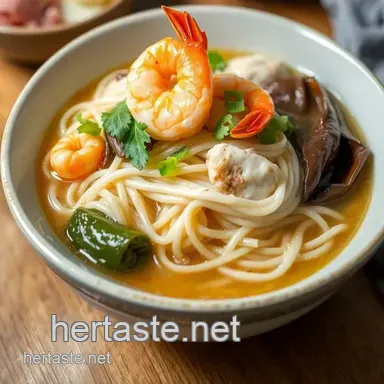
Simmered Noodles with Shrimp Chicken in 30 Minutes

- Time: 15 min active + 15 min cooking
- Flavor & Texture: Savory, umami-rich, and glossy
- Perfect for: A fast weeknight dinner
Simmered Noodles with Shrimp Chicken Specs
Most people struggle with this kind of dish because the shrimp turn into rubber balls or the noodles disappear into a soggy mess. The fix is all about the order of operations. By searing the chicken first and nestling the shrimp in at the very end, you get distinct textures in every bite.
This recipe uses a simple cornstarch slurry to turn a thin broth into a sauce that actually clings to the noodles. It's a fast, one-pan method that doesn't require a professional wok to get a great result.
You can expect a meal that feels like takeout but tastes fresher. It's designed for anyone who needs a high-protein dinner on the table in about 30 minutes.
What Makes This So Good
- Cornstarch Velvetting: Coating the chicken in cornstarch and soy sauce creates a protective layer. This keeps the meat tender even after searing and simmering.
- Staggered Cooking: Shrimp cook in roughly 2 minutes. Adding them last ensures they stay tender and curl into a loose C shape rather than shrinking.
- Noodle Absorption: Simmering the dried noodles directly in the seasoned broth means they soak up the garlic and ginger instead of just tasting like plain wheat.
| Method | Time | Texture | Best For |
|---|---|---|---|
| Quick Simmer | 30 mins | Saucy and tender | Comfort dinners |
| Classic Stir-fry | 20 mins | Crisp and charred | Fast lunches |
Ingredients
Ingredient Deep Dive
| Component | Purpose | Substitute Notes |
|---|---|---|
| Cornstarch | Thickens the broth | Arrowroot (use 1:1 ratio) |
| Oyster Sauce | Adds salty umami | Hoisin (sweeter, use 20% less) |
| Egg Noodles | Main structure | Rice noodles (shorten simmer time) |
The Grocery List
- 225 g boneless, skinless chicken thighs, sliced thin across the grain Why this? Thighs stay juicy during the simmer.
- 225 g medium shrimp, peeled and deveined
- 15 ml soy sauce, for the chicken marinade
- 3 g cornstarch, for the chicken marinade
- 1.5 g salt, for the shrimp
- A pinch of white pepper, for the shrimp
- 8 oz (225 g) dried wheat egg noodles, such as lo mein or chow mein style
- 2 cups (140 g) shredded napa cabbage
- 60 g carrot, cut into thin matchsticks
- 60 g green onions, whites and greens separated, cut into 5 cm pieces
- 9 g garlic, minced
- 6 g fresh ginger, minced
- 30 ml neutral oil (vegetable or canola), divided
- 840 ml low-sodium chicken broth
- 30 ml soy sauce, for the sauce
- 30 ml oyster sauce
- 15 ml toasted sesame oil
- 1 tsp (4 g) sugar
- 1 g white pepper
- 8 g cornstarch, for the slurry
- 30 ml cold water, for the slurry
- 3 g toasted sesame seeds (optional)
Tools You Will Need
Standard kitchen equipment is plenty for this. While a 12 inch wok is ideal, a large deep skillet is equally effective. Grab a measuring jug for the broth and a small bowl for the slurry.
Tongs are handy for stirring the noodles to ensure they don't clump into one large mass. To confirm the chicken and shrimp are cooked safely, a digital meat thermometer is essential.
Bringing It Together

Prep: Set Up Everything First
Combine the sliced chicken with 15 ml soy sauce and 3 g cornstarch, letting it marinate for 10 minutes. Meanwhile, pat the shrimp dry with paper towels and season them with 1.5 g salt and a pinch of white pepper.
In a measuring jug, whisk together the chicken broth, 30 ml soy sauce, oyster sauce, sesame oil, sugar, and 1 g white pepper. In a separate small bowl, mix 8 g cornstarch and 30 ml cold water to make a slurry; stir this again just before use, as the starch settles quickly.
Finally, mince the ginger and garlic and separate the green onion whites from the greens.
Cooking: Build Flavor in One Pan
Heat 15 ml oil in your pan over medium-high heat. Once hot, arrange the chicken in a single layer and sear undisturbed for 2 minutes until the edges turn golden. Stir and cook for an additional 1 to 2 minutes until the chicken reaches 165°F (74°C), then transfer it to a plate.
Add the remaining 15 ml oil, the ginger, garlic, and green onion whites. Stir for 30 seconds until fragrant, being careful not to brown the aromatics. Pour in the broth mixture, scraping up any browned bits from the pan, and bring the liquid to a rolling boil.
Add the noodles, using tongs to separate them. Lower the heat to a steady simmer, cover, and cook for 3 minutes, stirring once. Now, stir in the cabbage and carrot. Simmer uncovered for 3 minutes until the cabbage wilts and noodles have a slight bite.
Return the chicken to the pan and nestle the shrimp on top. Simmer for 2 minutes until the shrimp turn opaque pink, reach 145°F (63°C), and curl into a loose C shape.
Finishing
Lower the heat. Give the slurry a final stir, then drizzle it in while stirring the pan. Simmer for 30 seconds until the sauce becomes silky and coats the noodles. Taste the broth and add a few drops of soy sauce if more salt is needed. Remove from the heat and garnish with sesame seeds and green onion greens.
Serve immediately in deep bowls.
Pro Tips and Pitfalls
When the sauce doesn't thicken, it's usually because the slurry wasn't stirred right before adding. Cornstarch sinks to the bottom of the bowl, and if you pour it in without mixing, you just get a clump of flour at the bottom of the pan. Always whisk it again.
If the noodles feel too soft, you probably simmered them too long before adding the vegetables. The vegetables release water, which keeps the noodles cooking. Pull the noodles when they are just underdone.
Common Issues
| Problem | Root Cause | Solution |
|---|---|---|
| Rubbery Shrimp | Overcooked | Add shrimp only in the last 2 minutes |
| Mushy Noodles | Simmered too long | Reduce initial simmer time by 1 minute |
| Thin, Watery Sauce | Slurry not activated | Simmer on low for 30 more seconds |
Creative Twists and Swaps
If you want a different profile, try adding a tablespoon of chili crisp at the end for a spicy kick. You can also swap the napa cabbage for bok choy or sliced snap peas. If you prefer a lighter, more broth heavy meal, you could try a Canh Bun recipe for a different take on simmered noodles.
For those avoiding gluten, use tamari instead of soy sauce and swap the wheat noodles for wide rice noodles. Just be careful with the rice noodles, as they cook much faster and can turn to mush if simmered for the full 6 minutes.
Adjusting the Portion
| Ingredient | Half batch | Double batch |
|---|---|---|
| Boneless, skinless chicken thighs, sliced thin across the grain | 4 oz | 16 oz |
| Medium shrimp, peeled and deveined | 4 oz | 16 oz |
| Soy sauce, for the chicken marinade | 0.5 tbsp | 2 tbsp |
| Cornstarch, for the chicken marinade | 0.5 tsp | 2 tsp |
| Salt, for the shrimp | 0.125 tsp | 0.5 tsp |
| A pinch of white pepper, for the shrimp | — | — |
| Dried wheat egg noodles, such as lo mein or chow mein style | 4 oz | 16 oz |
| Shredded napa cabbage | 1 cups | 4 cups |
| Medium carrot , cut into thin matchsticks | 0.5 | 2 |
| Green onions , whites and greens separated, cut into 2-inch (5 cm) pieces | 2 | 8 |
| Cloves garlic , minced | 1.5 | 6 |
| Fresh ginger, minced | 0.5 tbsp | 2 tbsp |
| Neutral oil, such as vegetable or canola, divided | 1 tbsp | 4 tbsp |
| Low-sodium chicken broth | 1.75 cups | 7 cups |
| Soy sauce, for the simmering sauce | 1 tbsp | 4 tbsp |
| Oyster sauce | 0.5 tbsp | 2 tbsp |
| Toasted sesame oil | 0.5 tbsp | 2 tbsp |
| Sugar | 0.5 tsp | 2 tsp |
| White pepper | 0.125 tsp | 0.5 tsp |
| Cornstarch, for the slurry | 0.5 tbsp | 2 tbsp |
| Cold water, for the slurry | 1 tbsp | 4 tbsp |
| Toasted sesame seeds (optional) | 0.5 tsp | 2 tsp |
Do not multiply cooking time by the batch factor; use extra pans or work in batches and check doneness.
Make-ahead and Leftovers
Store any remaining portions in an airtight bowl in the refrigerator for no more than 3 days. Warming this meal up can be challenging, as the noodles keep soaking up the sauce during storage. You'll probably find most of the liquid gone by the following day.
To loosen the sauce during reheating, stir in a bit of water or chicken broth in the pan. Use medium heat and warm until the sauce bubbles and the chicken and shrimp reach 165°F (74°C) in the thickest part. Be careful not to overcook the shrimp in the microwave, otherwise they'll get rubbery.
When reheating cooked leftovers, check with a food thermometer that the centre reaches 165°F (74°C); the appliance temperature and time alone do not confirm this.
This recipe isn't suitable for freezing. Frozen and then thawed wheat noodles often lose their structure, leaving a mealy, unpleasant texture.
What to Serve With This
Because this dish provides a balanced mix of proteins, carbohydrates, and vegetables, a light accompaniment is all you need. A refreshing cucumber salad tossed with sesame oil and rice vinegar is perfect for balancing the rich oyster sauce.
For extra greens, try baby bok choy steamed and lightly drizzled with soy sauce. To drink, a chilled glass of jasmine tea or sparkling water infused with lime complements the savory umami notes.
High Sodium Content
1176 mg of sodium per portion (51% DV)
The American Heart Association suggests a maximum daily intake of 2,300 mg for the average adult to support cardiovascular health.
Ways to Lower Salt
-
Alternative Soy Options
Use coconut aminos or a low-sodium version of soy sauce to cut down on the overall salt content.
-
Better Broth Choices
Opt for homemade unsalted stock or chicken broth with no salt added to avoid hidden sodium.
-
Adjust Oyster Sauce
Use a low-sodium variety or cut the amount in half to reduce the salt concentration.
-
Skip Extra Salt
Avoid adding additional salt to the shrimp, as the other seasonings provide plenty of flavor.
-
Boost the Flavor
Add more garlic, fresh ginger, and white pepper to create a bold taste without needing more sodium.
Recipe FAQs
How to store leftovers?
Store the meal in the refrigerator.
Tip: reheat it on the stove with a bit of water to revive the sauce texture.
Why do my shrimp get rubbery?
Overcooking happens when shrimp are added too early to the pan.
Tip: look for an opaque pink color and a loose C shape to ensure they stay tender.
Can I use different noodles?
Other wheat-based varieties work if they are similar in thickness to lo mein or chow mein.
Tip: adjust the broth amount slightly if your chosen noodles absorb liquid more quickly.
What prevents the sauce from being watery?
A cornstarch slurry thickens the broth into a glossy coating that clings to the noodles.
Tip: stir the slurry one last time before drizzling it in to avoid any lumps.
Simmered Noodles with Shrimp Chicken