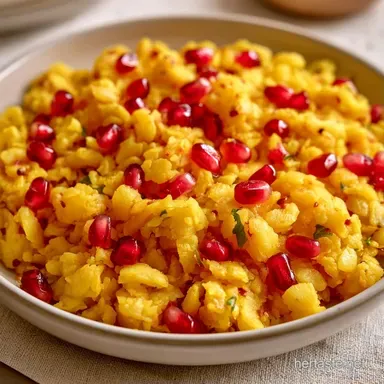
Pomegranate Poha in 37 Minutes
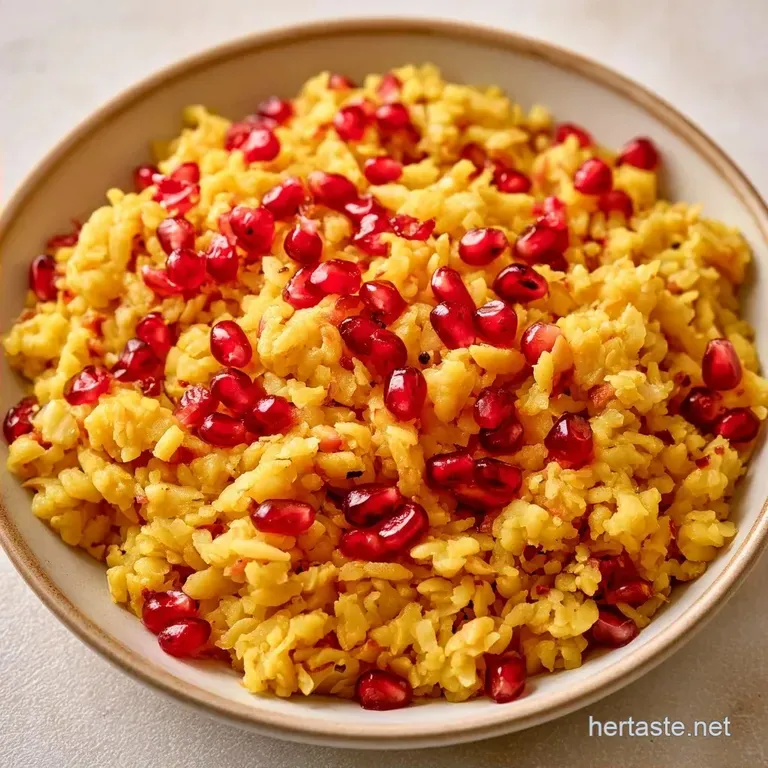
- Time: 10 min active + 15 min cook (Total 37 mins)
- Flavor/Texture Hook: Zesty and popping with sweet pomegranate seeds
- Perfect for: Busy weeknights or a fast healthy breakfast
Quick and Vibrant Pomegranate Poha
The aroma of popping mustard seeds in hot oil is the first sign that this breakfast is coming together perfectly. Early on, I mistakenly thought soaking was the key, but I ended up with a mushy, porridge like bowl.
After spending several mornings refining the rinsing process, I finally discovered the secret to the perfect texture.
Shifting my approach treating the rice more like a sponge than pasta made all the difference. Now, Pomegranate Poha is my favorite choice for a meal that feels sophisticated yet requires minimal effort. It's an ideal option for anyone wanting a vibrant plate without spending an hour in the kitchen.
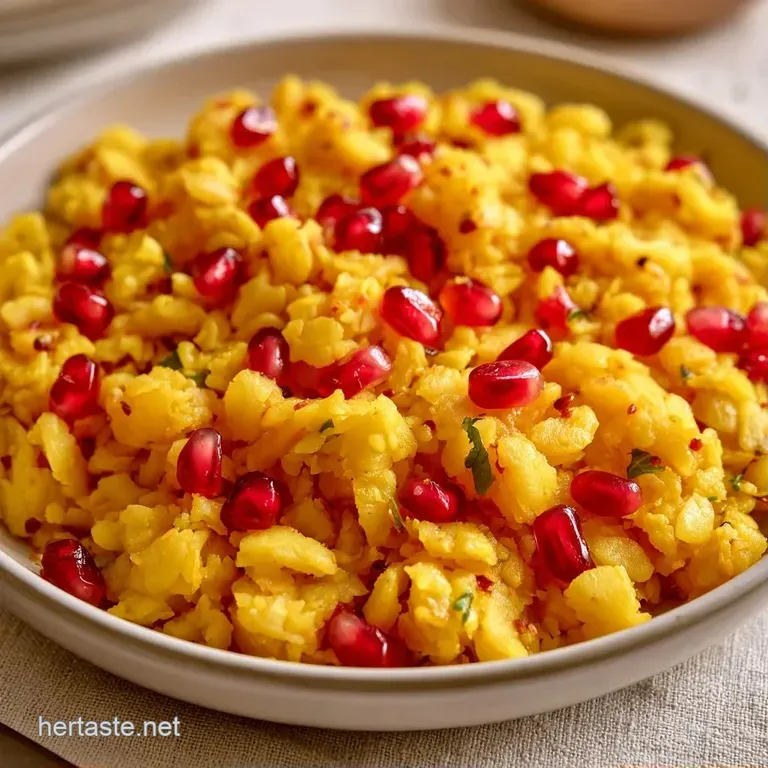
You can expect a dish that is bright yellow with deep red seeds and a hint of heat from green chilies. It's the sort of meal that energizes you even before your coffee is ready. The interplay between the warm rice and the chilled, fresh pomegranate is exactly what makes Pomegranate Poha so unique.
Why the Method Works
- The Quick Rinse: Rinsing hydrates the outer layer of the flake without saturating the core. This keeps Pomegranate Poha from becoming mushy, which is the most common fail for beginners.
- Residual Steaming: Covering the pan at the end lets the heat settle. This ensures the pomegranate seeds stay plump and the lemon juice penetrates every grain of Pomegranate Poha.
For those curious about the base, this poha explainer is useful for understanding why thick poha behaves differently than thin varieties.
| Ingredient State | Fresh Pomegranate | Frozen Pomegranate | Impact on Pomegranate Poha |
|---|---|---|---|
| Texture | Firm, popping | Softer, slightly bleeding | Fresh gives a better "pop" |
| Flavor | Bright, tart | Concentrated sweetness | Frozen is slightly sweeter |
| Prep Time | 5-10 mins shelling | 0 mins | Frozen is faster for busy mornings |
The Essential Ingredients
When making Pomegranate Poha, the quality of the flattened rice is everything. I always use thick poha because it holds its shape under heat. If you use the thin stuff, you'll likely end up with a sticky mass. The sugar might seem odd in a savory dish, but it just balances the tartness of the fruit.
The peanuts provide a necessary crunch. I like to fry them until they are just pale golden, which keeps them from tasting burnt. The curry leaves add that specific, nutty aroma that you can't get from any other herb.
| Original Ingredient | Substitute | Why It Works |
|---|---|---|
| Thick Poha (2 cups) | Medium Poha | Similar texture, but rinse for 20s instead of 60s |
| Peanuts (1/4 cup) | Roasted Almonds | Similar crunch. Note: Almonds have a milder flavor |
| Pomegranate (1/2 cup) | Dried Cranberries | Tangy and sweet. Note: Much sweeter and chewier |
| Lemon Juice (1 tbsp) | Lime Juice | Very similar acidity. Note: Lime is slightly more floral |
Quick Recipe Specs
- Prep time:10 minutes
- Cook time:15 minutes
- Total time:37 minutes (includes 10 min resting time)
- Yield: 4 servings
- Heat: Medium
Tools You'll Need
You won't need much equipment to get this done. I typically opt for a wide non-stick skillet, as it allows the grains to spread out and prevents clumping. A strong spatula is also essential for folding the ingredients in gently.
I suggest using a colander with small perforations. If the holes are too large, the delicate Pomegranate Poha flakes can easily slip through into the sink, causing unnecessary annoyance.
Cooking step by step
Prepping the Flakes
Place the poha in a colander and rinse under running water for 30-60 seconds. Do not soak it in a bowl. Gently toss in the 1/2 tsp salt and 1 tsp sugar while the grains are still damp. Set this aside for 10 minutes to let the moisture distribute evenly through the Pomegranate Poha.
Sautéing the Aromatics
Heat 2 tbsp vegetable oil in your skillet over medium heat. Add 1 tsp mustard seeds. Once they start to crackle, stir in 1 tsp cumin seeds and 10-12 curry leaves. Add the 1/4 cup raw peanuts and fry them until they turn a pale golden brown.
Stir in the diced onion and slit green chili, sautéing until the onions look translucent.
Finishing the Fold
Lower the heat and stir in 1/2 tsp turmeric powder. Add the hydrated Pomegranate Poha to the pan. Using your spatula, gently fold the mixture. Do not stir vigorously or you'll break the grains. Continue until every grain is a bright, uniform yellow.
The Fresh Finish
Turn off the heat immediately. Fold in the 1/2 cup pomegranate seeds, 2 tbsp chopped cilantro, and 1 tbsp lemon juice. Cover the pan with a lid for 2 minutes. This let's the residual heat steam the Pomegranate Poha flakes for a softer bite.
Solving Texture Issues
Mastering the texture is the primary challenge when making Pomegranate Poha. Usually, issues arise from an incorrect water-to-rice ratio during the washing process. In high humidity, you may want to reduce the rinse time by 5 seconds.
"Clumping" is another frequent problem. This occurs if the poha is overly saturated before it reaches the oil. Aim for damp grains rather than soaked ones. If the rice gathers into balls, you've probably rinsed it too long.
Avoiding Mushy Grains
If the result resembles mashed potatoes, the flakes were too moist. Try a coarser grain next time and limit the rinsing to 20 seconds.
Fixing Bland Flavor
If the Pomegranate Poha lacks depth, it generally needs more seasoning or acidity. Stir in some extra lemon juice or salt just before plating.
| Problem | Root Cause | Solution |
|---|---|---|
| Pomegranate Poha is mushy | Over rinsing or using thin poha | Use thick poha and rinse for max 60s |
| Grains are dry/hard | Under rinsing or no resting time | Rinse thoroughly and let sit for 10 mins |
| Bitter taste | Burnt mustard seeds or turmeric | Keep heat medium and add turmeric last |
| Pomegranate Poha is pale | Not enough turmeric or overcooked | Add turmeric before adding the rice |
Adjusting the Portion Size
For a single portion of Pomegranate Poha, use 1/2 cup of rice and halve the other ingredients. Be mindful of the salt and sugar, as it's easy to over season smaller amounts; I typically use a scant 1/4 tsp of each.
If you double or triple the recipe, avoid simply tripling the oil. Instead, use about 1.5x the oil to prevent a greasy result. If your pan lacks sufficient space, cook the dish in several rounds to avoid crowding, which will steam the Pomegranate Poha instead of sautéing it.
Common Poha Myths
A lot of people say you have to soak Poha for 30 minutes to get it soft. That's not true. A quick rinse and a 10 minute rest do the job much better and prevent the grains from breaking.
Some think you need to fry the turmeric with the onions. I actually prefer adding it right before the rice. This keeps the color vibrant and prevents the turmeric from tasting scorched in the hot oil.
Storage and Waste Tips
Pomegranate Poha is most delicious served immediately, but leftovers will keep in a glass jar in the refrigerator for 2 days. The seeds may lose their burst, but the flavor persists.
Instead of using a microwave to reheat, try a pan. I suggest adding the leftovers to a skillet with a teaspoon of oil and a tiny bit of water. Stir on medium heat for 3 minutes until it's hot and fluffy again.
To be more sustainable, don't discard the pomegranate peels if you're feeling daring. You can't add them to the poha, but boiling them with cinnamon makes a lovely tart tea. You can also reuse the cilantro stems by finely chopping them and tossing them in with the onions during the initial sauté.
Perfect Serving Pairs
Pomegranate Poha is satisfying by itself, yet it pairs wonderfully with other sides. I typically serve it with spicy mango pickle or a scoop of plain yogurt to balance the heat from the green chilies. A steaming cup of masala chai is the classic accompaniment.
To make this a more substantial brunch, consider adding a side of protein. For a different take on these flavors, you might enjoy my Pomegranate Glazed Salmon for a more elegant dinner. The fruit's natural tanginess works beautifully across both sweet and savory profiles.
Easy Recipe Tweaks
For those who want a more filling version of Pomegranate Poha, you can add 1/2 cup of diced boiled potatoes. Add them in right after the onions are translucent. They soak up the turmeric and add a lovely heartiness to the dish.
If you're looking for more pomegranate inspired meals, you should try making Pomegranate Chicken Rice for your next family dinner. It uses a similar flavor profile but brings a deeper, more savory richness.
For a nut free version of Pomegranate Poha, just swap the peanuts for toasted sunflower seeds or simply leave them out. You won't lose much flavor, just a bit of the crunch. For a low sodium version, replace the salt with a bit more lemon juice and a pinch of amchur (dried mango powder) to keep the zing.
Pomegranate Poha is all about that balance of salty, sweet, and sour. Once you get the rinse time down, you'll find yourself making this every single week. Let me know how your first batch turns out!
Recipe FAQs
Do I need to remove the seed part of a pomegranate?
Actually, no. The crunchy seed is the intended part to eat and provides the essential texture for this dish.
Which pomegranate variety is better, red or white?
Red pomegranates are preferred. They offer a deeper color and a more balanced tart sweet flavor that contrasts well with the turmeric.
How to prevent the flattened rice from getting mushy?
Rinse the poha in a colander for 30-60 seconds. Avoid soaking the grains in water, as this destroys the texture and makes them clump.
Is it true that poha needs to be soaked for a long time to soften?
No, this is a common misconception. Simply rinsing them under running water and letting them sit for 10 minutes is enough to distribute moisture.
What should I serve as a side?
A refreshing side salad works best. For another dish with a similarly bright and tangy profile, try our persimmon pomegranate salad.
Pomegranate Poha Breakfast