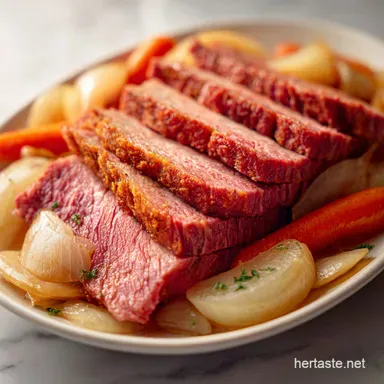
Pioneer Woman Corned Beef: Tender and Rich
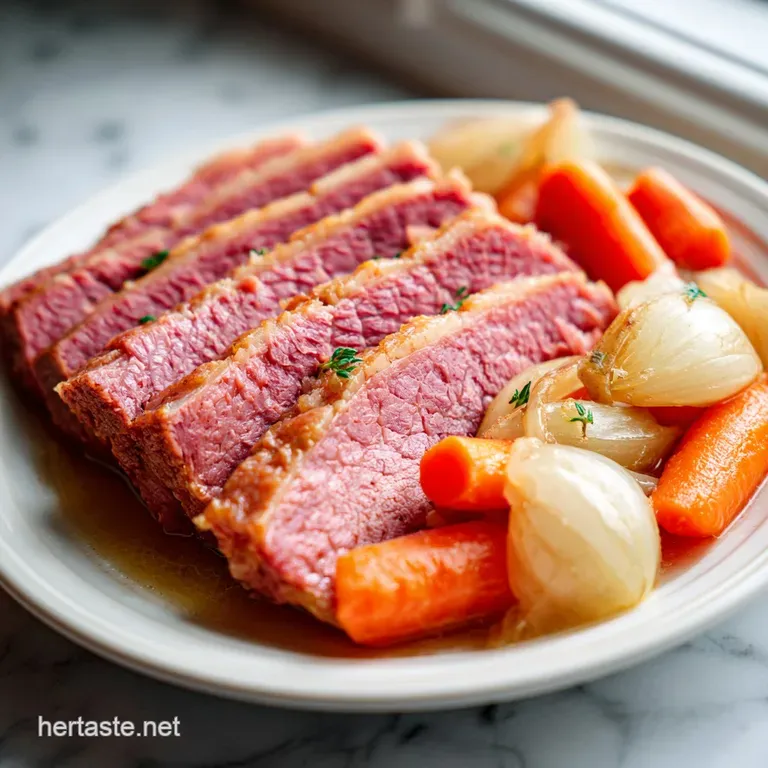
- Time:15 minutes active + 8 hours cooking = Total 8 hours 15 mins
- Flavor/Texture Hook: Tender, pull apart beef with charred, buttery cabbage
- Perfect for: St. Patrick's Day, cozy Sunday dinners, or low effort hosting
- Pioneer Woman Corned Beef Recipe Secrets
- Why This Low Slow Method Works
- The Essential Component Analysis
- Gathering Your Brisket and Veggies
- The Step-by-Step Cooking Process
- Fixing Common Corned Beef Errors
- Adjusting Portions for Your Crowd
- Common Corned Beef Myths
- Storage and Leftover Ideas
- Best Sides for This Roast
- Critical Sodium Level
- Recipe FAQs
- 📝 Recipe Card
That heavy, salty scent of curing spices hitting a hot pan is basically the smell of home. I remember the first time I tried making this, I grabbed the lean "flat cut" of the brisket because I thought it would be easier to slice. Huge mistake. It came out tasting like a salted shoe, no matter how long I cooked it.
I felt like I'd failed a basic kitchen test, but then I discovered the secret is all in the marbling.
Switching to the point cut changed everything. It's the fattier end of the brisket, and when you let it bathe in broth for hours, that fat renders down into the meat, making it velvety and rich. This pioneer woman corned beef recipe isn't just about the meat, though.
It's about that contrast between the savory beef and the charred, buttery cabbage finished with a syrupy balsamic reduction.
You can expect a dish that feels impressive but requires almost zero active work once the slow cooker is plugged in. We're talking about beef that yields to a fork with no resistance and cabbage that has a deep, golden brown crust.
It's the kind of meal that fills the whole house with an aroma that makes everyone wander into the kitchen asking when it's ready.
Pioneer Woman Corned Beef Recipe Secrets
The real magic here is the patience. When you're dealing with a brisket, you aren't just cooking meat, you're breaking down connective tissue. If you rush this, you're eating rubber. By keeping the heat low and the moisture high, we ensure the fibers relax.
I've found that layering the vegetables at the bottom isn't just for flavor, it's a functional move. It keeps the meat from sitting directly on the heating element of the slow cooker, which can sometimes cause the bottom of the roast to scorch or overcook before the center is tender.
For those who want a different vibe, this pairs beautifully with a side of homemade sauerkraut recipe to add a sharp, fermented tang that cuts through the richness of the beef.
Why This Low Slow Method Works
Collagen Melting: Long exposure to low heat transforms tough collagen into gelatin, which creates that silky mouthfeel.
Osmotic Balance: The beef broth and seasoning packet work together to keep the meat hydrated while the salt penetrates deep into the muscle fibers.
Acidic Contrast: The balsamic glaze provides a sharp, acidic bite that balances the heavy fats of the point cut brisket.
Caramelization: Searing the cabbage in butter creates a charred exterior that tastes far more complex than simply boiling the greens.
| Method | Time | Texture | Best For |
|---|---|---|---|
| Slow Cooker | 8 hours | Fall apart tender | Set it and forget it ease |
| Stovetop | 3-4 hours | Slightly firmer | When you're in a rush |
| Oven | 4-5 hours | Roasted edges | Deep, consistent heat |
The Essential Component Analysis
| Ingredient | Science Role | Pro Secret |
|---|---|---|
| Point Cut Brisket | Fat/Collagen source | Always buy point cut over flat cut for juiciness |
| Beef Broth | Heat conductor | Use low sodium broth to control the salt levels |
| Balsamic Vinegar | Acidic reducer | Simmer until syrupy to concentrate the flavor |
| Unsalted Butter | Browning agent | Use a cast iron skillet for the best cabbage char |
Gathering Your Brisket and Veggies
For the meat, you want a 3.5 lb corned beef brisket, specifically the point cut. If you're unsure which is which, the point cut is the one with more visible white fat streaks. According to Serious Eats, the point cut is significantly more flavorful and forgiving during long braises than the leaner flat.
The Gear and Goods:
- 3.5 lb corned beef brisket (point cut)Why this? High fat content prevents drying out
- 4 cups beef brothWhy this? Creates a savory braising liquid
- 3 large carrots, peeled and choppedWhy this? Adds natural sweetness to the base
- 1 large yellow onion, quarteredWhy this? Provides an aromatic foundation
- 4 cloves garlic, smashedWhy this? Deepens the savory profile
- 1 packet corned beef seasoningWhy this? Standardizes the spice profile
- 1 small head green cabbage, cut into wedgesWhy this? Holds shape better than shredded
- 2 tbsp unsalted butterWhy this? Essential for browning the cabbage
- 1/2 cup balsamic vinegarWhy this? Cuts through the richness
- 2 tbsp brown sugarWhy this? Balances the vinegar's acidity
- black pepper to taste
| Original Ingredient | Substitute | Why It Works |
|---|---|---|
| Beef Broth (4 cups) | Vegetable Broth (4 cups) | Similar liquid base. Note: Lacks the deep beefy undertone |
| Balsamic Vinegar | Apple Cider Vinegar + Honey | Similar acidity. Note: Lacks the syrupy thickness of balsamic |
| Brown Sugar | Maple Syrup | Same sweetness. Note: Adds a slight woody/maple flavor |
| Point Cut Brisket | Flat Cut Brisket | Same meat. Note: Much leaner, higher risk of toughness |
The key to a great pioneer woman corned beef recipe is not overthinking the prep. Just make sure your vegetables are cut into chunks large enough that they don't completely disintegrate during the 8 hour cook.
The step-by-step Cooking Process
- Layer the chopped carrots, quartered onions, and smashed garlic at the bottom of the slow cooker. Note: This creates a vegetable rack to protect the meat.
- Place the corned beef brisket on top of the vegetables.
- Sprinkle the seasoning packet evenly over the meat, pressing it in slightly.
- Pour in the beef broth until the meat is mostly submerged.
- Set the slow cooker to LOW and cook for 8 hours until the beef yields easily to a fork.
- Remove the meat from the slow cooker and let it rest for 20 minutes. Note: Resting lets the juices redistribute so they don't leak out when slicing.
- Melt butter in a large cast iron skillet over medium high heat.
- Sear the cabbage wedges until they develop a deep golden brown char.
- In a small saucepan, simmer the balsamic vinegar and brown sugar over medium heat until it thickens into a syrupy glaze.
- Slice the rested beef against the grain and serve alongside the charred cabbage, drizzling the balsamic reduction over both.
Fixing Common Corned Beef Errors
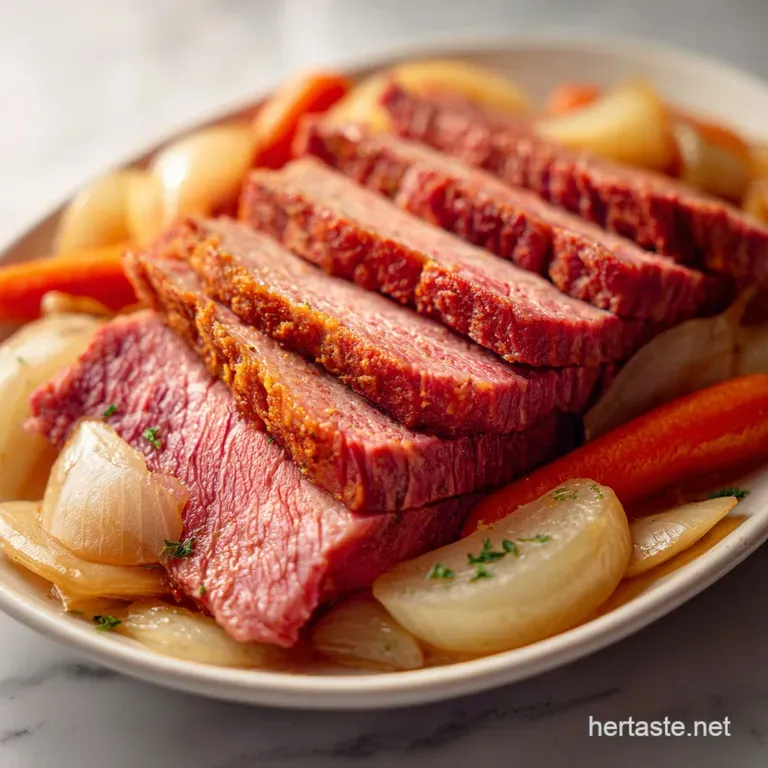
Cooking a large piece of meat for eight hours can be nerve wracking. The most common issue I see is people panic switching to "High" when they realize they're running out of time. Don't do it. High heat can seize the muscle fibers, making the meat tough.
Why Your Beef Still Feels Tough
If your beef isn't shredding, it usually means the collagen hasn't fully broken down. This is common with leaner cuts. The fix is simple: put it back in the liquid for another 30-60 minutes. It's almost impossible to overcook a brisket in a slow cooker on low.
How to Stop Excess Saltiness
Corned beef is cured in salt, and adding a seasoning packet can sometimes push it over the edge. If the broth tastes like seawater, you can add a peeled potato to the pot for the last two hours to absorb some salt, or simply dilute the final sauce with a bit more unsalted broth.
My Balsamic Glaze is Too Thin
If your glaze is more like a soup than a syrup, you haven't simmered it long enough. Keep it on medium heat, stirring occasionally, until the bubbles become larger and slower. It should coat the back of a spoon.
| Problem | Root Cause | Solution |
|---|---|---|
| Beef is dry | Used flat cut or overcooked on high | Switch to point cut and use LOW setting |
| Cabbage is mushy | Boiled instead of seared | Use a cast iron skillet with butter |
| Glaze is bitter | Burnt the sugar | Start over with lower heat and stir constantly |
The Final Check:
- ✓ Sliced against the grain for maximum tenderness
- ✓ Cabbage charred, not steamed
- ✓ Meat rested for a full 20 minutes
- ✓ Glaze reduced to a thick syrup
- ✓ Vegetables used as a base rack
Adjusting Portions for Your Crowd
If you're cooking for just two people, you can halve the meat (about 1.75 lbs), but don't halve the liquid. You still need enough broth to cover the meat to prevent drying. Reduce the cooking time by about 20%, but always use the fork test to be sure.
For a huge crowd, I recommend using two slow cookers. If you try to jam two briskets into one pot, they'll steam rather than braise, and you'll lose that consistent texture. Scale the spices to 1.5x rather than 2x, as the salt can become overwhelming in larger volumes.
| Servings | Beef Weight | Broth Amount | Cook Time |
|---|---|---|---|
| 2-3 people | 1.75 lbs | 3 cups | ~6.5 hours |
| 6 people | 3.5 lbs | 4 cups | 8 hours |
| 10-12 people | 7 lbs (2 pots) | 8 cups | 8 hours |
If you're making a massive batch, this is a great time to experiment with a pioneer woman corned beef recipe oven method. You can use a heavy Dutch oven at 300°F (150°C) for about 4-5 hours, which gives you more room for additional vegetables.
Common Corned Beef Myths
Searing the meat before putting it in the slow cooker "seals in the juices." This is a myth. Searing adds flavor through browning, but it doesn't stop moisture from leaving the meat. In a slow cooker, the moisture is trapped by the lid anyway, so don't stress if you skip the sear.
Boiling cabbage is the only traditional way. Actually, boiling cabbage often leads to a sulfurous smell and a limp texture. Searing it in butter, as we do here, brings out the natural sugars in the vegetable and creates a much more sophisticated flavor.
Storage and Leftover Ideas
Keep your sliced beef and cabbage in separate airtight containers in the fridge for up to 4 days. To reheat, I highly recommend a splash of beef broth in a skillet over medium heat. This steams the meat back to life without drying it out.
You can freeze the beef for up to 3 months, but the texture changes slightly. The best way to use frozen leftovers is to chop them up and make a pioneer woman corned beef hash recipe with diced potatoes and onions.
Don't throw away that braising liquid! It's liquid gold. Strain it and use it as a base for a classic beef stew recipe or a hearty vegetable soup. Just be careful with additional salt, as the broth is already quite potent.
Best Sides for This Roast
While the charred cabbage is the star, you can round out the plate with a few other elements. Roasted root vegetables like parsnips or turnips complement the saltiness of the beef. A crusty piece of sourdough bread is also essential for mopping up the remaining balsamic glaze.
If you want to lean into the traditional feel, a side of creamy mashed potatoes provides a neutral base that lets the tangy glaze shine. Just keep the potatoes simple- salted butter and a bit of milk nothing too complex that would compete with the bold flavors of the corned beef.
Critical Sodium Level
1880 mg 1,880 mg of sodium per serving (82% 82% of daily value)
The American Heart Association recommends a daily sodium limit of no more than 2,300 mg, and ideally less than 1,500 mg for most adults.
Tips to Reduce Sodium in Your Corned Beef
-
Swap Your Broth-30%
Replace standard beef broth with low-sodium or no-salt added beef broth to drastically lower the liquid base's salt content.
-
Ditch the Packet-25%
Discard the corned beef seasoning packet and create your own blend using peppercorns, coriander, and mustard seed.
-
Rinse the Meat-20%
Thoroughly rinse the corned beef brisket under cold water before cooking to remove excess surface brine and salt.
-
Modify the Glaze-20%
Reduce the balsamic vinegar or swap it for apple cider vinegar to maintain a tangy profile with lower sodium.
-
Enhance with Aromatics
Add fresh parsley, bay leaves, or extra black pepper to provide depth of flavor without adding sodium.
Recipe FAQs
What is the secret to the best corned beef?
Low and slow cooking combined with a final sear. Cooking on low for 8 hours ensures the brisket is meltingly tender, while searing the cabbage adds a deep, golden brown char.
Is corned beef good for hypertension?
No, it is generally not recommended. Corned beef is cured with high levels of sodium, which can significantly increase blood pressure.
Is corned beef ok for IBS?
It depends on your specific triggers. While the meat is usually fine, the garlic, onion, and cabbage used in this recipe are high FODMAP foods that often trigger symptoms.
What are the common mistakes cooking corned beef?
Cooking on high heat or skipping the resting period. High temperatures toughen the meat, and skipping the 20-minute rest allows the juices to escape, leaving the beef dry.
How to store leftover corned beef?
Store in separate airtight containers. Keep the beef and cabbage in the fridge for up to 4 days. If you enjoy hearty, crowd pleasing meats, try our homemade lasagna for your next gathering.
How to reheat corned beef without drying it out?
Add a splash of beef broth to a skillet over medium heat. This steams the meat back to life and preserves the moisture.
Is it true that corned beef must be boiled for hours to be tender?
No, this is a common misconception. Using a slow cooker on low for 8 hours achieves a tender texture without the harshness of a rolling boil.
Pioneer Woman Corned Beef