Patchwork Soup Mix Recipe | Smoky Protein-Dense Stew
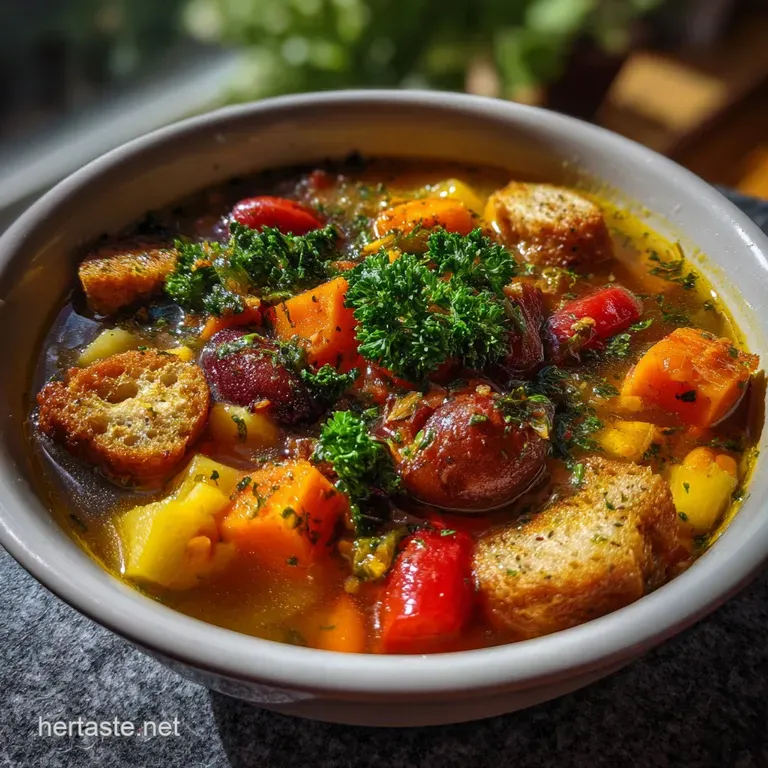
This recipe leverages the specific hydration rates of diverse legumes to create a thick, protein dense stew with a smoky profile. By layering dried components, you create a shelf stable gift or a pantry ready meal that transitions from dry grains to a velvety potage in 1 hour 30 mins.
- Effort/Time: Low-active effort; 1 hour 50 mins total.
- Flavor Hook: Deep wood smoke umami paired with earthy, mineral notes.
- Perfect for: Budget friendly meal prep or grab and-go holiday gifting.
## Crafting a Colorful Mosaic of Legumes and Smoke There is nothing worse than spending two hours hovering over a pot of beans only to bite into a grainy, chalky center while the skins float away like ghostly husks. I once served a "hearty" soup to my in-laws where the red lentils had completely disintegrated into sludge, yet the kidney beans were tough enough to chip a tooth. It was a texture nightmare that cost me an entire afternoon and left us eating toast for dinner. I destroyed three subsequent batches trying to force all the beans to soften at the same rate before I finally looked at the cellular biology of legumes. The secret isn't just "cooking longer"; it's about the osmotic pressure of salt and the specific pectin breakdown points of different seeds. You can't just toss dry beans into boiling water and hope for the best; you have to engineer the environment to ensure even hydration. The Patchwork Soup Mix Recipe succeeds because we balance the fast dissolving starches of red lentils with the structural integrity of pearl barley and black beans. Using a Lodge Enameled Cast Iron Dutch Oven ensures thermal mass consistency, preventing the temperature spikes that cause outer skins to shatter before the core is hydrated. The result is a velvety, mahogany colored broth where every spoonful offers a distinct, tender bite rather than a homogenized mush. This flavorful Patchwork Soup Mix Recipe provides superior texture. ## Synergistic Hydration and the Mechanics of Legume Softening Pectin Degradation: Controlled simmering at 212°F (100°C) breaks down the hemicellulose and pectin in bean cell walls, allowing water to penetrate the starch granules. Starch Gelatinization: The pearl barley acts as a natural thickener, releasing amylose molecules that cross link to create a velvety mouthfeel without flour. Maillard Synergy: Smoked paprika and ham hock provide phenolic compounds that mimic the deep, savory notes of a long term braise. Osmotic Balance: Adding Diamond Crystal Kosher Salt later in the process prevents the bean skins from toughening, which occurs if the mineral concentration in the water is too high too early. ## Precision Metrics for Optimal Soup Density This Patchwork Soup Mix Recipe is engineered for high yield efficiency and nutritional density. Prep Time: 20 minutes Cook Time: 1 hour 30 mins Total Time: 1 hour 50 mins Yield: 10 servings ## The Anatomy of the Patchwork Pantry | Ingredient | Chemical/Physical Role (Science) | The Pro Secret (Why This Matters) | |------------|-----------------------------------|-----------------------------------| | 1/2 cup Dried Red Lentils | Rapid starch release and disintegration | Acts as a built-in thickener for the broth base | | 1/2 cup Pearl Barley | Starch gelatinization and high water absorption | Provides "chew" and structural contrast to soft beans | | 1 lb Ham Hock | Collagen hydrolysis into gelatin | Creates a rich, lip-sticking mouthfeel and savory depth | | 1/2 tsp Smoked Paprika | Oil-soluble phenolic compound delivery | Provides "wood fired" aroma without a smoker | 1/2 cup Dried Green Split Peas Why this? High fiber content provides structural body during long simmers. 1/2 cup Dried Yellow Split Peas 1/2 cup Dried Black Beans Why this? Anthocyanins in the skin add deep color and earthy minerals. 1/2 cup Dried Kidney Beans 2 Dried Bay Leaves 2 tbsp Beef or Vegetable Bouillon Granules (e.g., Better Than Bouillon) 1 tbsp Dried Onion Flakes 1 tsp Garlic Powder 1 tsp Dried Thyme 1 tsp Dried Rosemary, crushed 1/2 tsp Sea Salt 1/2 tsp Cracked Black Pepper 8 cups Water 1 large Onion, diced 2 cloves Garlic, minced ## Essential Tools for Thermal Consistency For this Soup Mix Recipe, equipment choice dictates the final texture. Using a heavy bottomed Lodge Cast Iron Dutch Oven is non-negotiable for maintaining the steady simmer required for even bean hydration. You will also need a Ball 1 Quart Mason Jar if you are preparing this as a DIY Soup Mix In A Jar. A Wüsthof Chef’s Knife is ideal for the precision dicing of the fresh onion and garlic, ensuring they disappear into the broth rather than leaving chunky interruptions. If you’re gifting these as Homemade Soup Mixes For Gifting, a funnel makes layering the Mix Recipe much cleaner. Learning how to assemble the Patchwork Soup Mix Recipe into a jar is key for gifting.
## Atomic Execution for Layered Flavor Extraction 1. Layer the green peas, yellow peas, lentils, barley, black beans, and kidney beans in a quart jar. Note: Stratification prevents settling during storage. 2. Combine the bouillon, onion flakes, garlic powder, thyme, rosemary, paprika, salt, and pepper in a small bag or on top of the beans. 3. Sauté the fresh onion and garlic in your Dutch oven for 5 minutes until translucent and edges are pale golden. 4. Add the 1 lb ham hock to the pot, searing for 3 minutes until the skin starts to sizzle and release fat. 5. Pour in 8 cups of water, scraping the bottom until all browned bits (fond) are incorporated. 6. Empty the Patchwork Soup Mix Recipe contents into the boiling water. 7. Reduce heat to a low simmer until the surface barely ripples. 8. Cook for 1 hour 30 mins until the kidney beans are butter soft when pressed against the side of the pot. 9. Remove the ham hock, shred the meat, and return it to the pot until the soup looks thick and mahogany brown. 10. Discard the bay leaves and serve until the nutty aroma fills the room. ## Solving the Mystery of Stubborn Legume Skins ### Why Your Beans Stay Hard If your beans remain crunchy after 90 minutes, it is likely due to calcium pectin cross linking. This happens if your water is "hard" (high mineral content) or if you added acidic ingredients like tomatoes too early. Acid and calcium strengthen the cell walls of legumes, preventing them from softening. This is a common pitfall when attempting Dry Soup Mix Recipes in areas with heavy tap water. | Problem | Root Cause | The Fix | Pro Protocol | |---------|------------|---------|--------------| | Crunchy Beans | High mineral water or early acid | Add 1/4 tsp baking soda | Soda raises pH, weakening the pectin bonds | | Muddy Broth | Over boiling | Keep heat at a lazy simmer | High heat ruptures the lentils too violently | | Bland Flavor | Low salt penetration | Season the water early, but add acid late | Use bouillon for the base; save lemon/vinegar for the finish | ## Reimagining the Bean Blend for Global Palates This Mix Recipe is highly adaptable. If you want to lean into the warming spices found in my [Chai Tea Mix recipe](https://hertaste.net/recipes/homemade instant-chai tea-mix/), you could swap the thyme for ginger and turmeric. However, for a more traditional meal, stick to the savory herb profile. The adaptability of this Patchwork Soup Mix Recipe is one of its greatest strengths. Smoky Southwest: Replace rosemary with 1 tbsp chili powder and 1 tsp cumin. Add a can of diced green chiles at the end. The Patchwork Soup Mix takes on a rich, brick red hue. The Mediterranean Twist: Use chicken bouillon and add 2 tbsp of dried oregano. Finish with a squeeze of fresh lemon to brighten the earthy lentils. Vegan/Plant Based Swap: Omit the ham hock. Use 2 tsp of liquid smoke and 1 tbsp of tomato paste to mimic the Maillard depth. ## Preserving the Integrity of High Fiber Stews The Patchwork Soup Mix Recipe is an incredible make-ahead meal because the flavors actually improve after a 24 hour rest. This is due to flavor marriage, where the aromatic compounds from the rosemary and thyme continue to infuse the bean starches. Fridge: Store in an airtight container for up to 5 days. The soup will thicken as it cools; add a splash of water when reheating. Freeze: This soup freezes beautifully for up to 6 months. Leave 1 inch of headspace in the container to allow for expansion. Reheating: Heat on the stovetop over medium low heat. Avoid the microwave if possible, as it can cause "hot spots" that toughen the barley. > 💡 ZERO WASTE PHILOSOPHY: Don't discard the ham hock bone! Transform: Simmer the bone for another 2 hours after the soup is done to create a secondary "remouillage" or small batch stock. Science: The marrow and deep connective tissue contain residual collagen that adds a silky mouthfeel to your next pot of beans. ## Elevating the Bowl with Texture and Acid To serve, you need a textural contrast to the velvety soup. I highly recommend pairing this with a batch of my [Oyster Crackers Recipe](#) for a salty crunch. If you prefer something more substantial, a slice of crusty sourdough is the ultimate vessel for soaking up the starch thickened broth. For another cozy pairing that isn't soup, you might enjoy the hearty nature of a [SlowCooker Recipe Classic](https://hertaste.net/recipes/slow cooker-classic beef-stew/) on those days when you don't want to layer a jar. Regardless of the side, always finish this Patchwork Soup Mix Recipe with a pinch of fresh parsley or a dash of hot sauce to cut through the dense, smoky proteins. ### ⚗️ The Scaling Lab When doubling this Patchwork Soup Mix Recipe for Soup In A Jar Gifts, follow these strict logistics: 1. The Evaporation Paradox: If you double the recipe in the same large pot, do not double the water to 16 cups. Start with 14 cups. Because the surface area of the pot doesn't change, you lose less liquid to steam relative to the volume, and your soup will end up watery. 2. Flavor Saturation: Scale the smoked paprika and herbs to 1.5x, not 2x. Spices like rosemary can become bitter and overwhelming when doubled linearly. 3. Thermal Mass: A double batch of cold beans will drop the water temperature significantly. Bring the water to a rolling boil before adding the mix to ensure you don't spend 20 minutes just getting back to a simmer. ### Common Myths Myth: You must soak these beans overnight. Truth: Because split peas and lentils are the majority of the Patchwork Soup Mix, and we simmer for 90 minutes, the pre-soak is unnecessary. The small beans will hydrate sufficiently in the 1 hour 30 mins cook time. Myth: Salt makes beans tough. Truth: Only in extreme concentrations. A moderate amount of salt actually helps the beans cook more evenly by allowing the sodium ions to displace some of the magnesium/calcium in the skins. This Patchwork Soup Mix Recipe is more than just a jar of beans; it's a calculated balance of hydration, heat, and herb infused chemistry. Whether you're making it for a weeknight meal or as the Best Dry Soup Mix Gift for a friend, the science ensures a consistent, savory result every time.

Recipe FAQs
Can I soak the beans overnight instead of using them dry in the mix?
No. Pre-soaking is unnecessary for this mix. Since this blend contains fast dissolving lentils, soaking them causes them to turn to mush during the required 90-minute simmer. The Patchwork Soup Mix Recipe is engineered for ambient hydration during the cook time.
What liquid consistency results from this recipe?
Velvety and thick, not watery. The pearl barley releases starch that cross links with the broken down lentil structure, creating a naturally viscous mouthfeel. If the broth is too thin, try adding a slurry of cornstarch next time to see how it affects texture.
Why did my kidney beans remain hard while the lentils disintegrated?
Cold cheese added to hot liquid causes protein clumping. Temperature shock denatures casein proteins, creating grainy texture instead of smooth emulsion.
- Remove pan from heat first
- Add cheese in small handfuls
- Use fresh grated Gruyère (pre-shredded has cellulose coating)
Should I use Kosher salt or table salt for the dry mix?
Kosher salt for precision control. Table salt crystals are much smaller and denser, meaning the weight measurement translates to a far higher effective sodium level. Kosher salt dissolves more easily into the cooking liquid, allowing the osmotic pressure to be managed better during the long simmer.
Can I substitute the ham hock with another smoked meat?
Yes, smoked turkey legs work well. While the fat composition differs, the key chemical compounds providing the smoke flavor come from the curing/smoking process, which both meats share.
If you enjoyed mastering the emulsification technique required for stable sauces, you'll appreciate how the rendered fat here coats the barley grains beautifully.
Is it necessary to sear the ham hock before adding water?
Myth: Searing is only for color. Searing initiates the Maillard reaction, creating essential savory flavor precursors (pyrazines) that dissolve into the water. This step is crucial for achieving the deep umami profile typical of slow cooked beans.
How long can I safely store the dry mix components in a sealed jar?
Up to one year if stored cool and dark. Dried legumes maintain quality for a long period, though flavor potency decreases after 9 months. For optimal flavor transfer, ensure you follow the seasoning instructions precisely, similar to how we balance tartness in our Frozen Lemonade Concentrate: Bright, Bracing Homemade Recipe recipe.
Patchwork Soup Mix Jar

Ingredients:
Instructions:
Nutrition Facts:
| Calories | 308 kcal |
|---|---|
| Protein | 20g |
| Fat | 3.8g |
| Carbs | 49g |
| Fiber | 14g |
| Sugar | 4g |
| Sodium | 840mg |
