Garlic Parmesan Potato Wedges Recipe
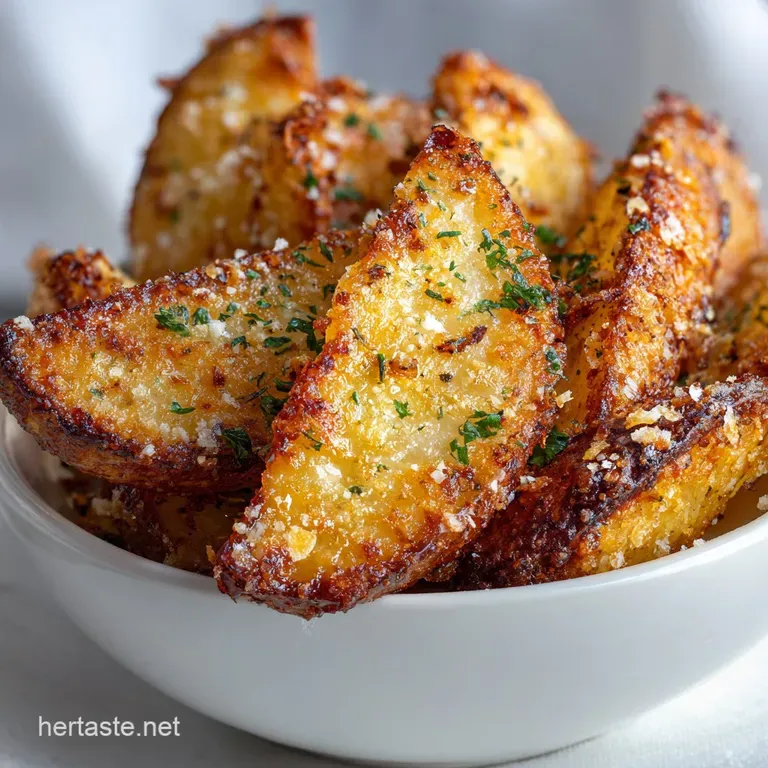
- Time: Active 15 minutes, Passive 35 minutes, Total 50 minutes
- Flavor/Texture Hook: Shatter crisp exterior with a buttery, fluffy center
- Perfect for: Game day snacks or a crowd-pleasing side dish
- Achieving Crispy Texture with Garlic Parmesan Potato Wedges
- The Cellular Science Behind Potato Starch and Heat
- Comparing Oven Roasting and Rapid Air Fryer Methods
- Selecting the Right Components for Flavor and Crunch
- Choosing Necessary Kitchen Tools for Successful Potato Baking
- Executing the Recipe Steps with Precision and Timing
- Solving Texture Issues and Preventing Burnt Garlic Bits
- Modifying Ingredients for Different Dietary and Health Needs
- Storing Leftovers Safely and Restoring That Original Crispness
- Styling Your Wedges for Professional Restaurant Quality Results
- The Myth of Boiling Before Baking
- Recipe FAQs
- 📝 Recipe Card
Achieving Crispy Texture with Garlic Parmesan Potato Wedges
The first time I tried making wedges, I ended up with a pile of limp, oily sticks that looked more like sad steamed vegetables than the golden treasures I was craving. I remember the frustration of seeing the Parmesan burn to a bitter charcoal while the potatoes remained stubbornly soft. It was a texture tragedy.
I realized then that you can't just toss raw potatoes in oil and hope for the best; you have to treat the starch with a bit of respect if you want that elusive "crunch."
Now, when I pull a tray of these Garlic Parmesan Potato Wedges out of the oven, the sound is the first thing you notice. It's a literal "clink" as they hit the serving bowl. The aroma of toasted cheese and pungent garlic fills the kitchen, signaling that we've forged something far better than anything from a fast food window.
We are looking for that specific moment where the edges start to darken and the cheese forms a lacy, salty crust that clings to every ridge.
We've all been there, staring at a bag of Russets wondering why they never turn out like the pictures. But once you understand how to manipulate the surface moisture, you'll never go back to basic roasting.
This method is about building layers of flavor from the smoky hit of paprika to the sharp bite of fresh garlic ensuring every bite has a personal touch that keeps people reaching for "just one more."
The Cellular Science Behind Potato Starch and Heat
The Starch Extraction Secret: Soaking the wedges in 2 liters of cold water physically removes surface sugars and starches that would otherwise caramelize too quickly and become gummy. This ensures the dry heat of the oven creates a crisp "skin" rather than a soft, steamed exterior.
The Maillard Cheese Fusion: The proteins in the 1/2 cup of freshly grated Parmesan undergo a Maillard reaction at the same rate the potato skins dehydrate, creating a fused micro crust. This bond prevents the cheese from simply sliding off the wedge during the roasting process.
Comparing Oven Roasting and Rapid Air Fryer Methods
| Method | Time | Texture | Best For |
|---|---|---|---|
| Conventional Oven | 35 minutes | Uniformly golden with soft centers | Large batches/Parties |
| Air Fryer | 22 minutes | Extreme "shatter" crunch | Quick lunches for two |
| Convection Oven | 30 minutes | Very dry, bubbly surface | Maximum crispness lovers |
Choosing your method depends entirely on how many people you're feeding. While the oven allows you to spread out 4 large Russet potatoes (900g) without crowding, the air fryer is brilliant for an ultra fast fix. If you choose the air fryer, you might want to try my Crispy Smashed Potatoes recipe next time for a similar over high heat thrill.
Selecting the Right Components for Flavor and Crunch
| Ingredient | Science Role | Pro Secret |
|---|---|---|
| Russet Potatoes (900g) | High starch content for fluffiness | Choose older potatoes; they have less water |
| Extra Virgin Olive Oil | Heat conductor and flavor carrier | Don't skimp; it's the "glue" for the spices |
| Fresh Garlic (3 cloves) | Pungent aromatic finish | Add this late to prevent bitter burning |
| Parmesan Cheese (1/2 cup) | Protein fat crust builder | Grate it yourself from a block for better melting |
For the potatoes, I strictly use Russets because their low moisture and high starch levels are non negotiable for that fluffy interior. You could use Yukon Gold, but the result will be creamier rather than fluffy.
For the spices, 1 tsp of garlic powder provides an even base layer of flavor, while the 3 fresh cloves add that sharp, fresh kick at the end. If you are out of fresh garlic, you can substitute with an extra teaspoon of garlic powder, though you will lose that hit of aromatic heat.
The 1 tsp of smoked paprika is what gives these that deep, rust colored glow that looks so professional on the plate.
Choosing Necessary Kitchen Tools for Successful Potato Baking
You don't need a professional kitchen, but a heavy duty rimmed baking sheet (like those from Nordic Ware) is a total must to prevent warping at high temperatures. I also recommend a sharp chef's knife to ensure your wedges are uniform.
If the wedges are different sizes, the small ones will turn into croutons while the big ones stay raw in the middle.
A large mixing bowl is essential for the "toss." You need enough space to really move the potatoes around so every millimeter is coated in that 3 tbsp of extra virgin olive oil. Finally, a wire cooling rack can be a secret weapon.
If you place the rack over your baking sheet and roast the potatoes on top of it, the hot air can circulate 360 degrees, which means you don't even have to flip them. It's an innovative way to ensure total crispness without the manual labor.
Executing the Recipe Steps with Precision and Timing
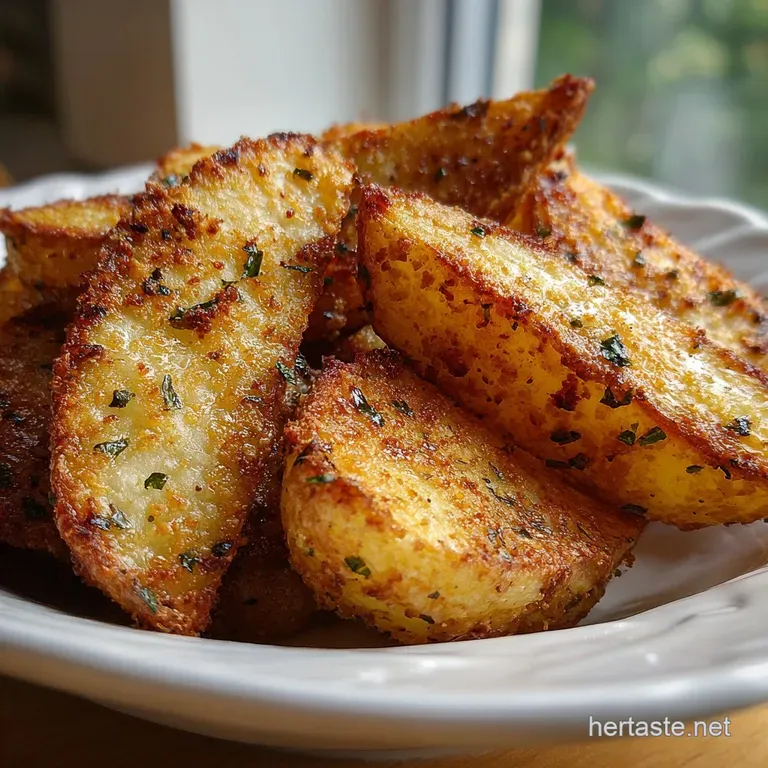
- Slice the Russets. Cut each of the 4 large potatoes into 8 even wedges. Note: Uniformity ensures they all finish cooking at the exact same moment.
- Soak in water. Submerge wedges in 2 liters of cold water for 15 minutes. Note: This pulls out the excess starch that causes sogginess.
- Dry thoroughly. Pat the potatoes with a clean kitchen towel until bone dry to the touch.
- Prepare the coating. In a large bowl, whisk 3 tbsp extra virgin olive oil, 1 tsp garlic powder, 1 tsp smoked paprika, and 1/2 tsp black pepper.
- Coat the wedges. Toss the dried potatoes in the oil mixture until every surface is glistening and orange.
- Arrange on tray. Place wedges skin side down on a parchment lined sheet. Note: Give them space; crowding leads to steaming.
- Roast the potatoes. Bake at 200°C for 25 minutes until the edges start to turn golden and firm.
- Add the cheese. Sprinkle 1/2 cup Parmesan and 3 cloves minced garlic over the wedges.
- Final crisping. Return to oven for 10 minutes until the cheese is bubbling and fragrant.
- Garnish and serve. Toss with 2 tbsp fresh parsley and 1/2 tsp flaky sea salt until the aroma hits your nose.
Chef's Tip: To get the cheese to really stick, I like to grate the Parmesan using the smallest holes on a box grater. This creates a "dust" that adheres better to the oil than larger shreds.
Solving Texture Issues and Preventing Burnt Garlic Bits
The "Soggy Skin" Dilemma
If your wedges come out soft, it's almost always a moisture issue. If you don't dry the potatoes perfectly after the soak, the water turns into steam under the oil layer. This effectively "boils" the potato inside the oil, preventing a crust from forming.
| Problem | Root Cause | Solution |
|---|---|---|
| Burnt Garlic | Added too early in the roast | Only add fresh garlic in the last 10 minutes |
| Cheese Sliding Off | Wedges were too dry/not enough oil | Ensure the 3 tbsp of oil is fully coating the wedges |
| Uneven Browning | Pan was overcrowded | Use two trays or cook in smaller batches |
To avoid these headaches, follow this common mistakes checklist:
- ✓ Never skip the soaking step; it's the difference between a fry and a roast.
- ✓ Use a high smoke point oil if you plan to crank the heat above 210°C.
- ✓ Grate your own Parmesan; pre shredded cheese is coated in potato starch that prevents melting.
- ✓ Check your oven calibration; a "cool" oven will never produce a shatter crisp wedge.
Modifying Ingredients for Different Dietary and Health Needs
If you're cooking for someone with dietary restrictions, these wedges are actually quite flexible. For a vegan version, you can swap the Parmesan for nutritional yeast or a high-quality vegan cheese alternative.
Just keep in mind that nutritional yeast browns much faster than dairy, so keep a close eye on it during that final 10 minute stretch.
| Original Ingredient | Substitute | Why It Works |
|---|---|---|
| Parmesan Cheese | Nutritional Yeast | Provides a similar nutty, salty flavor profile. Note: Browns faster than cheese. |
| Extra Virgin Olive Oil | Avocado Oil | Has a higher smoke point for even crispier results. |
| Sea Salt | Potassium Salt | Good for low sodium diets but has a slightly metallic finish. |
If you are looking for a main dish to go with these, they pair beautifully with my Creamy Garlic Chicken recipe. The velvety sauce of the chicken acts as a perfect contrast to the sharp, crispy edges of the potatoes.
Storing Leftovers Safely and Restoring That Original Crispness
Storage: Keep any leftover wedges in an airtight container in the fridge for up to 4 days. I like to line the container with a paper towel to absorb any residual moisture that might escape as they cool.
Zero Waste: Don't throw away those potato peels if you happen to peel them (though I recommend keeping them on for this recipe!). You can toss peels with a bit of oil and salt and bake them at 200°C for 10 minutes to make "kitchen chips." If you have leftover wedges that have gone soft, chop them up and fry them in a pan the next morning with some onions for the best home fries you've ever had.
Reheating: Avoid the microwave at all costs it will turn your beautiful wedges into rubber. Instead, use a toaster oven or air fryer at 180°C for about 5 minutes. This pulls the moisture back out of the crust and restores that signature "shatter" crunch.
Styling Your Wedges for Professional Restaurant Quality Results
Presentation is everything when you've put 50 minutes of work into a side dish. Instead of just piling them on a plate, try a vertical stack. Lean the wedges against each other in a circular pattern, leaving a hole in the middle for a ramekin of dipping sauce.
This not only looks great but prevents the wedges at the bottom from getting crushed and soggy under the weight of the others.
The final sprinkle of 2 tbsp fresh parsley isn't just for color; the brightness of the herbs cuts through the heavy fat of the oil and cheese. For a signature dip, I usually go with a roasted garlic aioli or even a spicy sriracha mayo.
If you're feeling adventurous, a drizzle of truffle oil right before serving can turn these into a high end bistro snack.
The Myth of Boiling Before Baking
One of the biggest misconceptions in the kitchen is that you must par boil potatoes to get them soft inside. While that works for some recipes, for Garlic Parmesan Potato Wedges, the long roast at 200°C is more than enough to gelatinize the starches in the center while the outside dehydrates.
Par boiling often makes the edges too fragile, causing the wedges to break apart when you try to toss them in the oil and spices.
Another myth is that "more oil equals more crispness." In reality, too much oil will lead to a greasy, heavy potato. The 3 tbsp called for in this recipe is calculated to create a thin, even film that facilitates heat transfer without drowning the tuber. This is much like the balance required in my Ground Turkey with recipe, where the fat needs to be managed to keep the textures distinct. Trust the measurements, and you'll be rewarded with a wedge that is light, airy, and incredibly satisfying.
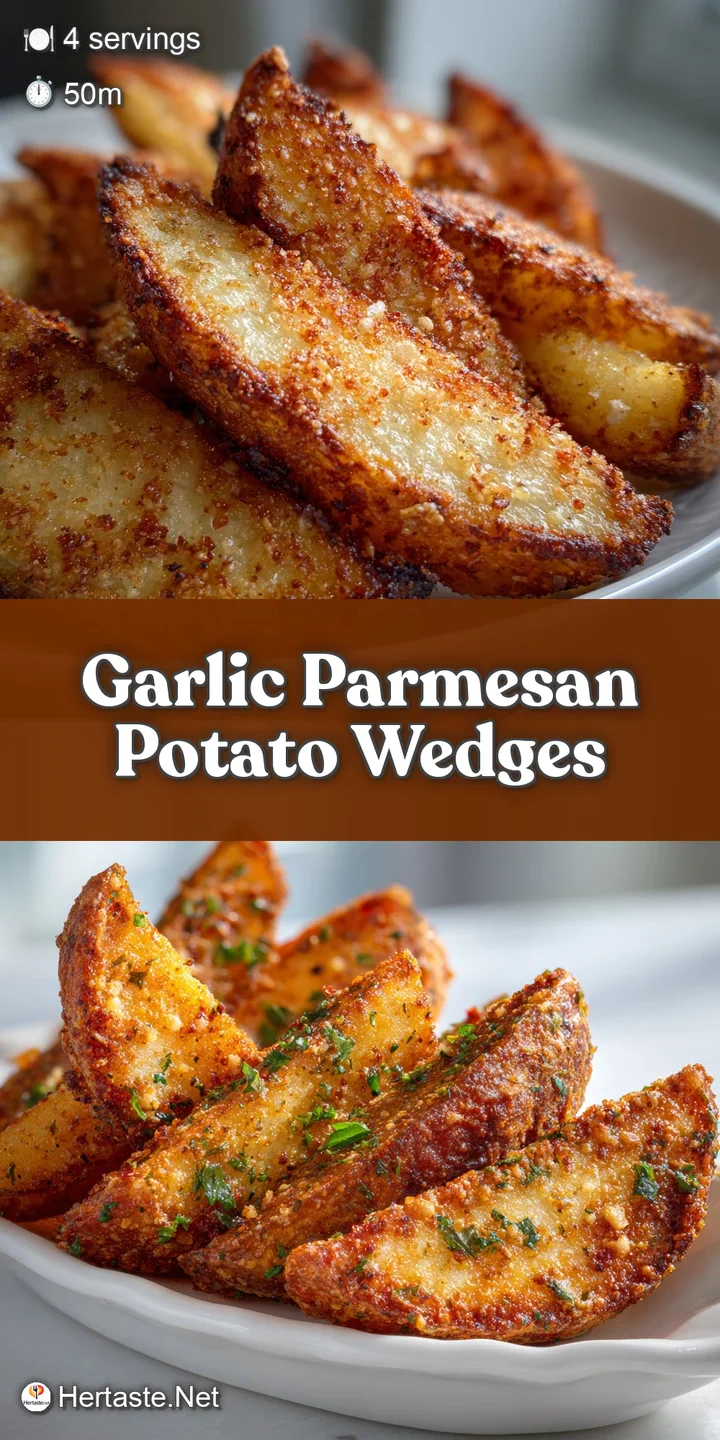
Recipe FAQs
Should I peel the potatoes before cutting into wedges?
No, leave the skins on. The skin holds the structure together during the soak and helps create that desired shatter crispness on the exterior.
How to ensure the Parmesan cheese doesn't burn before the potatoes are done?
Add the Parmesan during the last 10 minutes of baking. The potatoes need about 25 minutes to set before the delicate cheese is introduced to the high heat.
Why are my wedges ending up soggy instead of crispy?
You likely didn't dry the potatoes thoroughly after soaking. Any residual surface water turns to steam when it hits the hot oil, effectively steaming the potato instead of roasting it.
What is the optimal potato type for the fluffiest interior?
Use Russet potatoes exclusively. Their high starch and low moisture content gelatinizes perfectly in the oven, creating that fluffy center contrasted by a crunchy crust.
How to restore crispness to leftovers safely?
Reheat in an air fryer or toaster oven at 180°C for 5 minutes. The microwave will make them rubbery, but dry heat circulation effectively pulls the moisture back out of the crust.
Is it true that boiling the wedges before roasting improves texture?
No, parboiling is generally unnecessary for this method. The initial cold water soak removes surface starch, and the high oven temperature handles the internal cooking; boiling risks breaking apart the delicate wedges.
What makes the flavor of these wedges different from standard roasted potatoes?
The recipe utilizes a dual garlic approach: powder for the base seasoning and fresh minced garlic added late for aromatic punch. If you enjoy balancing sharp flavors, see how we apply this contrast in our Creamy CheddarPotato Soup recipe.
Garlic Parmesan Potato Wedges
Ingredients:
Instructions:
Nutrition Facts:
| Calories | 331 kcal |
|---|---|
| Protein | 9 g |
| Fat | 14 g |
| Carbs | 41 g |
| Fiber | 3 g |
| Sugar | 1 g |
| Sodium | 612 mg |
