Fried Potatoes and Onions: Crispy Skillet
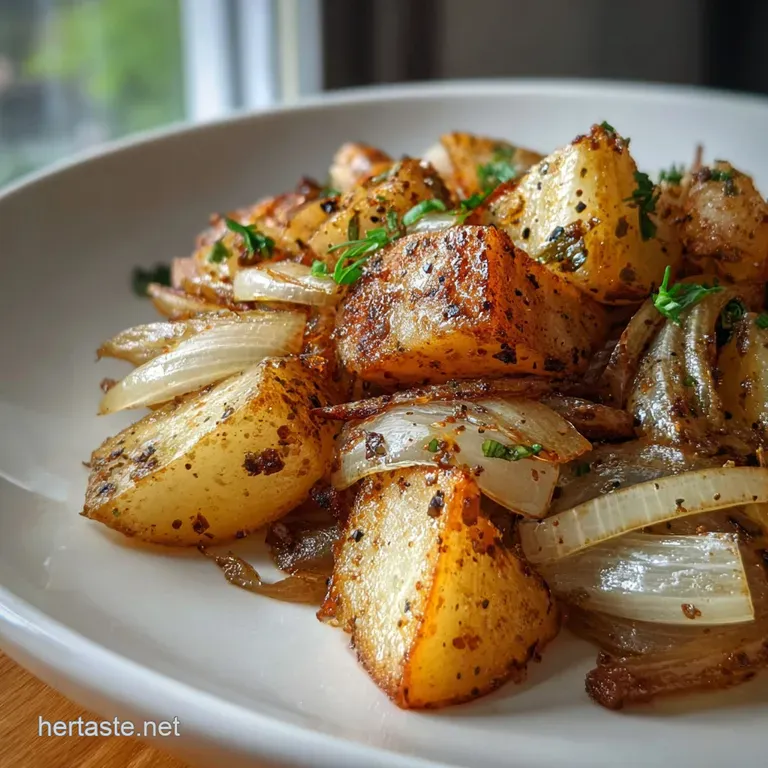
- Time: Active 15 minutes, Passive 20 minutes, Total 35 minutes
- Flavor/Texture Hook: Shatter crisp edges with buttery, caramelized undertones
- Perfect for: Weekend brunch, steak nights, or a quick comforting solo dinner
- The Secret to Achieving Shatter Crisp Fried Potatoes and Onions
- Crucial Specs and Decisions for Your Golden Potato Skillet
- A Deep Dive Into Choosing the Highest Quality Ingredients
- Essential Cookware for Reaching That Perfect Maillard Reaction Crunch
- Mastering the Layered Technique for a Superior Savory Finish
- How to Dodge Soggy Results and Other Common Mistakes
- Scaling the Recipe for Any Crowd
- Flavor Variations and Additions for a Truly Custom Dish
- Debunking the Myths of the Potato Skillet
- Preserving the Crunch Through Proper Storage and Reheating Methods
- Winning Combinations to Turn Simple Sides Into Full Meals
- Fried Potatoes and Onions FAQs
- 📝 Recipe Card
The Secret to Achieving Shatter Crisp Fried Potatoes and Onions
Do you hear that? It is the rhythmic, metallic tink tink tink of my grandmother's old carbon steel spatula hitting the side of a seasoned skillet. It’s 7:00 AM on a Tuesday, and the kitchen is already thick with the smell of rendered fat and sweet, softening alliums.
I remember watching her she never stirred. She waited. She let the heat do the heavy lifting, and that’s the first lesson I ever learned about making Fried Potatoes and Onions. If you’re constantly fussing with them, you’re just making mashed potatoes with an attitude.
The real magic happens in that moment of tension between the potato and the pan. You want that high pitched sizzle that sounds like a secret being whispered, not a wet, bubbling gurgle.
I spent years getting this wrong, ending up with a gray, soggy pile of sadness before I realized the potatoes need space to breathe and heat to transform. We’re going for those jagged, glass like edges that shatter when your teeth hit them, contrasted against an interior that’s as soft as a cloud.
Today, we are moving past the "toss it all in and hope" method. I've realized that the onion is the potato's best friend, but also its worst enemy if added too early. We are going to build this dish in layers, focusing on the starch first and the sugar later.
Trust me, once you nail the timing of this skillet fried potatoes and onions recipe, you’ll never look at a bag of frozen fries the same way again.
The Physics of the Starch Purge
Starch Retrogradation: Soaking sliced potatoes in cold water removes surface amylose, preventing the slices from gumming together. This allows the dry heat to immediately trigger the Maillard reaction rather than steaming the potatoes in their own released moisture.
Cook Method Comparison: Fresh vs Shortcut
| Method | Time | Texture | Best For |
|---|---|---|---|
| Fresh Skillet (This Recipe) | 35 minutes | Shatter crisp edges, velvety center | Maximum flavor and authentic texture |
| Par boiled & Fried | 25 minutes | Uniformly soft, less crispy exterior | Large batches where consistency is hard |
| Frozen Bag Shortcut | 15 minutes | Often soggy, lack of deep caramelization | Absolute emergencies only |
The Fresh Skillet method wins every single time because it allows the potato starch to interact directly with the fats. When you use a shortcut, you lose that specific "fried" flavor that only comes from raw starch hitting hot oil and butter.
Crucial Specs and Decisions for Your Golden Potato Skillet
When we talk about southern fried potatoes and onions, we aren't just talking about food; we're talking about a technique that has been passed down because it works. But even the best traditions need a little modern science to keep things consistent.
I always tell my friends that the most important tool you have isn't the knife it's your patience. If you try to rush the heat, the onions will burn into bitter black specks before the potatoes even think about softening.
We are aiming for a specific thickness here 1/8 inch (about 3mm). If they're too thin, they become chips; too thick, and the outside burns before the inside is cooked. I use a mandolin for this because my knife skills at 7 AM are questionable at best, but a sharp chef's knife works perfectly if you take your time.
You want them uniform so they play nice together in the pan.
Ingredient Deep Dive
| Ingredient | Science Role | Pro Secret |
|---|---|---|
| Russet Potatoes | High starch content | Russets have the lowest moisture, making them the kings of the "shatter" crunch. |
| Grapeseed Oil | High smoke point | Allows for over high heat searing without the oil breaking down and tasting acrid. |
| Unsalted Butter | Flavor and browning | Added late to provide milk solids for browning without burning during the initial sear. |
I've tried making this with Waxy potatoes like Red Bliss, but they just don't have the soul that a Russet brings to the table. The starch in a Russet is what creates that craggy, golden crust we are chasing.
A Deep Dive Into Choosing the Highest Quality Ingredients
Let’s talk about the shopping list for this pan-fried potatoes and onions masterpiece. You don't need a lot, but what you do bring to the party needs to be top tier. I usually grab my ingredients from the local farmer's market because the onions there actually have some "bite" to them, but your standard grocery store staples will do just fine as long as they're fresh.
- 2 lbs (907g) Russet potatoes: Sliced into 1/8 inch rounds. Why this? High starch ensures a crispy exterior and fluffy interior.
- Substitute: Yukon Golds (Same fat content but adds a buttery, denser texture).
- 1 large yellow onion: Thinly sliced into half moons. Why this? Yellow onions have the perfect balance of sulfur and sugar for caramelizing.
- Substitute: Red onion (Will be sweeter but turn a darker, almost purple brown).
- 3 tbsp (45ml) grapeseed oil: Why this? Neutral flavor and a high smoke point of 420°F (215°C).
- Substitute: Avocado oil (Equally high smoke point and very healthy).
- 2 tbsp (28g) unsalted butter: Why this? Controlled salt levels and essential for the final nutty aroma.
- Substitute: Ghee (Better for high heat, avoids the milk solid burning issue).
- 1 tsp (5g) smoked paprika: Why this? Adds an "outdoor fire" depth without needing bacon fat.
- Substitute: Sweet paprika (For color without the smoky punch).
- 1 tsp (5g) fine sea salt: Why this? Dissolves faster than kosher salt on the hot potato surface.
- Substitute: Himalayan pink salt (Adds a slight mineral complexity).
- 0.5 tsp (2g) cracked black pepper: Why this? Coarse grind provides little pops of heat.
- Substitute: White pepper (A more floral, hidden heat).
Essential Cookware for Reaching That Perfect Maillard Reaction Crunch
You can't make easy fried potatoes and onions in a thin, cheap pan. You just can't. You need something with thermal mass something that won't drop 50 degrees the second the potatoes hit the surface. A cast iron skillet (like a Lodge) is the gold standard here.
It holds heat like a champion and develops a natural non stick surface that helps those potato rounds slide around without tearing their skins off.
If you don't have cast iron, a heavy bottomed stainless steel pan works, but you'll need to be more aggressive with your oil usage to prevent sticking. Avoid non stick pans if you can; they don't allow for the same level of browning because the surface is literally designed to prevent things from "grabbing" and searing.
Chef's Tip: Freeze your butter for 10 minutes before adding it to the pan. This delays the melting process slightly, allowing the milk solids to toast more slowly alongside the onions.
One more thing: the spatula. Use a thin, metal fish spatula. It’s flexible enough to get under the potatoes without breaking the slices, but strong enough to scrape up those delicious "fond" bits the browned bits of joy that get stuck to the bottom of the pan.
Mastering the Layered Technique for a Superior Savory Finish
Now, let's get into the actual rhythm of the kitchen. This is where we build the flavor layers. We aren't just cooking; we're orchestrating a series of chemical reactions. For more potato inspiration, you might enjoy the technique used in my Classic Colcannon Recipe, which also focuses on that perfect potato to fat ratio.
Step 1: The Starch Purge
Slice your 2 lbs (907g) of potatoes into 1/8 inch rounds. Submerge them in a bowl of ice cold water for at least 10 minutes. Note: This washes away excess starch that would otherwise make your potatoes gummy.
Step 2: The Bone Dry Prep
Drain the potatoes and spread them out on a clean kitchen towel. Pat them until they are completely dry. Note: Moisture is the enemy of the sizzle. Any water left on the potatoes will turn to steam and ruin your crust.
Step 3: Heat the Foundation
Place your skillet over medium high heat. Add the 3 tbsp (45ml) of grapeseed oil and wait 2 minutes until the oil is shimmering and just starting to faintly smoke.
Step 4: The Initial Sear
Carefully lay the potatoes into the pan. Don't just dump them; try to get as much surface area contact as possible. Leave them alone for 5 minutes until the bottom layer is deep golden and releases easily from the pan.
Step 5: The First Flip
Use your metal spatula to turn the potatoes over in large sections. It’s okay if they aren't all perfectly flipped; we are looking for overall color. Cook for another 5 minutes until you hear a consistent, aggressive sizzle.
Step 6: The Onion Integration
Push the potatoes to the edges of the pan, creating a well in the center. Add your thinly sliced yellow onion and the 2 tbsp (28g) of unsalted butter. Note: The butter adds flavor while the onions release moisture to help tenderize the potato interiors.
Step 7: Seasoning the Layers
Sprinkle the 1 tsp (5g) of smoked paprika, 1 tsp (5g) of sea salt, and 0.5 tsp (2g) of black pepper over everything. Toss gently to combine the onions with the potatoes.
Step 8: The Final Crisp
Reduce heat to medium. Continue to cook, tossing every 3-4 minutes, for another 10 minutes until the onions are soft and caramelized and the potatoes are tender all the way through.
Step 9: The Finishing Touch
Turn the heat back up to medium high for the last 60 seconds. This "shocks" the exterior one last time to ensure maximum crunch before serving.
How to Dodge Soggy Results and Other Common Mistakes
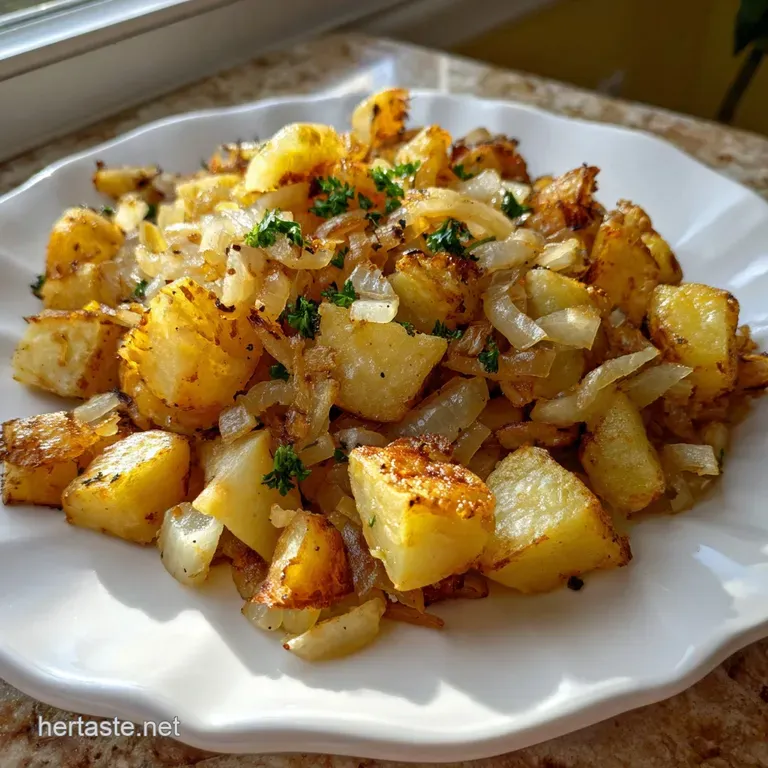
We've all been there you're halfway through cooking and the pan looks more like a potato stew than a fry up. Don't panic. Usually, this is because the heat was too low or you overcrowded the pan. If you're doubling the recipe, you must work in batches or use two separate skillets.
If you pile 4 lbs of potatoes into one pan, you've essentially created a steamer.
Troubleshooting Your Skillet
| Problem | Root Cause | Solution |
|---|---|---|
| Potatoes are gray and soft | Excess moisture or low heat | Pat potatoes drier next time; increase heat to medium high immediately. |
| Onions are burnt/bitter | Added too early | Onions cook faster than potatoes. Always add them after the potatoes have started to brown. |
| Potatoes sticking to pan | Pan wasn't hot enough | Wait for the oil to shimmer before adding vegetables. Don't flip too early. |
Common Mistakes Checklist
- ✓ Skipping the soak: This leads to "gluey" potatoes that stick together in clumps.
- ✓ Using a cold pan: If the oil isn't hot, the potato will soak it up like a sponge instead of searing.
- ✓ Constant stirring: You need to let the potatoes sit to develop that Maillard crust.
- ✓ Slicing unevenly: Thick slices stay raw while thin slices burn. Use a mandolin!
- ✓ Adding salt too early: Salt draws out moisture. Add it once the browning has already begun.
Scaling the Recipe for Any Crowd
When you're making this for a big family breakfast, it's tempting to just toss everything in a giant pot. Resist the urge. Here is how you scale skillet fried potatoes and onions without losing that signature crunch.
- Scaling DOWN (1-2 people): Cut the ingredients in half. You can use a smaller 8 inch skillet, and you might find the cook time reduces by about 5 minutes because there's less mass to heat through.
- Scaling UP (8+ people): This is where it gets tricky. If you double the recipe to 4 lbs of potatoes, do not double the oil and butter exactly. Use about 1.5x the amount of fat to avoid a greasy outcome. Most importantly, use two pans. Trying to cook 4 lbs of potatoes in one 12 inch skillet is a recipe for a soggy disaster.
- The Oven Hybrid: If you're cooking for a massive crowd, sear the potatoes and onions in batches on the stovetop, then spread them on a preheated baking sheet at 425°F (220°C) for 15 minutes to finish cooking them through.
Flavor Variations and Additions for a Truly Custom Dish
Once you have the base old fashioned fried potatoes and onions down, you can start playing with the "extras." I’m a purist most days, but sometimes you need a little more "oomph." If you're looking for a complementary side that's just as easy, check out this pan-fried Tilapia recipe the lemon butter sauce
is a dream with these salty potatoes.
For a Hearty Main
Add 1/2 cup of diced smoked sausage or kielbasa at the same time you add the onions. The fat from the sausage will render out and infuse the potatoes with an incredible meaty depth. This is how you make fried potatoes and onions and sausage that actually feels like a full meal.
For a Spicy Southern Kick
Swap the smoked paprika for 1/2 tsp of cayenne pepper and add 1 finely diced jalapeño (seeds removed) with the onions. This adds a brightness that cuts right through the richness of the butter.
For a Modern Twist
Top the finished dish with a drizzle of truffle oil and a handful of freshly grated Parmesan cheese. It sounds fancy, but the earthy truffle notes love the caramelized onions.
Debunking the Myths of the Potato Skillet
There is a lot of "kitchen folklore" surrounding fried potatoes and onions, and honestly, some of it is just plain wrong. Let's clear the air so you can cook with confidence.
- "You must par boil the potatoes first." False. While par boiling can save time, it often leads to a "fuzzy" exterior that doesn't crisp up as sharply as raw potatoes fried in fat. Raw to pan creates a much more distinct texture.
- "The lid stays on the whole time." Absolutely not. If you keep the lid on, you are steaming, not frying. I only use a lid for 2-3 minutes if my slices are a bit too thick and I need to ensure the centers are soft, but the lid is the enemy of the crunch.
- "Cast iron is the only way." It's the best way, but a heavy stainless steel skillet can produce fantastic results if you manage your heat properly. The key is thermal mass, not just the material.
Preserving the Crunch Through Proper Storage and Reheating Methods
Let’s be real: Fried Potatoes and Onions are best about 3 minutes after they come out of the pan. But if you have leftovers, don't throw them away. There's a way to save them.
- Storage
- Put them in an airtight container in the fridge for up to 4 days. They will lose their crunch as the starch absorbs moisture from the onions, but we can fix that.
- Freezing
- You can freeze them for up to 2 months, but the texture will change significantly. They’ll be much softer when thawed. I'd suggest using frozen leftovers in a frittata or hash.
- Zero Waste Tip
- Don't throw away the potato peels if you decide to peel them (though I leave them on!). Toss the peels with a bit of oil and salt and air fry them at 400°F for 8 minutes for a "trash to treasure" snack.
Reheating: Whatever you do, stay away from the microwave. It will turn your beautiful potatoes into a rubbery mess. Instead, reheat them in a dry skillet over medium heat for 5-7 minutes, or toss them into an air fryer at 375°F (190°C) for 4 minutes.
This will revive the exterior and bring back that "shatter" factor.
Winning Combinations to Turn Simple Sides Into Full Meals
What do you serve with the world's best potatoes? The options are endless because this dish is essentially a blank canvas for flavor. If it's breakfast, you can't go wrong with two over easy eggs resting right on top of the pile so the yolks can create a natural sauce.
For dinner, these are the ultimate partner for a seared steak or a roasted chicken. But if you really want to impress, serve them alongside some fluffy Garlic Butter Bread Rolls recipe to soak up any leftover butter and onion juices on the plate.
Decision Shortcut: If you want X, do Y
- If you want a "Diner Style" finish: Press the potatoes down firmly with a heavy lid or another pan during the first 5 minutes of cooking. This creates a flat, unified crust.
- If you want "Silky Sweet" onions: Slice them thicker and add them 5 minutes later than the recipe suggests, keeping the heat slightly lower to prevent burning.
- If you want "Air Fryer" ease: Toss everything (except the butter) in a bowl, then air fry at 400°F (200°C) for 18-20 minutes, shaking the basket every 5 minutes. Add a knob of butter at the very end.
At the end of the day, these potatoes are about comfort. They’re about that sizzle in the pan and the way the kitchen smells when the onions finally start to turn that deep, translucent gold.
It's a simple dish, sure, but when you get it right when that first bite shatters and gives way to a creamy, buttery center it's nothing short of extraordinary. Enjoy the process, don't rush the heat, and let the skillet do its thing!
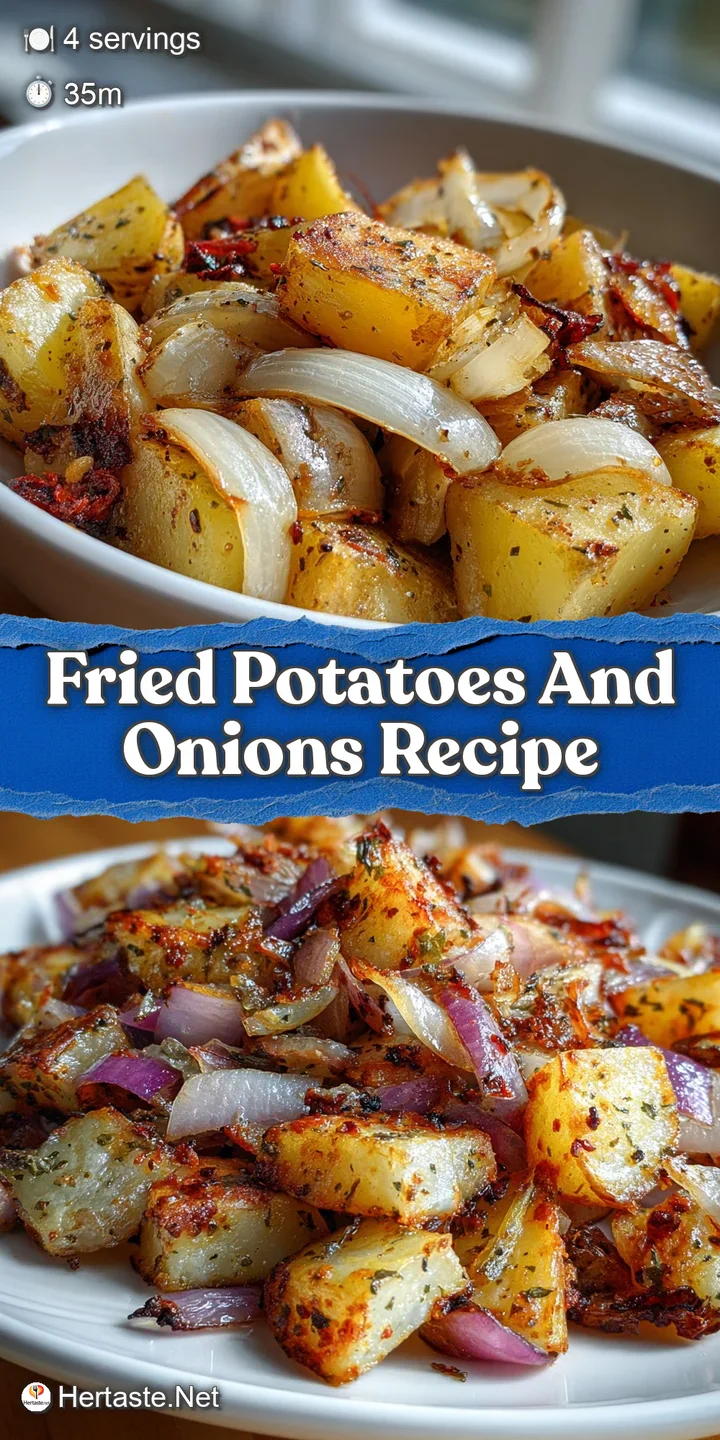
Fried Potatoes and Onions FAQs
Do you fry potatoes or onions first?
Potatoes first. Onions release moisture which can steam the potatoes, preventing them from crisping up properly. Start with the potatoes to build a good sear.
What's the secret to perfect pan-fried potatoes?
Don't overcrowd the pan and let them cook undisturbed. This allows each piece to make good contact with the hot surface, promoting even browning and crisping, similar to the technique in my Classic Colcannon Recipe.
What is the secret ingredient for crispy potatoes?
Proper drying and high heat. After soaking and draining your potatoes, ensure they are completely dry. Then, cook them in a hot skillet with enough oil, letting them sear undisturbed to achieve that signature crunch.
What spices are good for fried potatoes and onions?
Smoked paprika, salt, and pepper are classics. Smoked paprika adds a deep, savory note without the need for bacon. Fine sea salt enhances flavor, and cracked black pepper provides a little pop.
How do I prevent my fried potatoes from being soggy?
Ensure potatoes are thoroughly dry and cook in batches. Moisture is the enemy of crispiness. Overcrowding the pan creates steam, so cook in a single layer, using a second pan if necessary.
Can I use a lid while frying potatoes and onions?
Only briefly, if at all. Keeping a lid on steams the potatoes. It can be used for a few minutes towards the end if your potato slices are thick and you need to ensure they cook through, but it hinders crisping.
How do I get crispy edges on my fried potatoes?
Use a hot skillet and don't stir too often. Allowing the potatoes to sit undisturbed in hot oil is key for developing a crispy crust. For extra crispiness, consider techniques used in making How to Make Crispy Ore-Ida Fries in the Air Fryer: The Ultimate Snack.
Fried Potatoes And Onions
Ingredients:
Instructions:
Nutrition Facts:
| Calories | 341 kcal |
|---|---|
| Protein | 5.2 g |
| Fat | 16.5 g |
| Carbs | 45.2 g |
| Fiber | 5.0 g |
| Sugar | 3.2 g |
| Sodium | 612 mg |
