Baked Potato: the Ultimate Crispy-Skin Pub Classic
- Mastering the Ultimate Baked Potato: Crispy Skin, Fluffy Core
- Selecting Your Spud: Key Ingredients for the Ideal Bake
- From Prep to Plate: Step-by-Step Cooking Method
- The Science of Fluff: Achieving the Ideal Texture Contrast
- Troubleshooting Your Bake: Expert Tips and Avoiding Common Errors
- Handling Leftovers: Storage and Reheating Strategy
- Beyond Butter: Creative Serving Ideas and Topping Pairings
- Recipe FAQs
- 📝 Recipe Card
Mastering the Ultimate Baked Potato: Crispy Skin, Fluffy Core
The smell of a truly perfect Baked Potato is intoxicating. It’s that deep, nutty aroma released when the exterior oil and salt hit 425°F, creating a skin so brittle and savoury it snaps when you press it. Forget soggy, dense spuds.
We are aiming for a cloud like interior cradled by a crunchy, delicious jacket.
This humble Baked Potato recipe is the ultimate lifesaver. It’s incredibly cheap, requires almost zero active cooking, and pairs perfectly with nearly anything you might already have on hand. It was the backbone of my student diet, and honestly, it still saves my sanity on busy weeknights.
But reaching that fluffy nirvana takes technique, not just time. I’m going to share the non-negotiable rules I learned the hard way (usually involving scraping half cooked potatoes off a sheet pan). Trust me, this method guarantees the best Baked Potato you’ve ever had.
Why We Reject the Foil Method for Superior Texture
Listen, if you are wrapping your spuds in foil, you are effectively steaming them. Steaming makes the skin soft, pale, and completely lacks that structural integrity we crave. Foil is only useful if you’re trying to keep the potato warm for hours, but for baking perfection? Get rid of it.
We need direct, dry heat to wick away moisture and create that edible, crispy shell.
The Anatomy of a Perfect 'Jacket Potato'
The British call it a jacket potato, and that's exactly what we are creating: a delicious, substantial jacket. It needs two things: maximum dryness on the surface for the crunch, and rapid steam escape internally for the fluff.
High heat achieves both simultaneously, forcing the starch within to break down into that gorgeous, creamy texture while simultaneously dehydrating the outside skin. This ensures your Baked Potato is perfect every time.
Essential Equipment Check for High Heat Cooking
You don't need fancy tools to make the perfect Baked Potato in oven, but a few basics help tremendously. A reliable baking sheet is essential, even if you are baking directly on the rack (it saves your oven floor from oil drips!).
A simple fork is mandatory for pricking, and a digital thermometer is my secret weapon it eliminates all guesswork about doneness.
Selecting Your Spud: Key Ingredients for the Ideal Bake
The quality of your result is 80% dependent on the starting ingredient. Don't skip the selection process.
Choosing the Best Potato Variety (The Russet Requirement)
For the quintessential light and fluffy Baked Potato , Russets (known as Idaho potatoes in some places) are non-negotiable. They are high in starch and low in moisture. That starch content is exactly what we need to gelatinize and burst open into a powdery, dry fluff when cooked properly.
Low-starch potatoes like Yukon Golds hold too much moisture and tend to come out dense and waxy not what we want for a proper jacket potato.
Preparing the Canvas: The Importance of a Clean and Dry Skin
This is the most critical prep step, so listen closely. Scrub your potatoes aggressively under cold water to remove any lingering dirt or residue. Then, you must dry them. Seriously, dry them until they feel bone dry.
Any surface moisture is going to immediately turn into steam in the oven, sabotaging your crispy skin efforts entirely. I usually leave them sitting on a paper towel for 10 minutes while the oven preheats.
Essential Pantry Staples and Simple Swaps (Oil types, Salt Selection)
We need a neutral, over high heat oil. I use rapeseed (canola) oil because it’s cheap and has a high smoke point. For seasoning, use flaky sea salt the large crystals are fantastic for creating a crunchy, seasoned exterior that adds incredible flavour to the whole Baked Potato .
| Ingredient | My Recommendation | Simple Swap |
|---|---|---|
| Oil | Rapeseed or Canola Oil | Melted bacon fat or vegetable shortening (fantastic flavor!) |
| Salt | Flaky Sea Salt (Maldon) | Kosher salt (use slightly less) |
| Potato | Russet/Idaho | Large Maris Piper (for UK readers) |
From Prep to Plate: step-by-step Cooking Method
Making the best baked potato in oven is easier than you think, but timing is everything.
Prepping the Potatoes: Washing, Pricking, and Scoring
After drying them fully, you need to pierce each potato 6 to 8 times using a fork or skewer. This crucial step prevents the potato from building up steam pressure internally, which could lead to an unfortunate potato explosion (I may have learned this the hard way during a particularly stubborn bake).
Pricking ensures that steam can escape gradually, leading to a much fluffier interior.
The Controversial Start: Par-Boil vs. Direct Dry Bake Technique
I firmly stand in the Direct Dry Bake camp for this ultimate Baked Potato recipe. Par-boiling adds moisture and often results in a soft layer just beneath the skin. We want dry heat penetrating from the outside in.
We start by rubbing the dry skin with a light coat of oil and then seasoning generously with salt.
Chef’s Note: Place the seasoned potatoes directly onto the middle oven rack. Gravity helps the oil coat the skin evenly as it melts. Always place a tray beneath the rack to catch drips!
Achieving Maximum Crispy Skin: The Final over High heat Blast
We use a high baking temperature (425°F/220°C) throughout the cook time. This high heat is the secret to a perfect crispy crust. If you use a lower temperature, the potato cooks before the skin has a chance to dehydrate fully.
If you’re lucky enough to have a convection oven, using the convection setting at 400°F (200°C) is ideal for an even crispier result.
Knowing When It's Done: Testing for Internal Doneness
Doneness is achieved by texture, not just time. When the skin is dark golden brown and feels crisp, gently squeeze the potato using an oven mitt. It should yield easily, feeling soft and ready to burst.
For precision, the ideal internal temperature for a perfectly fluffy centre is 195°F 205°F (90°C 96° C) . Below this, and the starches will feel gluey and dense.
The Science of Fluff: Achieving the Ideal Texture Contrast

The Role of High Heat: Maximizing Steam and Starch Breakdown
The initial over high heat blast forces the water inside the potato to turn into steam very quickly. Since we pricked the skin, this steam vents out, carrying moisture with it and leaving the remaining starch structure airy and dry.
This rapid steam release is the real magic behind the fluffy interior of a great Baked Potato .
Salt and Oil: Creating the Savoury, Edible Crust
The oil conducts the heat right onto the skin, ensuring maximum dehydration. The flaky sea salt then sticks to the oil and becomes incredibly savoury and crunchy it’s not just seasoning; it's texture.
That salty crust makes the skin 100% edible, which is what separates a good bake from a truly outstanding one.
The Importance of the Post Bake Fluffing Technique
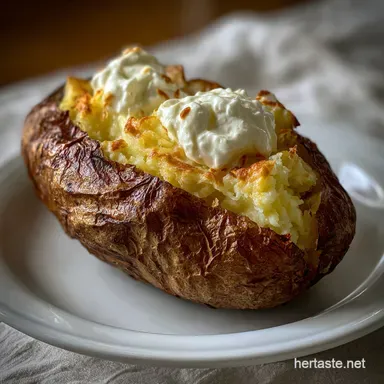
The moment your Baked Potato comes out of the oven, slice it open immediately. Slice lengthwise, but not all the way through the bottom skin. Then, quickly squeeze the ends together, pushing the fluffy flesh up and outward.
This releases the last bit of trapped steam, preventing the interior from settling back down and compacting. It’s mandatory for achieving that incredible, airy fluff.
Troubleshooting Your Bake: Expert Tips and Avoiding Common Errors
Why Is My Potato Skin Soggy? (The Moisture Culprit)
Soggy skin is always caused by moisture. You either didn't dry the potato properly before oiling, or you wrapped it in foil. You must reject the foil, friend! If the skin starts to soften mid-bake, it might also mean you crowded the oven, trapping steam. Give those potatoes space!
How to Adjust Baking Time for Different Potato Sizes
If you have a massive Russet (the size of your fist), it will definitely need longer closer to 90 minutes at 425°F. For average, uniform potatoes (about 10 oz each), stick to the 75 minute window.
Always choose potatoes that are roughly the same size so they finish baking simultaneously.
Handling Leftovers: Storage and Reheating Strategy
Safe Storage Guidelines for Cooked Potatoes
Cooked potatoes must be handled carefully. Once they cool, the cooked flesh can harbor bacteria if left at room temperature. Always cool your leftover Baked Potato rapidly and transfer it to an airtight container in the fridge within two hours of baking. They keep safely for 3 4 days.
Reheating to Preserve the Crisp
The biggest challenge with reheating is keeping the skin crispy. Do not microwave them! The microwave will turn that glorious crust into a mushy disappointment.
Reheat them in a 400°F (200°C) oven, directly on the rack, for about 15– 20 minutes until the interior is hot and the skin re-crisps.
Beyond Butter: Creative Serving Ideas and Topping Pairings
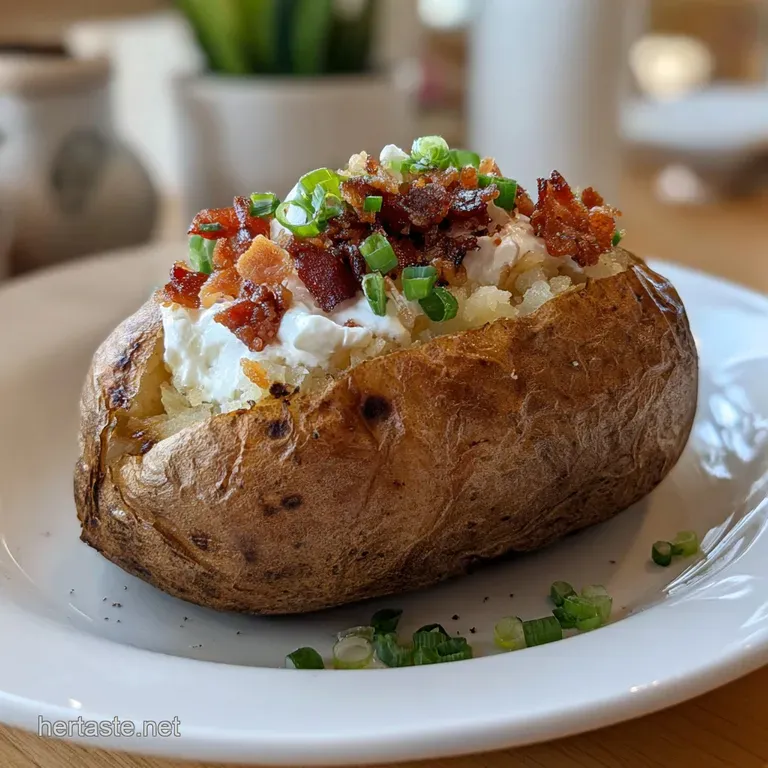
The classic Cheddar and sour cream is divine, but the sturdy, crispy nature of this Baked Potato makes it the perfect vehicle for heavier toppings.
Serve your ultimate Baked Potato alongside a flavourful protein, like my easy Baked Mustard Garlic Salmon with Honey Mustard Sau Easy 30 Min Dinner for a hearty, balanced meal. Or, if you’re planning a bigger feast, it’s a brilliant side for my Oven Baked Chicken Thighs: The Ultimate Crispy Skinned Recipe .
Here are some topping ideas I swear by:
- Pub Standard: Baked beans, grated Mature Cheddar, and maybe a dash of Worcestershire sauce.
- The Chili Boat: Loaded with rich beef chilli, shredded cheese, and a dollop of Greek yogurt or crème fraîche.
- Mediterranean: Pesto, sun-dried tomatoes, and crumbled feta cheese.
- Smoky Comfort: Cream cheese, crispy smoked paprika bacon bits, and finely chopped green onions.
Making the perfect Baked Potato really comes down to respecting the starch and managing the moisture. Follow these steps dry skin, high heat, and immediate fluffing and you'll never settle for a dense, pale potato again. Go forth and bake the best jacket potato!

Recipe FAQs
Why is the skin of my baked potato tough instead of crispy and flaky?
Lack of crispiness is usually due to moisture. Ensure you pat the potatoes completely dry before applying the oil and salt, and critically, do not crowd them on the baking sheet, as this traps steam. Using a rack within the baking tray can also promote air circulation, ensuring even, dry heat application.
Should I wrap my baked potato in aluminum foil?
No, avoid foil if your goal is the ultimate crispy skin and fluffy interior. Foil traps the steam released during baking, which effectively steams the potato skin soft, resulting in a soggy exterior. For a superior result, always use high, dry heat applied directly to the seasoned potato exterior.
Why is the inside of my potato dense or gummy instead of light and fluffy?
This often happens if the potato is baked at too low a temperature or for too long, causing the starch granules to over gelatinize. Use a high heat (400 425°F) and pierce the cooked potato immediately after removing it from the oven, which allows the trapped steam to escape and fluffs the interior flesh.
Can I par-cook the potato in the microwave to save oven time?
You can par-cook them in the microwave for about 5 to 7 minutes to slightly reduce the total baking time, perhaps by 15 to 20 minutes. However, finishing them entirely in the hot oven is mandatory, as this prolonged dry heat is the specific step that dehydrates and crisps the skin.
What type of potato is best for a proper baked potato?
The optimal choice is a high starch, low-moisture potato like a Russet (or Idaho) because their cellular structure breaks down perfectly when baked, yielding the fluffiest interiors.
Waxy potatoes, such as new potatoes or Red Bliss, hold their structure too well and result in a denser, less airy texture when baked whole.
Is it safe to store leftover baked potatoes, and how should I reheat them?
Leftover baked potatoes must be refrigerated immediately, ideally within two hours, as they are a high risk for botulism if left at room temperature for extended periods. To reheat, brush the skin lightly with oil and bake at 350°F (175°C) until thoroughly hot, or you can scoop out the flesh and microwave it safely.
Should I prick the potato before putting it in the oven, and why?
Yes, you must prick the potato deeply several times with a fork or skewer before baking. This crucial step allows internal steam to escape safely during the high heat process. Skipping this step risks internal pressure buildup, which can cause the potato to potentially burst in your oven.
Crispy Skin Baked Potato Recipe
Ingredients:
Instructions:
Nutrition Facts:
| Calories | 676 kcal |
|---|---|
| Protein | 37.3 g |
| Fat | 47.0 g |
| Carbs | 26.2 g |
