The Golden Spoonful Perfectly Creamy Baked Corn Pudding
- Elevating the Humble Side Dish: Why This Corn Pudding Reigns Supreme
- Unlocking the Secret to Spoonable Custard Texture
- Assembling Your Golden Components: Essential Ingredients Checklist
- The Tools of the Trade: Equipment Needed for Flawless Results
- The Step-by-Step Journey to Sublime Baked Corn Pudding
- Baking for Perfection: Temperature Control and Doneness Cues
- Storing Leftovers: Keeping Your Corn Pudding Fresh for Days
- Creative Twists and Flavor Enhancements for Next Time
- Nutritional Snapshot: Understanding What You're Serving
- Recipe FAQs
- 📝 Recipe Card
Elevating the Humble Side Dish: Why This Corn Pudding Reigns Supreme
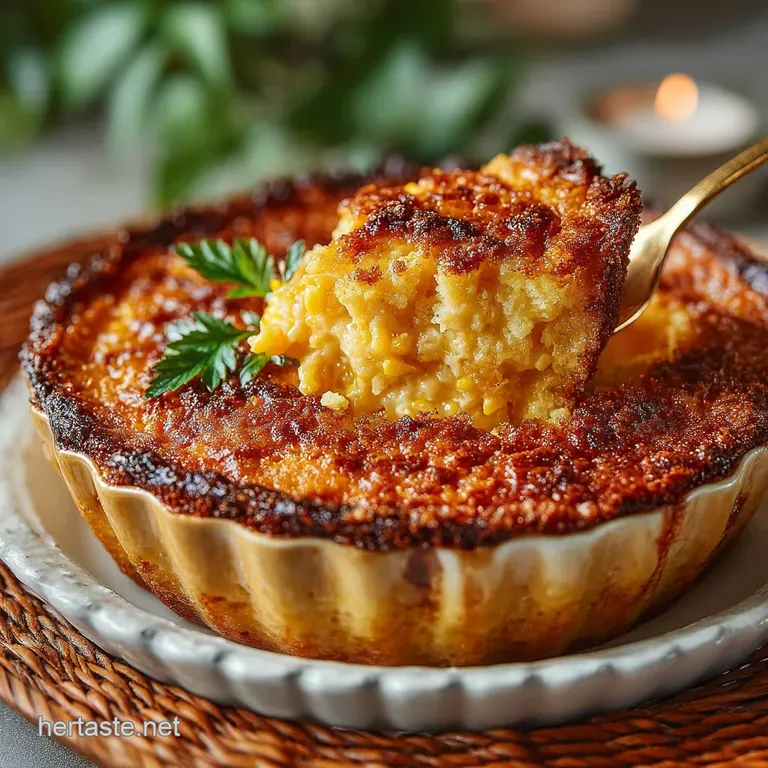
There are certain dishes that, upon their arrival at the table, signal immediate comfort and celebration. This Corn Pudding is unequivocally one of them. Forget any memories you might have of dry, overly sweet, or crumbly baked squares; this recipe is engineered for sheer decadence.
We are aiming for a dish that is simultaneously light and airy in its structure, yet profoundly rich, almost custardy, on the palate. It’s the quintessential Southern side dish, expertly translated for the modern kitchen, delivering an Ultimate Comfort Food Corn Pudding experience that complements everything from a Sunday roast to casual weeknight grilling.
This Creamy Corn Pudding Recipe proves that simple ingredients, treated with respect, can yield truly spectacular results.
Unlocking the Secret to Spoonable Custard Texture
The difference between a memorable Corn Pudding Casserole and a disappointing one lies entirely in the texture. A great pudding should barely hold its shape when spooned onto a plate, it should tremble slightly and melt away in your mouth.
Achieving this requires understanding the balance between the liquid dairy, the binding eggs, and the incorporation of diverse corn textures. We deliberately avoid common shortcuts like relying solely on a Jiffy Corn Pudding Recipe base, opting instead for fresh, whole ingredients to build a truly authentic structure.
Beyond the Crumble: Defining Truly Superior Corn Pudding
The common pitfall for many home bakers attempting this dish is achieving too much cake-like structure. That's usually the result of too much flour or over-baking. In our approach, the flour acts less as a primary structure builder and more as a stabilizer for the rich custard.
When measuring your All-Purpose Flour , ensure you spoon it lightly into the measuring cup and level it off; packing it in will introduce too much gluten structure, leading directly to that undesirable, dry crumble.
The Golden Ratio: Achieving Perfect Sweet and Savory Balance
This Easy Corn Pudding Recipe thrives on nuance. While corn is naturally sweet, we temper that sweetness with a necessary dose of salt (a full teaspoon is key here) and rich dairy.
The quarter cup of granulated sugar provides just enough lift to enhance the corn’s natural sugars without pushing the dish into dessert territory. This careful calibration ensures the resulting bake is savoury enough to stand proudly next to rich meats, yet sweet enough to feel like a special treat.
It’s this precise balance that makes it the perfect accompaniment for a Hearty Corn Casserole vibe.
Why Fresh Corn Makes All the Difference in This Classic
While convenience is tempting, for the very best flavor profile, utilizing actual kernels is paramount. If you are making this during peak season, this Corn Pudding with Fresh Corn shines brightest.
Fresh kernels provide a burst of clean, vibrant sweetness and a satisfying pop when chewed, contrasting beautifully with the smooth custard base. If fresh isn't available, high-quality frozen kernels work excellently; simply avoid fully thawing them before mixing to prevent excess water from diluting the custard.
Assembling Your Golden Components: Essential Ingredients Checklist
To create this exceptional bake, we bring together a mix of rich liquids, sturdy binders, and, crucially, two distinct forms of corn. For 8 generous servings, you will require 3 large eggs, whole milk (a full cup), and half a cup of heavy cream to ensure that luxurious mouthfeel.
We combine these with 4 tablespoons of melted, unsalted butter, which not only adds flavour but also helps create that tender internal crumb. The dry components are simple: 1/4 cup of all-purpose flour, 1 teaspoon of salt, 1/4 teaspoon of freshly ground black pepper, and 1/4 cup of granulated sugar.
The textural magic comes from two cups of whole sweet corn kernels (fresh or frozen) paired with one full 14.75-ounce can of undrained creamed corn. This dual-corn approach is the secret weapon in building depth in a Corn Pudding without Jiffy Mix .
The Tools of the Trade: Equipment Needed for Flawless Results
Fortunately, this recipe doesn't demand specialized equipment. You’ll need a sturdy 9-inch square baking dish, or a similar volume casserole dish, to ensure even cooking. A large mixing bowl and a reliable whisk are essential for combining the liquids and dry components smoothly.
Finally, a flexible rubber spatula is indispensable for gently folding in the delicate corn kernels without breaking them up, preserving that lovely texture.
Dairy Decisions: Selecting the Right Milk and Butter for Richness
In a dish relying so heavily on a custard base, the fat content matters immensely. We insist on using whole milk and heavy cream . Skim or low-fat alternatives simply do not provide the necessary richness or structure; the fat content is vital for ensuring the final product sets into a creamy, velvety texture rather than becoming rubbery.
Likewise, using unsalted butter allows you full control over the final seasoning.
Fresh Kernels vs. Creamed Magic: Utilizing Dual Corn Textures
The combination of whole kernels and the pre-pulped creamed corn creates textural complexity. The whole kernels provide those satisfying little bursts of sweetness, while the creamed corn melts into the custard, reinforcing the overall corn flavour and contributing to the pudding's inherent moisture.
If you are trying to replicate the density of a Jiffy Corn Pudding Recipe but with superior flavour, this combination is your best route.
The Binder Breakdown: Mastering Eggs and Flour/Starch Ratios
The eggs are the primary setting agent, forming the custard matrix when baked. We use three large eggs, lightly beaten, to distribute the richness evenly. The small amount of flour serves to slightly tighten this custard, preventing it from being too runny, especially important when aiming for a Weeknight Corn Pudding Recipe that needs to hold up well to slicing.
We mix the flour thoroughly with the dry ingredients first to help prevent lumps before introducing it to the liquids.
Related Recipes Worth Trying
- Best Bread Pudding Recipe with Whiskey Sauce Ultimate Comfort Dessert — Ditch the dry cubes This easy Bread Pudding Recipe creates a rich custardy classic served with a silky Whiskey Crème Anglaise Your new favourite stepbystep...
- The Best Bread Pudding Recipe with Warm Vanilla Sauce — Whip up Grandmas Classic Bread Pudding with Vanilla Saucea rich custardy bake perfect for using up stale bread This Old Fashioned Bread Pudding Recipe is...
- Best Brioche Bread Pudding with Salted Caramel Sauce Recipe — Transform your weekend with this incredible Brioche Bread Pudding Recipe Easy to make drenched in bourbon caramel Seriously the best brioche bread pudding...
The step-by-step Journey to Sublime Baked Corn Pudding
Getting this fantastic side ready takes about 20 minutes of active preparation time. Begin by setting your oven to 350° F ( 175° C) and thoroughly buttering your 9-inch baking dish, a crucial step for easy serving later.
Mise en Place: Prepping Wet and Dry Mixes Separately
In your large bowl, whisk together the melted butter, whole milk, heavy cream, and the lightly beaten eggs until they form a smooth, pale yellow liquid. In a separate, smaller container, whisk together the sugar, flour, salt, and pepper. Slowly sprinkle the dry mixture into the wet mixture while whisking constantly.
This staged approach ensures the flour is fully hydrated and dissolves smoothly into the dairy, preventing those frustrating dry pockets of flour in the finished bake.
The Gentle Fold: Incorporating Meringue or Whipped Whites (If applicable) Without Deflating
Since this specific recipe relies on the inherent structure provided by the eggs and minimal flour, we skip the step of separating and whipping the whites, which simplifies the process significantly for an Easy Corn Pudding Recipe . Instead, we move directly to incorporating the corn.
Use your rubber spatula for this final step. Gently fold in the 2 cups of whole corn kernels and the entire can of creamed corn. Mix just until you no longer see streaks of dry batter. Over-mixing at this stage can toughen the final texture.
Pour and Bake: The Final Transition
Transfer the entire mixture into your prepared, buttered baking dish. The batter will look quite liquid, which is precisely what we want for a smooth result. It should fill the dish to about two-thirds capacity.
Baking for Perfection: Temperature Control and Doneness Cues
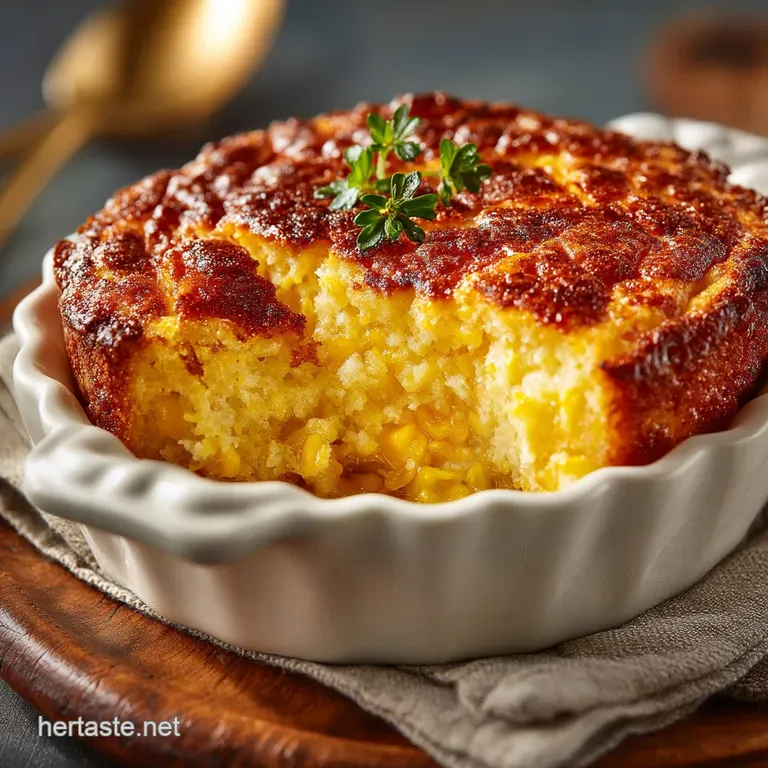
Baking time for this Corn Pudding Casserole typically spans 50 to 60 minutes at 350° F ( 175° C). The key to success isn't just the time, but recognizing the visual cues of a perfectly set custard.
Achieving the Set: How Long to Rest After Leaving the Oven
You are looking for a top crust that is beautifully golden brown, with the edges visibly set and slightly pulling away from the sides of the dish. When gently nudged, the centre should have a slight, yet distinct, wobble, it should not slosh.
Crucially, do not be tempted to keep baking until the centre is completely firm; it will continue to set as it cools. Allow the pudding to rest on a wire rack for a minimum of 10 minutes after removing it from the oven.
This resting period allows the internal temperature to equalize and solidifies the custard structure, making it much easier to serve cleanly.
Storing Leftovers: Keeping Your Corn Pudding Fresh for Days
Any leftovers of this Hearty Corn Casserole store beautifully, making it a fantastic make-ahead option. Once completely cooled, cover the baking dish tightly with plastic wrap or transfer individual portions to airtight containers. Refrigerated, the pudding will keep well for up to four days.
Reheating is best done gently in a low oven (around 325° F or 160° C) covered loosely with foil until warmed through, or briefly microwaved for faster serving.
Creative Twists and Flavor Enhancements for Next Time
While the basic recipe is sublime, experimentation is encouraged! To add depth to your next batch, consider incorporating savoury elements. A small addition of sharp white cheddar melted into the base, or perhaps some finely diced sautéed shallots, can offer a sophisticated counterpoint to the sweetness.
This recipe structure is robust enough to handle flavour additions without collapsing.
Spice It Up: Integrating Savory Herbs or a Touch of Heat
For an unexpected twist, fold in a teaspoon of finely minced fresh rosemary or thyme along with the corn. If you prefer a mild warmth, a dash of smoked paprika elevates the colour and adds a subtle, smoky depth that works wonderfully with the baked corn flavour.
Troubleshooting Common Baking Issues in Your Pudding
If your pudding sets too quickly or seems dry, the most common culprit is over-baking or inaccurate oven temperature. Always trust the "slight wobble" test over a rigid timer. If you find your pudding is too soft even after resting, it usually means the ratio of wet ingredients to eggs was slightly off.
Next time, ensure your eggs are large and that you are using the specified amount of flour to stabilize that luxurious custard.
Nutritional Snapshot: Understanding What You're Serving
As an Ultimate Comfort Food Corn Pudding , this dish naturally leans towards being richer, primarily due to the whole milk, heavy cream, and butter required for its signature texture.
Per serving, you can expect approximately 280 to 310 calories, with a moderate fat content derived from the dairy. It offers a good source of carbohydrates from the corn and a modest protein contribution from the eggs. It is important to note that this version contains gluten due to the use of all-purpose flour.
Freezing Facts: Can This Custard Handle the Deep Freeze?
While it stores well in the refrigerator, freezing is generally not recommended for this specific custard-style pudding. The high dairy and egg content can sometimes lead to a slightly grainy or weeping texture upon thawing, though individual results vary.
If you must freeze it, ensure it is tightly wrapped and consume within one month for the best quality preservation.
Serving Suggestions
This Creamy Corn Pudding Recipe is remarkably versatile. It shines brightest when served alongside hearty holiday fare like glazed ham or turkey. However, it also serves beautifully as a standalone vegetarian side dish, perhaps drizzled with a whisper of high-quality maple syrup if you desire a sweeter finish, or balanced by a tart cranberry relish.
Recipe FAQs
My Corn Pudding always comes out a bit soggy in the middle; what am I doing wrong?
That’s a common sticking point! It usually means you’re either underbaking or your ratio of liquid to solids is slightly off. Make sure your oven is properly preheated to 350°F (175°C) and resist the temptation to peek too early; it needs the full 50-60 minutes.
The key is the 'jiggle test', the edges should be firm, and the centre should only have a slight, gentle wobble, not a slosh.
Can I make this creamy Corn Pudding ahead of time, or does it need to be baked fresh?
You've got options! You can certainly prepare the batter completely (steps 1 through 4) and store it covered in the fridge for up to 24 hours, this actually lets the flour hydrate nicely. When ready to bake, let it sit on the counter for 30 minutes to take the chill off, then proceed with baking as directed.
It freezes beautifully too, once baked, for up to three months.
I don't have fresh corn; can I just use frozen or canned whole kernel corn for this recipe?
Absolutely, this recipe is robust enough for substitutions! If using frozen, use them straight from the freezer without thawing, as this helps keep the batter temperature stable. If you only have canned whole kernels, drain them well before adding them to the batter.
The mix of canned creamed corn and whole kernels is what gives us that brilliant texture, so don’t skip the creamed portion!
Is this Corn Pudding recipe suitable for vegetarians, and what's the best way to make it richer?
Good news: as written, this recipe is perfectly fine for ovo-lacto vegetarians since it uses eggs and dairy. To make it truly decadent, swap the whole milk for evaporated milk, or consider substituting half of the heavy cream with crème fraîche for a slight tang and supreme richness.
A sprinkle of sharp cheddar grated into the batter before baking adds a lovely savoury depth, too.
How do I stop the edges from burning before the centre of the pudding is set?
If your oven runs hot or your dish is particularly shallow, this can happen. A clever trick is to use a water bath, often called a 'bain-marie,' which is essential for delicate custards.
Place your baking dish inside a larger roasting pan, and pour boiling water into the roasting pan until it comes halfway up the sides of the pudding dish. This steam cooks the pudding gently and evenly, it’s foolproof!
The Golden Spoonful Perfectly Creamy Baked Corn Pudding Recipe