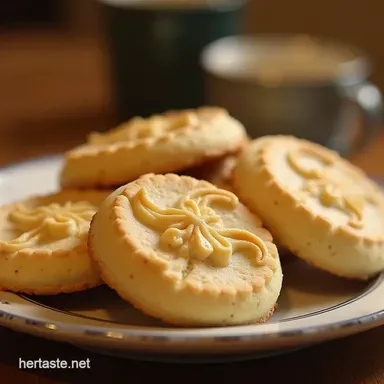
The Ultimate Buttery Bliss Classic Shortbread Cookies
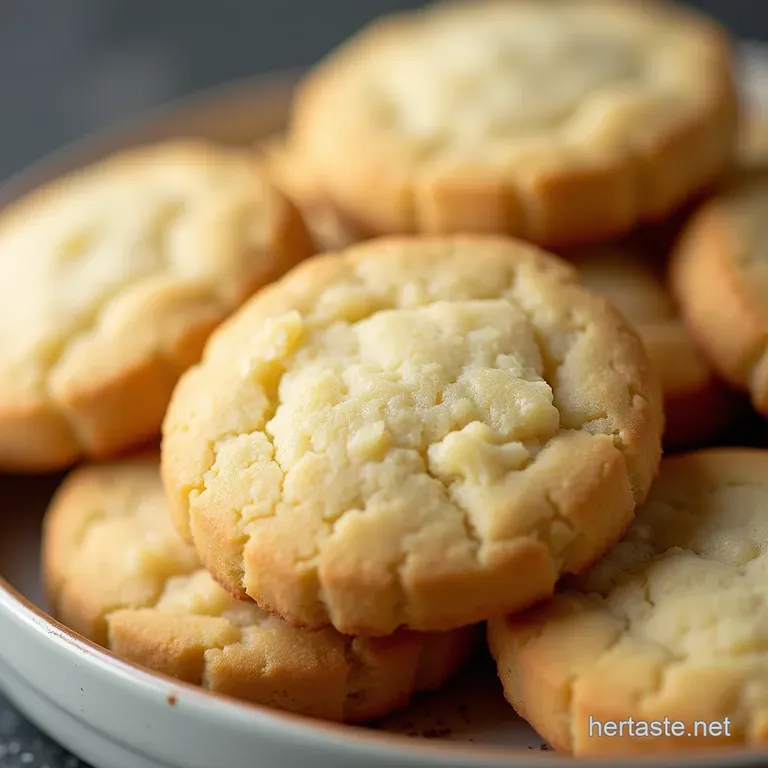
- Unlocking the Magic of Traditional Scottish Shortbread Cookies
- Assembling Your Buttery Foundation for the Best Bake
- Step-by-Step Guide: Crafting Your Dough
- Baking Science: Achieving the Ideal Golden Hue
- Extending the Enjoyment: Storage Secrets for Shortbread Cookies
- Elevating Your Classic Bake: Flavor Twists and Enhancements
- Recipe FAQs
- 📝 Recipe Card
Unlocking the Magic of Traditional Scottish Shortbread Cookies
Ah, shortbread. This Scottish icon is the epitome of elegant simplicity. Made traditionally with just butter, sugar, and flour, we are focusing on achieving that perfect sandy yet melt-in-your-mouth texture. Our version concentrates on maximizing the flavour of quality butter, yielding crisp edges and a tender centre.
Forget fancy additions; this is pure, unadulterated biscuit heaven, perfect for dunking in a cuppa. This Shortbread Cookies Recipe Easy approach proves that complex flavour doesn't require complex steps.
Why This Recipe Guarantees Crumbly Perfection
The secret to truly exceptional Buttery Shortbread Cookies lies entirely in the ratio and the handling of the ingredients. We are aiming for "short" texture, meaning the fat coats the flour particles so thoroughly that minimal gluten develops, resulting in that characteristic crumble.
Since this recipe relies on only four foundational components, the quality of the butter cannot be overstated. We opt for the traditional 1:2:3 ratio by weight (Sugar:Butter:Flour), but we are using US volume measurements here which translates beautifully into a robust, yet tender, bake.
Because we skip the egg, these become wonderfully accessible Egg Free Cookies , ensuring a cleaner, purer butter flavour shines through.
A Taste of Heritage: The Classic Bake Story
Shortbread traces its roots back to the 12th century in Scotland, initially evolving from expensive honey-sweetened oatcakes into the butter-rich delight we cherish today as the quintessential Biscuit Cookies Recipe .
Historically, these rich treats were reserved for special occasions, weddings, and, of course, Christmas Baking Cookies traditions, symbolizing wealth due to the high cost of butter and sugar.
Our dedication to the simple formula honors that long tradition, providing a timeless taste experience with minimal fuss.
Setting Expectations: What Makes True Shortbread?
True shortbread is recognizable by its pale, matte appearance and its immediate disintegration upon biting. It should never be chewy or overly crisp like a snap cookie. The bake time is intentionally brief to preserve this paleness; we are aiming for barely-there golden edges, not deep caramelization.
This patience during baking is what separates a good cookie from a truly stellar batch of Shortbread Cookies .
Assembling Your Buttery Foundation for the Best Bake
Before we dive into the mixing process, gathering your components correctly is half the battle won. For this foundation recipe, you will need 2 cups (250g) of all-purpose flour, 1/2 cup (100g) of fine granulated sugar, 1 cup (227g or two standard sticks) of unsalted butter, and just 1/4 teaspoon of fine sea salt to enhance the richness.
Selecting Your Key Components: Butter, Flour, and Sweetener
The star here is undeniably the butter. Use the highest quality unsalted butter you can find; since it constitutes almost 40% of the final product by weight, its flavour profile dictates the entire cookie.
For the flour, standard all-purpose works perfectly, providing enough structure without adding excess protein that could lead to chewiness. While caster sugar is often recommended for its fine grain, regular granulated sugar blends adequately when chilled correctly.
If you plan to decorate later with Shortbread Cookies with Icing , using a slightly finer sugar in the dough helps create a smoother surface canvas.
The Critical Role of Ingredient Temperature
For this specific technique, the temperature of your butter is paramount. Unlike chocolate chip cookies where softened butter is necessary for aeration, we need cold butter cubes, straight from the refrigerator, for classic shortbread.
Cold butter ensures that when it mixes with the flour, it creates small, distinct pockets. During baking, these cold pockets melt and create steam, physically separating the flour particles and giving you that desirable sandy, melt-in-your-mouth crumb structure.
If your butter is too warm, the dough will turn greasy and the final cookies will spread and be dense rather than crumbly.
Tools to Master the Traditional Shortbread Shape
While you can certainly use a simple rolling pin and a sharp knife to cut squares, traditionalists often prefer circular or decorative cutters. Ensure your baking sheets are lined with parchment paper to prevent sticking, which is crucial since these Easy Cookies lack chemical leaveners to help them lift away from the pan.
A stand mixer with a paddle attachment makes incorporating the cold butter easier, but robust mixing by hand works perfectly well too, provided you move quickly.
Step-by-step Guide: Crafting Your Dough
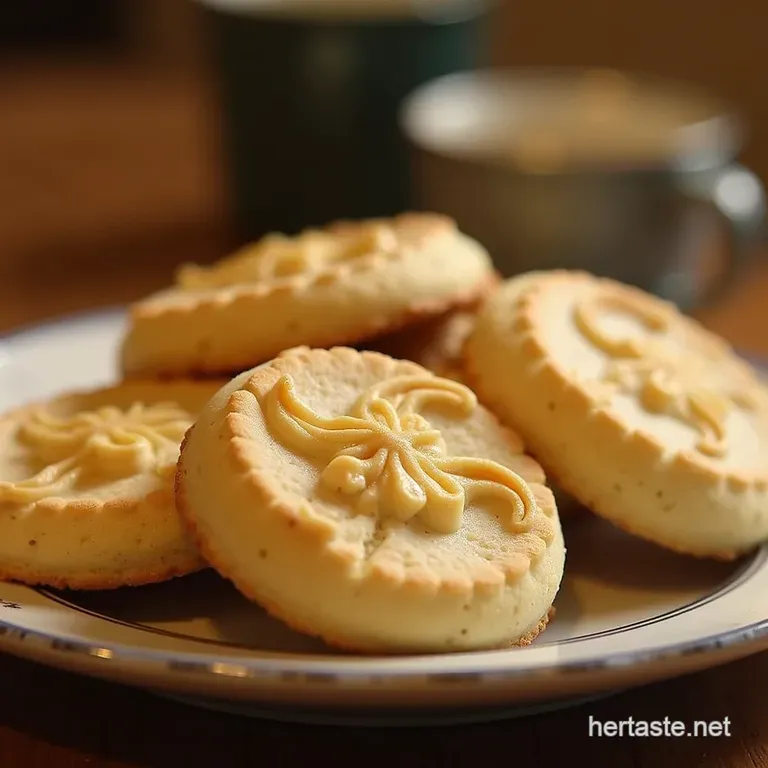
We begin by uniting the dry ingredients: whisking together the 2 cups of flour, the 1/2 cup of sugar, and the 1/4 teaspoon of salt in a large mixing bowl. This distributes the salt evenly and begins to aerate the flour slightly. Next, introduce the cold butter, which you should have cubed into roughly 1-inch pieces.
Using the paddle attachment on low speed, or your fingertips, cut the butter into the dry mix. The goal here is texture refinement, not creaming. You are aiming for a coarse meal consistency, where the mixture resembles wet sand, with some butter pieces still visible, pea-sized chunks are fine.
As soon as the mix comes together when pressed, cease mixing. Quickly gather this mixture and press it firmly into a thick disc, wrap it tightly in plastic wrap, and immediately transfer it to the refrigerator.
This chilling phase requires a minimum of 45 minutes, though an hour is better, ensuring the fat is rock-solid before rolling.
Related Recipes Worth Trying
- The Ultimate Brown Butter Sea Salt Chocolate Chunk Cookies Recipe — Forget ordinary cookies This golden brown butter recipe delivers chewy centres and crisp edges The perfect easy chocolate chip cookies upgrade
- Easy Irresistible Cinnamon Roll Cookies Recipe Chewy Swirls Cream Cheese Glaze — Skip the yeast and the faff These fast chewy Irresistible Cinnamon Roll Cookies Recipe are easy to make featuring a perfect cinnamon swirl and tangy cream...
- Felixs Flourless Chocolate Chunk Cookies Stray Kids Recipe — Obsessed with Stray Kids Get Felixs Fantabulous Flourless Chocolate Chunk Cookie Recipe Chewy dark chocolatey goodness An easy dessert youll love Get baking
Baking Science: Achieving the Ideal Golden Hue
Once your dough is perfectly chilled, the transformation from cold fat to warm oven heat begins the magic. Preheat your oven to a gentle 325° F ( 160° C). Lightly flour your work surface and roll the dough out evenly to about 1/4 to 3/8 of an inch thick.
Thicker cookies will require slightly longer baking times. Use your cutters to stamp out your shapes, carefully placing them onto the parchment-lined baking sheets, allowing a little space between them. Before baking, take a fork and traditionally "dock" each cookie, prick it two to three times on the surface.
Mixing Technique: Avoiding Overworking the Dough
As mentioned, this step is key to successful Shortbread Cookies . If you mix the dough until it becomes smooth and uniform in the mixer, you’ve already developed too much gluten. That gluten development leads to resilience and chewiness.
We want the flour to remain short and tender, which is why we stop mixing the moment the mixture begins to hold together, even if it looks a little shaggy. The friction of kneading or over-mixing warms the butter prematurely, leading to flat, oily results instead of thick, tender rounds.
Chilling Strategies for Optimal Texture
The required chill time serves two main purposes: it solidifies the butter, preventing spread, and it allows the flour to fully hydrate without requiring excess mixing energy. If you find your dough cracks excessively when you attempt to roll it out after chilling, let it sit on the counter for just five minutes to soften minimally, then gently re-form it into a disc before attempting to roll again.
This chilling time is what guarantees a clean cut and firm shape that holds beautifully through the oven's heat.
Scoring and Baking Timing for Flawless Results
Bake the cookies for 12 to 15 minutes. Watch them closely! The visual indicator of doneness is not a deep brown colour, but rather the very faintest hint of golden colour touching the edges. The centre of your Shortbread Cookies should remain pale.
Overbaking robs them of their characteristic buttery flavour and turns them brittle rather than crumbly.
Extending the Enjoyment: Storage Secrets for Shortbread Cookies
The beauty of a pure, Egg Free Cookies recipe is its exceptional shelf stability, provided they are stored correctly.
How Long Will These Biscuits Last at Peak Freshness?
When stored in an airtight container at cool room temperature, these classic Shortbread Cookies will maintain their peak texture and flavour for up to one week. If you plan to bake ahead for the holidays, they can be frozen, un-iced, for up to three months.
For the best texture retention, ensure they are completely cooled before placing them into the storage container, warm cookies release steam, leading to sogginess.
Troubleshooting Common Baking Hiccups
If your cookies spread significantly, it almost certainly means your butter was too warm when mixing or the dough wasn't chilled long enough. If your cookies are overly tough, you have overworked the dough during the initial combining stage.
For a Shortbread Cookies Recipe Easy fix next time, remember to use only cold butter and mix only until just combined.
Creative Infusions to Personalize Your Batch
While the classic four ingredients are divine, shortbread is a wonderful base for simple flavour additions. If you are looking to create Shortbread Cookies with Jam , leave the cookies plain, bake them as usual, and once cooled, sandwich two rounds together with a high-quality raspberry or apricot preserve.
Alternatively, for a slightly savory note, consider substituting 1/4 cup of the flour with finely chopped rosemary. You could also try a light dusting of powdered sugar mixed with cinnamon once cooled, as a simple alternative to full Shortbread Cookies with Icing .
Nutritional Snapshot of This Beloved Treat
It is important to note that due to the high butter content essential for texture, shortbread is inherently rich. A single cookie clocks in around 180-200 calories, primarily derived from fat and carbohydrates, meaning these are truly meant to be savoured as an occasional, comforting indulgence rather than an everyday staple.
Elevating Your Classic Bake: Flavor Twists and Enhancements
For those who love to customize their holiday bakes, shortbread accepts light flavour additions beautifully.
Creative Infusions to Personalize Your Batch
For a luxurious twist, consider folding in 1/2 cup of finely chopped nuts like pecans or walnuts near the end of the mixing process. If you prefer citrus notes, 1 teaspoon of finely grated lemon zest integrated with the sugar before the butter is added provides a bright counterpoint to the richness.
If you are preparing these as special Christmas Baking Cookies , a dash of almond extract (about 1/2 teaspoon) replaces some of the vanilla notes often added to other Easy Cookies , giving them a distinctly festive, nutty aroma without adding actual nuts.
These enhancements transform the humble biscuit without compromising its fundamental structural integrity.
Recipe FAQs
Why are my Shortbread Cookies spreading out like a flat pancake in the oven?
This is almost always down to two things: the butter was too soft, or you didn't chill the dough long enough. Shortbread relies on keeping the butter cold so it doesn't melt too fast upon entering the oven.
Make sure your butter is genuinely cold and let the dough rest in the fridge for that full 45 minutes, it’s worth the wait!
Can I use salted butter instead of unsalted butter for these Shortbread Cookies?
You certainly can, but you'll need to adjust the added salt. Since the recipe calls for 1/4 teaspoon of salt, skip adding it entirely if you use salted butter. If you use heavily salted butter, you might even reduce the natural saltiness a bit more to keep the flavour balanced.
How should I store my homemade shortbread to keep it fresh and crumbly?
Shortbread keeps brilliantly well, which is rather handy! Store the completely cooled cookies in an airtight tin or container at room temperature. They should last a good week, sometimes two, without losing much flavour. Just avoid storing them near anything too pungent, like onions, as they can absorb odours.
My dough is very crumbly and won't come together into a nice ball, what am I doing wrong?
Don't panic; that slightly crumbly texture is almost the definition of shortbread dough! The trick is to use the warmth of your hands to gently press it together once you've brought the mixer as far as it will go.
Avoid adding extra liquid; just give it a firm, quick squash into a disc before chilling; that firmness will hold it together when you roll it out later.
Can I flavour my shortbread beyond the classic taste? What are some easy variations?
Absolutely, shortbread is a fabulous blank canvas! For simple flavour boosts, try whisking in a teaspoon of vanilla extract with the dry ingredients, or adding citrus zest (lemon or orange) for a bright lift. You could also swap out a quarter of the flour for finely ground nuts like almonds for a richer texture.
Easy Buttery Shortbread Cookies Recipe MeltinYourMouth Bliss