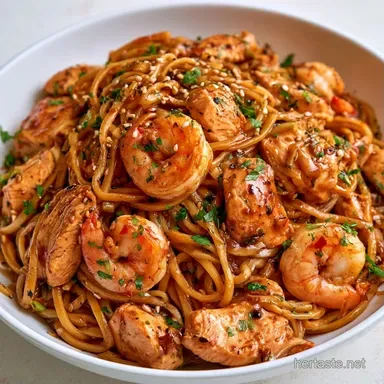
Chicken Shrimp Stir-Fry Noodles in 30 Minutes
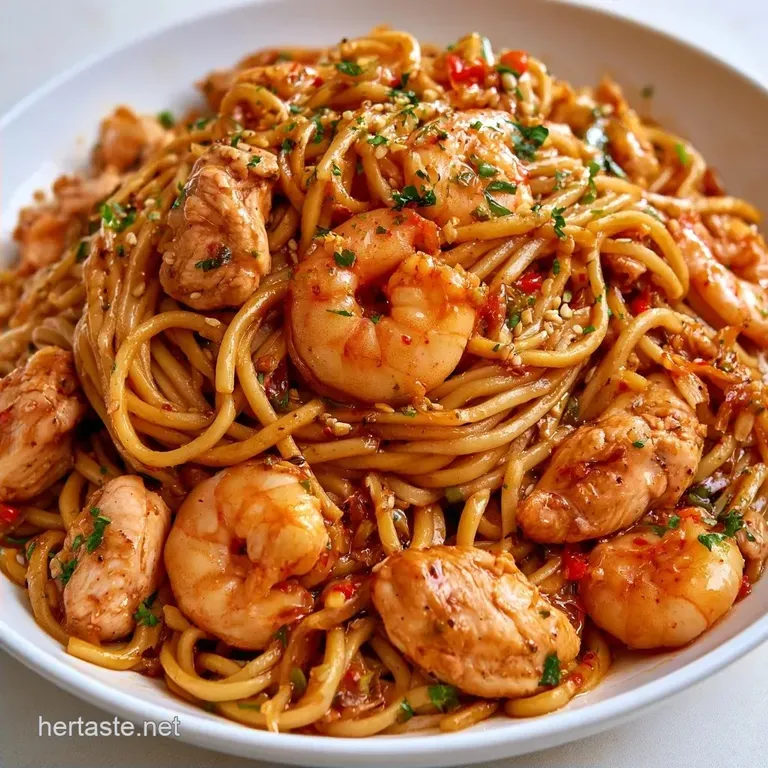
- Time: 15 min active + 15 min cooking
- Flavor & Texture: Savory, glossy, and vibrant
- Perfect for: Busy weeknight dinner
Chicken Shrimp Stir-Fry Noodles
Hear that sizzle? That's the sound of a dinner that doesn't take all night. The goal here is a glossy coating on every strand of noodle and proteins that actually brown instead of steaming in their own juices.
A common belief is that you need a professional high heat burner to get a proper sear, but a regular home stove works just fine. The trick is not crowding the pan. When you add too much at once, the temperature drops, and you end up with boiled meat instead of a golden crust.
This Chicken Shrimp Stir-Fry Noodles dish balances the richness of oyster sauce with the bite of fresh ginger. It is a fast, flavor-packed meal that hits the spot when you are starving but short on time.
Key Techniques Explained
- Cornstarch Coating: Tossing chicken in a bit of cornstarch creates a barrier that keeps the meat juicy while helping the sauce cling to it.
- Under-boiling Noodles: Cooking noodles for one minute less than the box says prevents them from turning into mush when they hit the hot wok.
- Sequential Searing: Cooking the chicken and shrimp separately ensures each reaches the right temperature without overcooking the other.
Why These Ingredients Work
| Component | Purpose | Substitute Notes |
|---|---|---|
| Oyster Sauce | Adds savory depth and thickness | Hoisin sauce works, but it is sweeter |
| Cornstarch | Thickens the sauce and tenders meat | Arrowroot powder is a 1:1 swap |
| Sesame Oil | Provides a toasted, nutty aroma | Use a tiny bit more neutral oil if unavailable |
Ingredients
- 8 oz (225 g) dried lo mein or chow mein noodles
- 450 g boneless, skinless chicken breast, sliced 6 mm thick against the grain
- 8 oz (225 g) raw shrimp (31–40 count), peeled and deveined
- 5 ml low-sodium soy sauce, for the chicken marinade Why this? Adds salt and color early
- 3 g cornstarch, for the chicken marinade Why this? Keeps chicken tender
- 5 ml neutral oil, for the chicken marinade
- 45 ml low-sodium soy sauce, for the sauce
- 15 ml oyster sauce Why this? Essential for that "takeout" flavor
- 1 tsp (4 g) brown sugar
- 3 g cornstarch, for the sauce
- 2 tbsp (30 ml) water
- 5 ml toasted sesame oil
- 45 ml neutral oil, divided
- 3 cloves garlic (9 g), minced
- 1 tsp (3 g) fresh ginger, grated
- 1 red bell pepper (140 g), thinly sliced
- 1 medium carrot (85 g), cut into matchsticks
- 2 cups (140 g) shredded napa cabbage
- 3 green onions (40 g), sliced, whites and greens separated
- 0.5 g red pepper flakes (optional)
- 3 g toasted sesame seeds, for garnish
- pinch of salt
- pinch of black pepper
| Original Ingredient | Substitute | Why It Works |
|---|---|---|
| Lo Mein Noodles | Rice Noodles | gluten-free option. Note: Soak instead of boil |
| Napa Cabbage | Bok Choy | Similar crunch and water content |
| Chicken Breast | Chicken Thighs | Higher fat, more flavor, harder to overcook |
Equipment Needed
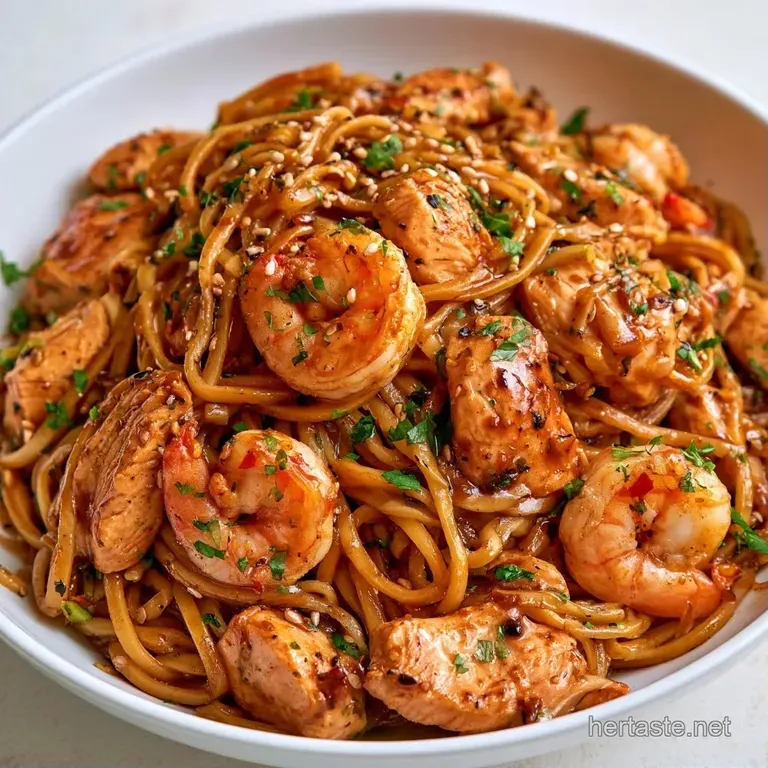
You only need a few tools for this. A large wok or a wide skillet is best because it allows moisture to evaporate quickly. Use tongs for tossing the noodles, as they provide a better grip than a spatula. A small bowl for the sauce and a colander for the noodles are the only other essentials.
From Prep to Plate
Phase 1: Prepping Everything (15 mins)
- Mix the sliced chicken with 5 ml soy sauce, 3 g cornstarch, and 5 ml neutral oil. Let it marinate for 10 minutes while you prepare the remaining ingredients.
- Pat the shrimp dry and season them with a pinch of salt and a pinch of black pepper. Note: Dry shrimp sear better
- In a small bowl, whisk together 45 ml soy sauce, 15 ml oyster sauce, 4 g brown sugar, 3 g cornstarch, 30 ml water, and 5 ml toasted sesame oil. Give it another stir just before adding to the pan.
- Bring a large pot of water to a boil. Boil the noodles for 1 minute less than the package instructions. Drain, rinse under cold water to stop the cooking process, and toss with a bit of oil. Set aside.
Phase 2: Cooking in Stages (15 mins)
- Heat 15 ml neutral oil in a large wok over high heat until it shimmers. Arrange the chicken in a single layer and leave it undisturbed for 60 seconds. Stir-fry for 3–4 minutes until the chicken is no longer pink, the edges are golden, and it reaches 165°F (74°C). Transfer to a plate.
- Add 15 ml neutral oil and the shrimp to the wok. Sear each side for 1–2 minutes until pink and curled into a loose C shape and they reach 145°F (63°C). Transfer to the plate with the chicken.
- Add the final 15 ml neutral oil, the white parts of the green onions, garlic, ginger, and red pepper flakes. Sauté for 20–30 seconds until aromatic but not browned. Add the bell pepper, carrot, and cabbage and stir-fry for 2–3 minutes until crisp tender.
Phase 3: Finishing and Serving (2 mins)
- Return the chicken and shrimp to the wok. Add the noodles and pour the sauce over the top. Toss with tongs for 1–2 minutes until the noodles look glossy and the sauce has thickened into a light coating.
- Top with the green onion greens and 3 g toasted sesame seeds. Serve immediately.
Chef: If you like a bit of extra heat, I like adding a teaspoon of chili garlic sauce to the final toss.
How to Fix Common Problems
Moisture is the primary challenge when stir-frying. If you overload the pan or use ingredients that are too wet, the food will steam rather than sear, ruining the shrimp's texture and making the noodles soggy.
Fixing Soggy Noodles
Mushy noodles usually result from overboiling or a sauce that is too thin. To correct this during cooking, raise the heat and toss everything for an additional minute to boil away any excess liquid.
Preventing Rubber Shrimp
Shrimp cook very quickly. When they curl into a tight "O," they have been overcooked; aim for a loose "C" shape instead. If you're unsure, remove them from the heat slightly early, as carry-over cooking continues on the plate.
Stopping Sauce Clumps
Cornstarch often settles while resting. If the sauce isn't stirred immediately before it enters the wok, you'll end up with thick starch lumps. A quick whisk right before the final stage prevents this.
| Problem | Root Cause | Solution |
|---|---|---|
| Mushy noodles | Overcooked in boiling water | Cook 1 min less than package directions |
| Rubbery shrimp | Cooked too long/too high heat | Cook until "C" shape (145°F/63°C) |
| Lumpy sauce | Cornstarch settled in bowl | Stir sauce immediately before adding to pan |
Variations & Substitutions
If you want to change the flavor profile, you can easily swap the aromatics. For a more pungent taste, double the ginger. If you prefer a gluten-free version, use rice noodles and swap soy sauce for tamari (labelled gluten-free). For this gluten-free version, also use products labelled gluten-free for all soy sauces.
For those who like a different texture, try replacing the napa cabbage with sliced bok choy or snap peas. If you want a more vibrant color, add some shredded purple cabbage. If you're feeling adventurous, a splash of rice vinegar added at the very end provides a bright acidity that cuts through the salty oyster sauce.
Keeping It Fresh
Keep any remaining portions refrigerated for up to 3 days. When warming it back up, stir in a tablespoon of water over medium heat and heat until the food reaches 165°F (74°C) inside; this technique loosens the noodles and blends the sauce back in, ensuring the meat stays moist.
This meal isn't ideal for the freezer. Once thawed, the noodles tend to get mushy from absorbing the sauce, and the shrimp often turn rubbery. To minimize waste, toss those leftover green onion stems into a morning omelet or a simple soup base.
Serving Suggestions
While this dish is satisfying on its own, a couple of sides can turn it into a full feast. I enjoy serving it with a crisp cucumber salad seasoned with sesame seeds and rice vinegar; the refreshing crunch perfectly offsets the salt and heat of the stir-fry.
Garlic-steamed bok choy is another excellent choice. Simply steam the greens for 3 minutes and top them with a drizzle of toasted sesame oil and soy sauce. If you want something more filling, a side of steamed jasmine rice is a great addition, though the noodles usually provide enough carbohydrates.
Recipe FAQs
How to prepare these noodles quickly?
Start by marinating the chicken for 10 minutes while prepping the other ingredients.
Tip: use a high-heat wok to reduce cooking time for the proteins.
Is this a Chinese-style dish?
Yes, it uses classic stir-fry techniques and a soy-based sauce common in Chinese cuisine.
Tip: ensure the wok is shimmering hot before adding oil to get a proper sear.
Can I make a healthier version?
Swap the noodles for rice noodles and use tamari (labelled gluten-free) for a gluten-free alternative.
Tip: increase the amount of napa cabbage to add more volume and nutrients.
What other vegetables work here?
Bok choy, snap peas, or purple cabbage provide great texture and color.
Tip: slice all vegetables into uniform sizes so they cook evenly.
Where should I store leftovers?
Place the noodles in a tightly closed container and keep them refrigerated.
Tip:Warm them in a pan with a bit of water to help loosen the sauce.
Why is rinsing noodles necessary?
Rinsing stops the cooking process and prevents the noodles from sticking together.
Tip: toss them with a bit of oil immediately after draining for easier handling.
Chicken Shrimp Stir-Fry Noodles, 30 Min