Chicken Bacon Spinach Spaghetti Recipe
- Time: Active 10 minutes, Passive 20 minutes, Total 30 minutes
- Flavor/Texture Hook: Smoky, velvety, and garlicky
- Perfect for: Stressful weeknights or impressive date nights
- Why You Will Crave This
- Efficiency Specs for Cooks
- Analyzing the Main Ingredients
- Essential Kitchen Tools Needed
- Simple Step by Step Flow
- Strategies to Avoid Disasters
- Flavor Profile Variations
- Storing and Reheating Tips
- Plating for Visual Appeal
- Debunking Common Kitchen Myths
- High in Sodium
- Recipe FAQs
- 📝 Recipe Card
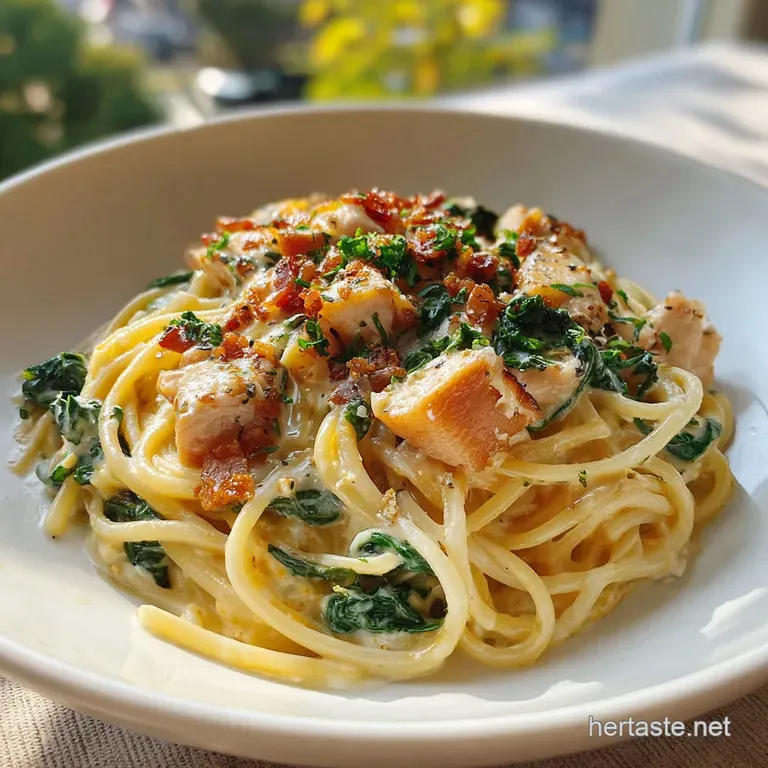
I used to think that a great chicken bacon and spinach spaghetti recipe required a heavy roux and an hour of hovering over the stove. Then came a Tuesday where I had exactly twenty minutes before a meeting and a fridge full of loose spinach.
I realized that the real magic doesn't happen in a separate sauce pan - it happens right in the skillet where the bacon fat and chicken juices are already doing the heavy lifting.
This isn't just another pasta dish. It's about that specific moment when the cold heavy cream hits the hot pan and deglazes all those crispy bits of bacon and chicken. You'll see the liquid turn a deep, golden hue as it picks up the salt and smoke from the pan floor.
It's a method I've refined through dozens of dinners, moving away from bottled sauces to something much more vibrant and personal.
We are going to focus on building layers of flavor rather than just dumping ingredients together. You'll learn how to time the spinach so it stays bright green instead of turning into a gray mush, and how to get that chicken so tender it practically melts.
Forget what you know about bland weeknight meals - we are forging something far better here.
Why You Will Crave This
The Physics of the Emulsion: The starch molecules in the pasta water act as a bridge between the heavy cream fats and the water based liquids in the pan. This creates a stable, silky coating that prevents the sauce from breaking or pooling at the bottom of your bowl.
The Power of Fond: When we sear the 1.5 lb chicken breast pieces, they leave behind browned bits called fond. These are concentrated protein sugars that dissolve into the cream, providing a depth of flavor that salt alone can never replicate.
Flash Wilted Nutrients: Adding the 5 oz fresh baby spinach at the very end uses residual heat to soften the leaves. This preserves the cellular structure of the greens, ensuring they provide a fresh pop of color and a mild earthy bite.
| Cooking Method | Cook Time | Final Texture | Best For |
|---|---|---|---|
| One Pan Skillet | 20 minutes | Extra thick sauce | Maximum flavor infusion |
| Traditional Boil | 30 minutes | Al dente strands | Classic pasta purists |
| Oven Finished Bake | 45 minutes | Crispy cheese edges | Large family gatherings |
Choosing the right method depends on how much time you have, but I always recommend the one pan approach for this chicken bacon and spinach spaghetti recipe quick enough for any schedule. The way the noodles absorb the bacon fat directly is a total game changer for the overall flavor profile.
Efficiency Specs for Cooks
| Ingredient | Science Role | Pro Secret |
|---|---|---|
| Thick cut Bacon | Fat source | Start in a cold pan to render maximum fat without burning. |
| Heavy Cream | Emulsifier | Use room temperature cream to prevent the sauce from curdling. |
| Reserved Pasta Water | Binding agent | The "liquid gold" that transforms dry noodles into a silky feast. |
Analyzing the Main Ingredients
To make the best chicken bacon and spinach spaghetti recipe, you need to be intentional about what goes into your pan. I always reach for thick cut bacon because it provides a much more satisfying "shatter" when you bite into it compared to thin, flimsy strips.
- 1.5 lb chicken breast: Cut into 1 inch pieces. Why this? Even sizes ensure every piece of protein finishes cooking at the exact same moment.
- Substitute: Chicken thighs. These stay juicier but require an extra 3 minutes of searing.
- 6 slices thick cut bacon: Chopped into small bits. Why this? The rendered fat replaces the need for extra oil or butter in the base.
- Substitute: Pancetta. It's less smoky but adds a sophisticated, salty punch to the dish.
- 12 oz dry spaghetti: The classic vessel. Why this? The long surface area is perfect for carrying the light cream and Parmesan coating.
- Substitute: Linguine. The wider shape holds even more of that creamy chicken bacon spinach pasta recipe sauce.
- 5 oz fresh baby spinach: Don't use frozen here. Why this? Fresh leaves wilt into the sauce without adding excess water that dilutes the flavor.
- Substitute: Baby kale. It provides a heartier texture but needs 2 extra minutes of simmering.
- 4 cloves garlic: Freshly minced. Why this? Jarred garlic loses its essential oils - fresh garlic provides that sharp, aromatic backbone.
- Substitute: Shallots. If you want a sweeter, milder flavor profile, shallots are a brilliant pivot.
- 0.5 cup heavy cream: The richness factor. Why this? It has the fat content necessary to withstand the heat without separating.
- Substitute: Half and half mixed with 1 tsp cornstarch for a lighter but still thick result.
- 0.5 cup Parmesan cheese: Freshly grated is mandatory. Why this? Pre shredded cheese is coated in potato starch, which can make your sauce feel gritty.
- Substitute: Pecorino Romano. This is saltier and funkier, perfect if you love a bold cheese flavor.
If you find yourself loving these savory, protein packed meals, you might also enjoy the flavor profile of this Zesty Lemon Garlic recipe. It uses a similar pan searing technique that builds a massive amount of flavor in a very short amount of time.
Essential Kitchen Tools Needed
You don't need a professional kitchen, but a large, heavy bottomed skillet is your best friend for this recipe. A 12 inch cast iron or stainless steel pan allows enough room for the chicken to sear rather than steam.
If you crowd the pan, the chicken will release its juices too quickly, and you'll lose that beautiful golden crust we are looking for.
You'll also want a set of tongs for tossing the spaghetti. Trying to mix long noodles with a spoon is a recipe for a mess. Tongs allow you to lift and swirl the pasta, ensuring the 0.5 cup Parmesan cheese and 0.5 cup heavy cream are distributed evenly into every nook and cranny.
Chef Tip: Freeze your block of Parmesan for 10 minutes before grating. This makes the cheese firmer and prevents it from clumping or melting into a blob against the grater.
Simple step-by-step Flow
- Boil the water. Fill a large pot with water and a generous palmful of salt. Note: The water should taste like the sea to properly season the noodles from the inside out.
- Cook the pasta. Drop the 12 oz dry spaghetti into the boiling water. Cook 8-9 minutes until firm to the bite (al dente).
- Save the liquid. Scoop out 0.5 cup reserved pasta water before draining the noodles. Note: This is the most important step for a silky sauce.
- Crisp the bacon. Place the 6 slices chopped bacon in a cold skillet. Cook over medium heat until the fat has rendered and the bits are golden and crackling.
- Sear the protein. Remove bacon, leaving the fat. Add the 1.5 lb chicken pieces seasoned with 1 tsp sea salt and 0.5 tsp black pepper. Cook 5-6 minutes until the edges are brown and crisp.
- Aromatize the base. Stir in the 4 cloves minced garlic and 0.5 tsp red pepper flakes. Sauté for 30 seconds until the scent fills your kitchen.
- Deglaze the pan. Pour in the 0.5 cup heavy cream. Note: Use a wooden spoon to scrape up all the browned bits from the bottom of the pan.
- Build the emulsion. Lower the heat and stir in the 0.5 cup Parmesan cheese and the reserved pasta water. Whisk until the sauce looks velvety and thick.
- Wilt the greens. Add the 5 oz fresh baby spinach to the pan. Toss for 1 minute until the leaves just begin to collapse.
- Final assembly. Toss the cooked spaghetti back into the skillet. Mix thoroughly until the sauce clings to the noodles and the bacon is redistributed.
The way the sauce transforms from a thin liquid into a glossy coating is almost magical. If you've ever struggled with a healthy chicken bacon and spinach spaghetti recipe feeling "dry," the trick is that reserved pasta water. It's the secret weapon that bridges the gap between the ingredients.
Strategies to Avoid Disasters
One of the most common issues people face is the "broken" sauce, where the fat separates from the liquid, leaving you with an oily mess. This usually happens if the heat is too high when you add the cheese. Always turn the burner down to low before introducing the dairy to keep the proteins stable.
Fixing Broken Cream Sauces
A broken sauce looks curdled and greasy. This is usually caused by extreme temperature shifts or over boiling the cream after the cheese has been added.
| Problem | Root Cause | Solution |
|---|---|---|
| Oily Separation | Heat was too high | Add a splash of cold cream and whisk vigorously off the heat. |
| Gritty Texture | Pre shredded cheese used | Whisk in a tablespoon of pasta water to help emulsify the starches. |
| Thin Sauce | Too much water added | Simmer for 2 mins or add an extra handful of Parmesan. |
Another mistake I often see is overcooking the spinach. If you put the greens in too early, they turn into a dark, slimy string that disappears into the noodles. You want to add them at the very last second. The residual heat from the pasta is more than enough to soften them while keeping their vibrant integrity.
Preventing Overcooked Spinach Textures
Spinach is delicate. If it looks like seaweed, you've gone too far. The goal is for the leaves to be soft but still recognizable as individual pieces of greenery.
- ✓ Only add spinach once the heat is turned off or set to low.
- ✓ Use a wide pan to ensure the heat is distributed evenly across the leaves.
- ✓ Don't cover the pan after adding greens, as the steam will accelerate the wilting.
- ✓ Pat the spinach dry after washing to avoid adding excess water to your sauce.
- ✓ If using a healthy chicken bacon and spinach spaghetti recipe variation, consider doubling the spinach for extra volume.
If you enjoy the combination of greens and bacon, you absolutely have to try The Dolly Parton recipe. It uses a similar flavor profile but in a fresh, crunchy format that pairs beautifully with this warm pasta.
Flavor Profile Variations
While the classic version is hard to beat, I love forging new paths with different ingredients. For an easy chicken bacon and spinach spaghetti recipe twist, you can add a squeeze of fresh lemon juice at the very end.
The acidity cuts through the richness of the bacon fat and cream, making the whole dish feel lighter and more energetic.
Healthy Chicken Bacon and Spinach Spaghetti
To lighten things up, swap the heavy cream for Greek yogurt. You'll need to whisk the yogurt with a little warm pasta water before adding it to the pan to prevent it from curdling.
Use turkey bacon for a lower fat content, though you'll need to add a tablespoon of olive oil to sear the chicken since turkey bacon doesn't render as much fat.
Chicken Bacon Spinach Pasta Bake
If you want something heartier, transfer the finished spaghetti into a baking dish. Top it with a layer of shredded mozzarella and a handful of panko breadcrumbs. Bake it at 375°F for 15 minutes until the cheese is bubbling and the top has a satisfying shatter when you poke it with a fork.
This chicken bacon spinach pasta bake is a massive crowd pleaser for potlucks.
The Zesty Tuscan Twist
Add 0.25 cup chopped sun dried tomatoes and a teaspoon of dried oregano during the garlic sautéing step. This transforms the dish into a "Tuscan style" feast. The sweet and tart tomatoes play perfectly against the smoky bacon and the earthy spinach.
Using Penne Instead
If you prefer short pasta, a chicken bacon spinach penne pasta recipe works just as well. The hollow centers of the penne act like little straws, trapping the creamy sauce inside. It’s often easier for kids to eat and holds up better if you are planning on having leftovers for lunch the next day.
Storing and Reheating Tips
This pasta stores surprisingly well in the fridge for up to 3 days. However, the noodles will continue to absorb the sauce as they sit, which can lead to a dry texture when you go to eat it later. I always suggest storing it in an airtight glass container to keep the flavors from migrating.
To reheat, don't just throw it in the microwave. Put the pasta in a small skillet with 2 tablespoons of milk or water over medium low heat. Cover the pan for 2 minutes to let the steam loosen the sauce, then toss it gently until it's creamy again.
This prevents the chicken from becoming rubbery and keeps the bacon from losing its integrity.
For zero waste cooking, don't throw away those spinach stems! You can finely chop them and sauté them right along with the garlic. They have a great crunch and contain even more nutrients than the leaves.
If you have leftover bacon fat that didn't make it into the pan, save it in a jar in the fridge for frying eggs the next morning. It’s liquid gold.
Plating for Visual Appeal
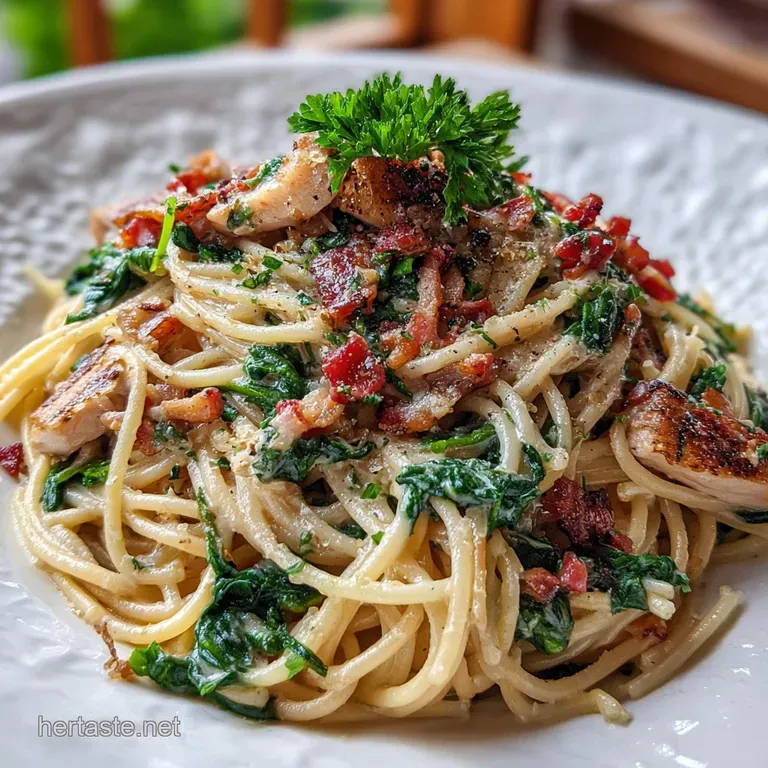
The "best chicken bacon and spinach spaghetti recipe" should look as good as it tastes. Use a large meat fork or long tongs to twirl the spaghetti into a tight nest in the center of the bowl. This creates height and makes the portion look more substantial.
Once the pasta is nested, manually place a few pieces of the golden brown chicken and the crispy bacon on top. If the spinach has all sunk to the bottom, pull a few leaves up to the surface to show off that green color. Finish with a final dusting of freshly grated Parmesan and a few cracks of black pepper.
If you are feeling fancy, a sprinkle of fresh parsley or a few more red pepper flakes can add that final "innovative" touch. It’s these small details the personal touch of a few extra garnishes that turn a simple weeknight meal into a dish you'd be proud to share with anyone.
Chef Tip: Add 1/4 teaspoon of espresso powder or a tiny pinch of nutmeg to the cream sauce. You won't taste the coffee or spice, but it deepens the savory notes of the bacon and makes the Parmesan taste even richer.
Debunking Common Kitchen Myths
Myth: You must rinse pasta to stop the cooking. Rinsing removes the precious starch that helps the sauce stick. Instead, pull the pasta out 1 minute before the box instructions say to, and let it finish cooking directly in the sauce.
This ensures the noodles are infused with flavor rather than just being coated by it.
Myth: Bacon must be cooked until hard to be "crispy." If you cook bacon until it's completely stiff, it will become unpleasantly tough once it sits in the cream sauce. You want to cook it until it's golden and the fat has rendered, but it should still have a slight "give" to it.
It will firm up as it cools, giving you that perfect crispy texture in every bite.
Myth: Cream sauces need flour to be thick. A lot of people think you need a roux to get a thick sauce. In reality, the combination of heavy cream reduction, melted Parmesan, and starchy pasta water creates a much cleaner, more vibrant thickness.
Flour can often mask the delicate flavors of the garlic and spinach.
By focusing on these small techniques and understanding the "why" behind the ingredients, you’re not just following a chicken bacon and spinach spaghetti recipe you’re building your intuition as a cook. Now, go get that skillet screaming hot and start searing!

High in Sodium
940 mg of sodium per serving (41% of daily value)
The American Heart Association recommends limiting sodium intake to about 2,300mg per day for optimal health.
Tips to Reduce Sodium in Your Spaghetti
-
Reduce Bacon-25%
Bacon is a significant source of sodium. Try using only 3 slices of bacon instead of 6, or substitute with low-sodium ham or sautéed mushrooms.
-
Lower Sodium Cheese-15%
Parmesan cheese is high in sodium. Reduce the amount of Parmesan cheese used by half, and consider using a lower sodium cheese alternative or nutritional yeast for a cheesy flavor.
-
Reduce Added Salt-25%
Eliminate the added teaspoon of sea salt. Taste the dish before adding any salt, and remember that bacon and cheese already contribute sodium. You can always add salt at the end if needed, but start with none!
-
Unsalted Pasta Water-5%
When cooking the pasta, do not add any salt to the water. This helps reduce the overall sodium content of the dish. It might not seem like much, but it adds up.
-
Flavor Boost
Experiment with sodium free herbs and spices like oregano, basil, or garlic powder to enhance the flavor without adding sodium.
Recipe FAQs
Is spinach good in spaghetti sauce?
Yes, absolutely, when added correctly. Spinach should be added at the very end of the cooking process to wilt using residual heat. This keeps it bright green and preserves its texture rather than letting it turn into a gray mush.
Why is the dish sometimes called "marry me pasta"?
This isn't standard nomenclature for this specific combination. "Marry Me Pasta" generally refers to a creamy, rich tomato based sauce, often featuring sun-dried tomatoes and Parmesan. However, our rich cream and bacon base achieves a similar level of comforting indulgence.
Do I cook bacon before putting it in pasta?
Yes, the bacon must be cooked first to render its fat. Rendering the fat creates the flavorful base of the entire sauce, replacing the need for separate oil. Remove the crispy bits, then use the rendered fat to sear the chicken pieces.
Can you put spinach in chicken pasta?
Yes, spinach pairs beautifully with chicken and bacon. It adds necessary color and a slight earthiness to balance the richness of the cream and pork fat. If you are looking for other ways to incorporate greens into creamy chicken dishes, check out our Louisiana Chicken Pasta recipe.
How do I stop my cream sauce from separating or breaking?
Reduce the heat to low before adding cheese or cream. Rapid temperature changes cause the fat and liquid to split, resulting in an oily mess. If it does separate, whisk in a splash of cold heavy cream or reserved starchy pasta water off the heat.
What is the secret to making the sauce cling perfectly to the spaghetti?
The secret is reserved, starchy pasta water. The starch molecules in the water act as an emulsifier, binding the fat from the bacon and cream with the liquid in the pan. If you master this technique, you can apply the same stabilizing logic when making rich sauces for our Grandmas Secret Homemade recipe.
Can I use low-fat milk instead of heavy cream?
No, using low-fat milk is highly discouraged for this sauce. Milk lacks the necessary fat content and will curdle or thin out immediately when exposed to the heat of the skillet. Stick to heavy cream or, for a lighter but stable option, use half and half mixed with a thickening agent.
Chicken Bacon Spinach Spaghetti
Ingredients:
Instructions:
Nutrition Facts:
| Calories | 872 kcal |
|---|---|
| Protein | 77.8 g |
| Fat | 30.4 g |
| Carbs | 67.5 g |
| Fiber | 3.2 g |
| Sugar | 2.1 g |
| Sodium | 940 mg |
