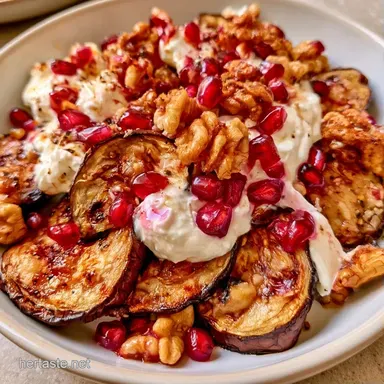
Charred Eggplant Burrata with Pomegranate Seeds
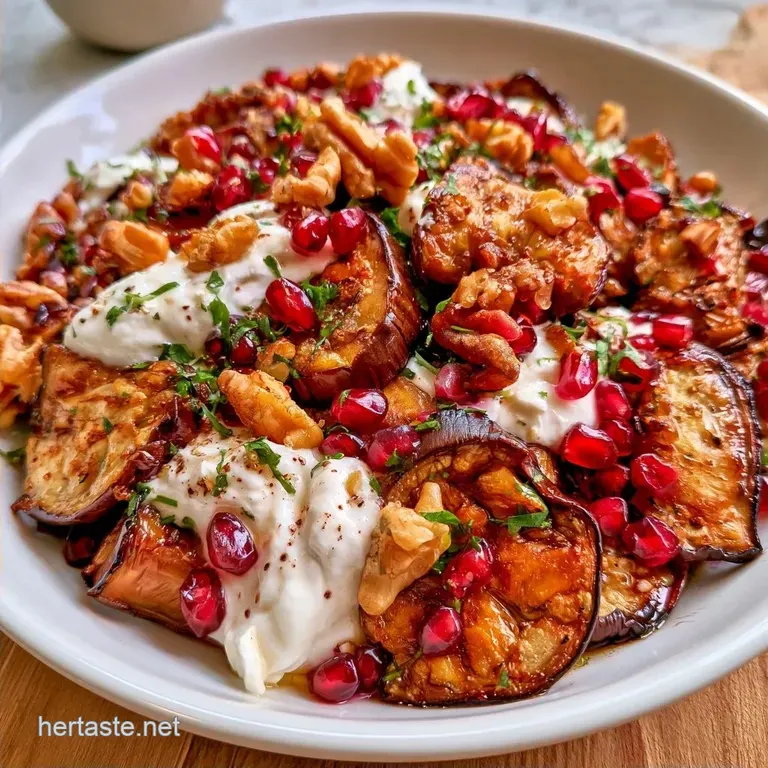
- Time: 10 min prep + 10 min cooking
- Key Notes: Smoky, hot eggplant paired with chilled burrata and toasted nuts
- Perfect for: An impressive mezze board or a fast weekend starter
The sound of the eggplant searing in a ripping hot cast iron skillet is the best part. I recall my first attempt where I played it too safe with the temperature, resulting in limp, colorless slices.
It wasn't until I cranked up the heat and let the pan smoke that I achieved those dark, caramelized rounds reminiscent of a professional wood-fired grill.
This Charred Eggplant with Burrata and Pomegranate Walnut Relish lets the vegetable shine. A fast sear ensures the interior stays soft while the exterior develops a pleasantly bitter char. The burrata then rounds everything out with its cool, creamy profile.
This dish is a celebration of contrast. You have the searing heat of the pan, the refreshing chill of the cheese, and the zesty burst of pomegranate. It looks stunning on a platter and is a simple trick for turning humble ingredients into a gourmet experience.
Quick Details and Timing
This recipe is designed for speed without sacrificing the look. Since we are searing in rounds rather than roasting a whole eggplant, the cook time drops significantly.
Precision Checkpoints:
- Pan Temp: Water droplets must dance and evaporate in 1-2 seconds.
- Sear Time: 3-5 minutes per side.
- Resting Time: 2 minutes off the heat.
Decision Shortcut:
- More tang? → Add 1 tsp extra lemon zest
- More crunch? → Double the walnuts
- Extra heat? → Drizzle with chili oil
| Ingredient | Fresh | Shortcut | Impact |
|---|---|---|---|
| Burrata | Fresh ball | Buffalo Mozzarella | Less creamy center, firmer texture |
| Pomegranate | Fresh seeds | Dried berries | Sweeter, less "pop", different acidity |
| Walnuts | Toasted | Raw | Lacks depth, slightly more bitter |
Why These Ingredients Work
The balance here depends on the fat from the cheese and the acidity of the relish. If you skip the honey, the pomegranate can feel too sharp.
| Component | Purpose | Substitute Notes |
|---|---|---|
| Italian Eggplant | Hearty base | Japanese eggplant works but cook 2 mins less |
| Burrata | Creamy contrast | Fresh mozzarella; less ooze |
| Pomegranate Seeds | Acidic pop | Chopped apple or currants; sweeter profile |
| Walnuts | Earthy crunch | Toasted almonds; similar texture, milder taste |
For the Charred Eggplant
- 2 medium (1 lb / 450g) Italian eggplants, sliced into 1 inch rounds
- 3 tbsp extra virgin olive oil
- 1 tsp kosher salt
- ½ tsp cracked black pepper
For the Pomegranate Walnut Relish
- ½ cup pomegranate seeds
- ⅓ cup walnuts, toasted and roughly chopped
- ¼ cup fresh parsley, finely chopped
- 1 tbsp lemon juice
- 1 tsp honey
- 2 tbsp extra virgin olive oil
- ¼ tsp salt
For the Plating
- 2 (4 oz / 113g) balls of fresh Burrata cheese
Chef's Note: Freeze your walnuts for 10 minutes before chopping. This makes them less likely to clump and keeps the edges sharper for better texture.
Gear for the Job
You don't need much, but the pan matters. A cast iron skillet is the gold standard because it holds heat steadily, which is how you get those dark marks without the vegetable steaming.
If you have a grill pan with ridges, use it. The ridges create focused char points and let the excess oil drain away. Avoid non stick pans if possible, as they can't always handle the high heat required for a true sear. A simple whisk and a small mixing bowl will handle the relish.
How to Make It
Precise timing is key to ensuring the eggplant remains tender and doesn't become spongy.
- Pat the eggplant slices dry using a paper towel. Note: Excess moisture on the surface causes the eggplant to steam rather than sear.
- Lightly coat both sides of the rounds with olive oil and season with salt and pepper.
- Preheat a cast iron pan on medium-high until a droplet of water sizzles and vanishes instantly.
- Place the eggplant in the pan without overcrowding. Note: Crowding the pan lowers the temperature.
- Sear for 3-5 minutes on each side until a mahogany colored crust forms and the center feels soft.
- Remove from the heat and allow to rest for 2 minutes.
- Whisk together the honey, lemon juice, and 2 tablespoons of olive oil in a small bowl.
- Stir in the pomegranate seeds, toasted walnuts, and chopped parsley.
- Arrange the hot, charred eggplant on a serving platter.
- Break the burrata balls open and nestle them among the eggplant. Spoon the Burrata and Pomegranate Walnut Relish over the top.
Tips for Better Results
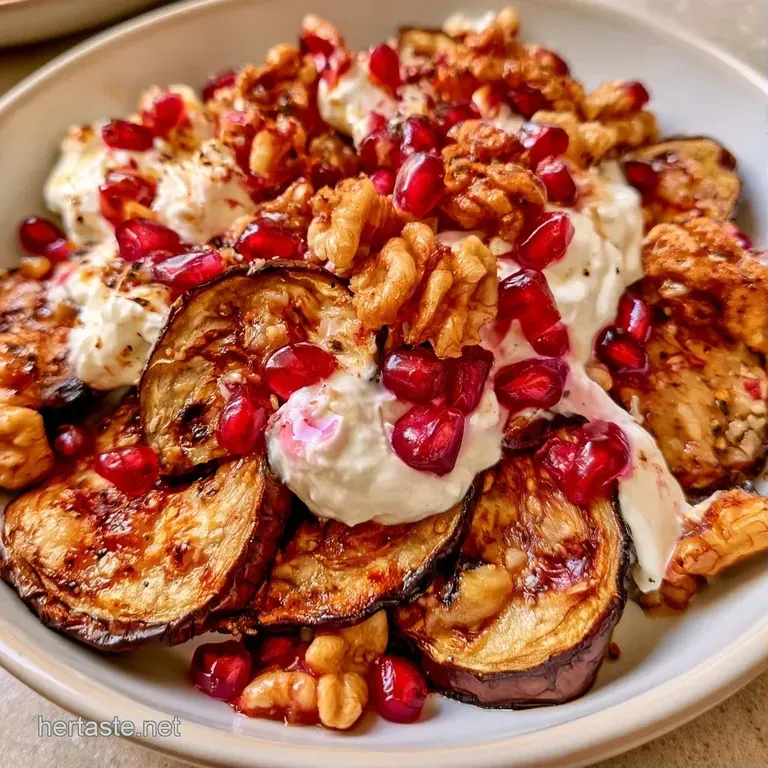
Charred Eggplant Burrata relies on reaching that perfect high-heat threshold. While the method is straightforward, a few small refinements elevate the dish from average to exceptional.
- High-Heat Searing: Using extreme heat caramelizes the exterior rapidly, ensuring the interior remains juicy rather than becoming overly soft.
- Balancing Acids: The honey in the relish softens the sharp lemon juice, providing a bright contrast to the creamy richness of the burrata.
If you appreciate this approach to eggplant, try this smoky baba ganoush recipe for another great grilling option.
Color Strategy
- 1. Ruby Red
- Stir in pomegranate seeds at the very end to maintain their brilliant hue.
- 2. Emerald Green
- Use finely diced parsley to create a vivid pop against the pale cheese.
- 3. Deep Mahogany
- Let the eggplant develop dark, charred edges before you plate it.
Fixing Common Issues
Moisture management is the key to this recipe. Because eggplants act like sponges, failing to handle them correctly means they will either absorb too much oil or release excess water.
Eggplant Feels Spongy
This is typically caused by insufficient pan heat or cutting the slices too thin. In a lukewarm pan, the eggplant essentially boils in its own juices. Make sure the oil is hot and bubbling before introducing the vegetables.
Lack of Dark Char
If you aren't seeing those deep brown marks, you might be moving the slices too frequently. Leave them undisturbed for at least 3 minutes.
Relish Tastes Too Tart
If the lemon is too dominant, a tiny pinch of sugar or an additional drop of honey will balance the flavors.
| Problem | Fix |
|---|---|
| Spongy texture | Boost pan heat and pat eggplant drier |
| Pale color | Sear longer without flipping |
| Relish too acidic | Add a small amount of honey |
Storage and Waste Tips
Because burrata is most delicious when served fresh, I suggest avoiding storing the finished meal. You can, however, prepare the individual parts ahead of time.
Store the pomegranate walnut relish in a glass jar for up to 3 days, shaking it before serving to blend the oil. The grilled eggplant lasts in the refrigerator for 2 days; simply warm it in a pan for 2 minutes to restore its crispiness.
Zero Waste Tips: Rather than throwing away eggplant stems or the small scraps, finely dice them and stir them into a stew or pasta sauce. While pomegranate skins are inedible, you can simmer them with cloves and cinnamon to create an aromatic syrup for other treats.
Swapping the Flavors
You can easily pivot this Charred Eggplant Burrata to fit different moods or available ingredients.
The Mediterranean Twist: Swap the pomegranate and walnuts for toasted pine nuts and a drizzle of balsamic glaze. This moves the flavor profile away from the Middle East and more toward Italy.
The Spicy Version: Add a pinch of Aleppo pepper or red chili flakes to the olive oil before searing the eggplant. This adds a slow heat that works beautifully with the cool cheese.
The Nut Free Route: Replace the walnuts with toasted sunflower seeds or pumpkin seeds. You get the same crunch but without the allergens.
For another fresh side, you could try a Yogurt Sauce for 4 recipe to keep the meal light and vibrant.
Perfect Complements
Because the Charred Eggplant Burrata is both creamy and tangy, it pairs best with accompaniments that are either neutral or provide a crisp, fresh balance.
Try serving it with a stack of warm, toasted sourdough or grilled pita, essential for scooping up the burrata and the relish on the plate. A light arugula salad with lemon dressing is also a great choice, as the peppery greens cut through the richness of the cheese.
For a more satisfying meal, this dish goes perfectly with a platter of olives and hummus. It serves as an ideal focal point for a mezze-style dinner where guests can enjoy a variety of small plates throughout the evening.
Choosing Your Eggplant
I typically recommend Italian eggplants for this recipe. If you're using Japanese eggplants, be aware that they are seedless and thinner, meaning they cook more quickly. To prevent them from shriveling, reduce the searing time to about 2-3 minutes per side.
Common Eggplant Misconceptions
There is a common belief that you must salt eggplant slices for an hour to eliminate bitterness. For modern Italian cultivars, this is largely unnecessary. A fast sear over high heat develops the flavor profile effectively without the extra wait.
Another myth is that the eggplant should be peeled. The skin provides necessary structure and color, resulting in the signature mahogany crust that defines the Charred Eggplant Burrata.
Recipe FAQs
How to make charred eggplant?
Pat the eggplant rounds dry, brush with olive oil, and sear in a medium-high heat skillet for 3–5 minutes per side. This prevents steaming and creates a mahogany crust while keeping the center velvety.
Is it possible to bake the eggplant for this recipe?
No, stick to the skillet. High-heat searing is essential to achieve the specific charred exterior and succulent interior that defines this dish.
What common mistakes lead to mushy eggplant?
Crowding the pan or using low heat. Ensure the skillet is hot enough that water evaporates instantly to lock in the texture.
Is it true that white pomegranates are better for savory dishes?
That's a myth. Red pomegranate seeds provide the vibrant color and classic tartness needed to balance the creamy richness of the burrata.
What should the pomegranate seeds taste like?
Tart and juicy. They should provide a bright, acidic contrast to the honey and salty cheese.
Would yogurt work as a burrata substitute?
Yes, for a tangier profile. If you enjoy layering creamy elements with roasted produce, check out the technique used in our vegetable lasagna.
Which ingredients pair best with the pomegranate seeds?
Toasted walnuts and lemon juice. In this recipe, these ingredients combine with honey to create a balanced, zesty relish.
Why is honey included in the relish?
To balance the lemon juice. The sweetness mellows the acidity, which helps cut through the heavy fat of the burrata.
Charred Eggplant Burrata in 20 Minutes