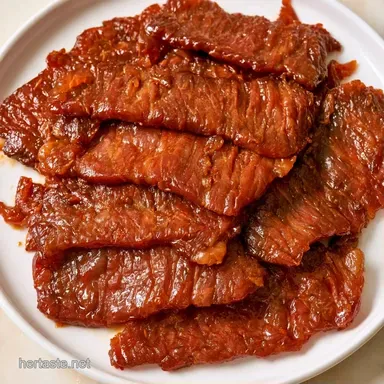
Teriyaki Beef Jerky with Apple Juice

- Time: 20 min active + 1–2 hours partial freezing + 12 hours marinating + 6 hours cooking
- Flavor & Texture: Savory-sweet with a firm, chewy bite
- Perfect for: High-protein snacking and meal prep
The word teriyaki comes from the Japanese "teri" for luster and "yaki" for grilled. It is all about that glossy, savory finish that makes the meat look like polished dark golden. This style of snacking brings that deep, umami-rich glaze to a lean cut of beef.
You can expect a snack that is salty, slightly sweet, and has a satisfying pull. It's a great way to handle a large piece of beef without spending a fortune on store-bought bags.
This teriyaki beef jerky relies on a long soak in a ginger-soy mix to get the flavor deep into the muscle fibers. Once dehydrated, you get a concentrated burst of flavor in every bite.
Why This Method Works
- Cutting Across the Grain: Slicing perpendicular to the fibers means your teeth don't have to fight through long muscle strands, making it easier to chew.
- Two-Stage Temperature: Starting at a lower heat prevents the outside from sealing too fast, which allows the interior to dry out without trapping moisture.
Meat Cut Comparison
| Meat Cut | Leanliness | Chew Factor | Best For |
|---|---|---|---|
| Eye of Round | Very High | Firm | Classic, lean jerky |
| Top Round | High | Medium | Balanced texture |
| Flank Steak | Medium | Tender | Softer, more expensive bites |
The Grocery List
- 2 lbs eye of round or top round beef, trimmed of all visible fat Why this? Lean meat has less fat that can turn rancid during drying and storage
- 1/2 cup reduced-sodium soy sauce
- 1/4 cup apple juice with sugar
- 3 tbsp brown sugar, packed
- 1 tbsp liquid smoke
- 1 tsp garlic powder
- 1 tsp ground ginger
- 1/2 tsp black pepper
Equipment Needed
- Dehydrator or an air fryer with a dehydrate setting
- Gallon-sized Ziploc bag
- Medium whisking bowl
- Meat thermometer
Bringing It Together
1. Preparing the Meat for Success
Partially freeze the beef for 1 to 2 hours to make it firm. Identify the direction of the muscle fibers (the grain) and slice the beef into strips about 1/4 inch thick, cutting across the grain. Note: Slicing across the grain prevents the jerky from feeling like a rubber band.

2. The Infusion Process
In a medium bowl, whisk together the 1/2 cup reduced-sodium soy sauce, 1/4 cup apple juice with sugar, 3 tbsp brown sugar, 1 tbsp liquid smoke, 1 tsp garlic powder, 1 tsp ground ginger, and 1/2 tsp black pepper until the sugar is fully dissolved.
Place the beef strips into a gallon-sized Ziploc bag and pour the marinade over them. Squeeze out as much air as possible and refrigerate for at least 12 hours, or up to 24 hours.
3. The Drying Phase
Arrange the beef strips on dehydrator trays, ensuring they are spaced apart and not touching. If using an air fryer, cook in batches if they don't fit in one layer.
Set the dehydrator to 130°F (54°C) and dry for the first 2 hours. Increase the temperature to 160°F (71°C) and dry for the remaining 4 hours, or until the meat reaches an internal temperature of 160°F (71°C).

4. Determining Doneness
Verify doneness by gently bending a piece. It should bend and show small cracks or white fibers on the surface without snapping completely in half.
Allow the jerky to cool completely to room temperature before storing in an airtight container or vacuum-sealed bag in the refrigerator.
Quick Fixes
If your jerky feels too hard, it likely stayed in the heat too long. You can sometimes soften it by placing it in a container with a slice of fresh apple for a few hours to introduce a tiny bit of moisture.
If the meat feels spongy, it hasn't dried enough. Put it back in the dehydrator for another 30 to 60 minutes.
Handling Texture Issues
| Problem | Root Cause | Solution |
|---|---|---|
| Brittle, snaps in half | Overdried | Reduce drying time by 30 mins |
| Rubbery, won't break | Undried | Increase heat to 160°F for 1 hour |
| Hard outside, soft inside | Temperature too high initially | Start at 130°F for 2 hours |
How to Serve and Enjoy

I like to serve this with a side of spicy mayo or a squeeze of fresh lime to cut through the sweetness of the teriyaki. It's a great addition to a hiking pack or a protein-heavy snack board.
Keeping It Fresh
Keep your jerky in an airtight container or a vacuum-sealed bag. It stays fresh in the refrigerator for up to 4 days or in the freezer for up to 6 months.
Store it in the refrigerator rather than at room temperature. Because this recipe contains sugar, I highly recommend the fridge to keep the quality high.
When you're ready to eat leftovers, you can have them as is, or warm them slightly. If you are reheating them in an oven or microwave, ensure they hit 165°F (74°C) as suggested by USDA guidelines for leftovers. When reheating cooked leftovers, check with a food thermometer that the center reaches 165°F (74°C); the appliance temperature and time alone do not confirm this.
Easy Flavor Twists
- Spicy Kick: To boost the heat, stir in 1 tbsp Sriracha; alternatively, a pinch of cayenne pepper works well.
- Ginger-Forward: For a bolder ginger taste, double the ground ginger and add a teaspoon of fresh grated ginger.
- Low-Sugar: Use monk fruit sweetener instead of brown sugar for a low-sugar version, though the glaze will be less shiny.
If you're looking for a more classic and less sugary option, this Smoky Beef Jerky recipe emphasizes the wood smoke over the sweetness of the glaze.
Before You Start Cooking
How long to marinate jerky?
Marinate for 12 to 24 hours. This duration allows the ginger and soy flavors to penetrate deep into the muscle fibers for a professional taste.
Can the marinade be used on other meats like chicken for skewers?
Yes, the soy and apple juice base works well for poultry. It creates a similar savory-sweet glaze that caramelizes nicely when grilled; cook the poultry until it reaches an internal temperature of 165°F (74°C).
Is it possible to make the jerky spicier without ruining the flavor?
Yes, simply increase the black pepper. Adding more of this existing ingredient provides a heat boost while keeping the original teriyaki profile intact.
Where should homemade jerky be stored?
Keep it in the refrigerator. As a cooked meat product, it should be placed in a vacuum-sealed bag or airtight container once cooled to room temperature.
Teriyaki Beef Jerky with Apple Juice