Easy Spicy Peanut Noodles Ready Fast
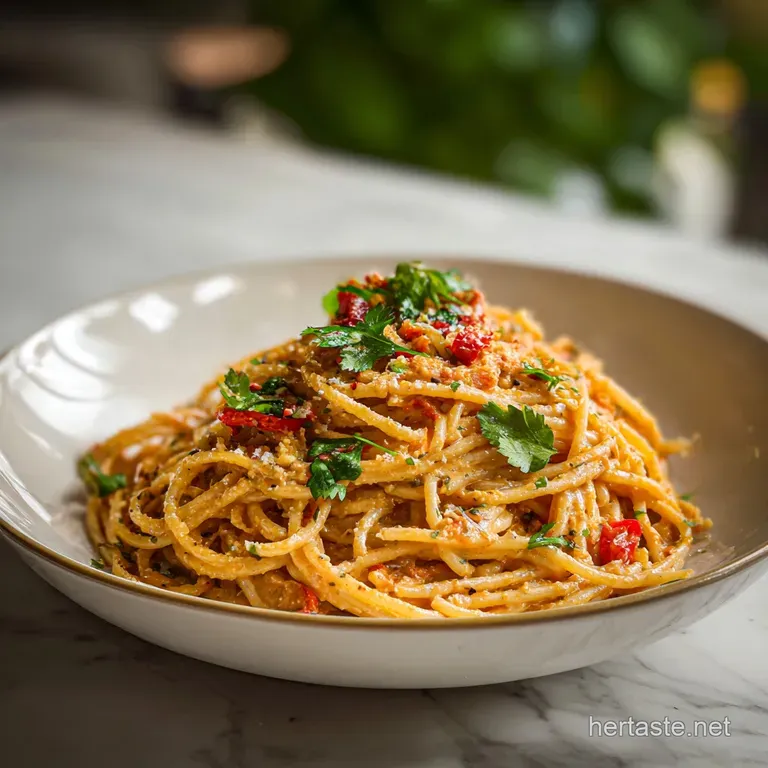
- Time: Active 5 minutes, Passive 10 minutes, Total 15 minutes
- Flavor/Texture Hook: A velvety, zingy coating with a distinct peanut shatter
- Perfect for: High speed weeknight hunger or adventurous beginner cooks
- Master This Easy Unusual Dinner Idea with Spicy
- The Physics of the Instant Emulsion
- Vital Statistics for This Quick Meal
- Essential Elements for Spicy Peanut Pasta
- Simple Tools for High Speed Cooking
- Steps for Creating This Spicy Dish
- Common Pitfalls and Pro Fixes
- Scaling
- Myths
- Creative Variations for Bold Flavor
- Storage and Future Meal Planning
- Plating for a Vibrant Visual
- High in Sodium
- Recipe FAQs
- 📝 Recipe Card
Master This Easy Unusual Dinner Idea with Spicy
Imagine the heavy, nutty scent of roasted peanuts hitting a pan of sizzling ginger and garlic. I remember the first time I threw this together on a rainy Tuesday when the fridge looked like a desert.
I had half a jar of peanut butter and some limp carrots, but as soon as that creamy sauce hit the hot noodles, the kitchen transformed. The steam carried a sharp, vinegary kick that promised something far more exciting than a standard buttered pasta.
It is honestly one of those rare recipes where the effort to reward ratio is completely skewed in your favor. You are looking at a 15 minute timeline from pantry to plate. This easy, unusual dinner idea features spicy peanut pasta and will delightfully shake up your routine by offering a flavor profile that sits comfortably between a street food stall and a cozy home kitchen.
We've all been stuck in a spaghetti marinara loop, but this brings a punchy, bold heat that keeps things interesting.
We are focusing on high impact ingredients that do the heavy lifting for us. By using the starch heavy water from the noodles, we create a glossy emulsion that clings to every strand without needing heavy creams or complex reductions. It's a vibrant, textured meal that feels like a treat but handles like a quick snack.
You'll find that once you nail the balance of the spicy Gochujang against the sweet honey, there is no going back to boring weeknight dinners.
The Physics of the Instant Emulsion
Molecular Bonding: The starch molecules in the reserved pasta water act as a bridge between the fats in the peanut butter and the water based soy sauce. This creates a stable, velvety coating rather than a greasy separation on the plate.
| Method | Time | Texture | Best For |
|---|---|---|---|
| Stovetop Infusion | 15 minutes | Glossy and warm | Chilly evenings |
| Cold Noodle Salad | 12 minutes | Snappy and firm | Summer meal prep |
| over High heat Stir Fry | 18 minutes | Charred and smoky | Extra veggie crunch |
Choosing the right method depends on your mood. While the stovetop version is my personal favorite for that silky mouthfeel, the cold version works wonders if you are using thinner noodles like linguine.
If you want a more complex profile, the stir fry method adds a layer of caramelization to the carrots and cabbage that is hard to beat.
Vital Statistics for This Quick Meal
When we talk about an Easy Unusual Dinner Idea with Spicy Peanut Pasta to Shake Up Your Routine, we have to look at the numbers. This recipe is built for speed but doesn't sacrifice the "soul" of a home cooked meal.
Unlike some heavy pasta dishes that leave you feeling sluggish, the high protein count from the peanut butter and the fiber from the raw vegetables keep this feeling light yet satisfying.
It's a meal that scales beautifully, whether you are cooking for a solo midnight feast or a quick dinner for two. We've optimized the cook time to match the boiling point of your noodles exactly.
While the udon or linguine dances in the pot, you are whisking the sauce, meaning the moment the noodles are tender, the meal is ready for assembly. This efficiency is the hallmark of a great weeknight staple.
Essential Elements for Spicy Peanut Pasta
The magic happens when pantry staples collide with fresh aromatics. Using creamy peanut butter (1/2 cup) provides the fat base, but the real secret is the ginger (1 tsp) and garlic (1 clove). They cut through the richness, preventing the dish from feeling cloying.
I've found that using low sodium soy sauce (3 tbsp) is non negotiable here; it allows you to control the salt levels while still getting that deep, fermented umami we all crave.
| Ingredient | Science Role | Pro Secret |
|---|---|---|
| Pasta Water (1/2 cup) | Emulsifier | Never salt it too early; concentrated starch is better for the sauce. |
| Gochujang (1 tbsp) | Heat & Body | Use the back of a spoon to smear it into the peanut butter for even distribution. |
| Rice Vinegar (1 tbsp) | Acid Balance | It breaks down the peanut fats, making the sauce feel lighter on the tongue. |
Adding that splash of rice vinegar provides a necessary "zing" that highlights the sweetness of the honey or maple syrup (1 tbsp). Without that acid, the peanut butter can feel a bit one dimensional. If you're looking for another punchy meal later in the week, the flavor profile here is quite similar to the technique used in our How to Mix recipe.
For a Velvety Glossy Sauce
To get that restaurant quality sheen, you must treat the pasta water like liquid gold. When you add the hot water to the peanut butter mixture, don't just dump it in. Whisk vigorously. You'll see the sauce go from a thick, stubborn paste to a smooth, pourable glaze in seconds.
This is the Peanut Pasta to Shake Up Your Routine in action, turning basic ingredients into a luxury texture.
For the Base and Crunch
Texture is the unsung hero of this dish. We use 8 oz of Udon or Linguine because they have the surface area to hold onto the sauce. The thinly sliced red cabbage (1 cup) and julienned carrot (1 large) aren't just for color; they provide a fresh, watery snap that contrasts with the rich glaze.
Finally, the crushed toasted peanuts (1/4 cup) add that final layer of "shatter" that makes every bite interesting.
| Original Ingredient | Substitute | Why It Works |
|---|---|---|
| Udon Noodles (8 oz) | Linguine or Spaghetti | Similar chewiness. Note: Linguine holds the sauce slightly better than spaghetti. |
| Gochujang (1 tbsp) | Sriracha | Provides heat and acidity. Note: Sriracha is thinner, so reduce pasta water by 1 tsp. |
| Honey (1 tbsp) | Brown Sugar | Adds sweetness with a molasses undertone. |
Choosing the right sweetener can change the vibe of the dish. Honey offers a floral note, while maple syrup keeps it earthy and vegan friendly. If you find yourself out of Gochujang, don't panic.
A good quality chili crisp or Sriracha works perfectly fine, though you might lose a bit of that fermented depth that Gochujang provides.
Simple Tools for High Speed Cooking
You don't need a high end kitchen to pull off this Dinner Idea with Spicy Peanut Pasta to Shake Up Your Routine. A standard large pot for the noodles and a medium mixing bowl for the sauce are your primary players.
I usually suggest a microplane for the ginger and garlic because it turns them into a paste almost instantly, ensuring you don't bite into a raw chunk of garlic halfway through dinner.
Chef Tip: If you don't have a microplane, use the smallest holes on a box grater. To make ginger easier to grate, keep it in the freezer. It will grate into a fine snow without the stringy fibers getting in the way.
A pair of tongs is also essential. Trying to mix long noodles into a thick peanut sauce with a spoon is a recipe for frustration. Tongs allow you to lift, swirl, and coat the strands evenly.
This ensures that the Peanut Pasta to Shake Up Your Routine is fully integrated, with no naked noodles left at the bottom of the bowl.
Steps for Creating This Spicy Dish
- Boil water in a large pot. Add 8 oz Udon or Linguine. Note: Cook according to package instructions until al dente.
- Whisk 1/2 cup Creamy Peanut Butter and 3 tbsp Soy Sauce in a bowl. until smooth and combined.
- Stir in 1 tbsp Gochujang, 1 tbsp Rice Vinegar, and 1 tbsp Honey. Note: This creates the flavor base.
- Add 1 tsp freshly grated Ginger and 1 minced Garlic clove to the sauce. until the aroma becomes sharp and fresh.
- Reserve 1/2 cup of hot Pasta Water before draining the noodles. until the water looks cloudy and starchy.
- Gradually whisk the Pasta Water into the peanut mixture. until a velvety, glossy glaze forms.
- Toss the cooked noodles in the sauce using tongs. until every strand is completely coated.
- Fold in 1 cup Red Cabbage and 1 julienned Carrot. Note: The residual heat will slightly soften the veggies while keeping their snap.
- Garnish with 2 sliced Green Onions and 1/4 cup Crushed Toasted Peanuts. until the dish looks vibrant and textured.
- Serve immediately while the sauce is at its creamiest.
Common Pitfalls and Pro Fixes
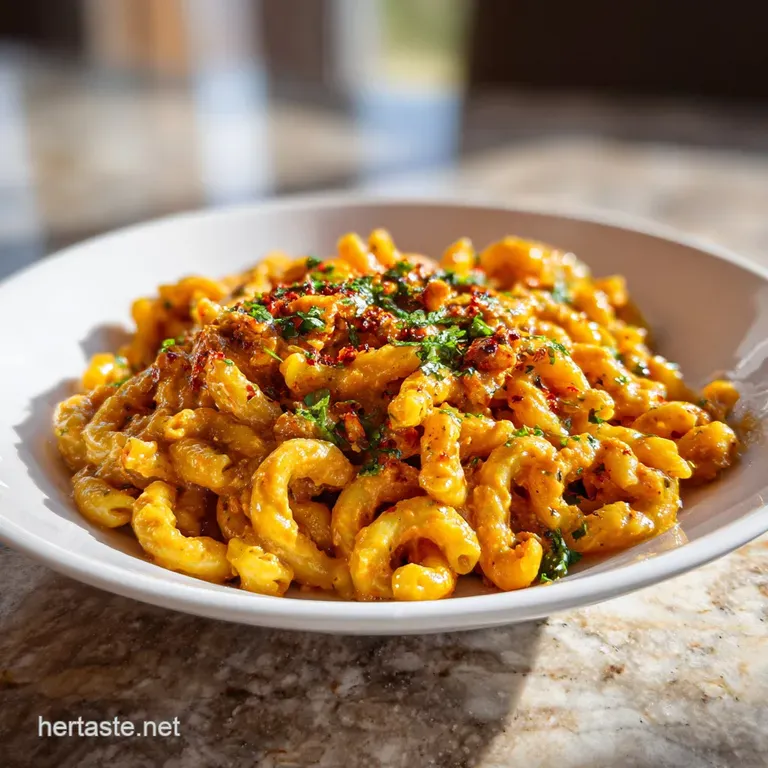
The most common mistake people make with an Unusual Dinner Idea with Spicy Peanut Pasta to Shake Up Your Routine is letting the sauce sit too long before tossing. Peanut butter is high in fat and protein, which means it firms up as it cools.
If your sauce becomes too thick to move, simply add another tablespoon of hot water. It's a very forgiving recipe if you keep that hot water handy.
To Fix a Grainy Sauce
If your sauce looks broken or grainy, it usually means the peanut butter was too cold or the water wasn't whisked in fast enough. You can fix this by adding a tiny splash of warm water and whisking like your life depends on it. The goal is to re emulsify those fats into the liquid. It's a similar fix to what you might do if a soup base goes wrong, like in this Spicy Chicken Noodle recipe.
| Problem | Root Cause | Solution |
|---|---|---|
| Sticky Noodles | Draining too early | Toss with a teaspoon of sesame oil if not using sauce immediately. |
| Bland Sauce | Old Ginger | Add an extra teaspoon of rice vinegar to brighten the existing flavors. |
| Too Much Heat | Heavy handed Gochujang | Stir in an extra teaspoon of honey or a squeeze of lime juice. |
Sometimes the cabbage can release a bit of water if it sits too long, which might thin out your sauce. To avoid this, only toss the vegetables in right before you are ready to eat. This keeps the crunch at a maximum and the sauce at its thickest consistency.
Trust me, the contrast between the soft noodles and the snap of the carrot is what makes this dish work.
Common Mistakes Checklist:
- ✓ Forget to reserve the pasta water (the sauce won't emulsify without it).
- ✓ Using "Natural" peanut butter with oil on top (it can be too runny for this specific glaze).
- ✓ Overcooking the noodles (they should have a slight "bite" to balance the creamy sauce).
- ✓ Skipping the acid (the vinegar is what stops the peanut butter from feeling too heavy).
- ✓ Adding the veggies to the boiling water (they will lose their color and crunch).
Scaling
If you are scaling this Peanut Pasta to Shake Up Your Routine down for one person, simply halve everything, but use the same amount of ginger and garlic. Aromatics don't always scale linearly, and you want that punch. For a single serving, use a small pot and about 4 oz of noodles.
The cook time remains the same, so it's a perfect "dinner for one" scenario when you want something better than toast.
When scaling up for a group of four or more, be careful with the liquids. Double the peanut butter and soy sauce, but only increase the pasta water by about 1.5 times to start. You can always add more, but you can't take it away. Also, work in batches when tossing the noodles in the sauce if your bowl isn't massive.
This ensures every single strand gets its fair share of that spicy, nutty coating.
Myths
Many people believe that you need to cook the peanut sauce on the stovetop to "activate" the flavors. This isn't true for this specific recipe. The heat from the freshly boiled noodles and the reserved pasta water is more than enough to bloom the ginger and garlic while melting the peanut butter.
Cooking the sauce separately often leads to it becoming too thick or even scorching the sugars in the honey.
Another myth is that you must use expensive "oriental" style noodles. While udon is fantastic, a standard box of linguine from the grocery store works beautifully. The sauce is the star here, and as long as the pasta provides a good chew, the origin doesn't matter.
In fact, using what you have in the pantry is the whole point of an Easy Unusual Dinner Idea with Spicy.
Creative Variations for Bold Flavor
If you want to turn this into a full blown feast, adding a protein is the way to go. This Dinner Idea with Spicy Peanut Pasta to Shake Up Your Routine is very versatile. You can toss in some leftover shredded chicken or even some seared tofu cubes.
The peanut sauce acts as a universal flavor binder that makes almost any protein taste like it belongs there.
For a Protein Boost
- Shrimp: Sizzle some peeled shrimp in a pan with a little chili oil for 2 minutes per side before tossing them in.
- Chicken: Rotisserie chicken is a lifesaver here; just shred it and let the heat of the noodles warm it up.
- Tofu: Use extra firm tofu, press the water out, and pan fry until the edges are crispy and golden.
For a Low Carb Swap
If you are watching your carbs, you can replace the udon with zucchini noodles or even spaghetti squash. Just be aware that these vegetables release a lot of water. You'll want to reduce the pasta water in the sauce to about 1/4 cup and perhaps add an extra tablespoon of peanut butter to keep the consistency thick.
It still delivers all that spicy, nutty satisfaction without the heavy pasta base.
Storage and Future Meal Planning
This dish is a champion of meal prep. You can store the Spicy Peanut Pasta in an airtight container in the fridge for up to 3 days. However, the noodles will absorb the sauce over time, so it might lose some of that initial silkiness. When you're ready to eat, don't just microwave it on high.
Add a tiny splash of water or milk and stir halfway through the heating process to bring the sauce back to life.
For zero waste, use the leftover stems of the green onions to start a little kitchen garden in a glass of water. Also, if you have extra red cabbage, it makes a killer quick pickle with some of that rice vinegar and a pinch of sugar.
It's a great way to ensure nothing goes to waste while adding a bright side dish to your next meal. I don't recommend freezing this dish, as the texture of the noodles and the fresh veggies will suffer significantly upon thawing.
Plating for a Vibrant Visual
We eat with our eyes first, and this dish has some stunning colors to work with. To make it look like it came from a high end bistro, use a wide, shallow bowl. Twirl the noodles into a high nest in the center using your tongs. This creates height and makes the portion look generous.
Then, scatter the bright orange carrots and purple cabbage around the edges rather than mixing them all into the bottom.
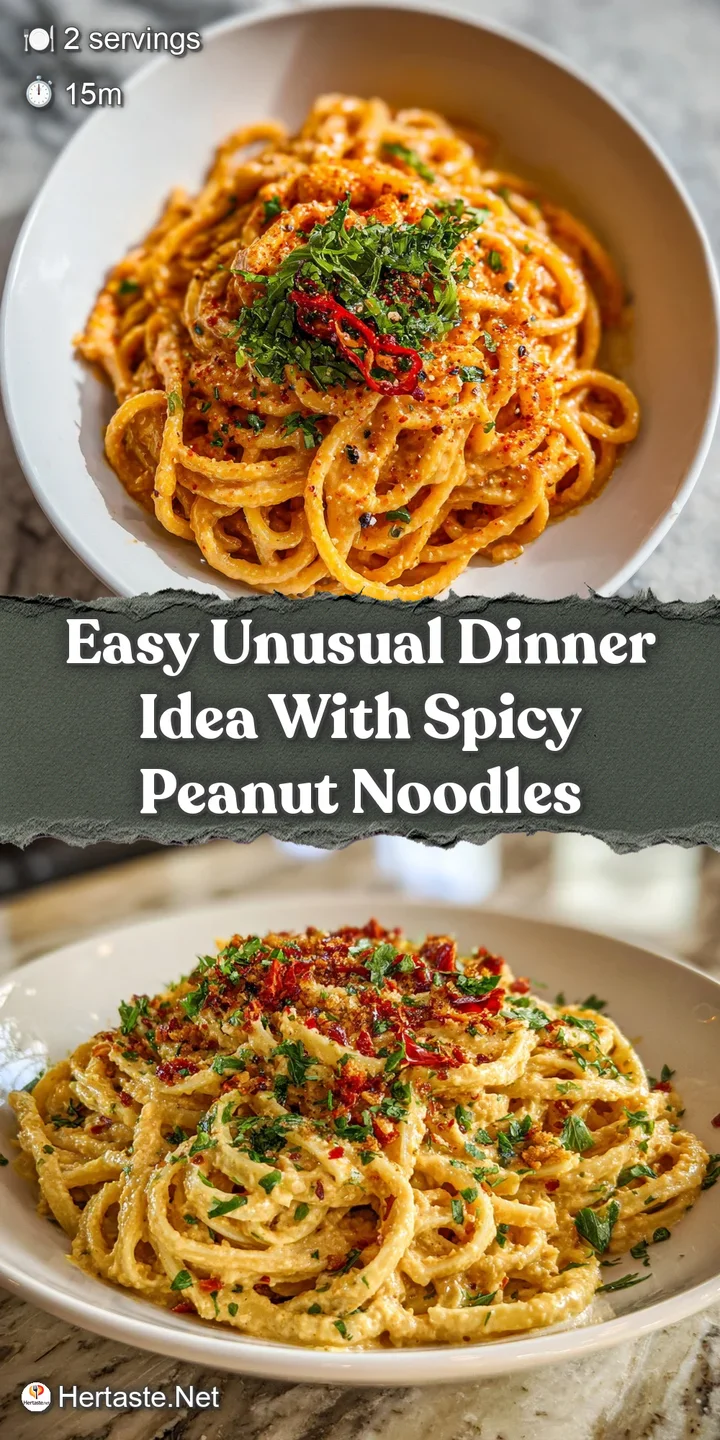
Finish the plate with a heavy handed sprinkle of the crushed peanuts and the green onions sliced on a bias (that's the diagonal cut). The contrast of the dark, glossy noodles against the bright, raw vegetables is what makes this Easy Unusual Dinner Idea with Spicy really pop.
If you're feeling fancy, a final drizzle of toasted sesame oil or a sprinkle of black sesame seeds adds a professional touch that takes seconds but looks like a million bucks.
High in Sodium
1045 mg mg of sodium per serving (45% % of daily value)
The American Heart Association recommends limiting sodium intake to about 2,300mg per day for overall cardiovascular health.
Tips to Reduce Sodium in Your Peanut Noodles:
-
Low-Sodium Soy Sauce Swap-20%
Replace the regular low-sodium soy sauce with a very low-sodium soy sauce. This single swap can significantly reduce the overall sodium content.
-
Dilute Gochujang/Sriracha-15%
Gochujang and Sriracha can contain quite a bit of sodium. Use half the amount specified and increase the ginger and garlic to compensate for flavor.
-
Unsalted Peanut Butter-15%
Use unsalted peanut butter to eliminate added sodium. You can adjust the salt level later to your preference, if needed.
-
Water it Down-10%
Increase the amount of pasta water used to thin the sauce by 1/4 cup (60ml). This will dilute the sodium concentration without drastically altering the flavor profile.
-
Acid Boost-5%
Enhance the flavor with a squeeze of fresh lime or lemon juice instead of relying on sodium for brightness. Add a little at a time to taste.
-
Herb & Spice Power!
Experiment with fresh herbs like cilantro or basil, and spices like white pepper or toasted sesame seeds to boost the flavor without adding sodium. Fresh herbs and spices will take the dish to the next level!
Recipe FAQs
What are some unusual pairings with peanut butter besides standard jelly sandwiches?
Yes, try it savory and spicy. Peanut butter pairs surprisingly well with sharp acidity and heat; incorporating it into a spicy sauce for noodles or vegetables offers an unusual but delicious flavor contrast.
What pairs well with peanut noodles besides standard chicken?
Yes, tofu or shrimp work exceptionally well. Tofu seared until golden absorbs the rich sauce, while shrimp adds a sweet, snappy texture that contrasts the creamy glaze nicely.
What meat goes best with spicy noodles when aiming for a quick meal?
Use pre-cooked or shredded meat for speed. Rotisserie chicken is perfect; simply shred it and let the heat of the freshly tossed noodles warm it through without adding extra cook time.
What can I do with leftover Thai peanut satay sauce if I don't want more noodles?
Use it as a bold dipping sauce or marinade. It works brilliantly as a glaze for roasted carrots or as a thick dipping sauce for fresh spring rolls. If you enjoyed mastering the sauce base here, you can apply the same emulsification principle to other dressings like our Soy Ginger marinade recipe.
How do I prevent my peanut sauce from becoming too thick or oily after mixing?
Always incorporate reserved starchy pasta water gradually. The starch molecules in the water act as an emulsifier, binding the fats in the peanut butter to the liquid base and preventing separation.
Is it true that the noodles must be piping hot to properly coat with the peanut sauce?
No, this is a common misconception, though heat helps significantly. While very hot noodles allow the sauce to melt immediately, using very hot reserved pasta water to thin the sauce is the true key to achieving a velvety coating.
How do I ensure the final dish isn't one-dimensionally rich from the peanut butter?
Introduce a strong acidic element. A splash of rice vinegar or lime juice cuts through the fat, brightening the flavor profile considerably. Mastering this sweet/sour balance is crucial, much like when preparing How to Make recipe where fresh herbs lift the heavy broth.
Spicy Peanut Noodles 15 Min
Ingredients:
Instructions:
Nutrition Facts:
| Calories | 713 calories |
|---|---|
| Protein | 25.8 g |
| Fat | 39.4 g |
| Carbs | 63.8 g |
| Fiber | 6.2 g |
| Sugar | 15.4 g |
| Sodium | 1045 mg |
