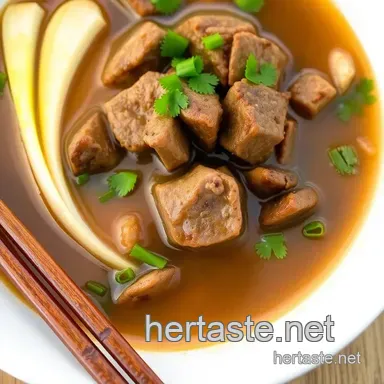
Aromatic Bun Bo Hue with Lemongrass and Beef Shank

- Time: 45 min active + 130 min cooking
- Flavor & Texture: Spicy, citrusy, and rich
- Ideal for: A slow-paced weekend dinner
Making Aromatic Bun Bo Hue
The scent of charred ginger and lemongrass hits you before the pot even finishes boiling. This soup is different from Pho. It's bolder, spicier, and has a distinct depth that comes from the fermented shrimp paste and annatto oil.
The goal is a mahogany colored broth that tastes clean but feels heavy on the palate. You'll get a mix of tender beef shank and marrow-rich broth that warms you up instantly.
It takes a few hours, but most of that is just the pot doing the work. You'll end up with a bowl that's as vibrant in color as it is in flavor.
The Technique Behind It
- The Initial Parboil: Boiling the meat for 5 minutes and rinsing it removes the gray foam and impurities. This keeps the final broth clear instead of cloudy.
- Charring the Aromatics: Blackening the onion and ginger over a flame adds a smoky layer. This cuts through the richness of the beef fat.
- Slow Collagen Release: Simmering the marrow bones and shank for 2 hours breaks down connective tissue. This creates a rich mouthfeel without needing thickeners.
What You'll Need
- 2 lb (900 g) beef marrow bones
- 1.5 lb (680 g) beef shank, trimmed of excess fat Why this? Great for slicing and adds collagen
- 1 lb (450 g) beef short ribs Why this? Provides tender, fatty bites
- 8 stalks (120 g) lemongrass, bruised and knotted
- 1 medium (110 g) white onion, halved
- 3 inches (8 cm) ginger, sliced
- 4 cloves (12 g) garlic, smashed
- 3 tbsp (45 ml) fish sauce, low-sodium
- 1 tbsp (15 g) rock sugar or coconut sugar
- 12 cups (2.8 L) water
- 3 tbsp (45 ml) neutral oil (avocado or grapeseed)
- 2 tbsp (15 g) annatto seeds
- 3 tbsp (30 g) minced lemongrass
- 2 tbsp (30 g) minced shallots
- 1 tbsp (15 g) minced garlic
- 2 tbsp (30 g) fermented shrimp paste
- 2 tsp (10 g) chili flakes or Gochugaru
- 1.5 lb (680 g) thick Vietnamese rice vermicelli noodles
- 1 cup (150 g) bean sprouts
- 1 bunch (30 g) shredded banana blossom or cabbage
- 1 cup (30 g) fresh mint leaves
- 1 cup (30 g) fresh Thai basil
- 2 limes, cut into wedges
- 2-3 slices (5 g) fresh bird's eye chili, optional
The Gear You Need
No specialized equipment is required. A large stockpot (at least 6 quarts) is essential for holding the bones and water. To achieve a clear broth, use a fine mesh strainer, while a small skillet is ideal for the annatto oil and spice blend.
The Cooking Process

Preparing the Base
- Put the beef marrow bones, beef shank and beef short ribs into the stockpot. Cover them with water and let the liquid reach a rolling boil for 5 minutes.
- Rinse the pot and wash the meat and bones under cold water to clear away impurities. Note: This step is what makes the broth look professional and clear.
- Using a gas flame or a broiler, char the sliced ginger and halved onion until the edges are blackened and fragrant.
Building the Broth
- Place the cleaned bones and meats back into the stockpot. Add the lemongrass knots, charred ginger, charred onion, and 12 cups (2.8 L) water. Bring to a gentle bubble, then lower the heat.
- Every 20 minutes during the simmering process, skim any foam off the surface.
- Simmer for approximately 2 hours, until the beef shank and short ribs are tender (internal temperature 195°F/90°C). Remove the short ribs and beef shank, shock them in an ice bath to keep them from drying, then slice thinly.
- Pass the broth through a fine mesh strainer, discarding the aromatics and bones. Set the broth back over low heat.
- Season the liquid with rock sugar and fish sauce, then adjust to taste.
Adding the Spicy Essence
- Combine the neutral oil and annatto seeds in a small pan and heat on medium-low until the oil reaches a deep red orange color. Strain out the seeds and reserve the annatto oil.
- Using the same pan over medium heat, sauté the minced garlic, minced shallots and minced lemongrass in the annatto oil until fragrant. Stir in the chili flakes and shrimp paste, cooking for 1 minute.
- Mix this spice blend into the broth and let it simmer on low for 10 minutes.
Assembling the Bowl
- Boil the rice vermicelli according to the package directions until tender. Drain and rinse with cold water just before serving.
- Distribute the noodles among 6 bowls. Top each with shredded banana blossom or cabbage, bean sprouts, and the sliced short ribs and beef shank.
- Ladle the hot broth over each bowl. Serve with lime wedges, Thai basil, mint, and bird's eye chili slices, if using.
Avoiding Kitchen Disasters
A cloudy broth is the most frequent problem, often caused by excessive heat. When the liquid reaches a rolling boil, fats and proteins emulsify, destroying the clarity. Maintain a gentle simmer instead.
If the shrimp paste tastes too strong, there's no need to worry. The lime wedges added at the finish provide acidity that offsets the pungency. Alternatively, stir in a bit more water or a touch of sugar.
Fixing Common Issues
| Problem | Root Cause | Solution |
|---|---|---|
| Cloudy Broth | Boiling too vigorously | Keep at a bare simmer; skim foam every 20 min |
| Overpowering Paste | Too much | Add more lime juice or a pinch of sugar |
| Mushy Noodles | Overcooked in boiling water | Rinse with cold water immediately after draining |
Flavor Variations to Try
For a leaner version, use beef eye of round instead of short ribs. You'll lose some richness, but the lemongrass and shrimp paste still carry the flavor.
If you want a lighter side to balance the rich beef, a Cauliflower Salad with Yogurt Sauce provides a cool, tangy contrast to the spicy broth.
For a different heat profile, swap the chili flakes for fresh diced habaneros in the spice blend. It gives a fruitier, sharper burn.
| Style | Change | Result |
|---|---|---|
| Lean | Swap ribs for eye of round | Lower fat, lighter broth |
| Extra Spicy | Add fresh habaneros | Sharper, fruitier heat |
| Mild | Reduce chili flakes by half | Focuses more on lemongrass |
Storage and Reheating
Store the broth and sliced meats in individual airtight containers in the fridge for 3 days; this stops the aromas from permeating other foods.
Keep the noodles separate from the broth to prevent them from absorbing the liquid and becoming mushy.
To reheat, bring the broth to a simmer on your stovetop. Warm the beef slices by dipping them into the hot broth for a few seconds. Boil new noodles or reheat pre-cooked ones in a separate pot of water for 30 seconds.
The broth stays fresh in the freezer for 2 months. Thaw it overnight in the fridge before heating it on the stove.
Plating Your Bowl
The look of this soup is half the experience. Start with a mound of white noodles at the bottom. Arrange the sliced beef on one side and the bright green bean sprouts on the other.
Ladle the red orange broth over the top. The color should be a deep, glossy red. Pile the fresh mint and basil on top. Serve the lime wedge on the side of the bowl so the diner can control the acidity.
Chef: Always rinse your noodles in cold water. This stops the cooking process and removes excess starch, keeping the noodles distinct and bouncy in the hot broth.
Recipe FAQs
How to store leftovers?
Store broth and sliced meats in separate containers in the refrigerator. Using airtight lids prevents aromas from leaking into other foods and stops the noodles from turning into mush.
Why shock the beef in an ice bath?
Stop the meat from drying out. This rapid cooling process ensures the thinly sliced beef shank and short ribs stay moist and tender after simmering.
Can I use different noodles?
Yes, though thick Vietnamese rice vermicelli is recommended. Other rice-based noodles can work, but thinner varieties may overcook too quickly in the hot broth.
Does rinsing the meat improve broth clarity?
Yes, it removes impurities. Boiling the bones and meat for 5 minutes, then rinsing them and the pot under cold water, prevents the broth from becoming cloudy.
Do I need to char the onion and ginger?
Yes, for a deeper flavor profile. Blackening the edges over a gas flame or under a broiler adds a fragrant, smoky dimension to the aromatic base.
Aromatic Bun Bo Hue for 6 Servings