Shredded Beef with Garlic and Onions
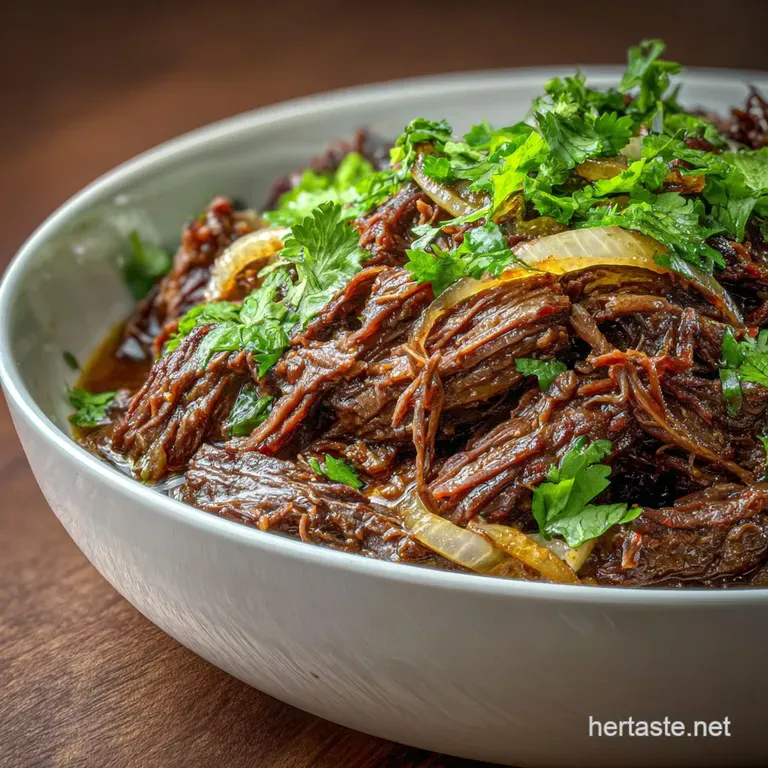
- Time: Active 15 minutes, Passive 8 hours, Total 8 hours 15 mins
- Flavor/Texture Hook: Velvety, melt in-your mouth beef with caramelized garlic notes
- Perfect for: Stress free Sunday dinners or high protein meal prep
- Mastering Shredded Beef with Garlic and Onions
- The Science of Succulence
- Component Analysis and Pro Secrets
- Elements for Deep Flavor
- Required Cooking Hardware
- The Layered Braising Method
- Troubleshooting Common Pitfalls
- Scaling for Different Groups
- Debunking Braising Myths
- Preserving Quality and Freshness
- Serving Styles for Crowds
- Very High in Sodium
- Recipe FAQs
- 📝 Recipe Card
Mastering Shredded Beef with Garlic and Onions
The scent of onions slowly caramelizing in beef fat is something that stays with you. I remember the first time I tried making a roast like this, I was so impatient. I pulled the meat out after four hours, thinking it looked "done." It was a disaster, chewy, tough, and frankly, a waste of a good chuck roast.
But when I finally learned to trust the process and let those eight garlic cloves melt into the fibers over a full eight hours, everything changed. This shredded beef recipe with garlic and onions is a flavorful and easy dinner winner that proves patience is the most important ingredient in your kitchen.
We've all been there, staring at a massive slab of beef chuck, wondering if it's actually going to turn into those tender piles of meat you see in professional kitchens. Trust me, it will. The magic happens when the sharp, pungent bite of raw garlic transforms into a mellow, almost buttery sweetness.
Combined with the jammy texture of thin sliced yellow onions, you get a sauce that doesn't need thickeners or fancy creams. It's just pure, concentrated beef flavor.
In this guide, we are going to look at why we sear the meat first, how the acid in apple cider vinegar does the heavy lifting, and the reason you should never skip the resting phase.
By the time you're done, you'll have a kitchen that smells like a five star steakhouse and a meal that practically falls apart if you even look at it with a fork.
The Science of Succulence
Collagen Transformation: At approximately 160°F, tough collagen fibers in the chuck roast begin to denature and turn into silky gelatin, which provides that iconic mouthfeel.
This process is time dependent, requiring the long, slow cook to ensure the meat doesn't just get hot, but actually changes its molecular structure.
Alliaceous Caramelization: As the onions and garlic cook in the beef juices, their complex carbohydrates break down into simple sugars through a slow pyrolysis. This creates a natural sweetness that balances the savory, salty notes of the kosher salt and black pepper without adding refined sugar.
Acidic Cleaving: The acetic acid in apple cider vinegar works to break down the exterior protein bonds of the beef roast. This allows the bone broth and garlic essence to penetrate deeper into the center of the meat during the eight hour braise.
| Thickness of Roast | Target Internal Temp | Rest Time | Visual Doneness Cue |
|---|---|---|---|
| 2 inches | 205°F | 15 minutes | Meat shreds with a light tap of a fork |
| 3 inches | 205°F | 20 minutes | Fat cap has completely turned translucent |
| 4 inches | 205°F | 30 minutes | Bone (if present) pulls out with zero resistance |
The internal temperature of 205°F is the "sweet spot" for shredded beef. While 145°F is technically safe to eat, the meat will be tough and rubbery. You must push past the "stall" to reach that higher temperature where the fibers finally give up their grip and become tender.
Component Analysis and Pro Secrets
| Ingredient | Science Role | Pro Secret |
|---|---|---|
| Beef Chuck Roast | Primary fat and protein source | Choose a roast with heavy white marbling for maximum moisture. |
| Fresh Garlic | Aromatic sulfur compounds | Slice into thick chips rather than mincing to prevent burning during the long cook. |
| Apple Cider Vinegar | pH balancer and tenderizer | Use raw vinegar with "the mother" for a more complex tang. |
| Yellow Onions | Moisture reservoir | Slice against the grain so they melt into the sauce entirely. |
A quick note on the onions - if you want them to retain some shape, slice them thick. If you want them to become part of the gravy, slice them as thin as paper. I personally prefer the "melt away" method because it coats every strand of beef in a sweet onion glaze. This technique is similar to what I use in my PanSeared Beef Medallions recipe to build a deep base flavor.
Elements for Deep Flavor
To get the best results, stick to these exact measurements. The balance of salt to fat is crucial here.
- 3 lbs beef chuck roast: Make sure it is trimmed of excess external fat, but keep the internal marbling. Why this? Chuck has the ideal fat to connective tissue ratio for shredding. (Substitute: Brisket, though it will be slightly more fibrous).
- 1 tbsp kosher salt: Use a coarse grain like Diamond Crystal if possible. Why this? It draws out moisture to create a better crust during searing. (Substitute: 1.5 tsp table salt).
- 2 tsp cracked black pepper: Freshly cracked makes a world of difference. (Substitute: Pre ground white pepper for a milder heat).
- 1 tbsp garlic powder: This acts as a dry rub base. (Substitute: Onion powder).
- 2 large yellow onions: Sliced thin. Why this? Yellow onions have the highest sugar content for caramelization. (Substitute: White onions for a sharper bite).
- 8 fresh garlic cloves: Sliced into thick chips. Why this? Chips provide bursts of flavor without disappearing. (Substitute: 2 tbsp jarred minced garlic).
- 1 cup low sodium beef bone broth: Richer than standard stock. (Substitute: Dry red wine for a French twist).
- 2 tbsp apple cider vinegar: For that necessary brightness. (Substitute: Red wine vinegar).
- 2 bay leaves: Adds a subtle herbal background note. (Substitute: 1/2 tsp dried thyme).
Required Cooking Hardware
You don't need a professional kitchen, but a few specific tools will make your life significantly easier. First, a heavy bottomed pan for searing is non negotiable. A cast iron skillet (like a Lodge) is my go to because it holds heat like a champ, ensuring you get a dark, crispy crust on the beef.
Next,, you'll need a reliable slow cooker or a heavy Dutch oven. If you use a slow cooker, make sure it's at least a 6 quart model so the 3 lbs of beef isn't cramped. For the shredding phase, a couple of sturdy dinner forks will work, but I actually love using a stand mixer with the paddle attachment if I'm in a hurry.
It shreds the whole roast in about thirty seconds. Just don't over process it, or you'll end up with beef mush!
The Layered Braising Method
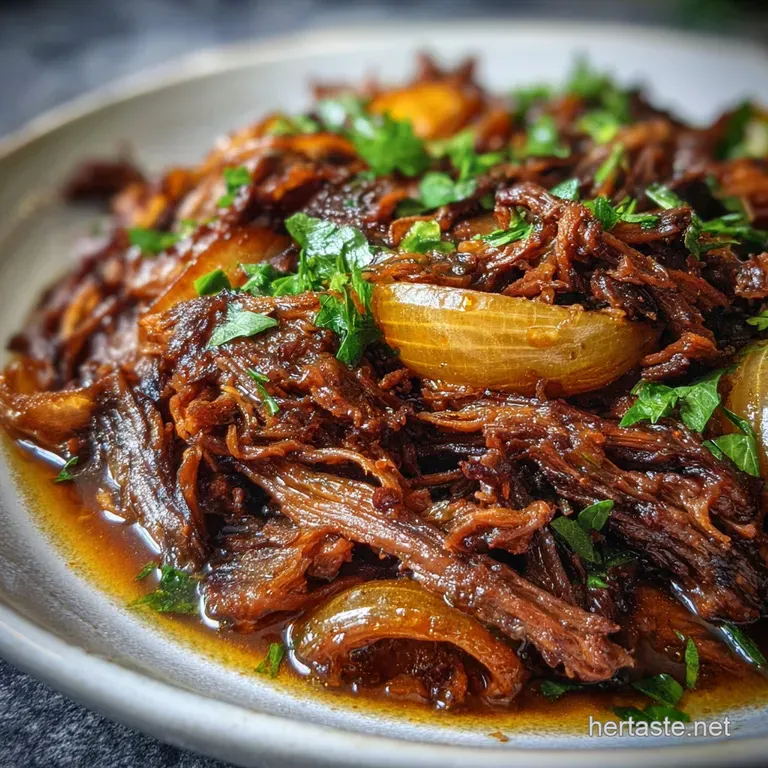
- Prep the meat. Pat the 3 lbs beef chuck roast completely dry with paper towels. Note: Surface moisture creates steam, which prevents a proper sear.
- Apply the rub. Combine the kosher salt, cracked black pepper, and garlic powder in a small bowl. Rub this mixture into every nook and cranny of the beef.
- Sear the beef. Heat a skillet over high heat with a splash of oil. Sear the roast for 4 minutes per side until a dark, mahogany crust forms.
- Build the base. Place half of the sliced yellow onions and half of the garlic chips in the bottom of your slow cooker.
- Transfer the roast. Place the seared beef directly on top of the onion bed.
- Add the liquids. Pour the 1 cup beef bone broth and 2 tbsp apple cider vinegar around the sides of the beef, not over the top. Note: Pouring over the top washes off your seasoning crust.
- Layer the aromatics. Pile the remaining onions, garlic chips, and the 2 bay leaves on top of the roast.
- The long wait. Cover and cook on "Low" for 8 hours until the meat yields to the slightest pressure.
- Rest and shred. Remove the roast to a large bowl and let it sit for 15 minutes. Shred the meat into thick strands using two forks.
- The final toss. Return the shredded meat to the slow cooker and toss it with the remaining juices until every strand is glossy and wet.
If you are looking for a similar "set it and forget it" vibe, you might also enjoy my Crockpot Corned Beef recipe for your next big family meal.
Troubleshooting Common Pitfalls
Fixing Tough Beef
If you try to shred the beef and it feels like you're fighting a rubber band, it simply hasn't cooked long enough. Even if the timer says 8 hours, every slow cooker and every piece of meat is different. Some roasts have more connective tissue than others and just need more time to break down.
| Problem | Root Cause | Solution |
|---|---|---|
| Meat is dry/stringy | Cooked on "High" too fast | Shred and submerge in extra broth for 30 mins before serving. |
| Sauce is too thin | Too much condensation | Transfer liquid to a saucepan and boil until reduced by half. |
| Garlic tastes bitter | Garlic burned during sear | Always add fresh garlic after the searing stage is complete. |
Another common issue is the "bland" factor. If the beef tastes flat, it usually needs a touch more acid or salt. A tiny splash of extra vinegar right before serving can wake up all those heavy, fatty flavors.
Common Mistakes Checklist
- ✓ Never skip the searing step; it’s where 80% of the deep flavor comes from.
- ✓ Don't open the lid during the first 6 hours of cooking; you'll lose the steam needed for tenderizing.
- ✓ Ensure the roast is at least halfway submerged in liquid to prevent the top from drying out.
- ✓ Avoid using "Lean" beef cuts like Eye of Round; they will never shred properly.
- ✓ Always let the meat rest before shredding to keep the juices inside the fibers.
Scaling for Different Groups
Scaling Down (1.5 lbs beef): If you're cooking for just two people, use a smaller 3 quart slow cooker. Keep the onion and garlic amounts the same (they provide the moisture!), but reduce the broth to 1/2 cup. Check for doneness at the 6 hour mark.
Scaling Up (6 lbs beef): You'll need an 8 quart slow cooker or a large roasting pan. Double the salt and pepper, but only increase the garlic powder and bay leaves by 1.5x to avoid overpowering the meat. Work in batches when searing to ensure the pan stays screaming hot. This is a great way to handle large parties, much like the process in this How to Turn recipe.
| Method | Time | Texture | Best For |
|---|---|---|---|
| Slow Cooker | 8 hours (Low) | Silky & Soft | Total "set and forget" convenience |
| Dutch Oven | 3 hours (300°F) | Rich & Deep | When you want a thicker, braised sauce |
| Instant Pot | 75 mins (High) | Firm but Tender | Last minute weeknight dinner |
Debunking Braising Myths
Myth: You must submerge the meat entirely in liquid. Truth: This isn't soup! If you cover the meat completely, you end up boiling it, which results in a gray, flavorless roast. You only need enough liquid to create steam and a base for the sauce.
Myth: Cooking on "High" for 4 hours is the same as "Low" for 8 hours. Truth: While the temperature might eventually reach the same point, the collagen needs time to melt.
High heat often tightens the muscle fibers before they have a chance to relax, leading to meat that is "done" but still tough.
Preserving Quality and Freshness
Storage: Store your shredded beef in an airtight container in the refrigerator for up to 4 days. Always store it in its cooking juices. If you store it "dry," the fibers will oxidize and turn tough and gray.
Freezing: This recipe freezes beautifully. Place the cooled beef and juices in a heavy duty freezer bag, squeeze out all the air, and freeze for up to 3 months. To reheat, thaw overnight in the fridge and warm it gently in a skillet over medium low heat.
Zero Waste Tip: Don't you dare throw away those leftover onions and fat! The remaining liquid in the pot is liquid gold. Strain it and keep it in the fridge; once the fat solidifies on top, you can use it like butter to sauté vegetables or roast potatoes for a massive flavor boost.
Serving Styles for Crowds
The High Protein Power Bowl
Pile the shredded beef over a bed of cilantro lime rice or quinoa. Top with pickled red onions, sliced avocado, and a dollop of Greek yogurt. The richness of the garlic heavy beef pairs perfectly with the bright, acidic toppings.
Rustic Garlic Onion Sliders
Toast some brioche buns with a little garlic butter. Heap the beef onto the bottom bun and add a slice of provolone cheese. Pop it under the broiler for 60 seconds until the cheese is bubbling and brown.
Serve with a small cup of the leftover braising juices for dipping essentially a "French Dip" style slider that will disappear in minutes.
Very High in Sodium
1245 mg mg of sodium per serving (54% % of daily value)
The American Heart Association recommends limiting sodium intake to about 2,300mg per day.
Tips to Reduce Sodium in Your Chuck Roast
-
Broth Swap-30%
Replace the 1 cup of low-sodium beef bone broth with 1 cup of homemade beef broth or unsalted beef stock. This will drastically cut down on the sodium content.
-
Reduce Salt-25%
Cut the kosher salt in half, using only 1/2 tbsp. You can always add more salt to taste at the end, but it's easier to start with less.
-
Skip the Salt-25%
Eliminate the kosher salt entirely and rely on other flavors to season the roast. You can add salt substitutes, or increase the other spices.
-
Adjust the Acid-5%
The apple cider vinegar adds brightness. Consider using a squeeze of fresh lemon juice or a splash of red wine vinegar instead to further enhance flavor and reduce the perceived need for salt.
-
Spice it Up!
Experiment with fresh herbs and spices like thyme, rosemary, smoked paprika, or a pinch of red pepper flakes to enhance flavor without adding sodium. These contain no sodium.
Recipe FAQs
What's the secret to tender shredded beef?
Slow and low is key. Tougher cuts like chuck roast need at least 8 hours of slow cooking to break down connective tissues into gelatin, which makes the meat incredibly tender.
What is the best cut of beef for shredding?
Beef chuck roast is ideal. It has the perfect balance of fat and connective tissue, which breaks down during slow cooking to create that signature tender, shreddable texture.
When to add onions and garlic to shredded beef?
Add them early with the beef. Onions and garlic cook down significantly during the long braising process, infusing their flavors deeply into the meat and creating a rich sauce base.
What spices are good for pulled beef?
Classic aromatics work best. Salt, black pepper, and garlic powder form a great base, while bay leaves add a subtle herbal note during the long cook. You can also explore flavors similar to our Best Classic Beef Chili Recipe Proper Texan Comfort Food.
Can I use ground beef instead of a chuck roast for shredded beef?
No, ground beef won't achieve the same texture. Ground beef is already broken down and will turn into mush during a long braise. For shredded beef, you need a cut with intact connective tissues like chuck roast.
How do I ensure my shredded beef isn't dry?
Don't skip the resting and storing in juices. After shredding, toss the meat with the reserved cooking liquid until glossy. Store it in its juices in an airtight container; this keeps it moist and flavorful for days.
What if my shredded beef is still tough after cooking?
It likely needs more time. Toughness indicates that the connective tissues haven't fully broken down. Continue cooking on low heat until the meat shreds easily with a fork. Mastering this patience is similar to achieving perfect tenderness in dishes like our Ultimate Comfort: How to Braise Beef Short Ribs with Oxtail Spice.
Shredded Beef Garlic Onion
Ingredients:
Instructions:
Nutrition Facts:
| Calories | 438 kcal |
|---|---|
| Protein | 49.2 g |
| Fat | 21.8 g |
| Carbs | 7.4 g |
| Fiber | 1.2 g |
| Sugar | 3.1 g |
| Sodium | 1245 mg |
