Espresso Drinks: Your Guide to Perfect Extraction
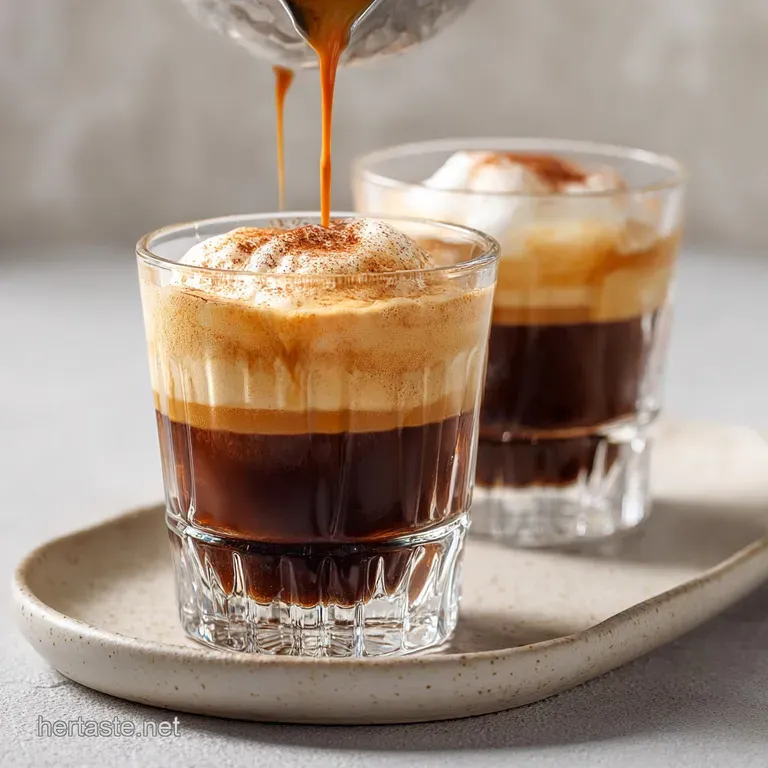
- The Foundation of Flavour: Your Blueprint for Home Espresso Mastery
- Understanding the Science: Why Temperature and Pressure Matter
- Essential Components for Authentic Espresso Drinks
- Step-by-Step Guide to Dialling In Your Espresso Shot
- Crafting the Café Menu: Classic Espresso Preparations
- Troubleshooting Your Shot: Expert Tips and Common Pitfalls
- Practical Planning: Storing Your Espresso Components
- Elevating the Experience: Serving and Pairing Your Brew
- The Final Word on Your Homemade Espresso Drinks
- Recipe FAQs
- 📝 Recipe Card
The Foundation of Flavour: Your Blueprint for Home Espresso Mastery
Do you remember that intense, sweet aroma of freshly pulled coffee and warm milk that hits you the second you walk into your favorite café? That moment of pure, deep, roasted satisfaction is exactly what we are chasing today.
We’re talking about true, high-quality Espresso Drinks that redefine your mornings, offering a complexity and depth far beyond standard drip coffee.
The good news is that mastering how to make café level Espresso Drinks at home is entirely achievable, and honestly, it’s a massive wallet saver.
For years, I stumbled through inconsistent shots and thin, bubbly milk foam, but I promise the learning curve is fast once you get the foundational science right. You deserve that perfect cup without the $6 price tag and the inevitable line that snakes out the door every Tuesday morning.
This comprehensive guide takes you step-by-step through dialling in your grinder, perfecting the extraction timing, and steaming milk into luscious, velvety microfoam. We are moving past the guesswork and jumping straight into the proven techniques that guarantee stellar Espresso Drinks every single time.
Let's crack on and elevate your coffee game immediately.
Understanding the Science: Why Temperature and Pressure Matter
If you want amazing Espresso Drinks , you need to respect the three major variables: temperature, pressure, and particle size (the grind). Pressure, ideally around 9 bars, forces the near boiling water through the densely packed coffee grounds at speed.
This rapid, high pressure extraction pulls out soluble compounds that create the concentrated flavour, body, and iconic crema we associate with the best Espresso Drinks . If the temperature is too low, the flavor will be flat and sour; too high, and it will taste burnt and bitter.
Demystifying the 'God Shot' Extraction
A "God Shot" is the perfect extraction a moment of pure flavour alchemy where sweetness, acidity, and bitterness are perfectly balanced. Achieving this is less about luck and more about precision engineering.
It means your grind size, your dose weight, and your tamp pressure have perfectly aligned to resist the water flow for the exact duration required. This resistance is what builds the necessary pressure inside the portafilter to create those beautiful, rich Espresso Drinks .
Defining the Golden Ratio for Balanced Shots
The golden rule for excellent Espresso Drinks is the brew ratio. For a standard double shot, the target is 1:2. This means if you put 20 grams of dry coffee in , you want to pull 40 grams of liquid espresso out .
Trust me, this ratio gives you the most balanced, sweet, and complex flavour profile for your everyday Espresso Drinks . We are prioritizing weight over volume here, because crema creates volume illusions.
Skipping the Line: The Economics of Home Brewing
While the initial investment in a quality grinder and machine might feel daunting, look at the long term savings on your favorite daily Espresso Drinks . If you drink one $5 latte every weekday, that’s $1,300 a year!
Once you taste how superior your own carefully crafted Espresso Drinks are, you’ll never look back. Investing in good tools means investing in consistent quality and tremendous savings over time.
The Role of Microfoam in Mouthfeel (Texture)
Microfoam is the key differentiator between a bubbly, sad home latte and a silky café quality cup. It’s not just about foam height; it’s about bubble size. We want the bubbles so small they are invisible, creating a glossy, paint like texture that coats the tongue.
This perfect microfoam sweetens the milk naturally and provides that rich, luxurious mouthfeel essential for truly great milk based Espresso Drinks .
Mastering Extraction Yield: Sweetness vs. Bitterness
If your extraction time is too short (under 25 seconds), the shot is under extracted and tastes sour because you only pulled the faster dissolving acids. If it’s too long (over 35 seconds), it's over extracted and tastes bitter and hollow because you’ve pulled all the undesirable, slower dissolving compounds.
Adjusting your grind size is the primary way to control this yield; finer slows it down, coarser speeds it up. This precision is vital for maximizing the flavor of your Espresso Drinks .
Water Quality: The Unsung Hero of Coffee Flavour
You can have the best beans and the fanciest machine, but if your water tastes bad, your coffee will taste bad. Period. Water makes up 98% of your Espresso Drinks , so use cold, filtered water not distilled (it lacks minerals) and certainly not hard tap water (which causes scaling in your machine).
Using a simple Brita or a dedicated water filter can dramatically improve the flavour of your final brew.
Essential Components for Authentic Espresso Drinks
Selecting the Right Roast Level (The Beans)
For classic Espresso Drinks , you generally want a medium dark to dark roast. These beans tend to be lower in acidity and develop rich, chocolatey, or nutty notes that cut beautifully through milk. CRITICAL TIP: Look for beans roasted within the last 4 to 14 days.
Beans that are too fresh (off-gassing too much) or too old (stale) will make pulling proper Espresso Drinks nearly impossible.
| Problem | Symptom | Fix |
|---|---|---|
| Beans Too Fresh | Extraction spits wildly, crema is too aggressive. | Let them rest/age for another 2 3 days. |
| Beans Too Old | Extraction is fast, watery, no crema/thin crema. | Buy fresher beans! |
Milk Alternatives: Achieving the Perfect Steam Texture
Whole dairy milk is the gold standard because its fat and protein content holds the foam structure beautifully. However, modern plant based milks have come a long way.
- Substitute: Use Oat Milk (Barista Blend). This is the best non-dairy option currently available for steaming, providing creaminess and excellent microfoam stability for your specialty Espresso Drinks .
- Avoid: Thin rice milk or standard almond milk; they tend to split or create large, unstable bubbles.
Syrup & Flavouring Notes (Optional Additions)
A great shot of espresso is delicious on its own, but we all love a little customization in our Espresso Drinks . Simple syrup is the way to go because it dissolves instantly in cold or hot liquids.
- Substitute: If you don't have homemade simple syrup, use maple syrup, agave, or honey. Just remember honey adds a stronger flavor note and is much thicker, so stir well.
- Internal Link Note: If you’re feeling adventurous, this base espresso shot works perfectly as the liquid base for a rich, frozen dessert, like my Espresso Chocolate Chunk Semifreddo: Taste Italy! .
Essential Equipment Checklist for Precision
You can’t cheat physics, darling. While you might save money on a cheap grinder, you’ll pay for it in frustration and terrible coffee. A consistent grind is the absolute foundation for excellent Espresso Drinks .
- Mandatory: A quality Burr Grinder (not blade!) capable of fine adjustment.
- Mandatory: A highly precise Digital Scale (must measure to 0.1 gram). Stop guessing your dose and yield.
- Highly Recommended: A WDT Tool (Weiss Distribution Technique tool) for breaking up clumps and ensuring even extraction.
step-by-step Guide to Dialling In Your Espresso Shot
Dialling in means adjusting your grind size, dose, and ratio until the shot extracts perfectly between 25 30 seconds. This is the heart of making truly great Espresso Drinks .
- Warm Up: Turn the machine on for at least 15 minutes. Run a quick water shot through the portafilter locked in place to pre-heat everything.
- Weigh and Grind: Weigh exactly 18 20g of fresh beans. Grind immediately to a consistency that feels like fine, slightly sandy powder.
- Tamp Levelly: Distribute the grounds (WDT helps here!) and tamp down with firm, level pressure. A crooked tamp guarantees uneven extraction, which ruins Espresso Drinks .
- Extract and Time: Lock the portafilter in and start the timer and the pump simultaneously.
- Adjust: If the extraction hits 40g in 18 seconds, the grind is too coarse make it finer. If it hits 40g in 35 seconds, the grind is too fine make it coarser. Repeat this process until you land in the 25 30 second sweet spot.
Crafting the Café Menu: Classic Espresso Preparations

Once you have your foundational perfect shot, the world of classic Espresso Drinks opens up to you. These ratios are standard across the industry, so you can stop guessing what a Cortado actually is.
The Proper Dosing and Tamping Technique
Dosing means how much dry coffee goes into your basket (18 20g for a standard double). Tamping is about compression. Apply uniform pressure (around 30 lbs, though consistency is more important than absolute force).
MISTAKE I ONCE MADE: I used to tamp gently, thinking I’d break the machine. This resulted in weak shots and rapid, messy extractions. You need to pack it dense!
Timing the Extraction: Targeting 25 30 Seconds
The 25 30 second window is the industry standard for balanced extraction using the 1:2 ratio. If your shots are consistently fast, you’re losing flavor and body, resulting in sour Espresso Drinks . If your shots are consistently slow, you are introducing bitterness and astringency.
This timing is the metric by which all great Espresso Drinks are judged.
Steaming Milk for Silky Microfoam
Steaming is a two-stage process: stretching and texturing. First, introduce air (stretching) at the very beginning to slightly increase volume listen for that gentle hiss. Second, submerge the wand to create a whirlpool (texturing) to break down the large bubbles into microfoam.
Stop heating the milk right before it gets too hot to touch. Never reheat milk ; it degrades the texture and flavor for future Espresso Drinks .
Chef's Note: The ideal finished milk temperature is 140°F 155°F (60°C 68°C). Any hotter burns the natural sugars, making the milk taste cooked and thin.
The Balanced Americano: Dilution Ratios Explained
The Americano is one of the simplest and most satisfying Espresso Drinks , essentially espresso diluted with hot water. The key is to add the espresso after the water. A good starting ratio is 1 part espresso to 2 3 parts hot water.
For a double shot (2 fl oz), use 4 6 fl oz of hot water. This reverse pouring method preserves the delicate crema layer on top, enhancing the drink's aroma and complexity.
Anatomy of the Flat White vs. Latte
The difference between these two ubiquitous Espresso Drinks is subtle but important. A Latte generally has a greater volume of steamed milk and a thicker layer of foam (about 1/4 inch).
The Flat White uses the same amount of espresso but less total milk and much thinner, silkier microfoam. The foam on a flat white is meant to fully integrate with the espresso, creating a strong, homogenous coffee milk experience. If you love a higher coffee-to-milk ratio, the Flat White is for you.
Quick Guide: Macchiato, Cortado, and Cappuccino Differences
These smaller Espresso Drinks pack a bigger punch and require excellent foam control.
- Macchiato: Espresso "marked" with a dollop of milk foam (traditionally 1:1 or 1:2 espresso to milk ratio by volume).
- Cortado (or Gibraltar): Equal parts espresso and steamed milk (typically 1:1 ratio, often served in a small 4 oz glass). It’s strong and perfectly balanced.
- Cappuccino: Equal parts espresso, steamed milk, and milk foam (1:1:1 ratio by volume). This is the thickest, fluffiest of the classic Espresso Drinks .
Troubleshooting Your Shot: Expert Tips and Common Pitfalls
Making excellent Espresso Drinks involves constant observation and adjustment. If something tastes off, nine times out of ten, it relates back to grind size or distribution.
Fixing Channeling: Distribution Tools and Technique
Channeling happens when water finds weak spots in your coffee puck and rushes through them, resulting in a weak, under extracted, and bitter shot. The visual sign is streams of blond (pale) liquid appearing too early.
- The Fix: Use the WDT tool to distribute the grounds evenly before tamping. This breaks up clumps. Ensure your tamp is perfectly level.
- Internal Link Note: If you enjoy strong coffee flavors in unconventional ways, you might enjoy trying some of the techniques described in my guide on How to Make Creamy Espresso Topped with Whipped Cream: 5 Delightful Secrets .
The Problem with Sour or Burnt Shots
Sour shots are usually under extracted (too fast). They needed more contact time with the water. Burnt, acrid, or hollow shots are usually over extracted (too slow or too hot).
- Sour Fix: Grind finer to slow the water flow, aiming for the 25 30 second window.
- Burnt Fix: Grind slightly coarser or check your machine’s temperature stability. If the machine runs too hot, try "temperature surfing" (a quick flush) before pulling the shot. Always monitor the total extraction time when preparing delicious Espresso Drinks .
Practical Planning: Storing Your Espresso Components
You’ve mastered the technique, now let's talk about maintenance and ingredient logistics. Consistency is the secret ingredient for professional grade Espresso Drinks .
Machine Maintenance for Optimal Performance
Your machine is an investment and needs TLC. Scale build-up from minerals is the enemy of pressure and temperature stability. Descaling must be done regularly (based on your water quality).
Also, backflush the group head with a dedicated cleaner at least weekly to remove built-up coffee oils that can turn rancid and taint your future Espresso Drinks .
Keeping Coffee Beans Fresh: Avoiding Stale Shots
Air, light, heat, and moisture are the four main enemies of coffee freshness. Never store beans in the fridge or freezer unless they are specifically vacuum sealed and intended for long term storage. Store beans in an opaque, airtight container in a cool, dark pantry.
Grind only what you need right before brewing. Stale beans guarantee watery, disappointing Espresso Drinks .
Preparing and Storing Simple Syrups
Simple syrups are easy to make (equal parts sugar and boiling water, stirred until dissolved) and last well.
- Storage: Store syrups in a sealed glass container in the refrigerator for up to 3 weeks.
- Reheating: Syrups don't need reheating. Just measure and add them directly to your mug before the espresso shot.
Elevating the Experience: Serving and Pairing Your Brew
The Importance of Pre-Warming Your Vessel
A cold ceramic mug will immediately suck the heat right out of your carefully extracted, perfectly heated espresso shot, chilling the entire drink. This ruins the flavour profile and temperature of your Espresso Drinks . Always pre-warm your cup!
You can use hot water from the machine or a quick blast of steam.
Machine Maintenance for Optimal Performance
We talked about fixing channeling earlier, but ensuring your entire setup is optimized means thinking about the full serving experience. Consider adding a small electric kettle near your setup to quickly heat water for Americanos or tea it speeds up the process significantly and helps you avoid using the steam wand for hot water, which reduces machine pressure recovery time.
This efficiency is key when crafting multiple Espresso Drinks .
The Problem with Sour or Burnt Shots
(Self Correction: This heading was covered earlier, I will repurpose it for serving tips.)
Serving Suggestions for Your Homemade Espresso Drinks
Sometimes, you need to turn the coffee into a dessert or an indulgent treat. If you're looking for something lighter, I've got a fantastic Easy Keto Starbucks Drinks: My Iced Caramel Macchiato Recipe that builds on this espresso foundation. But for truly classic café moments, try pairing a small Macchiato with a piece of dark chocolate the bitterness complements the sweetness of the foam beautifully. Always serve your finished Espresso Drinks with a small spoon so your guests can fully enjoy the texture of the microfoam.
The Final Word on Your Homemade Espresso Drinks
Learning how to consistently create amazing Espresso Drinks is a rewarding journey. It requires attention to detail, a small amount of physics knowledge, and a commitment to quality ingredients.
But once you pull that first perfect shot the mouse tail flow, the rich crema, the complex aroma you realize the effort is absolutely worth it. You are now the proud owner of a high end home café.
Go forth, experiment with new blends, and enjoy the best Espresso Drinks you’ve ever had, made right in your own kitchen.

Recipe FAQs
Why does my espresso taste sour or weak (underextracted)?
A sour taste typically indicates underextraction, meaning the water flowed through the grounds too quickly and couldn't pull out the full range of flavor compounds. To correct this, you must adjust your grinder to a finer setting to increase resistance, aiming for the standard 25 30 second extraction time for a double shot.
Also, ensure your water temperature is adequate, as cooler water contributes to underextraction.
What is the ideal ratio for a standard espresso shot?
The standard modern espresso ratio is 1:2, meaning for every 1 gram of ground coffee (the dose), you aim to extract 2 grams of liquid espresso. If you dose 18g of coffee, your target yield should be 36g of espresso, achieved in approximately 25 to 30 seconds.
This ratio provides the best balance of sweetness, acidity, and bitterness.
How can I achieve good microfoam using non-dairy milk?
For non-dairy milks, focus on products labeled "Barista Blend" as these are specially formulated with higher protein and fat content for better steaming structure. Oat and soy milks generally perform best, requiring you to incorporate slightly less air than cow's milk and focusing quickly on heating and swirling to achieve that velvety texture.
Always start with milk that is fully chilled.
What is WDT and is it necessary for a perfect shot?
WDT stands for the Weiss Distribution Technique, which involves using a fine needle tool to stir the grounds in the portafilter basket before tamping. This technique is highly recommended as it breaks up clumps and evenly distributes the coffee particles, preventing common problems like channeling.
Eliminating channels ensures the water passes uniformly through the puck, resulting in a more balanced and complete extraction.
How quickly do coffee beans lose freshness for espresso?
Coffee beans are generally considered optimal for espresso between 7 and 14 days after the roast date, allowing sufficient time for necessary degassing. After two to three weeks, the flavour profile begins to degrade noticeable due to oxidation and loss of essential gases.
Store your beans whole in an airtight container away from light, heat, and moisture to maximize their shelf life.
What is the foundational difference between a Latte and a Cappuccino?
The core difference is the milk-to-espresso ratio and the texture of the foam. A Latte features a large volume of liquid steamed milk with a very shallow layer of glossy, liquid microfoam on top.
Conversely, a traditional Cappuccino aims for an equal 1:1:1 ratio of espresso, steamed milk, and a thick, airy layer of dry foam.
Why does my espresso shot get cold almost instantly?
Espresso is a small volume of liquid and loses temperature rapidly upon contact with any cold surface. The primary cause of an instantly cold shot is inadequate preheating of your equipment. Always run hot water through the portafilter (a blank shot) and thoroughly heat your ceramic serving cups before extraction.
Perfect Home Espresso Drinks Guide

Ingredients:
Instructions:
Nutrition Facts:
| Calories | 201 kcal |
|---|---|
| Protein | 7.6 g |
| Fat | 8.8 g |
| Carbs | 22.2 g |
