Homemade Italian Tiramisu

- Prep25 Mins
- Cook10 Mins
- Servings12 slices
- Time: 25 min active + 10 min cooking + 8 hours chilling
- Taste: Deep coffee bitterness balanced by sweet, creamy mascarpone and a dusting of dark cocoa
- Best for: Holiday dinner parties or a cozy Sunday night comfort treat
- Make ahead: Prepare up to 24 hours before serving to let the flavors meld
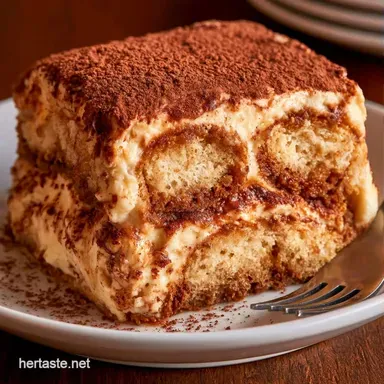
Tiramisu
Picture a cold winter evening, a table full of family, and a tray of this dessert waiting in the fridge. It's the kind of treat that brings a bit of Italian joy to any occasion, whether it's a birthday or just a reason to gather.
You can expect a dessert that balances rich and bright notes. The deep, toasted flavor of coffee cuts right through the sweetness of the cream, creating a bite that feels balanced and comforting.
This Tiramisu recipe focuses on a stable, safe cream and a precise soak. Since it's a Tiramisu easy enough for any home cook, you'll get professional results without the stress of raw eggs.
Ingredient Deep Dive
The magic here comes from how the ingredients fight and then agree with each other. You have the heavy fat of the cheese meeting the sharp acidity of the coffee.
| Option | Texture | Stability | Best Use |
|---|---|---|---|
| Fresh Mascarpone | Thick and creamy | High | Traditional, rich finish |
| Cream Cheese Blend | Denser and tangier | Very High | More structured slices |
Before you start, make sure your mascarpone is at room temperature. If it's too cold, it won't blend into the egg mixture smoothly.
| Ingredient | What It Does | Best Swap |
|---|---|---|
| Mascarpone | Provides a rich, creamy base | Full-fat ricotta (strained), but it's grainier |
| Savoiardi | Absorbs coffee while staying airy | Sponge cake slices, but they are denser |
| Espresso | Adds a bitter, roasted contrast | Strong brewed coffee, approximation of espresso |
The Essentials
- 1½ cups (355 ml) strong brewed coffee or espresso, cooled
- 2 tsp pure vanilla extract
- 2 tbsp granulated sugar
- 16 oz mascarpone cheese, room temperature Why this? Provides the essential creamy, mild base
- 4 large egg yolks
- ½ cup granulated sugar
- 1¼ cups (300 ml) heavy whipping cream, chilled Why this? Adds air and lightness to the filling
- 1 tsp vanilla extract
- 1 pinch salt
- 40 (10 oz / 280 g) Savoiardi ladyfingers Why this? Specific structure for absorbing liquid
- 3 tbsp (15 g) cocoa powder, sifted
Kitchen Tools
Keep it simple. You'll need a wide, shallow bowl for the coffee soak so you don't break the biscuits. A heat-proof bowl and a small pot for the double boiler are essential for the yolks. Use a rubber spatula for folding the cream to keep the air bubbles intact.
The Cooking Process
Crafting the Flavor Base
In a wide, shallow bowl, mix the cooled coffee, 2 tbsp sugar, and 2 tsp vanilla extract. Stir until the sugar dissolves completely, which helps the biscuits absorb the sweetness uniformly.
Making the Safe Sabayon
Place egg yolks and ½ cup sugar in a heat-proof bowl over a pot of simmering water. Whisk without stopping until the mixture thickens to a pale, ribbon-like consistency and reaches 160°F (71°C). Set the bowl aside to cool.
This process heats the yolks to a temperature that pasteurizes them and provides a velvety thickness.

Incorporating the Mascarpone
Mix the room-temperature mascarpone into the cooled yolk mixture. Beat on a low setting just until the consistency is smooth.
Chef: Turn off the mixer as soon as it looks uniform. Overbeating can cause the cheese to split and become grainy.
Whipping and Folding
Using a separate chilled bowl, beat the heavy whipping cream, 1 tsp vanilla extract, and salt until medium-stiff peaks form. With a rubber spatula, gently fold the whipped cream into the mascarpone using a cut-and-fold motion until no white streaks remain.

Precise Assembly
Dip each ladyfinger into the coffee soak for exactly 2 seconds per side. Line an 8x8-inch baking dish with a layer of these soaked biscuits. Spread half of the mascarpone cream evenly over them. Repeat with another layer of biscuits and top with the rest of the cream.

The Finishing Touch
Cover the dish and refrigerate for at least 8 hours. Sift a generous dusting of cocoa powder over the top immediately before serving.
Common Problems and Fixes
Fixing a Grainy Texture
If the mascarpone mixture looks curdled, you likely over-beaten it or the temperature was off. Gently stir in a tablespoon of room-temperature heavy cream by hand. This helps re-emulsify the fats and smooths the cream back together.
Preventing Soggy Biscuits
A mushy dessert usually happens when the ladyfingers stay in the coffee too long. Stick to the 2-second rule per side. The center of the biscuit should still feel slightly firm when you place it in the pan. It will soften perfectly during the 8-hour chill.
Solving a Runny Filling
Runny layers usually mean the whipped cream didn't reach stiff peaks or the mascarpone was too warm. Ensure your whipping cream is ice-cold before beating. If the filling is already too soft, you can't "fix" it, but an extra 4 hours in the fridge often helps it set.
Freezing and Reheating Guide

Store this homemade Tiramisu in a sealed container for up to 4 days in the refrigerator. The notes of coffee and cream actually intensify and improve after the first 24 hours.
This dessert is also surprisingly freezer-friendly. Secure the dish using plastic wrap and foil, and it will remain fresh for up to 2 weeks. To serve, defrost it slowly in the refrigerator for 6 to 8 hours. Do not let it thaw on the counter, as the cream may lose its consistency and weep.
Why This Method Works
The stability of the Tiramisu comes from cooking the yolks to 160°F, which thickens them into a custard that helps hold the cream together. Combined with the timed soak of the biscuits, it prevents the dessert from collapsing into a puddle.
Frequently Asked Questions
Why is tiramisu so wet?
Over-soaking the biscuits. Dipping ladyfingers for more than 2 seconds per side releases too much liquid into the cream.
What are some different types of tiramisu?
Variations often change the base or flavor. You can use a cream cheese blend for a denser, tangier structure or explore fruit-based versions.
Does the mascarpone and egg mixture ever turn grainy?
Yes, usually due to temperature. This happens if the mascarpone is too cold when added to the yolks, preventing a smooth emulsion.
Can the dessert be made without raw eggs?
Yes, this version avoids them. The egg yolks are whisked over simmering water until they reach 160°F (71°C) to ensure they are cooked.
How should the recipe be scaled up for a larger pan?
Multiply all ingredient quantities proportionally. Calculate the volume difference between the 8x8-inch pan and your larger dish to maintain the correct ratios.
At what temperature should the yolk mixture be before adding mascarpone?
Cool it slightly first. This prevents the room-temperature mascarpone from breaking or separating upon contact.
Tiramisu with Mascarpone
Ingredients:
Instructions:
Try These Next

No Bake Oreo Fluff Dessert: Velvety, Cloud-Like Perfection
Discover the ultimate No Bake Oreo Fluff Dessert recipe! Achieve a velvety texture that lasts up to…

Easy Keto Coconut Flour Cookies Low Carb, Velvety Soft Batch
Find the Easy Keto Coconut Flour Cookies Low recipe that delivers a velvety crumb in just 22…

Healthy Vegan Muffins Easy Plant-Based Breakfast: Quick & Moist
Get the ultimate quick morning meal: Healthy Vegan Muffins Easy Plant-Based Breakfast.
