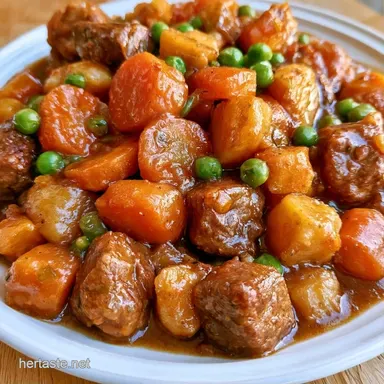
Hearty and Thick Beef Stew

- Prep15 Mins
- Cook2 Hrs 40 Mins
- Servings6
- Time: 15 min active + 160 min cooking
- Taste: Savory, rich, and hearty with a bright finish
- Best for: Cold weather dinners or meal prep for the week
Hearty and Thick Beef Stew
The smell of beef searing in a heavy pot is a classic signal that comfort is on the way. This dish has roots in the rustic kitchens of Europe and America, where tough cuts of meat were transformed through slow heat into something tender.
It's the kind of meal that brings a sense of warmth to a home, especially when the weather turns cold.
Making this beef stew requires a bit of patience, but the result is worth it. You get deep, dark golden meat and vegetables that hold their shape instead of turning into mush. It's a reliable way to feed a crowd without spending the whole night standing over the stove.
Once you get the hang of the searing process, this beef stew delivers a rich, savory depth that tastes like it simmered for days. The key is layering the flavors, starting with a hard sear and ending with a gentle simmer.
Why This Method Works
- Collagen Breakdown: Simmering beef chuck at a low temperature turns tough collagen into gelatin. This naturally thickens the liquid into a silky sauce.
- Timed Vegetable Additions: Root vegetables go in later. This prevents the potatoes and carrots from disintegrating while the meat reaches the right tenderness.
| Method | Time | Texture | Best For |
|---|---|---|---|
| Stovetop | 2 hrs 55 mins | Consistent and rich | Direct control of heat |
| Oven | 3 hrs | Very tender, slow-developed | Set and forget cooking |
Essential Kitchen Tools
Use a 6-quart Dutch oven for this dish. A thick-bottomed pot provides steady heat distribution, reducing the risk of scorching during the long simmer. A wooden spoon is also essential for loosening the flavorful residue from the pan's base.
Recipe Details
- Prep time: 15 minutes
- Cook time: 160 minutes
- Total time: 175 minutes
- Yield: 6 servings
Gathering Your Essentials
- 2 lbs (900g) boneless beef chuck, cut into 1-inch cubes
- 3 tbsp (45ml) neutral oil, divided
- 2 tbsp (16g) all-purpose flour
- 1 tsp (6g) salt
- 1/2 tsp (1g) black pepper
- 4 cups (950ml) low-sodium beef broth
- 1 tbsp (15ml) apple cider vinegar Why this? Adds acidity to balance the rich fats
- 2 tbsp (30g) tomato paste Why this? Deepens the color and umami flavor
- 3 cloves (15g) minced garlic
- 1 bay leaf
- 1 tsp (1g) dried thyme
- 3 large (450g) carrots, sliced into 1-inch rounds
- 3 medium (450g) Yukon Gold potatoes, cubed into 1-inch pieces
- 1 large (150g) yellow onion, diced
- 2 celery stalks (100g), sliced
- 1 cup (60g) frozen peas
| Original Ingredient | Substitute | Why It Works |
|---|---|---|
| Yukon Gold Potatoes | Parsnips | Similar density. Note: Adds a peppier, earthier taste |
| Beef Broth | Vegetable Broth | Lower calorie. Note: Lacks the deep beefy profile |
| All-purpose Flour | Cornstarch | Thickens similarly. Note: Slurry needed at the end |
The Cooking Process
The Searing Phase
Pat the beef cubes dry with paper towels. In a bowl, toss the beef with 2 tbsp (16g) flour, 1 tsp (6g) salt, and 1/2 tsp (1g) black pepper until lightly coated. Heat 1 tbsp (15ml) of oil in a 6-quart Dutch oven over medium-high heat.
Brown the beef in 3 separate batches for 3–5 minutes per batch until a deep brown crust forms. Remove the beef to a plate. Note: Crowding the pan drops the temperature and steams the meat.

The Flavor Base
Reduce heat to medium and add the remaining 2 tbsp (30ml) of oil. Sauté the diced onion and celery for 5 minutes until translucent. Stir in the minced garlic and 2 tbsp (30g) tomato paste. Cook for 2 minutes until the paste turns brick-red.
The Long Simmer
Pour in 4 cups (950ml) beef broth and 1 tbsp (15ml) apple cider vinegar. Use your spoon to scrape the bottom of the pot. Return the beef and its juices to the pot. Add the bay leaf and 1 tsp (1g) dried thyme. Bring the liquid to a boil, then immediately turn the heat to low.
Cover and simmer at a gentle bubble for 1 hour and 30 minutes.

Adding the Veggies
Stir in the sliced carrots and cubed potatoes. Cover and simmer for another 45 minutes until the beef is fork-tender.

Final Finishing Touch
Remove the lid and stir in the frozen peas. Cook in the residual heat for 2–3 minutes. Discard the bay leaf. If you want a thicker sauce, simmer the pot uncovered for an additional 10 minutes.
Quick Fixes
Getting the consistency right can be tricky depending on how much moisture your vegetables release. Keeping the beef stew balanced usually comes down to two things: time and acidity.
Fixing Tough Meat
If the beef still feels rubbery, it needs more time. Beef chuck varies in toughness. Keep simmering on low for another 30 minutes. Don't crank up the heat, as boiling the meat can toughen the fibers.
Thickening Thin Sauce
If the liquid looks more like a soup than a stew, leave the lid off. Simmer uncovered for 10 to 15 minutes. This lets water evaporate and concentrates the flavors.
Balancing Sour Tastes
If the vinegar makes the sauce too sharp, add a pinch of sugar. This softens the perceived sharpness without making the dish sweet.
| Problem | Fix |
|---|---|
| Meat is tough | Simmer on low for 30 more minutes |
| Sauce is watery | Simmer uncovered for 15 minutes |
| Flavor is too acidic | Stir in a pinch of granulated sugar |
Storing Your Stew

Store the leftovers in an airtight container in the fridge for 3 to 4 days. The flavors usually meld and taste better the next day.
This dish freezes well. Let it cool completely before putting it in freezer-safe containers. It keeps for up to 3 months. To reheat, put it on the stove over medium-low heat. Add a splash of beef broth to loosen the sauce, as the potatoes soak up liquid while sitting.
When reheating, ensure the food reaches an internal temperature of 165°F (74°C) to follow USDA guidelines for leftovers. Avoid leaving the pot at room temperature for more than 2 hours, or 1 hour if your kitchen is above 90°F (32°C).
Smart Swaps
Switch the beef stew meat for boneless short ribs to alter the character of the dish. Because they are fattier, short ribs produce a more luxurious, dense sauce. The cooking time does not need to change.
To vary the vegetables, consider incorporating turnips or parsnips. These options stay firm during the slow cook and contribute a wonderful earthiness. For extra greens, fold in some fresh spinach just before serving.
Great Side Dishes
Serve this meal with a crusty loaf of bread, which is perfect for mopping up every bit of the sauce. If you have the time, consider baking some Amish White Bread to go on the side.
A zesty garden salad also pairs beautifully. Its bright, acidic notes balance out the deep flavors of the braised beef.
Your Questions, Answered
What gives this beef stew its deep flavor?
Apple cider vinegar and tomato paste. These ingredients add essential acidity and umami that balance the richness of the beef chuck.
Is stewing different from boiling?
Yes, it uses a lower temperature. While boiling is aggressive, stewing requires a gentle bubble for a long period to break down connective tissues in the meat.
Can I use beef stew meat for other dishes?
Yes, it works well for braising. These cuts are ideal for any slow-cooked meal like a pot roast or slow-cooked beef tips.
How to thicken the sauce if it's too thin?
Simmer the stew uncovered for an additional 10 minutes. This allows excess moisture to evaporate and concentrates the flour-based thickening.
Why is the beef tough instead of tender?
It may have boiled rather than simmered. High heat toughens the fibers; ensure the liquid stays at a gentle bubble for the full 1 hour and 30 minutes.
Are parsnips or sweet potatoes good substitutes?
Yes, both work well. They provide a similar texture and sweetness, though sweet potatoes may soften faster than Yukon Golds.
Does simmering longer help a sour sauce?
Yes, it softens the sharp taste of the vinegar. Simmering longer allows the apple cider vinegar to mellow and concentrate, creating a more balanced taste.
Hearty and Thick Beef Stew
Ingredients:
Instructions:
Try These Next

Beef Spaghetti Sauce
Enjoy a savory, glossy Beef Spaghetti Sauce with a hint of balsamic sweetness.

Homemade White Bread Recipe with Butter for Delicious Sandwiches
The ultimate Homemade White Bread Recipe with Butter for Delicious Sandwiches.

The Foolproof Recipe for Classic Amish White Bread, Soft, Sweet
Bake the most tender, slightly sweet Amish White Bread from scratch.

Slow Cooked Beef Stew
Tough meat often ruins dinner. This Beef Stew uses high-heat searing and a slow simmer to break…

Hearty Slow-Cooked Beef Stew: A Family Favourite for Crockpot Meals
Looking for easy crockpot meals? Try my Hearty Slow-Cooked Beef Stew!

Crispy Chicken Cordon Bleu
Want a fail-proof Chicken Cordon Bleu? Pounding the meat thin and chilling the rolls before cooking…
