Fresh Mango Salsa Recipe
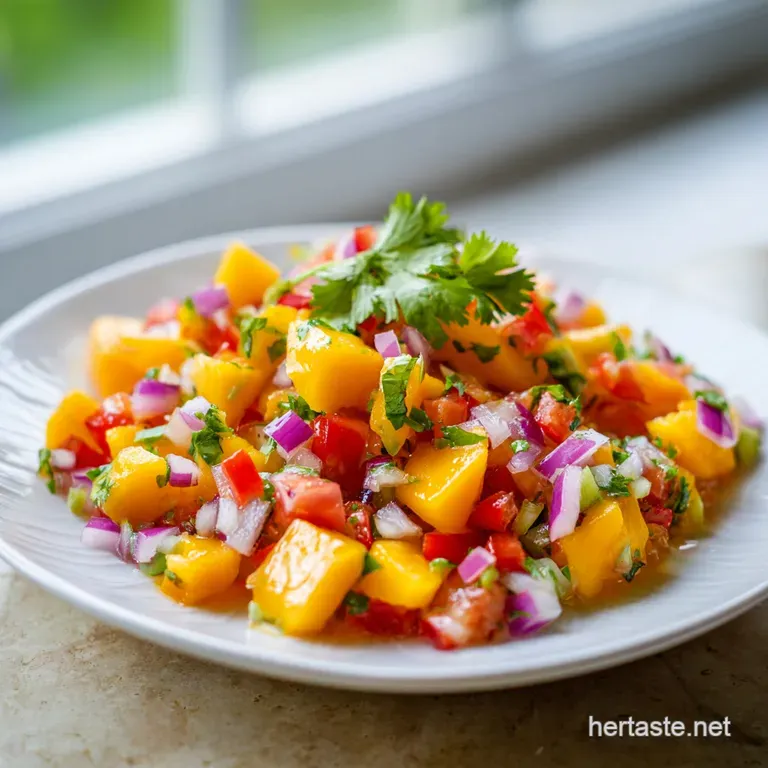
- Time: Active 10 minutes, Passive 15 minutes, Total 25 minutes
- Flavor/Texture Hook: Zesty, crunch forward, and tropical
- Perfect for: Fish tacos, summer grilled chicken, or a poolside appetizer
- Why This Balance Works
- Component Analysis and Pro Secrets
- Essential Ingredients and Easy Subs
- Minimal Tools for Maximum Flavor
- Precise Steps for Perfect Salsa
- Pro Techniques and Common Pitfalls
- Flavor Variations and Creative Twists
- Optimal Storage and Zero Waste
- Serving Suggestions and Pairings
- Recipe FAQs
- 📝 Recipe Card
Why This Balance Works
To understand why this fresh mango salsa recipe is so addictive, we have to look at the chemistry of the ingredients. It is not just about throwing fruit in a bowl; it is about managing moisture and acidity.
- Osmotic Extraction: Salt draws out just enough juice from the mango and tomatoes to create a natural "dressing" without making the bowl a soup.
- Acid Neutralization: The citric acid in the lime juice breaks down the harsh sulfur compounds in the red onion, turning them sweet and mild.
- Capscacin Suspension: The natural sugars in the mango coat the tongue, which allows you to enjoy the heat of the jalapeño without it becoming overwhelming.
| Method | Prep Time | Resulting Texture | Best For |
|---|---|---|---|
| Classic Raw | 10 minutes | Crisp and vibrant | Tacos and dipping chips |
| Macerated | 30 minutes | Syrupy and unified | Topping grilled white fish |
| Slightly Grilled | 15 minutes | Smoky and jammy | Steaks or heavy proteins |
When you choose the raw method, you're prioritizing that fresh "pop" in every bite. If you’ve ever had Aji Verde Recipe with your seafood, you know how much a bright sauce can change the game. This salsa does the same thing but with a tropical lean.
Component Analysis and Pro Secrets
The "how" of this recipe is just as important as the "what." Every ingredient has a specific job to do in the bowl.
| Component | Science Role | Pro Secret |
|---|---|---|
| Ripe Mangos | Primary Base | Use a glass to "scoop" the fruit from the skin for perfect cubes. |
| Lime Juice | Enzyme Inhibitor | Microwave the lime for 10 seconds to loosen the juice membranes. |
| Red Onion | Aromatic Contrast | Soak minced bits in ice water for 5 minutes to remove the "bite." |
| Sea Salt | Flavor Extractor | Use flaky salt to add tiny bursts of seasoning rather than a flat saltiness. |
Chef's Tip: If your mangos are a bit too firm, toss the diced cubes with a pinch of sugar and let them sit for 5 minutes before adding the other ingredients. This softens the cell walls and mimics ripeness.
Essential Ingredients and Easy Subs
For this fresh mango salsa recipe, we are using exactly what the garden provides. No fillers, no weird preservatives. Just clean, bright flavors.
- 2 large ripe mangos (680g): These are the stars. Why this? They provide the buttery texture and base sweetness.
- 2 medium Roma tomatoes (120g): These add bulk and a savory backbone. Why this? Roma tomatoes have less water than beefsteak varieties.
- 1/2 cup red bell pepper (75g): For that necessary crunch. Why this? It adds a different kind of sweetness than the fruit.
- 1/3 cup red onion (50g): The savory anchor. Why this? It provides a sharp contrast to the tropical sugar.
- 1 medium fresh jalapeño (15g): For the heat. Why this? It offers a grassy, fresh spice that dried flakes can't match.
- 1/2 cup fresh cilantro (15g): The herbal finish. Why this? It brightens the entire flavor profile instantly.
- 2 tablespoons lime juice (30ml): The essential acid. Why this? It prevents oxidation and balances the sugar.
- 1/2 teaspoon sea salt (3g): To make the flavors pop.
- 1/4 teaspoon chili powder: For a hint of earthiness.
| Original Ingredient | Substitute | Why It Works |
|---|---|---|
| Mango | Peach or Nectarine | Similar stone fruit texture with a slightly more floral aroma. |
| Red Onion | Shallots | Provides a more delicate, garlicky undertone. |
| Jalapeño | Serrano Pepper | Same flavor profile but significantly more heat. |
| Cilantro | Fresh Mint | Adds a cooling, refreshing finish perfect for fruit heavy versions. |
Minimal Tools for Maximum Flavor
You don't need a pantry full of gadgets for this. In fact, a food processor is your enemy here because it will turn your beautiful mango into a mushy puree.
- A Sharp Chef's Knife: Essential for those clean, square cuts that won't bruise the fruit.
- Large Glass Mixing Bowl: Use glass or stainless steel. Plastic can hold onto old onion smells, and aluminum might react with the lime juice.
- A Sturdy Silicone Spatula: For folding the ingredients. You want to be gentle so you don't smash the ripe mango.
If you are a fan of tropical flavors and want to keep the theme going for dessert, you could check out my Effortless NoChurn Mango recipe which uses similar fruit prep techniques.
Precise Steps for Perfect Salsa
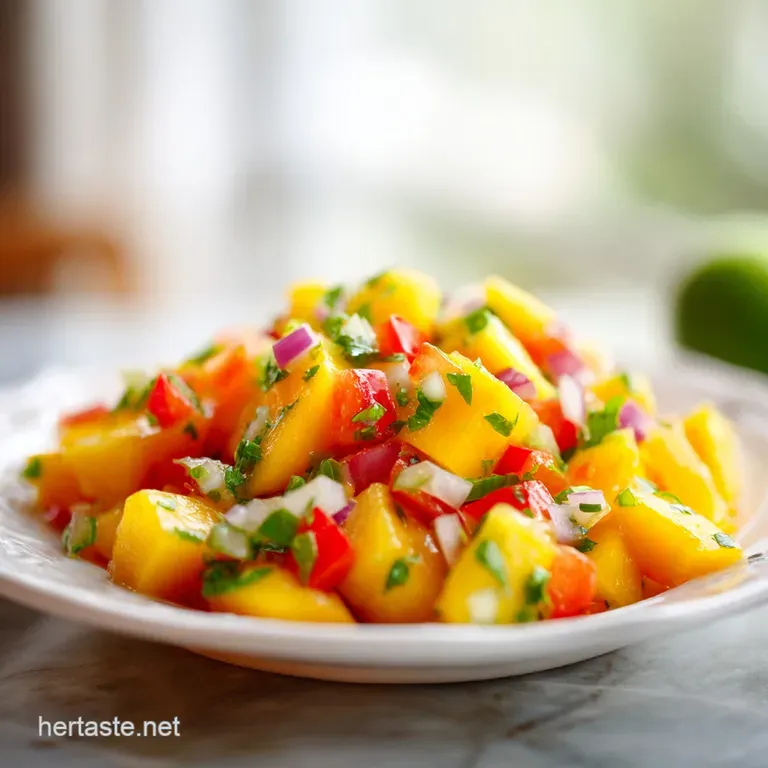
Phase 1: The Precision Prep
- Prep the mangos. Peel and dice the 2 mangos (680g) into 1/2 inch cubes. Note: Keep them uniform so you get a bit of everything in one bite.
- Seed the tomatoes. Slice the 2 Roma tomatoes (120g) and scoop out the watery seeds before dicing. Note: This prevents the salsa from becoming a soggy mess later.
- Chop the aromatics. Finely mince 1/3 cup red onion (50g) and 1/2 cup red bell pepper (75g).
- Handle the heat. Seed and mince 1 jalapeño (15g). Wash your hands immediately after handling the seeds.
Phase 2: The Maceration
- Juice the lime. Squeeze 2 tablespoons of lime juice (30ml) over the mango and onion.
- Season the base. Sprinkle 1/2 teaspoon sea salt (3g) and 1/4 teaspoon chili powder over the mixture.
- Toss gently. Use a spatula to fold the ingredients together until the mango looks glossy.
Phase 3: The Final Fold
- Add the greens. Chop 1/2 cup cilantro (15g) and fold it in at the very end.
- Rest the salsa. Let the bowl sit at room temperature for 15 minutes. Wait for the juices to pool slightly at the bottom.
- Final taste. Check for salt. Sometimes a second tiny pinch is needed to truly make the mango sing.
Pro Techniques and Common Pitfalls
The biggest mistake I ever made with this dish was skipping the resting phase. I thought I could just mix and serve, but the onions were too sharp and the mango felt "separate" from the salt. Letting it sit allows the salt to pull the natural sugars out, creating a velvety glaze that coats every vegetable.
Why Your Salsa is Watery
If your salsa looks like a soup after an hour, it is usually because of the tomatoes. Roma tomatoes are meatier, but they still have "guts" that turn to liquid. Always scoop those out. Also, don't add the salt until you are nearly ready to serve, as salt is a powerful humectant that pulls water out of cell walls.
| Problem | Root Cause | Solution |
|---|---|---|
| Too Much Liquid | Over salting too early | Drain excess juice and add a fresh squeeze of lime before serving. |
| Bitter Aftertaste | Pith in the lime juice | Ensure you are only using the juice and no white pith from the skin. |
| Lack of Flavor | Under ripe mango | Add a teaspoon of honey or agave to boost the perceived sweetness. |
Common Mistakes Checklist ✓ Never use a food processor; hand dicing is the only way to get the right texture. ✓ Pat the peppers and onions dry after washing to keep the salsa crisp.
✓ Don't skip the onion soak if you're sensitive to that raw onion "burn." ✓ Use only fresh lime juice; the bottled stuff has a metallic tang that ruins the fruit. ✓ Work in small batches if you're doubling the recipe to ensure even seasoning.
Flavor Variations and Creative Twists
If you want a different vibe, there are a few ways to pivot this fresh mango salsa recipe without losing its soul.
- For a Creamy Texture: Fold in one diced avocado right before serving. The fat in the avocado makes the salsa feel more like a meal.
- For a Smoky Char: Grill the mango halves and the jalapeño for 2 minutes per side before dicing. This adds a depth that pairs beautifully with steak.
- For a Low Acid Diet: Reduce the lime juice by half and add a tablespoon of orange juice. It’s softer on the stomach but still provides a citrus lift.
Scaling the Recipe
To scale down (1/2 batch): Simply halve all ingredients. Since we aren't cooking anything, the chemistry stays the same. Use a smaller bowl so the lime juice doesn't just spread out and evaporate.
To scale up (2x-4x batch): Double the fruit and vegetables, but be careful with the salt and chili powder. I recommend only going to 1.5x on the spices first, then tasting. Large batches of salsa can become overly salty very quickly as they sit in the fridge.
Optimal Storage and Zero Waste
Fresh salsa is a "live" food, meaning the acid is constantly working on the textures. It is best eaten the day it is made, but it will keep in the fridge for about 2 days in an airtight container. After that, the mango starts to lose its structure and becomes a bit grainy.
Freezing is a no go. The water in the mango and tomatoes will expand, shattering the cell walls. When you thaw it, you will have fruit mush. However, you can freeze leftovers in ice cube trays to drop into smoothies later!
Zero Waste Tip: Don't throw away that mango pit! There is always a lot of flesh stuck to it. I like to squeeze the pit over the bowl like a lemon to get that extra "mango milk" into the salsa. You can also simmer the pits with water and sugar to make a quick mango simple syrup for cocktails.
Serving Suggestions and Pairings
This fresh mango salsa recipe belongs on anything that has been kissed by fire. It is the ultimate companion for grilled shrimp, blackened tilapia, or even a simple grilled chicken breast.
If you are hosting a party, serve this in a hollowed out mango skin or a small wooden bowl for that rustic, beachside feel. It also works surprisingly well as a bruschetta topper just swap the basil for cilantro and the balsamic for lime.
The sweetness of the mango against a toasted, salty baguette is a combination you didn't know you needed.
Right then, you've got the secrets. Grab your knife, find the ripest mangos in the shop, and get dicing. You'll know you've nailed it when the bowl is empty before the main course even hits the table!
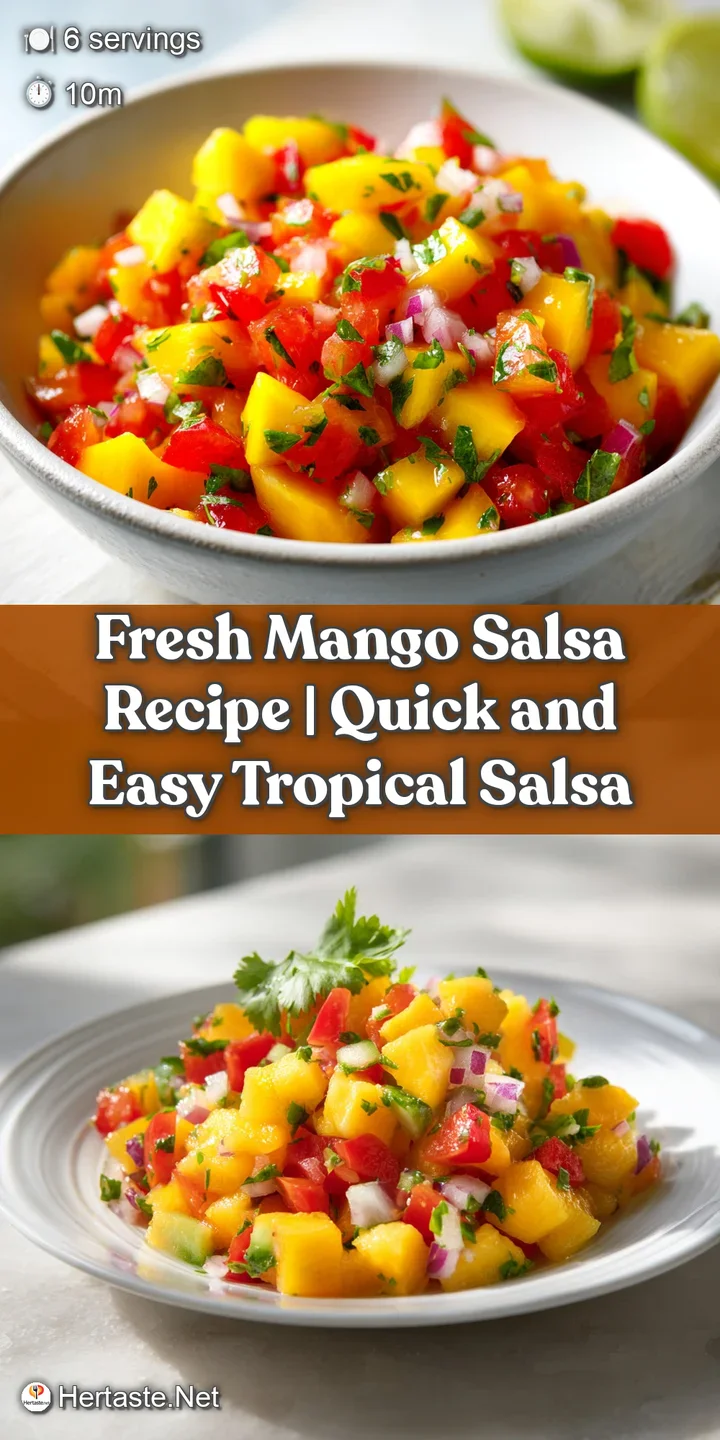
Recipe FAQs
How do you make mango salsa?
Dice ripe mango, de-seed tomatoes, and finely mince red onion, bell pepper, and jalapeño. Gently fold these ingredients together with fresh lime juice, sea salt, and cilantro. Allow the mixture to rest for 15 minutes so the salt draws out a light dressing.
How long does homemade mango salsa last?
Ideally, eat it the same day you make it. It is best consumed within 24 hours, stored airtight in the refrigerator. After 48 hours, the mango structure begins to break down and can become slightly watery.
What to do with raw mango?
Use firm, but not hard, raw mango for salsa. The key is uniform dicing; aim for 1/2 inch cubes so the texture remains crisp. If your mango is slightly underripe, a quick toss with a pinch of sugar for five minutes helps soften the cell walls.
Do you put cilantro in mango salsa?
Yes, fresh cilantro is essential for the herbal brightness. Fold the chopped cilantro in at the very end, after mixing the other ingredients and salt. This prevents the delicate leaves from bruising or turning dark during mixing.
What is the best way to cut the onion to prevent it from tasting too strong?
Soak the minced red onion in ice water for five minutes before use. This process leaches out many of the harsh sulfur compounds responsible for the aggressive "bite." You get the necessary savory crunch without overwhelming the fruit.
Can I substitute the lime juice with another acid?
Yes, you can use a softer acid if needed, such as orange juice. Reduce the lime juice by half and use one tablespoon of orange juice as a replacement. If you are interested in balancing strong sweet and tart flavors in other contexts, see how we manage acid ratios in our Big Mac Sauce Recipe.
Is it necessary to remove the seeds from the tomatoes?
No, it is not strictly necessary, but highly recommended for texture. The watery seed pulp releases excess moisture rapidly, which causes the salsa to become soupy quickly. Scooping out the seeds keeps the final product chunky and vibrant.
Fresh Mango Salsa Recipe
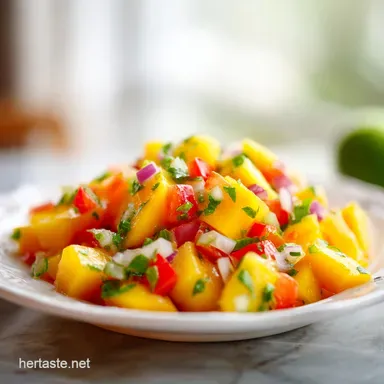
Ingredients:
Instructions:
Nutrition Facts:
| Calories | 81 kcal |
|---|---|
| Protein | 1.4 g |
| Fat | 0.6 g |
| Carbs | 20.1 g |
| Fiber | 2.3 g |
| Sugar | 15.8 g |
| Sodium | 195 mg |
