Savory Black Eyed Peas Recipe Easy: Velvety Comfort
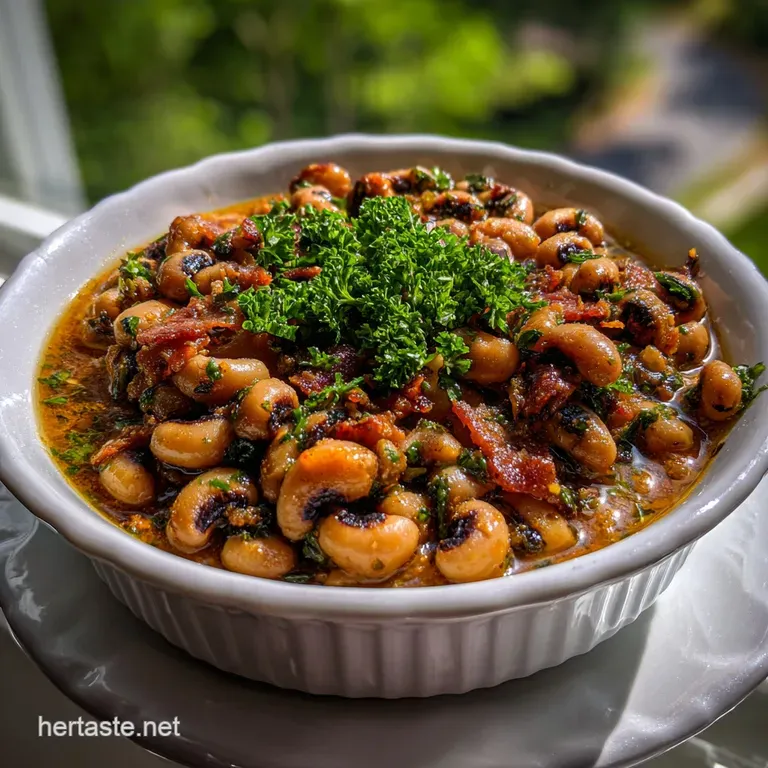
- Effort/Time: Low-active effort / 1 hour 45 minutes total.
- Flavor Hook: Deeply smoked, pork-infused broth with a peppery, bright finish.
- Perfect for: Make-ahead Sunday dinners or nutrient-dense meal-prep.
- The Science of Umami: Why This Savory Black Eyed Peas Recipe Easy Succeeds
- Thermal Efficiency and Timing for Optimal Legume Hydration
- The Savory Foundation: Selecting Elements for Depth and Texture
- Essential Tools for Precision Thermal Mass Management
- The Action Protocol for Building Layered Flavor Profiles
- Fixing Texture Failures and Flavor Imbalances
- Customizing the Profile: Flavor Architecture and Adaptations
- ⚗️ The Scaling Lab: The Physics of Quantity
- Preservation Physics: Maintaining Structural Integrity Over Time
- Optimizing the Sensory Experience with Complementary Pairings
- Common Myths
- Recipe FAQs
- 📝 Recipe Card
There is nothing more frustrating than investing two hours into a pot of beans only to end up with a "mahogany colored disaster": legumes that are simultaneously mushy on the outside and chalky in the center, swimming in a thin, metallic tasting broth.
I’ve seen beginners dump $20 of high end organic stock and artisanal ham into a pot, only to have the entire batch ruined by a lack of thermal control or a premature addition of salt that prevented the skins from ever softening.
Wasting ingredients is a gut-punch, but wasting that much time on a texture failure is even worse.
I’ll be the first to admit I’ve ruined my fair share of "lucky" New Year's Day meals. Early in my journey, I thought "boiling" was the same as "cooking," and I’d blast the heat until the peas exploded into a gritty paste.
I once tried to rush the process by using un-soaked beans in a highly acidic tomato base, only to realize after three hours of simmering that the acid had essentially "tanned" the bean skins, rendering them permanently bullet hard.
It was a humbling lesson in the chemistry of pectin and osmotic pressure.
The secret to this Savory Black Eyed Peas Recipe Easy isn't some "magic" ingredient; it’s the science of collagen hydrolysis and the Maillard reaction. By slowly simmering 1 lb of smoked ham hocks in 6 cups of high-quality chicken stock, we extract gelatin that provides a velvety mouthfeel without needing heavy thickeners.
This recipe relies on a gentle simmer to allow the starch inside the peas to gelatinize uniformly, while a final splash of apple cider vinegar breaks the heavy fat molecules, resulting in a clean, vibrant finish that lingers on the palate.
The Science of Umami: Why This Savory Black Eyed Peas Recipe Easy Succeeds
- Collagen Hydrolysis: Simmering 1 lb smoked ham hocks converts tough connective tissue into liquid gelatin, providing a rich, lip-smacking body to the broth.
- Pectin Management: Adding apple cider vinegar only at the very end ensures the bean skins soften properly during the simmer, as acid can strengthen the pectin bonds and keep beans tough.
- Aromatic Synergy: Sautéing the "Holy Trinity" (onion, celery, pepper) in 2 tbsp extra virgin olive oil initiates the Maillard reaction, creating complex sulfur compounds that form the flavor base.
- Osmotic Balance: Using 6 cups of chicken stock provides a mineral rich environment that seasons the peas from the inside out as they hydrate and expand.
Thermal Efficiency and Timing for Optimal Legume Hydration
When executing this Savory Black Eyed Peas Recipe Easy, understanding the thermal mass of your vessel is critical for consistent results. We are targeting a specific window of starch gelatinization where the interior of the pea becomes creamy without the exterior integument (the skin) shattering.
| Metric | Value | Technical Rationale |
|---|---|---|
| Prep Time | 15 minutes | Allows for precision dicing (Mise en Place) to ensure even aromatic softening. |
| Cook Time | 1 hour 30 mins | The required duration for collagen breakdown in ham hocks and full hydration of dried peas. |
| Total Time | 1 hour 45 mins | Includes the initial sauté phase and the final reduction of the pot liquor. |
| Yield | 8 servings | Optimized for a standard 6 quart Lodge Enameled Cast Iron Dutch Oven. |
H3 The Bean Base
The foundation of this Savory Black Eyed Peas Recipe Easy is the 1 lb of dried black eyed peas. Unlike other legumes, these do not strictly require a 12 hour soak, but sorting and rinsing are non-negotiable to remove field debris or stones that can damage dental work.
H3 The Savory Foundation
The 1 lb of smoked ham hocks acts as the primary seasoning engine. As the hocks simmer, they release smoky phenols and salt into the 6 cups of chicken stock. This creates a "pot liquor" that is far more complex than water based alternatives, similar to the depth found in a SlowCooker Recipe Classic beef stew.
The Savory Foundation: Selecting Elements for Depth and Texture
Ingredient Chemistry Breakdown
| Ingredient | Chemical/Physical Role (Science) | The Pro Secret (Why This Matters) |
|---|---|---|
| Smoked Ham Hocks | Collagen hydrolysis and lipid infusion | Provides the gelatinous "body" and smoky base notes. |
| Dried Black Eyed Peas | Starch gelatinization and protein source | Absorbs the cooking liquid, thickening the stew naturally. |
| Apple Cider Vinegar | Acid modulation and pH balance | Cleanses the palate by cutting through the heavy fat of the pork. |
| Green Bell Pepper | Pyrazine aromatic contribution | Adds a distinct earthy, savory "green" note essential for depth. |
- 1 lb dried black eyed peas: Sorted and rinsed. Why this? Dried beans offer superior texture and starch release compared to canned versions.
- 6 cups high-quality chicken stock: Such as Swanson Unsalted Chicken Broth. Why this? Provides a controlled sodium base with high protein content for better mouthfeel.
- 1 lb smoked ham hocks: Look for meaty, deeply bronzed hocks.
- 2 tbsp extra virgin olive oil: Such as Bertolli EVOO.
- 1 large yellow onion: Finely diced.
- 2 stalks celery: Diced.
- 1 green bell pepper: Diced.
- 3 cloves garlic: Minced.
- 1 tsp smoked paprika: Such as McCormick Gourmet Smoked Paprika. Why this? Adds "fireless" smoke and a vibrant mahogany hue to the broth.
- 1/2 tsp dried thyme: Crushed between fingers to release oils.
- 1/4 tsp cayenne pepper: For subtle back-of-the-throat warmth.
- 1 tbsp apple cider vinegar: Such as Bragg Organic ACV.
- Diamond Crystal Kosher Salt: To taste.
- Cracked black pepper: To taste.
Essential Tools for Precision Thermal Mass Management
To achieve the best results with this Savory Black Eyed Peas Recipe Easy, you need a vessel that offers high heat retention and even distribution.
- Lodge 6 Quart Enameled Cast Iron Dutch Oven: The heavy lid traps steam, creating a pressurized environment that speeds up bean softening.
- Wooden Spoon or Heat Resistant Spatula: Necessary for scraping the fond (browned bits) off the bottom of the pot.
- Fine Mesh Strainer: For rinsing the 1 lb of dried peas and ensuring no grit enters the final dish.
- Digital Kitchen Scale: For precise measurement of the 1 lb of peas and ham hocks.
The Action Protocol for Building Layered Flavor Profiles
- Sort and rinse the 1 lb dried black eyed peas in cold water until the water runs clear and all debris is removed.
- Heat 2 tbsp extra virgin olive oil in the Lodge Dutch Oven over medium heat until the oil shimmers and a faint wisp of smoke appears.
- Sauté the diced onion, celery, and green bell pepper for 6 minutes until the onions are translucent and the edges begin to turn pale gold.
- Stir in the 3 cloves of minced garlic, 1 tsp smoked paprika, 1/2 tsp thyme, and 1/4 tsp cayenne until the spices become intensely fragrant, about 60 seconds.
- Pour in the 6 cups of chicken stock, scraping the bottom of the pot until all the browned bits (fond) are incorporated into the liquid.
- Add the 1 lb of smoked ham hocks and the rinsed black eyed peas until they are fully submerged in the stock.
- Bring the mixture to a rolling boil for 2 minutes until large bubbles break the surface vigorously.
- Reduce heat to low, cover tightly, and simmer for 1 hour 15 mins until the peas are tender but not falling apart.
- Remove the ham hocks, shred the meat from the bone, and return the meat to the pot until the pork is evenly distributed.
- Stir in 1 tbsp apple cider vinegar until the aroma shifts from heavy and fatty to bright and balanced.
- Season with Kosher salt and cracked black pepper until the flavors pop and the savory notes are fully realized.
Chef's Tip: For an ultra creamy "Easy Comfort Food for Fall," take a ladle of the cooked peas and mash them against the side of the pot or in a small bowl, then stir them back in. This releases extra starch into the broth for a velvety texture.
Fixing Texture Failures and Flavor Imbalances
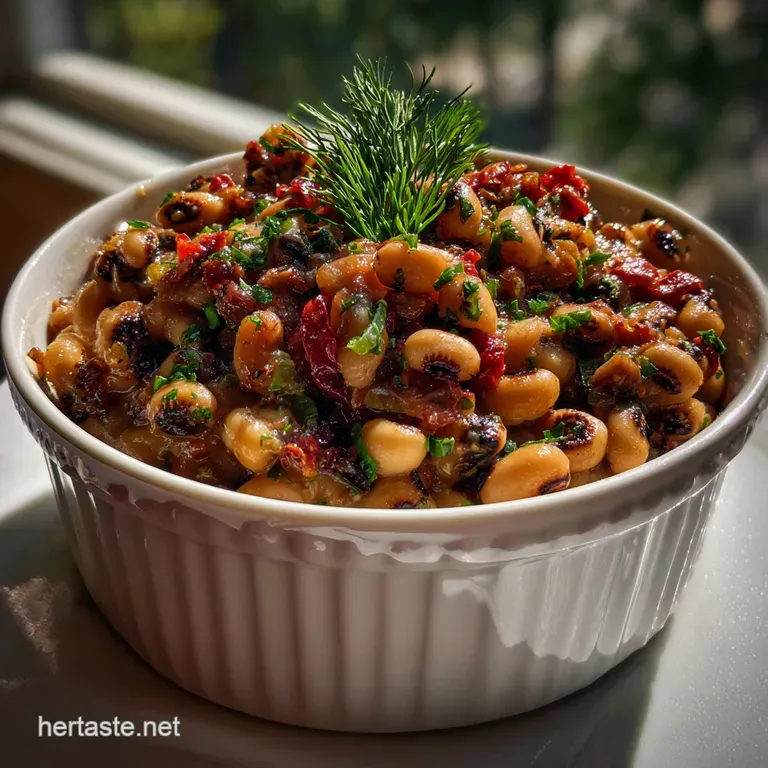
Why Your Beans Remain Hard
Hard beans are typically a result of "old" dried stock or high mineral content in your water (hard water). The calcium and magnesium in hard water can strengthen the cell walls of the peas, preventing them from softening regardless of cook time.
| Problem | Root Cause | The Fix | Pro Protocol |
|---|---|---|---|
| Hard Peas | Old beans or hard water minerals | Add 1/4 tsp baking soda | Soda increases pH, helping to break down pectin faster. |
| Watery Broth | Insufficient evaporation or low starch | Mash 1/2 cup of peas | Reintroducing mashed peas creates an instant natural emulsion. |
| Excess Salt | Ham hock salt release | Add a peeled potato | The potato absorbs excess sodium; remove before serving. |
H3 Thin or Watery Broth
If your Savory Black Eyed Peas Recipe Easy looks more like a tea than a stew, you likely have too much liquid relative to the starch released. Ensure you are using the exact 6 cups of stock for the 1 lb of peas.
If it's still thin, simmer uncovered for the last 15 minutes to encourage evaporation and concentration.
Customizing the Profile: Flavor Architecture and Adaptations
H3 Vegetarian Smoky Swap
If you want to maintain the soul of this Eyed Peas Recipe: Easy Comfort Food for Fall without the meat, swap the ham hocks for 2 tsp of liquid smoke and 1 tbsp of soy sauce (for umami). Use vegetable stock instead of chicken stock.
H3 Extra Heat Twist
For those who prefer a more aggressive "Peas Recipe Easy," double the cayenne pepper or add a diced jalapeño (seeds removed) during the aromatic sauté phase. This creates a layered heat that builds as you eat. If you enjoy spice forward blends, you might also like experimenting with a Pumpkin Pie Spice recipe for a completely different, sweet savory profile in other dishes.
⚗️ The Scaling Lab: The Physics of Quantity
When doubling this Savory Black Eyed Peas Recipe Easy, do not simply double every ingredient.
- The Evaporation Paradox: If using a larger pot with more surface area, your liquid loss will be higher. However, in a standard tall stockpot, volume increases faster than surface area. Reduce the total chicken stock by 10% (use 10.8 cups instead of 12) to avoid a diluted result.
- Flavor Saturation: Spices like cayenne and smoked paprika scale non-linearly. Use 1.5x the amount for a 2x batch, then taste and adjust.
- Thermal Mass: A double batch (2 lbs of peas) will take significantly longer to reach a boil. This extended "warm-up" period can lead to the peas on the bottom overcooking. Stir every 20 minutes to ensure even heat distribution.
Preservation Physics: Maintaining Structural Integrity Over Time
Storage & Reheating
- Fridge: Store in an airtight container for up to 5 days. The flavors actually improve on day two as the starches continue to absorb the smoky broth.
- Freeze: These peas freeze beautifully for up to 6 months. Leave 1 inch of headspace in the container to allow for liquid expansion.
- Reheat: Warm over low heat on the stovetop. You may need to add a splash of water or stock, as the peas will have thickened the liquid significantly during cooling.
💡 ZERO WASTE PHILOSOPHY
Don't discard the ham bones or veggie scraps! Ham Bones: Transform: Save in the freezer for a future split pea soup. Science: Even after simmering, the marrow contains deep flavor compounds and residual gelatin.
Celery Leaves: Transform: Finely chop and use as a garnish. Science: The leaves contain a higher concentration of Vitamin C and a more intense "celery" aroma than the stalks.
Optimizing the Sensory Experience with Complementary Pairings
To complete this Black Eyed Peas Recipe: Easy Comfort Food for Fall, serve it over a bed of fluffy white rice or alongside a wedge of honey sweetened cornbread. The sweetness of the corn balances the smoky, salty notes of the ham hocks perfectly.
For a unique beverage pairing, the earthy notes of the peas are surprisingly well complemented by the spicy complexity of a Chai Tea Mix recipe. The tannins in the tea help cleanse the palate after the rich, gelatinous broth.
Common Myths
Myth: You must soak black eyed peas overnight or they won't cook. Truth: Black eyed peas are relatively small and have thinner skins than kidney or pinto beans. A 1 hour 30 min simmer is more than enough to achieve full hydration and a velvety texture without a pre-soak.
Myth: Adding salt at the beginning makes beans tough. Truth: While acid (like vinegar) makes beans tough if added early, a moderate amount of salt actually helps the skins soften more evenly by displacing magnesium and calcium ions in the cell walls.
However, since ham hocks are unpredictable in their salt release, we wait until the end of this Savory Black Eyed Peas Recipe Easy to ensure perfect seasoning.

Recipe FAQs
Can I use dried peas without soaking them?
Yes, soaking is optional for black eyed peas. Black eyed peas are small and have thinner skins than most other beans. A minimum 1 hour 30 minute simmer will fully hydrate them without the necessity of an overnight soak.
What is the best substitute for smoked ham hocks?
Use liquid smoke and soy sauce. If omitting pork, use 2 tsp liquid smoke and 1 tbsp soy sauce for depth in vegetable stock. This provides savory depth, much like the umami compounds we build when searing meat for a Tuna Melt: The Best Classic Tuna Melt Sandwich Recipe.
Why are my cooked black eyed peas grainy and mushy?
Heat was too high during the simmering phase. Graininess results when the internal starch gelatinizes too rapidly without sufficient time for the surrounding moisture to equalize. Use low, steady heat to ensure uniform cooking throughout the legume structure.
- Maintain a gentle simmer (barely bubbling)
- Do not boil vigorously
- Stir only every 20 minutes to prevent skin rupture
Should I add the acid (vinegar) at the start or the end?
Add the vinegar only at the end. Acidic ingredients like vinegar interact with pectin, the substance that keeps cell walls firm. Adding it early "tans" the skins, preventing them from softening during the required long cook time.
Can I prepare this recipe in a slow cooker?
Yes, a slow cooker yields excellent tenderness. Use the LOW setting for 6 8 hours, ensuring the liquid covers the peas entirely. If you are adapting a stove top braise, observe the principle of flavor layering used in our Chicken Sausage Puffs with Creamy Mustard Dipping Sauce Recipe to build the aromatic base first.
How much salt should I add if using salted chicken stock?
Use unsalted stock for precision control. Salted brands vary widely (sometimes 300mg per cup), making seasoning difficult when using salty components like ham hocks. Unsalted stock lets you precisely calibrate the final flavor based on the rendered pork.
Myth: Black eyed peas must be cooked for at least two hours.
Myth: Cooking time is entirely dependent on the age and initial hydration state of the dried pea. A longer cook time does not guarantee better texture if the heat is too aggressive or if acid was introduced prematurely.
Easy Savory Black Eyed Peas
Ingredients:
Instructions:
Nutrition Facts:
| Calories | 269 kcal |
|---|---|
| Protein | 17.7 g |
| Fat | 5.9 g |
| Carbs | 36.4 g |
| Fiber | 6.1 g |
| Sugar | 3.2 g |
| Sodium | 845 mg |
