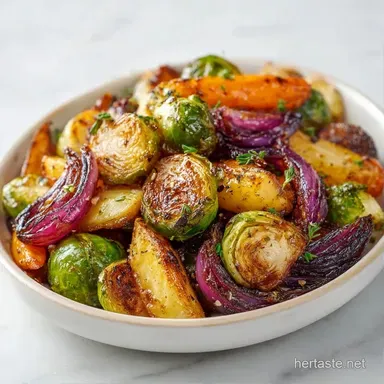
Easy Roasted Winter Vegetables: Caramelized and Tangy
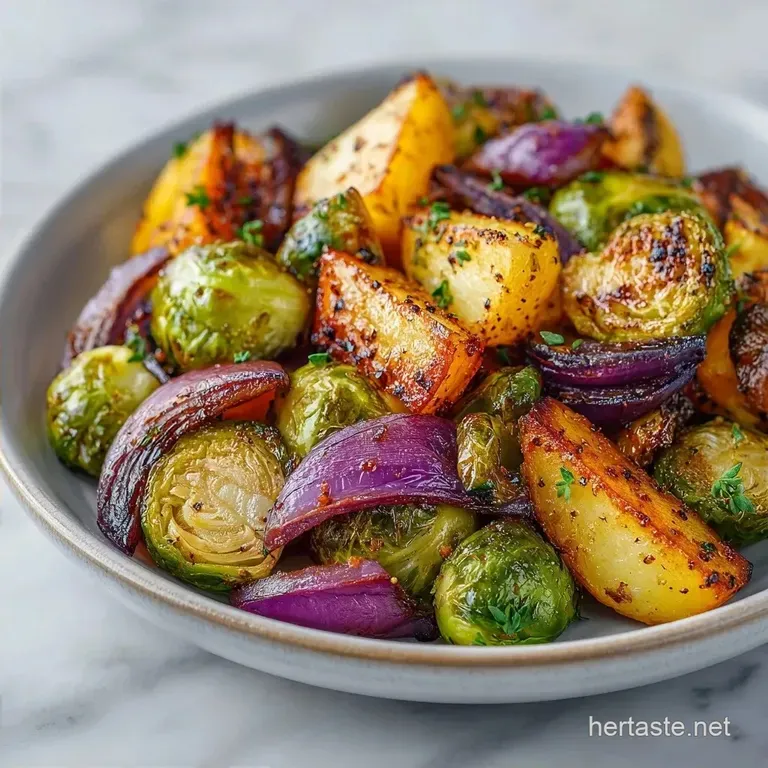
- Time: 25 min active + 40 min roasting
- Flavor/Texture Hook: Tangy sweet glaze with crisp edges
- Perfect for: Sunday roast side or weekday meal prep
The smell of roasting root vegetables always reminds me of those old European village stories, where families relied on root cellars to survive the frost. There's something deeply grounding about pulling carrots and parsnips from the cold earth and roasting them until they're tender.
It's a tradition of survival that turned into a comfort food staple.
I used to just toss things in a pan and hope for the best, but that usually left me with some mushy bits and some raw bits. This version of Easy Roasted Winter Vegetables fixes that by focusing on the cut and the coat.
You can expect a side dish that hits all the notes: the earthiness of the parsnips, the sweetness of the squash, and that sharp hit of balsamic. It’s a reliable, one pan win that doesn't require you to stand over the stove for an hour.
Easy Roasted Winter Vegetables Tips
The Sugar Kick: Maple syrup and balsamic vinegar create a glaze that browns quickly under high heat. This gives you those dark, caramelized edges without overcooking the centers.
Uniform Cutting: Keeping everything around 1 inch ensures the potatoes and carrots finish at the same time as the squash. If the pieces vary too much, you'll have burnt carrots and raw potatoes.
| Method | Total Time | Texture | Best For |
|---|---|---|---|
| Fast Roast (400°F) | 65 mins | Crisp edges, tender core | Weeknights |
| Slow Roast (325°F) | 120 mins | Uniformly soft, jammy | Holiday feasts |
What Each Ingredient Does
| Ingredient | What It Does | Best Swap |
|---|---|---|
| Balsamic Vinegar | Adds acidity and deep color | Apple cider vinegar |
| Maple Syrup | Helps with browning | Honey or brown sugar |
| Extra Virgin Olive Oil | Transfers heat to the veg | Avocado oil |
| Fresh Garlic | Adds pungent depth | Garlic powder (1/2 tsp) |
The Produce and Pantry List
- 1 lb carrots, peeled and sliced into 1 inch chunks Why this? Natural sweetness that caramelizes well
- 1 lb parsnips, peeled and sliced into 1 inch chunks Why this? Adds a peppery, nutty contrast
- 1 lb butternut squash, cubed into 1 inch pieces Why this? Provides a creamy interior texture
- 1 lb red potatoes, cubed into 1 inch pieces Why this? Hearty base that absorbs the glaze
- 1 cup Brussels sprouts, halved Why this? Adds a bitter, charred element
- 1 medium red onion, cut into thick wedges Why this? Softens into a sweet jammy flavor
- 3 tbsp extra virgin olive oil
- 2 tbsp balsamic vinegar
- 1 tbsp maple syrup
- 3 cloves garlic, minced
- 1 tsp dried rosemary
- 1 tsp kosher salt
- 1/2 tsp cracked black pepper
Tools for the Job
You don't need a fancy kitchen to make these Easy Roasted Winter Vegetables. I keep it minimal so cleanup doesn't take longer than the actual cooking.
- Large rimmed baking sheet
- Parchment paper (this is a must for easy cleanup)
- One big mixing bowl
- Whisk or fork
- Sharp chef's knife
How to Make It
- Preheat your oven to 400°F (200°C). Line your large rimmed baking sheet with parchment paper. Note: This prevents the balsamic glaze from sticking to the metal.
- Chop the carrots, parsnips, squash, and potatoes into 1 inch pieces. Keep the potatoes and carrots slightly smaller than the squash.
- In your large mixing bowl, whisk the olive oil, balsamic vinegar, maple syrup, minced garlic, rosemary, salt, and pepper. Mix until the glaze looks glossy.
- Toss all the chopped vegetables into the bowl. Stir them well until every piece has a thin, shimmering coat of the glaze.
- Spread the vegetables in a single layer on the baking sheet. Give them space to breathe. Note: If they're piled up, they'll steam instead of roast.
- Roast for 40 minutes. Wait until you see golden brown caramelized edges and the vegetables feel tender when pierced with a fork.
- Remove from the oven and let them sit for 5 minutes before serving. This lets the glaze set slightly.
Avoiding Kitchen Disasters
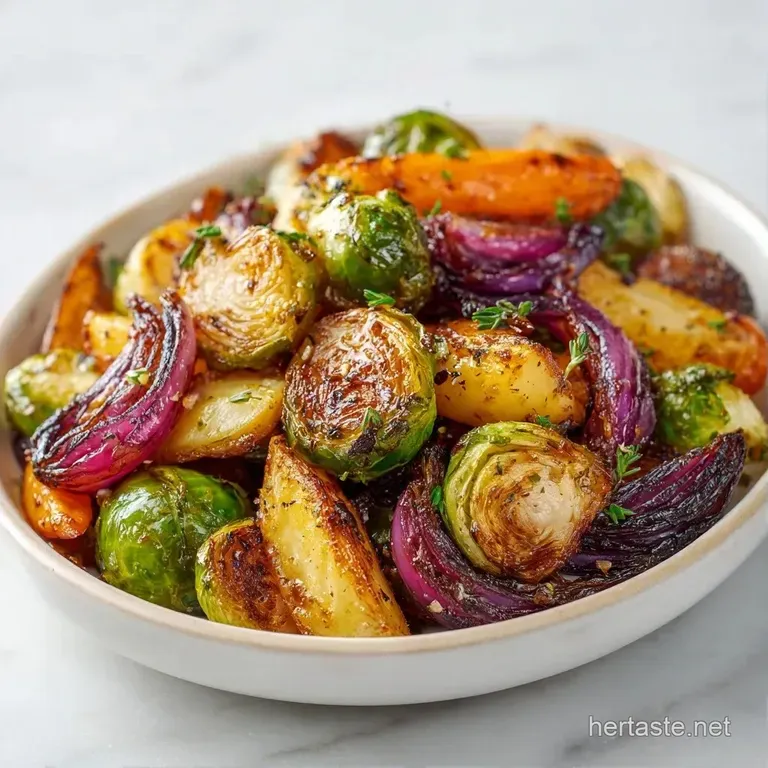
Most people struggle with these Easy Roasted Winter Vegetables because they crowd the pan. When vegetables are too close, they release moisture that stays trapped, which basically boils your dinner.
Why Your Veggies Are Mushy
If your vegetables come out soft rather than crisp, you likely used a pan that was too small. The steam has nowhere to go, so it re absorbs into the veg. Use two pans if you're doubling the batch.
Why Your Garlic Burnt
Minced garlic can burn at 400°F if it's not well integrated. By whisking it into the oil and vinegar glaze first, the oil protects the garlic from direct heat.
Fixing Uneven Cooking
If the potatoes are still hard but the onion is gone, your cuts weren't uniform. Next time, slice the hard roots smaller and the softer squash larger.
| Problem | Root Cause | Solution |
|---|---|---|
| Soggy texture | Overcrowded pan | Use a larger sheet or two pans |
| Burnt edges | Oven too hot | Lower temp by 10°C and roast longer |
| Bland taste | Not enough salt | Toss with a pinch of flaky salt after roasting |
Variations and Substitutions
You can easily tweak this to fit your mood. If you want something a bit more Mediterranean, skip the maple syrup and add a squeeze of lemon and some dried oregano. This turns them into Mediterranean Roasted Root Vegetables that pair well with feta.
For those who prefer a sharper tang, you can swap the balsamic glaze for a homemade zesty Italian vinaigrette. It changes the profile from sweet savory to a bright, herb forward side.
Quick Decision Guide:
- If you want more sweetness: Add 1 tsp of honey to the glaze.
- If you want more heat: Toss in 1/2 tsp of red pepper flakes.
- If you want a smokier flavor: Use smoked paprika instead of rosemary.
Adjusting the Batch Size
Scaling these Easy Roasted Winter Vegetables is straightforward, but you can't just multiply everything blindly.
Cutting the recipe in half: Use a smaller baking sheet and reduce the roasting time by about 5 to 8 minutes. Since there's less mass in the oven, the heat penetrates faster.
Doubling the recipe: Do not use one giant pan. Divide the vegetables between two baking sheets. I only increase the salt and rosemary to 1.5x rather than 2x, as these flavors can become overwhelming in large quantities.
For the oil and vinegar, stick to the double measurement to ensure everything stays coated.
| Scaling | Pan Use | Time Adjustment | Spice Adjustment |
|---|---|---|---|
| 1/2 Batch | Small sheet | - 8 minutes | Exact half |
| 2x Batch | 2 Large sheets | Same time | 1.5x spices |
Common Myths
Searing vegetables in a pan before roasting doesn't actually "lock in" nutrients. It just adds an extra step. The high heat of the oven does the heavy lifting for the flavor.
Some people think you have to peel carrots to get them tender. You don't. Just scrub them well. Leaving the skin on adds a bit of earthiness and helps them hold their shape.
Storage Guidelines
Fridge: Store your Easy Roasted Winter Vegetables in an airtight container for up to 4 days. They hold up surprisingly well in the cold.
Freezing: I don't recommend freezing these. The cell walls of the root vegetables break down during the freeze thaw cycle, leaving them grainy and watery.
Reheating: To get the crisp back, avoid the microwave. Toss them in a toaster oven or a skillet over medium heat for 3 to 5 minutes. This brings back the charred edges.
Zero Waste: Don't throw away the onion skins or the ends of the carrots. Toss them in a freezer bag. Once you have a handful, boil them with water and peppercorns to make a quick, free vegetable stock.
Perfect Complements
These Easy Roasted Winter Vegetables are a hearty side, so they work best with a lean protein. I love serving them alongside a roast chicken or a grilled pork chop.
If you're looking for another veggie option to round out the table, a crispy broccoli side adds a great pop of green and a different kind of crunch. For a more filling meal, try pairing them with some pan seared turkey and potatoes.
According to guidelines from Serious Eats, the key to any roast is the balance of fat and acid, which is why the balsamic and olive oil combo works so well here. It cuts through the density of the root vegetables, leaving you with a side that feels light despite being filling.
Recipe FAQs
What vegetables can you roast in the winter?
Carrots, parsnips, butternut squash, red potatoes, Brussels sprouts, and red onion. These hearty options handle high oven temperatures well and develop a natural sweetness when caramelized.
Are roasted vegetables ok for diabetics?
Yes, but monitor the carbohydrate intake. Root vegetables and the maple syrup in the glaze contain natural sugars, so adjust the portion sizes to fit your dietary needs.
What vegetables can you roast quickly?
Any vegetable cut into pieces smaller than one inch. Reducing the size of the chunks allows the 400°F heat to penetrate the center faster, shortening the cook time.
What are 5 winter vegetables?
Butternut squash, parsnips, carrots, red potatoes, and Brussels sprouts. These are seasonal staples that provide the best texture and flavor for roasting during colder months.
How to roast vegetables to prevent steaming?
Spread the vegetables in a single layer on a parchment lined baking sheet. This ensures optimal airflow so the pieces roast and brown rather than trapping moisture and steaming.
Is it true that all root vegetables should be cut to the same size?
No, this is a common misconception. Cut potatoes and carrots slightly smaller than the butternut squash to ensure every piece reaches the same level of tenderness in 40 minutes.
What's a good recipe for roasted vegetables?
Toss winter vegetables in a balsamic and maple syrup glaze and roast at 400°F for 40 minutes. If you enjoyed mastering the roasting technique here, see how the same principle works in our roast lamb sides.
Easy Roasted Winter Vegetables