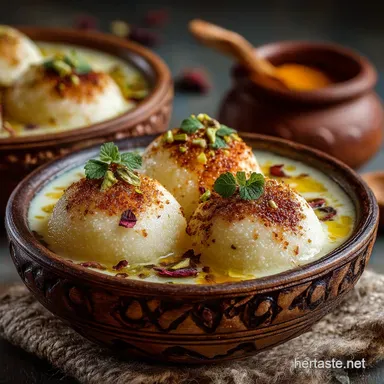
Cloudsoft Rasgulla the Bengali Secret to Spongy Perfection
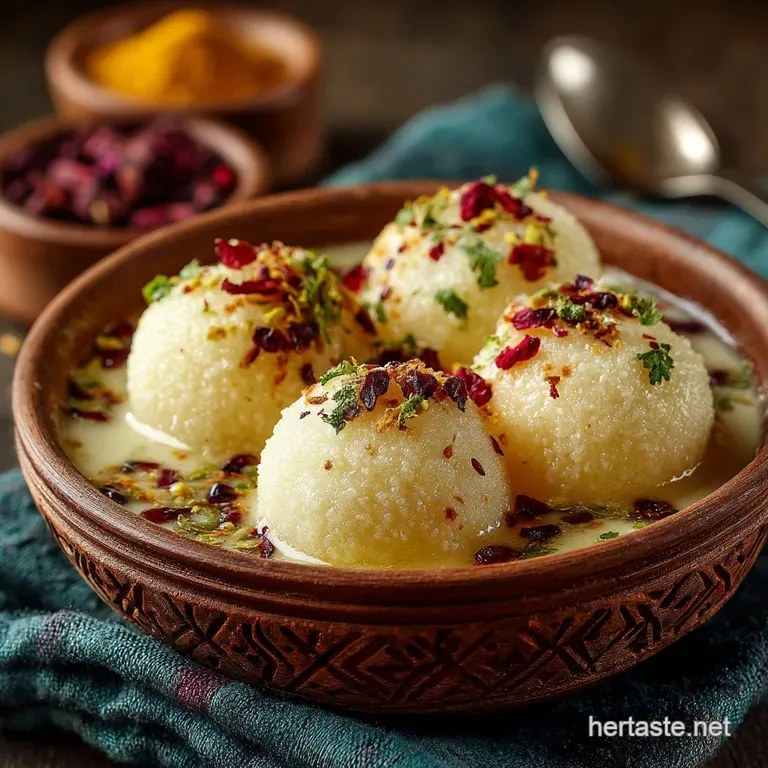
- Capturing the Essence of Bengali Sweets
- The Culinary Challenge of Perfect Bengali Rasgulla
- Decoding the Chhena Checklist
- Crafting the Perfect Aromatic Sugar Syrup (Chashni)
- Mastering the Delicate Art of Chenna Preparation
- The Crucial Simmer: Poaching the Rasgullas
- Common Pitfalls and How to Rescue Your Rasgulla Batch
- Storage Secrets and Suggested Dessert Pairings
- Recipe FAQs
- 📝 Recipe Card
Capturing the Essence of Bengali Sweets
The Rasgulla is more than just a sweet; it is the quintessential embodiment of Bengal's rich culinary history. These delicate, snow-white spheres, derived from fresh cheese curd and bathed in a fragrant sugar syrup, define melt-in-your-mouth perfection.
Forget the dense, store-bought approximations; a properly executed Bengali Rasgulla should be impossibly light, a sweet cloud that yields instantaneously under the slightest pressure, releasing its aromatic syrup.
Mastering the authentic Rasgulla recipe elevates home cooking to an art form, demanding respect for both the quality of the ingredients and the precision of the technique.
The reward for this dedication is an unparalleled dessert experience that captures the true essence of Eastern Indian confectionary.
The Culinary Challenge of Perfect Bengali Rasgulla
While the ingredient list for this renowned sweet is remarkably short, the process demands patience and careful observation. The challenge lies entirely in controlling two variables: the quality of the initial cheese curd, known as chhena , and the intensity of the subsequent kneading.
This is why the difficulty level is rated medium, the ingredients are simple, but the technique must be precise to achieve that signature spongy texture associated with the finest homemade Bengali Rasgulla .
Defining the True Texture: Spongy vs. Rubbery
The hallmark of a great Rasgulla is its bounce. When pressed, it should release syrup and immediately spring back into shape. If your final product is heavy, hard, or overly dense, it is a clear indication that the chhena was either too dry or was kneaded inadequately, failing to release the necessary milk fat to bind the curds into a smooth, malleable dough.
We aim for spongy structural integrity, not a rubbery resistance.
Why Homemade Chhena is Non-Negotiable for Purity
The foundation of the dessert is the fresh cheese, and attempting this recipe with pre-made paneer or inferior dairy simply will not yield the desired result. We require the soft, slightly moist curds created by using 8.5 cups (2 litres) of the freshest, highest-quality whole milk possible.
Making the chhena at home grants complete control over the texture and moisture content, which is the single most critical factor in determining the ultimate lightness of the final Rasgulla.
Kitchen Equipment You Must Prepare
Success in this recipe relies heavily on having the right tools ready before you begin the curdling process. A heavy-bottomed pot, ideally 5 litres or larger, is essential for boiling the milk without scorching. You will also need a colander lined with fine muslin or cheesecloth for straining the curds.
Crucially, the final poaching stage requires a separate, large, wide pot or even a pressure cooker (used without the weight) to ensure the Rasgullas have ample room to expand, they nearly double in size when they hit the rapid-boiling syrup.
Understanding the Role of Acidity in Curdling
The process of separating the milk into curds and whey is triggered by introducing an acid. Whether you use 4 tablespoons (60 ml) of fresh lemon juice or white vinegar, the application must be slow and steady once the milk has been brought just below boiling point.
Equally important is the rinsing stage immediately after the curds form. Thoroughly rinsing the chhena under cold water for two minutes is non-negotiable, as it washes away all residual acid flavour, ensuring a clean, sweet taste in the finished product.
Decoding the Chhena Checklist
Once the curds are separated and rinsed, the waiting game begins. After gathering the cheesecloth corners and giving a gentle initial squeeze, the chhena must be hung to drain for a passive period of 60 to 90 minutes.
This duration is specific because we are aiming for a Goldilocks level of moisture: the chhena should be crumbly when released from the cloth, yet still feel noticeably damp to the touch. If it drains too long and becomes bone dry, the Rasgullas will crumble during kneading and be tough when cooked.
If it is too wet, the spheres will dissolve in the boiling syrup.
Crafting the Perfect Aromatic Sugar Syrup (Chashni)

While the focus often rests on the chhena , the sugar syrup, or chashni , plays an equally vital role in flavor infusion and texture preservation. This sweet bath is where the Rasgullas will spend over an hour transforming from soft balls into spongy clouds.
Essential Dairy Choices for Optimal Curd
As mentioned, only full-fat, non-UHT (ultra-heat treated) whole milk should be used. Inferior dairy products possess differing protein structures that either curdle into hard, gritty masses or fail to hold their shape during the simmering process.
Using 2 litres ensures a sufficient quantity of high-quality Rasgulla base material.
Acid Starters: Lemon Juice vs. Vinegar Secrets
While 4 tablespoons of fresh lemon juice offers a slightly cleaner flavour profile, an equal measure of plain white vinegar is a reliable alternative. The secret lies in not allowing the acid to overcook the curds.
Once the milk separates, immediately strain and proceed to the rinsing process; this halts the reaction and keeps the curds soft and pure.
Sourcing Authentic Bengali Cardamom Pods
For true aromatic depth, the syrup must be infused with authentic flavorings. We use 4–5 lightly crushed green cardamom pods during the initial syrup preparation. If desired, a teaspoon of high-quality rose water can be stirred in after the cooking is complete, adding a final, quintessential Bengali fragrance.
Water to Sugar Ratios for a Light Finish
Unlike heavy Indian syrups used for gulab jamun, the bengali rasgulla recipe demands a light, thin chashni . We combine 2 cups (400g) of granulated white sugar with a generous 6 cups (1.5 litres) of water.
This high dilution ratio ensures the syrup maintains a rapid, furious boil necessary for the Rasgullas to expand properly, yet remains light enough to be absorbed without making the dessert cloyingly sweet.
Mastering the Delicate Art of Chenna Preparation
The kneading phase is where the magic happens and where many cooks mistakenly fail. Once the drained chhena is placed on a clean surface, use the heel or palm of your hand to spread and press the curds firmly. This is not simply mixing; it is a dedicated workout.
You must knead the chhena continuously for 8 to 12 minutes. The goal is to release the natural milk fat, which acts as the binder. You know you are done when the chhena forms a completely smooth, cohesive mass, resembling soft Play-Doh, and your palm feels faintly greasy from the released fat.
The Crucial Simmer: Poaching the Rasgullas
The transformation of the chhena spheres into classic Rasgulla occurs in the high-heat syrup. The spheres are gently dropped into the liquid once it is at a rapid, rolling boil, ensuring the temperature never dips.
They must be covered and cooked for a total of approximately 50 to 60 minutes, allowing them to swell and soak up the sugar water.
Draining and Pressing Chhena for Ideal Moisture Content
Recall the passive draining stage, which takes approximately 1 hour 30 minutes. This period is paramount because the finished bengali rasgulla kaise banta hai depends fundamentally on the moisture level.
If the curds are too dry, they will crack during shaping; if too wet, they will disintegrate during boiling.
The Science of Kneading: Timing and Palm Pressure
Dedication to the 8–12 minutes of active kneading ensures the chhena structure is uniform. Incorrect or insufficient kneading results in trapped air pockets and a crumbly texture, guaranteeing the final balls will collapse.
Use broad palm pressure to smooth out every last grain of curd.
Rolling Uniform Spheres (No Cracks Allowed!)
After kneading, divide the dough into 18–20 equal portions. When rolling each piece between your palms, they must achieve a perfectly smooth, flawless surface. If even a tiny crack appears, the ball will split open when introduced to the boiling syrup.
If this happens, return the entire batch to the kneading surface and knead for another minute or two before reshaping.
Monitoring the Expansion Rate in the Boiling Syrup
Upon entering the rapid chashni , the Rasgulla spheres should swell significantly, almost doubling in size, within the first five minutes.
It is crucial that the pot remains tightly covered during this initial high-heat period to trap steam, which aids in setting the internal structure. If the syrup level drops during the long simmer (45–55 minutes), gently introduce small splashes of very hot water to maintain the boil and concentration.
Common Pitfalls and How to Rescue Your Rasgulla Batch
One of the most frequent questions we receive is why the Rasgullas turn out dense or hard. This almost always traces back to dry chhena or inadequate kneading. If you find your chhena dough is too dry, try sprinkling it with a teaspoon of cold water and kneading briefly to reintroduce flexibility.
Conversely, if your dough feels overly sticky and greasy (over-kneaded), incorporate a tiny pinch of cornflour or semolina to absorb excess oil before rolling. Be mindful that using brown sugar or jaggery, while offering a deeper flavour, will result in a bengali rasgulla brown hue rather than the prized snow-white color.
Storage Secrets and Suggested Dessert Pairings
The Rasgulla requires time to become truly magnificent. The minimum chilling time is four hours, allowing the spheres to fully absorb the syrup and develop that signature spongy texture.
Why Did My Rasgullas Collapse? (Troubleshooting Density)
If your spheres held their shape but collapsed after cooling, the density was likely incorrect, usually due to overly high moisture content or a failure to maintain a sufficiently rapid boil during the first 10 minutes of cooking.
The vigorous boil is necessary for setting the outer shell quickly.
Achieving that Pristine Snow-White Color
To ensure the classic snow-white color, use only plain granulated white sugar for the syrup. Avoid adding any colourants and ensure the milk does not scorch during the initial boiling, as this will introduce a pale brown tint to the chhena itself.
Maximizing Shelf Life for Authentic Bengali Rasgulla
For the best flavour and texture, authentic Bengali Rasgulla should always be served chilled. Stored submerged in their syrup in an airtight container in the refrigerator, they will maintain their quality for 5 to 7 days.
Serving them cold ensures the full flavor profile is preserved and enhances the light, spongy feel.
Transforming Leftovers: Rasmalai and Other Sweet Variations
If you're interested in exploring variations beyond the traditional sweet, understanding bengali rasgulla kaise banta hai opens the door to other classic desserts.
One popular evolution involves making Rasmalai , where you gently flatten the cooked spheres into patties and soak them in a separate, saffron-infused, sweetened milk reduction.
For those tracking macro counts, note that the estimated bengali rasgulla calories sit around 180–200 kcal per serving, depending on the syrup absorption.
Other delicious variations include incorporating a pinch of saffron into the boiling syrup for a golden Kesar Rasgulla or adding a touch of pineapple purée to the chhena before kneading for a fruity twist.
Serve your chilled creations garnished with slivered almonds or pistachios alongside a strong, hot cup of Masala Chai for the perfect contrast.
Recipe FAQs
Why are my Rasgullas flat and dense, not light and spongy like a proper Bengali Rasgulla should be?
Achieving that iconic cloud-like sponge is the trickiest part, like catching smoke! The biggest culprit is usually the moisture content of your chhena; if you drain it too much, it becomes dry and can't absorb the syrup properly, resulting in a dense little rock.
Crucially, ensure your sugar syrup is at a rapid, furious boil when you drop the spheres in and that the boil never breaks during the cooking time, this high heat is essential for maximum expansion.
I’ve run out of lemon juice! Can I use something else to curdle the milk for the chhena?
Absolutely, darling! White vinegar (distilled) is an excellent, consistent alternative and often favoured by experienced chefs, as it separates the milk reliably. If you’re feeling technical, you can also use citric acid powder dissolved in hot water.
Regardless of the acid you choose, the crucial bit is rinsing the curds thoroughly under cold water afterwards to ensure there is no residual sour taste, otherwise, it’s just not cricket!
Help! My Rasgulla balls cracked when I put them in the sugar syrup. What went wrong?
Cracks are a sign that the chhena wasn't kneaded enough. Kneading is non-negotiable; you must work the dough with the heel of your hand for the full 8–12 minutes until it looks like soft, lump-free putty and your palm feels slightly greasy from the released milk fat.
If cracks still appear after thorough kneading, your chhena might be slightly too dry, in which case a sprinkle of cold water and a final knead should sort things out.
How long do these delightful sweets last, and what is the best way to store them?
These beauties keep surprisingly well, usually tasting even better the day after they're made once they've had a proper chance to soak. Store them completely submerged in their syrup within an airtight container in the refrigerator, this prevents them from drying out.
They will happily keep fresh for about 5 to 7 days, so you can enjoy a perfect bite of India whenever the craving strikes.
This recipe makes a lot of syrup. Can I reduce the sugar quantity, or will that ruin the texture?
You need that high sugar concentration in the cooking phase; it raises the boiling point of the water, which is crucial for achieving the perfect spongy structure. While you shouldn't mess with the proportions during cooking, you can absolutely reduce the overall sweetness for serving.
Once the Rasgullas are cooked and cooled, you can gently drain some of the cooking syrup and replace it with fresh water or a lighter, less concentrated simple syrup before chilling.
Authentic Bengali Rasgulla Recipe Spongy Perfection at Home