Sausage Herb Stuffing: the Ultimate Golden-Crusted Sausage and Sage Dressing
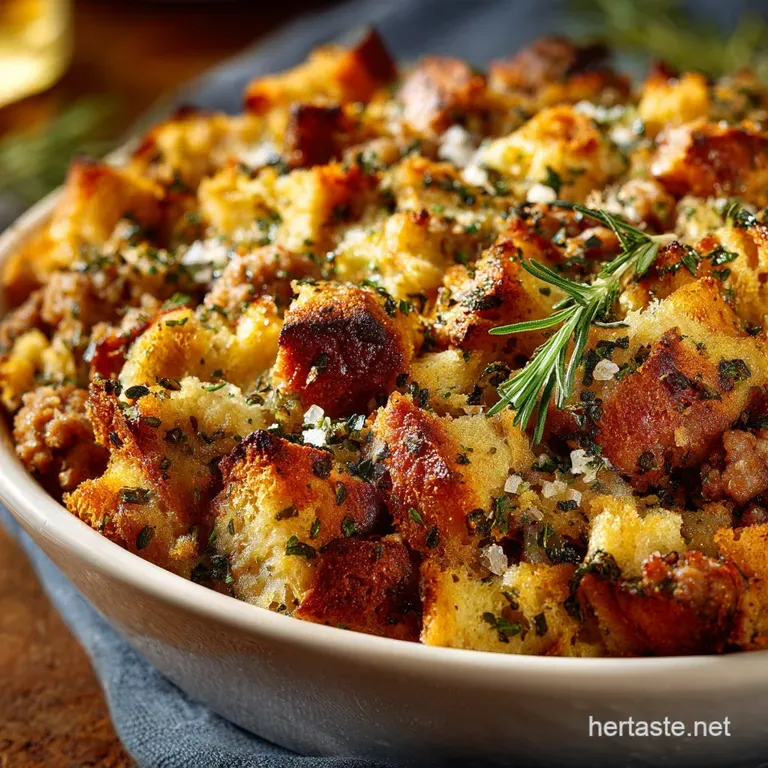
- The Ultimate Golden-Crusted Sausage, Sage, and Thyme Stuffing
- Mastering Texture and Flavour: Why This Sausage Herb Stuffing Recipe Stands Out
- The Building Blocks: What You Need for Classic Sausage and Herb Stuffing
- Ingredient Deep Dive: Notes on Substitutions and Preparation
- Step-by-Step Guide to the Perfect Stuffing Bake
- Troubleshooting and Chef's Secrets for the Moistest Stuffing
- Planning Ahead: Make-Ahead, Storage, and Freezing Tips
- The Ideal Pairings for Rich Sausage Herb Stuffing
- Recipe FAQs
- 📝 Recipe Card
The Ultimate Golden Crusted Sausage, Sage, and Thyme Stuffing
That smell, honestly, is pure magic. When the rich aroma of toasted sage, browned pork, and melted butter starts wafting out of the oven, you know the holidays are officially happening.
This Sausage Herb Stuffing isn't just a side dish; it’s a deeply savoury, comforting centerpiece with a perfect textural contrast crispy, golden top, and wonderfully moist inside.
Look, holiday cooking is stressful, but this recipe is a total lifesaver. It’s surprisingly quick to assemble, incredibly inexpensive if you shop smart, and the best part? It’s perfect for making ahead of time. That flexibility is exactly what we need when the kitchen is absolute chaos, right?
It cuts down on day-of scrambling immensely.
I’ve made every mistake you can imagine with stuffing soggy centers, dry edges, bland flavour but I finally cracked the code on the ratios. We are ditching the guessing game today and getting straight to the point: how to make the best, easiest Sausage Herb Stuffing that everyone will rave about.
Mastering Texture and Flavour: Why This Sausage Herb Stuffing Recipe Stands Out
The secret to truly spectacular stuffing is managing texture and moisture simultaneously. You are aiming for a dish that is deeply savoury from the sausage, earthy from the herbs, and structurally sound from the bread base. It’s a delicate balance.
The Difference Between Stuffing and Dressing (And Why It Matters)
This is the age-old debate! Technically, "stuffing" is cooked inside the bird, and "dressing" is cooked in a casserole dish outside the bird. We are making a dressing today, but we’ll call it stuffing because that’s what we all instinctively crave.
Cooking it separately is safer, guarantees that golden, crunchy crust, and you can make so much more of it.
Achieving the Golden Ratio: Fat-to-Bread Balance
The fat content of the sausage is crucial here. We brown the sausage first to render the fat and create beautiful crispy bits. Don't drain all the fat ; leave about two tablespoons in the pan to sauté the vegetables.
This means every part of the stuffing is infused with that deep, meaty flavour, which is far superior to relying solely on butter.
Why Stale Bread is Non-Negotiable
If you use fresh, soft bread, you are going to end up with paste. Full stop. The bread needs to be stale or thoroughly dried out so that it acts like a sponge, absorbing the stock without dissolving. This structural integrity is what gives you that perfect, fluffy, yet moist interior crumb.
Ensuring a Crisp, Buttery Top Crust
We are covering the dish for the first 30 minutes to steam the interior and keep it incredibly moist. But the final 15 minutes are dedicated solely to texture.
We remove the foil, revealing the final layer of butter dots we added earlier, and let that hot oven work its magic to deliver a deep, golden, and incredibly crunchy crust.
Hydration Secrets for a Tender Interior
The biggest mistake people make is dumping cold stock onto cold ingredients. Instead, use slightly warmed chicken or turkey stock and let the full mixture rest for 5 to 10 minutes before baking.
This resting period allows the dry bread cubes to fully saturate evenly, leading to a perfect, tender interior without any overly dry or overly wet pockets.
The Building Blocks: What You Need for Classic Sausage and Herb Stuffing
This recipe is built on simple, high impact ingredients. We are focusing on high-quality pork, the right aromatics, and loads of fresh sage because nothing says ‘holiday’ quite like sage.
- The Base: Sturdy Sandwich Bread (Sourdough or French Loaf)
- The Fat: Unsalted Butter
- The Meat: Mild Pork Sausage Meat
- The Aromatics: Yellow Onion, Celery Stalks, Garlic
- The Binder: Chicken/Turkey Stock, Large Eggs
- The Flavour: Fresh Sage, Fresh Thyme, Parsley, Salt, Pepper
Ingredient Deep Dive: Notes on Substitutions and Preparation
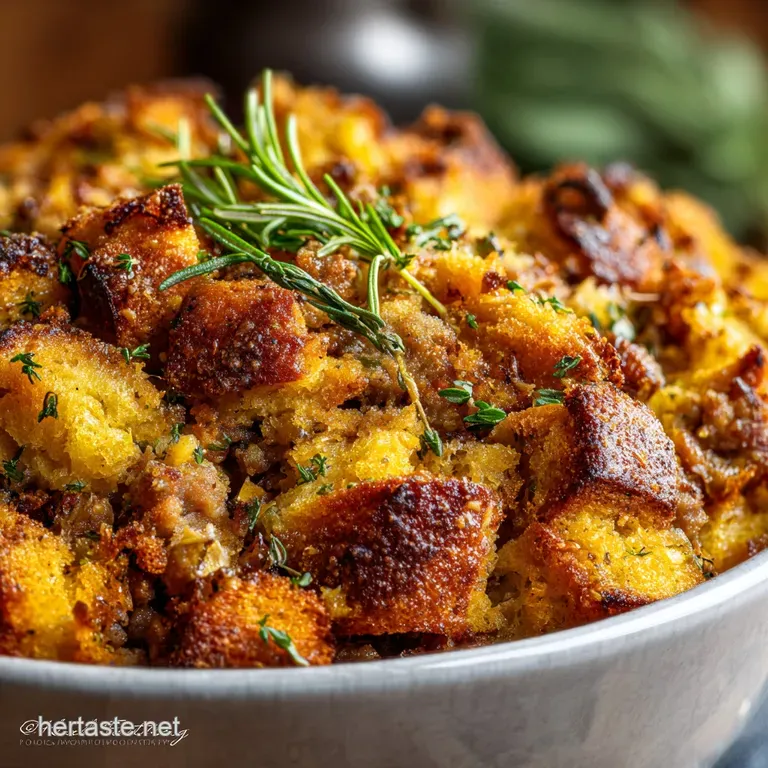
Swapping out ingredients isn't a problem, provided you maintain the structure and overall moisture level. Don’t be afraid to adjust based on what you have in the pantry!
Choosing the Right Sausage Meat (Flavour Profile Matters)
I prefer a high-quality mild bulk pork sausage because it carries the flavour of the herbs beautifully without overpowering them. If you can only find Italian sausage, make sure it’s the mild variety the fennel can be a nice complement!
| Ingredient | My Recommendation | Viable Substitution |
|---|---|---|
| Pork Sausage | Mild Bulk Pork Sausage | Ground turkey or chicken (add 2 Tbsp oil or extra butter for moisture). |
| Sturdy Bread | Sourdough, French Loaf | Quality cornbread (it will absorb more liquid, adjust stock). |
| Chicken Stock | Low-sodium, warmed | Vegetable broth or water mixed with better than-bouillon. |
| Butter | Unsalted | Olive oil or high-quality ghee (dairy-free option). |
Hard Herbs vs. Soft Herbs: Sage and Thyme Breakdown
Sage is a hard herb and is non-negotiable here. It’s what gives this stuffing its classic profile. We sauté the sage and thyme with the aromatics so they release their oils and flavour the fat before everything else.
You can use dried sage and thyme, but use only 1 teaspoon of dried sage instead of 4 tablespoons fresh.
Binder Basics: Stock, Egg, and Butter Ratios
We use eggs to act as a light binder, helping the whole casserole slice nicely. The stock is the primary hydrator. My rule of thumb: the mixture should feel like a very wet sponge that holds its shape when squeezed, but it should not be dripping.
If it’s too dry, add stock, 1/4 cup at a time.
To Toast or Not to Toast the Bread Cubes
You absolutely must dry the bread, but you don't necessarily have to toast it until it’s fully coloured. The key is removing moisture. I usually cube mine a day ahead and leave them out on the counter uncovered.
If you forget, a quick 15 minutes in a 300°F (150°C) oven works perfectly.
Aromatics: Preparing Onions and Celery Correctly
We want the onions and celery completely tender, not crunchy. Take the time to chop them finely and sauté them gently for a full 8 to 10 minutes after browning the sausage. Don't worry about giving them colour we just want that beautiful translucence.
step-by-step Guide to the Perfect Stuffing Bake
Let’s crack on. This is where attention to detail pays off big time.
Browning the Sausage and Aromatics Base
- Dry the Bread: Ensure your 1 inch bread cubes are completely dry. Place them in your largest mixing bowl.
- Sizzle the Sausage: Cook the sausage meat in a large, heavy bottomed pan over medium high heat, breaking it up completely. Cook until well browned and little crispy edges form this is flavour! Drain excess grease, leaving about 2 tablespoons in the pan. Transfer the sausage to the bread bowl.
- Soft Sauté: Melt 4 tablespoons of butter in the same pan. Add the onion and celery and cook gently for 8– 10 minutes until very soft. Add the minced garlic, chopped sage, and thyme; cook for just one minute until incredibly fragrant.
- Flavour Base: Scrape all the sautéed vegetables and fragrant herb mixture into the bread bowl and toss gently to coat everything.
Mixing and Massaging the Stuffing Base (The Key to Moisture)
- Prep the Liquids: Whisk the warm stock, beaten eggs, parsley, salt, and pepper in a separate bowl.
- Moisten and Rest: Pour the liquid over the dry ingredients. Use a spatula or your hands to toss everything together until every bread cube looks evenly hydrated.
- Crucial Rest: Let the mixture stand for 5– 10 minutes. This rest ensures the bread fully absorbs the stock and prevents a dry, powdery texture after baking.
Chef’s Note: Do not press the mixture down tightly into the baking dish! If you pack it in too densely, the steam can't circulate, and you will end up with a heavy, gummy consistency. Lightly fill the dish.
Temperature Checks for Safety and Doneness
- Bake Prep: Preheat the oven to 375°F (190°C). Dot the top surface of the stuffing with the remaining 4 tablespoons of cubed butter. Cover tightly with foil.
- Initial Bake: Bake for 30 minutes. The internal temperature should be at least 165°F (74°C) for food safety, especially if any trace amounts of fat were left from the sausage.
Baking Uncovered for Maximum Crumb Texture
- The Grand Reveal: Remove the foil and bake for an additional 15– 20 minutes. Watch closely! We want the top to achieve a beautiful deep gold and satisfying crunch.
- Final Rest: Let the finished stuffing rest for 10 minutes before serving. This allows the internal moisture to redistribute perfectly.
Troubleshooting and Chef's Secrets for the Moistest Stuffing
If you've been haunted by dry edges or a sloppy center, these quick tips will fix your life.
Addressing 'Soggy Bottom' Syndrome
The dreaded soggy bottom happens when too much liquid pools at the base of the dish, usually because the bread wasn't dry enough or you over poured the stock. The fix: Ensure the bread is truly dry, and if your mixture looks borderline too wet before baking, bake it in a shallow dish (like a 9x13 inch) rather than a deep one.
Why Over Mixing Kills Texture
Once you add the liquid, toss gently and stop once everything is combined. Over mixing activates the gluten in the bread and breaks down the structure of the already soaked cubes. This is how you get gumminess instead of lightness.
Adjusting Liquids for Altitude or Bread Type
Sturdy sourdough needs more liquid than softer white sandwich bread. Similarly, if you live at a high altitude or if your oven runs hot, things dry out faster. If your stuffing feels firm and dry halfway through the covered bake, add a splash (2 3 tablespoons) of warm stock around the edges before re-covering.
Planning Ahead: make-ahead, Storage, and Freezing Tips
When hosting, the fewer things you have to do on the day, the better. This Sausage Herb Stuffing is brilliantly cooperative.
Freezing Unbaked vs. Baked Stuffing
You can absolutely freeze this.
- Unbaked (Best Option): Assemble the entire mixture, place it in the baking dish, but do not add the stock/egg binder. Freeze the dry mix tightly wrapped for up to 3 months. When ready to bake, thaw overnight, pour the prepared binder mixture over it, let it soak, and proceed with the baking instructions.
- Baked: Bake completely, cool fully, then wrap tightly. It can freeze for up to 2 months. Note that the crust won't be quite as crisp upon reheating.
Cooling and Reheating Safely
Leftovers keep beautifully in an airtight container in the fridge for up to 4 days. To reheat: You want to add back some moisture. Place the leftovers in an oven safe dish, sprinkle a tablespoon of stock over the top, cover with foil, and reheat at 325°F (160°C) until piping hot (about 20 minutes).
If you want to re-crisp the top, remove the foil for the last five minutes.
The Ideal Pairings for Rich Sausage Herb Stuffing
This stuffing is robust and flavourful, meaning it pairs perfectly with classic roast dinners and rich sauces.
Traditional Roast Meats and Gravies
This stuffing is meant for the big show. It’s perfect alongside a juicy bird, especially if you follow my guide for a beautiful Roast Turkey: The Ultimate Herb Butter Recipe for a Succulent Holiday Feast . Don't forget the gravy a rich, savoury gravy poured over the top is mandatory.
If you are looking for an even fruitier twist, you might want to try adding apples and cranberries; those flavours are divine. We have a great recipe for Sausage Apple and Cranberry Stuffing: The Awesome 5 Star Holiday Recipe if you want to explore that route!
And hey, if you’re planning the turkey, make sure you check out the secret to great flavour starting days early with a Turkey Brine Recipe for Roasting: Aromatic Citrus Herb .
Recipe FAQs
How can I prevent my Sausage Herb Stuffing from turning out too dry or too soggy?
Dry stuffing usually means insufficient broth; add liquid one tablespoon at a time until the mixture holds its shape loosely when pressed. If the stuffing is too wet, gently fold in a few extra dried bread crumbs or bake it uncovered for the last 15 minutes to evaporate excess moisture.
Can I make this stuffing ahead of time, and how should I store it?
Yes, you can assemble the stuffing fully (without baking) up to 24 hours in advance and store it covered tightly in the refrigerator. Ensure the dish is removed from the fridge and allowed to reach room temperature for 30 minutes before baking to promote even cooking.
What is the best way to ensure a perfectly crispy, golden brown top crust?
For a truly professional golden crust, ensure the baking dish is lightly buttered and bake the stuffing uncovered for the entire duration of the cooking time. Alternatively, toss a few extra pats of butter or a light drizzle of olive oil over the surface before placing the dish into the oven.
I don't eat pork. What is a suitable substitute for the sausage?
Absolutely, you can use high-quality chicken or turkey sausage, or even a robust plant based crumbled sausage alternative. Remember that these substitutions might release less fat than pork, so you may need to add an extra tablespoon of butter or oil to maintain moisture.
Can I use fresh bread instead of stale or dried bread cubes?
Using fresh bread is not recommended as it results in a heavy, dense, and gummy stuffing consistency. If you only have fresh bread, cube it and spread it on a baking sheet, then toast it at 325°F (160°C) for about 10 15 minutes until completely crunchy and dry.
Is it safe to freeze any leftover Sausage Herb Stuffing?
Yes, this stuffing freezes well. Bake the stuffing completely, let it cool entirely, and then transfer it to a freezer safe container where it will keep for up to three months. To reheat, thaw overnight, then bake covered at 350°F (175°C) until piping hot throughout.
Should I cook this stuffing inside the turkey or chicken, and what are the risks?
While traditional, cooking stuffing inside poultry is generally not recommended by food safety experts due to the risk of bacterial contamination. If you choose this method, the stuffing must reach a verified internal temperature of 165°F (74°C) to be safe, which often means the bird will be overcooked.
Classic Sausage Herb Stuffing Recipe
Ingredients:
Instructions:
Nutrition Facts:
| Calories | 331 kcal |
|---|---|
| Protein | 15.0 g |
| Fat | 18.0 g |
| Carbs | 27.0 g |
