Bobby Flay Salisbury Steak Recipe with Mushroom Gravy
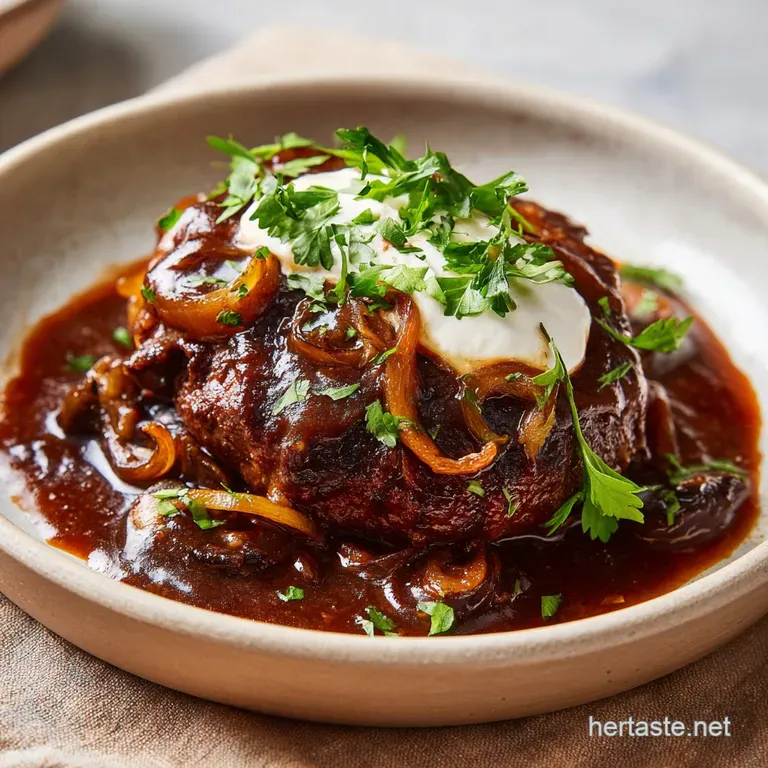
- Time: Active 15 minutes, Passive 25 minutes, Total 40 minutes
- Flavor/Texture Hook: Savory, umami rich patties with a silky, mushroom studded gravy
- Perfect for: A weeknight dinner upgrade or an impressive yet low effort weekend meal
- Master the Bobby Flay Salisbury Steak Recipe Chefjar
- Essential Techniques for Better Beef
- The Building Blocks of Umami
- Essential Components and Quality Swaps
- Simple Tools for Better Cooking
- Step-by-Step Cooking Mastery Guide
- Solving Potential Kitchen Disasters
- Scaling the Recipe for Any Crowd
- Innovative Flavor Profiles and Twists
- Debunking Common Kitchen Myths
- Preservation and Smart Leftover Use
- Presentation and Pairing Ideas
- Recipe FAQs
- 📝 Recipe Card
Master the Bobby Flay Salisbury Steak Recipe Chefjar
Picture this: It is a Tuesday evening, the rain is drumming against the window, and you are craving something that feels like a warm hug but tastes like a professional chef spent hours over the stove.
I remember the first time I attempted a version of this; I treated the meat like a standard burger and ended up with dry, crumbly pucks. It was a disaster, but it led me to forging a much better approach.
The moment the 1.5 lb ground beef hits the hot stainless steel, that initial sizzle releases an aroma of browned protein and sweet onions that instantly changes the mood of the kitchen.
We aren't just making meatloaf in a pan here. This specific method focuses on creating a shatter crisp exterior while maintaining a plush, tender interior. It’s about that beautiful moment when the velvety gravy clings to the back of your spoon, smelling of fresh thyme and earthy cremini mushrooms.
We’ve all had the cafeteria version of this dish, but this version is a total departure from those sad, soggy memories.
You’ll find that the secret isn't in complicated gadgets, but in how we handle the basic elements. By the time the butter begins to foam and the flour turns a nutty golden brown, you’ll realize why this dish remains a staple in my rotation.
It’s innovative in its simplicity, proving that minimal tools can produce a meal that rivals any restaurant steak. Let’s get into the mechanics of making this happen in your own kitchen.
Essential Techniques for Better Beef
Understanding the "how" behind the heat is what separates a good cook from a great one. When we make the Bobby Flay Salisbury Steak Recipe Chefjar, we are manipulating proteins and starches to achieve a specific mouthfeel.
- The Panade Principle: Mixing 0.5 cup breadcrumbs with 0.25 cup whole milk creates a paste that coats meat fibers, preventing them from linking too tightly and becoming tough.
- Maillard Management: The 80/20 beef ratio ensures enough fat to trigger the Maillard reaction, creating that mahogany crust that houses the most intense savory flavors.
- Starch Gelatinization: Whisking 2 tbsp flour into the foaming butter allows the starch granules to swell and trap the 2 cups beef stock, resulting in a sauce that is smooth rather than watery.
- Aromatic Extraction: Grating the 0.25 cup yellow onion into the meat allows the juices to distribute evenly, providing moisture and a subtle sweetness that chopped onions can't match.
| Feature | Fresh Preparation | Shortcut Version | Resulting Difference |
|---|---|---|---|
| Onion Prep | Finely grated yellow onion | Pre chopped frozen onion | Grated onion provides better moisture and a seamless texture in the patty. |
| Mushroom Choice | Sliced cremini (baby bella) | Canned sliced mushrooms | Fresh cremini offers a meaty texture and deeper umami than canned alternatives. |
| The Binder | Fresh breadcrumbs/milk panade | Dried crackers | The panade keeps the beef significantly more tender and less "crumbly" than crackers. |
Choosing the right path depends on your time, but for this specific recipe, the grated onion is a non negotiable for that signature "melt in-your mouth" quality.
The Building Blocks of Umami
I’ve spent years experimenting with different components, and I’ve found that the specific synergy between the Worcestershire sauce and the beef stock is what defines the profile. This isn't just a list; it's a blueprint for flavor.
| Component | Science Role | Pro Secret |
|---|---|---|
| 80/20 Ground Beef | Provides the essential fat to protein ratio for juiciness. | Keep it cold until the moment you mix to prevent the fat from melting too early. |
| Worcestershire Sauce | Supplies fermented anchovies and tamarind for complex acidity. | Use it both in the meat and the gravy to create a cohesive flavor bridge. |
| Cremini Mushrooms | Offers a denser cell structure and more ergothioneine than white buttons. | Don't salt them until they have browned; salt draws out water and prevents searing. |
| Fresh Thyme | Introduces volatile oils that cut through the richness of the beef. | Slap the sprigs against your palm before chopping to "wake up" the oils. |
Similar to how you'd build a Meat Sauce Recipe, the layering of these ingredients is what creates the depth we're after.
Essential Components and Quality Swaps
For this Bobby Flay Salisbury Steak Recipe Chefjar, we are sticking to high impact ingredients that maximize the 40 minutes of total time.
- 1.5 lb ground beef (80/20): Why this? The 20% fat content is vital for a moist patty that doesn't dry out. (Substitute: Ground chuck or 90/10 beef with 1 tbsp added olive oil)
- 0.5 cup plain breadcrumbs: Why this? They provide the structure for the panade without adding competing flavors. (Substitute: Panko or crushed saltines)
- 0.25 cup whole milk: Why this? The fat and liquid hydrate the breadcrumbs for a soft texture. (Substitute: Heavy cream or unsweetened almond milk)
- 1 large egg, lightly beaten: Why this? Acts as the protein "glue" to keep the steaks together during the flip. (Substitute: 1/4 cup applesauce or a flax egg)
- 2 tbsp Worcestershire sauce, divided: Why this? Adds the concentrated hit of savory umami. (Substitute: Soy sauce with a pinch of sugar)
- 0.25 cup yellow onion, finely grated: Why this? Provides moisture and flavor that blends into the meat. (Substitute: Onion powder, though texture will suffer)
- 1 tsp kosher salt & 0.5 tsp black pepper: Essential seasoning.
- 8 oz cremini mushrooms, thinly sliced: (Substitute: White button mushrooms or shiitakes)
- 1 medium yellow onion, thinly sliced: (Substitute: Shallots for a milder flavor)
- 2 cups low sodium beef stock: (Substitute: Chicken stock mixed with 1 tsp soy sauce)
- 2 tbsp unsalted butter: (Substitute: Ghee or olive oil)
- 2 tbsp all purpose flour: (Substitute: Cornstarch slurry, though color will be lighter)
- 1 tsp fresh thyme, chopped: (Substitute: 1/2 tsp dried thyme)
Simple Tools for Better Cooking
You don't need a kitchen full of gadgets for this. In fact, I prefer using a single large cast iron skillet (like a Lodge) for the entire process. The heavy bottom provides the thermal mass needed to sear all four steaks without the temperature dropping.
A simple box grater is my favorite "innovative" tool for the onion it’s much faster to clean than a food processor.
A flat edged wooden spoon is also essential here. It allows you to scrape up the "fond" those brown bits stuck to the bottom of the pan which is where the concentrated flavor lives. If you have a meat thermometer, it will ensure your beef reaches exactly 160°F without overcooking.
step-by-step Cooking Mastery Guide
1. The Binding Phase
In a large bowl, combine the 0.5 cup breadcrumbs, 0.25 cup whole milk, the beaten egg, 1 tbsp of the Worcestershire sauce, and the grated onion. Let this sit for 5 minutes. Note: This allows the breadcrumbs to fully hydrate, ensuring a tender bite.
2. Shaping the Steaks
Gently fold the 1.5 lb ground beef into the panade with the salt and pepper. Divide into 4 equal portions and shape into oval patties about 3/4 inch thick. Note: Do not overwork the meat, or it will become rubbery.
3. The Mahogany Sear
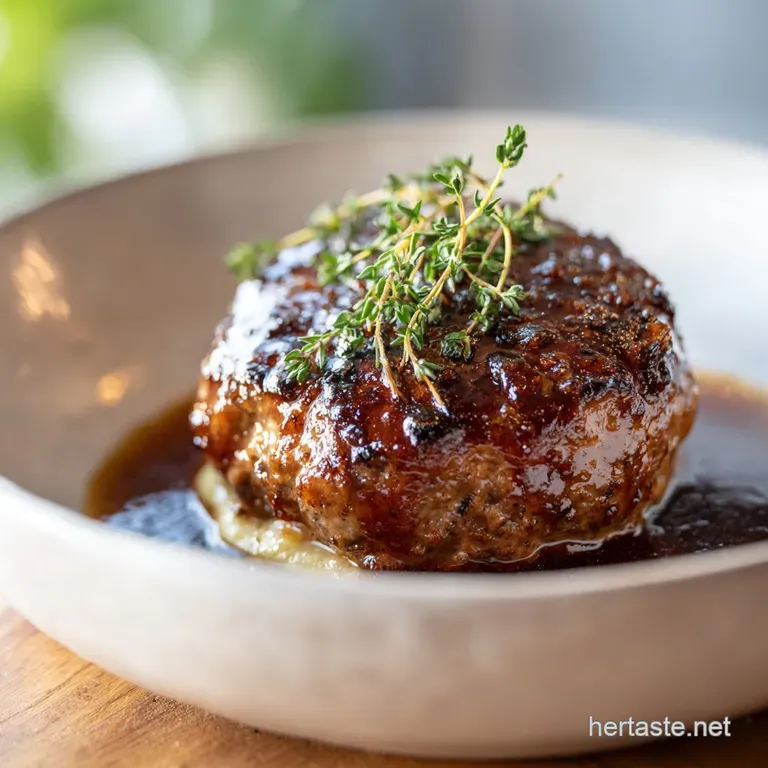
Heat 1 tbsp of oil in your skillet over medium high heat. Add the patties and cook for 4-5 minutes per side until a deep brown crust forms. Note: They don't need to be cooked through yet; we just want color.
4. Sautéing the Aromatics
Remove the steaks to a plate. In the same pan, add the 8 oz sliced mushrooms and the sliced onion. Sauté for 6-8 minutes until the onions are translucent and mushrooms are browned.
5. Creating the Velvet Gravy
Push the vegetables to the side and melt 2 tbsp unsalted butter in the center. Whisk in 2 tbsp flour and cook for 1 minute until it smells like toasted bread.
6. Incorporating the Liquid
Slowly pour in the 2 cups beef stock and the remaining 1 tbsp Worcestershire sauce, whisking constantly. Note: Gradual addition prevents lumps from forming in the roux.
7. The Final Braise
Nestle the steaks back into the gravy. Simmer over medium low heat for 8-10 minutes until the sauce thickens and the beef reaches 160°F.
8. Finishing Touches
Sprinkle with the 1 tsp fresh thyme. Spoon the velvety gravy over the steaks just before serving to ensure every inch is coated in flavor.
Solving Potential Kitchen Disasters
Even with a reliable recipe, variables like stove heat or meat fat content can throw a wrench in the works. I’ve faced these issues myself, usually when I’m in a rush.
Why Your Steak Falls Apart
If the patty crumbles the moment you try to flip it, it’s usually due to a lack of binding or moving it too early. The egg and panade are the structure, but the sear is the "exoskeleton." If the meat hasn't formed a crust, it will stick to the pan and tear.
Fixing Thin or Lumpy Gravy
Gravy is a fickle beast. If it's too thin, it likely hasn't simmered long enough for the starches to fully expand. If it's lumpy, you probably added the liquid too fast.
| Problem | Root Cause | Solution |
|---|---|---|
| Thin Gravy | Not enough reduction time or too much stock added at once. | Simmer uncovered for 5 extra minutes or add a tiny cornstarch slurry. |
| Dry Meat | Patties were overworked or cooked at too high a temperature. | Ensure you use 80/20 beef and stop cooking at exactly 160°F internal. |
| Bland Flavor | Lack of salt or missed "fond" scraping. | Add an extra splash of Worcestershire or a pinch of salt at the very end. |
Common Mistakes Checklist:
- ✓ Never use extra lean beef (95/5); the steaks will be dry as sawdust.
- ✓ Don't skip the resting period for the panade (breadcrumbs/milk mix).
- ✓ Ensure the pan is hot before the meat hits; you want a sizzle, not a hiss.
- ✓ Avoid overcrowding the pan; if your skillet is small, sear the steaks in two batches.
- ✓ Use low sodium stock so you can control the final salt level yourself.
Scaling the Recipe for Any Crowd
If you are cooking for a larger family or meal prepping, you can easily double this Bobby Flay Salisbury Steak Recipe Chefjar. When doubling, I suggest using two separate pans for the searing phase.
Overcrowding the pan causes the temperature to drop, which results in the meat steaming in its own juices rather than developing that shatter crisp crust.
For the gravy, you can scale the 2 cups stock to 4 cups, but only increase the flour and butter to 3.5 tbsp each. Liquids don't always scale linearly in a wide pan because of the evaporation surface area. If you're scaling down for two people, simply halve everything, but use a smaller 8 inch skillet to ensure the gravy doesn't evaporate too quickly. For another high protein option that scales well, you might enjoy learning How to Cook recipe for steaks.
Innovative Flavor Profiles and Twists
- The Spicy Southwestern Twist: Add 1 tsp cumin and 1 finely chopped chipotle in adobo to the meat mixture. Swap the thyme for fresh cilantro at the end.
- The French Bistro Style: Use a mix of mushrooms (oyster, shiitake, and cremini) and swap the beef stock for a rich Authentic Sauce Diane recipe for a sophisticated cognac finish.
- The Turkey Alternative: Use ground turkey but add 1 tbsp of olive oil and a dash of liquid smoke to the meat mixture to mimic the richness of beef.
Debunking Common Kitchen Myths
Myth: Searing meat seals in the juices. Truth: This is a classic misconception. Searing is entirely about the Maillard reaction the chemical reaction between amino acids and reducing sugars that gives browned food its distinctive flavor.
Moisture loss actually happens more rapidly at higher temperatures, but the trade off is the incredible flavor of the crust.
Myth: Salisbury steak is just a hamburger with gravy. Truth: Not even close. The inclusion of a panade (milk and breadcrumbs) and grated aromatics makes the texture of a Salisbury steak closer to a meatloaf or a Swedish meatball than a burger.
A burger should be pure beef; a Salisbury steak is an engineered comfort food designed for tenderness.
Preservation and Smart Leftover Use
Storage: Keep your leftovers in an airtight container in the fridge for up to 3 days. This dish actually tastes better the next day as the mushrooms continue to infuse the gravy with their earthy essence.
Freezing: You can freeze the cooked steaks in the gravy for up to 3 months. To reheat, thaw in the fridge overnight and warm slowly in a skillet over low heat, adding a splash of water to loosen the sauce.
Zero Waste Tip: If you have leftover gravy but no meat, use it as a base for a poutine or pour it over a Juicy Steak with recipe. You can also freeze the gravy in ice cube trays to add a boost of umami to future soups or stews.
Presentation and Pairing Ideas
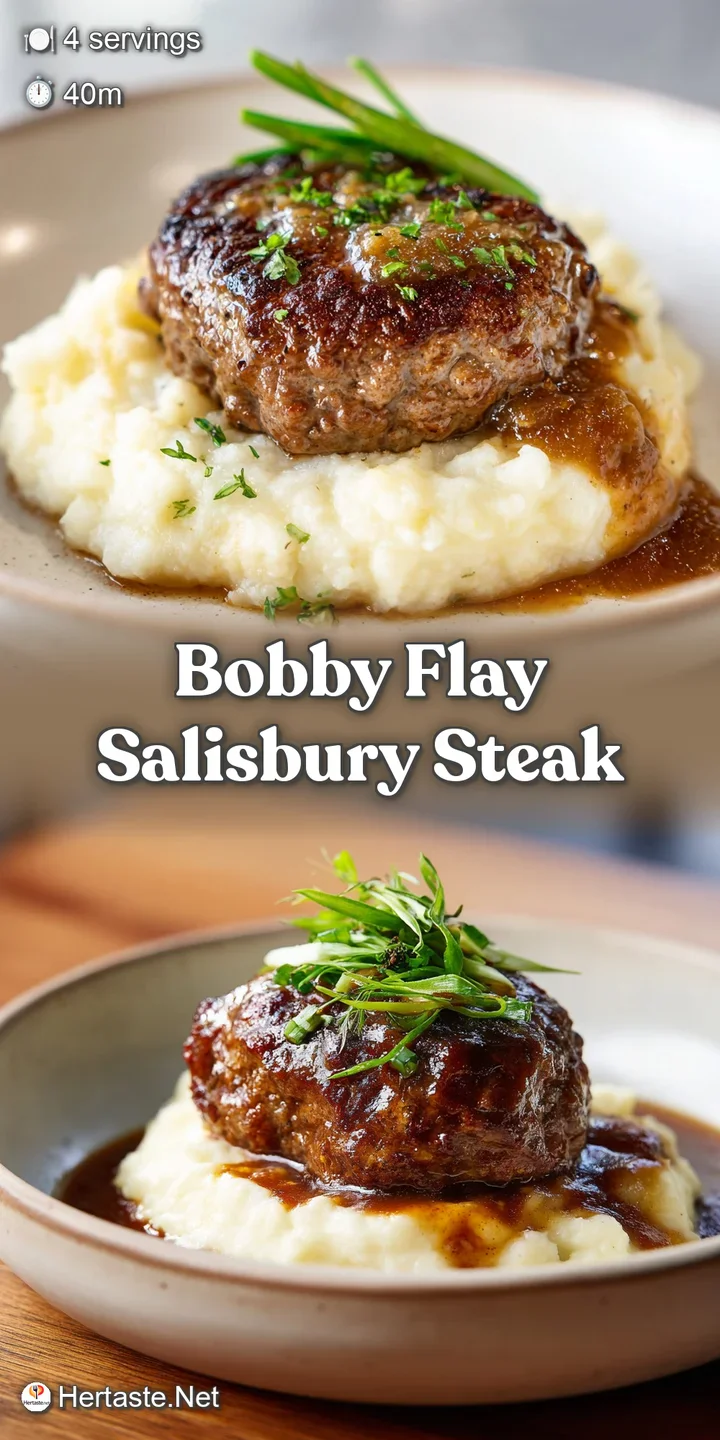
For the classic experience, serve this over a mountain of buttery mashed potatoes. The "well" in the potatoes is the perfect vessel for the excess mushroom gravy. If you want something a bit lighter, a side of roasted green beans with lemon zest provides a bright contrast to the heavy, savory notes of the beef.
I personally love serving this with a thick slice of toasted sourdough. There is something deeply satisfying about using the bread to "mop" the last bit of velvet sauce from the plate. It's an innovative way to ensure not a single drop of that Bobby Flay Salisbury Steak Recipe Chefjar goes to waste.
Whether it's a casual family dinner or a cozy night in, this recipe is a reliable win for any cook.
Recipe FAQs
What are some tips for making the best Salisbury steak?
Ensure the meat mixture includes a panade. Mixing breadcrumbs and milk hydrates the beef fibers, which prevents the final patty from becoming tough or crumbly.
What is Bobby Flay's dry rub for steak?
This recipe uses a wet seasoning approach, not a dry rub. The main savory flavor comes from Worcestershire sauce, salt, and pepper mixed directly into the binding agent for a cohesive taste.
What kind of meat is best for Salisbury steak?
Use 80/20 ground beef for optimal results. The 20% fat content is crucial as it creates moisture and aids in achieving the deep brown crust during the sear.
How do I prevent my Salisbury steaks from drying out during the final simmer?
Cook the patties until the internal temperature reaches exactly 160°F. If you enjoyed mastering temperature control here, apply that same precision to our Cajun Steak Tips recipe for perfectly cooked protein every time.
How do I make the mushroom gravy rich and velvety smooth?
Create a roux by cooking the flour in melted butter for one minute before adding liquid. Whisk in the beef stock slowly to ensure the starches gelatinize evenly without clumping.
What is the best way to serve Bobby Flay's Salisbury Steak?
Serve the steaks over creamy mashed potatoes to soak up the gravy. A side of roasted green beans provides a nice, bright textural contrast to the savory beef.
What are Bobby Flay's most popular recipes generally?
His most popular recipes often feature bold Southwestern and simple, expertly executed American flavors. While steak is a favorite, dishes featuring complex sauces or spice blends, like those found in The Green Gold recipe, are widely sought after.
Bobby Flay Salisbury Steak
Ingredients:
Instructions:
Nutrition Facts:
| Calories | 541 kcal |
|---|---|
| Protein | 36.8 g |
| Fat | 33.2 g |
| Carbs | 19.5 g |
| Fiber | 1.6 g |
| Sugar | 4.2 g |
| Sodium | 685 mg |
