My Best New Years Eve Dinner: Herb-Crusted Masterpiece
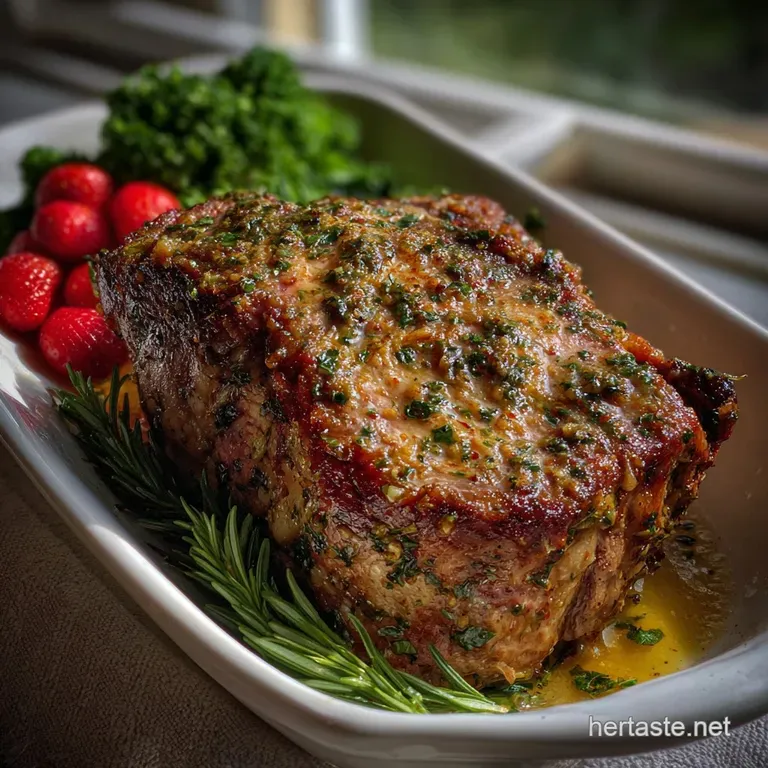
- Effort/Time: High-focus / 4 hours
- Flavor Hook: Herb-crusted richness meets a sharp, wine-infused umami reduction.
- Perfect for: High-stakes holiday hosting and luxury celebrations.
- Why This Recipe Works: The Science of Precision Roasting
- Specs: Technical Metrics for My Best New Years Eve Dinner
- The Alchemy of Umami: Selecting Elements for My Best New Years Eve Dinner
- Essential Tools for Thermal Mastery
- Key Steps: The Thermal Protocol for My Best New Years Eve Dinner
- Common Mistakes & Solving the Mystery of Gray Meat
- Flavor Architecture and Variations for My Best New Years Eve Dinner
- Maintaining Texture in the Aftermath: Storage & Reheating
- ⚗️ The Scaling Lab: The Physics of Quantity
- Common Myths about Prime Rib
- Recipe FAQs
- 📝 Recipe Card
There is nothing worse than pulling a $200 roast out of the oven only to find it's turned into a gray, dry hunk of cardboard that costs more than your first car’s insurance. I’ve seen it happen at more holiday parties than I’d like to admit, where the host tries to mask a "well done" tragedy with store-bought gravy.
That financial and emotional sting is exactly why most home cooks feel a spike of cortisol when they think about preparing My Best New Years Eve Dinner.
I once destroyed a beautiful 3 bone roast by trusting a cheap analog thermometer that was off by twenty degrees. I served what looked like mahogany colored shoe leather to my in-laws, and the silence at that table was deafening.
It was a humbling lesson in the physics of thermal mass; I had rushed the tempering and ignored the reality of carryover heat, resulting in a protein denatured disaster.
The secret to avoiding that heartbreak is understanding the science of the reverse sear and the power of a "dry brine." By allowing Kosher salt to penetrate the muscle fibers overnight, you create a moisture locking barrier that results in a velvety, buttery texture.
When you pair that with a slow roasting protocol that keeps the internal temperature consistent, the final over high heat blast creates a mahogany, crackling exterior that yields to a succulent, ruby red center every single time.
Why This Recipe Works: The Science of Precision Roasting
- Enzymatic Tenderization: Resting the roast with 3 tbsp Kosher salt for 24 hours triggers osmotic pressure, drawing moisture out and then back in, breaking down tough connective tissues.
- Reverse Sear Thermodynamics: Starting at a low temperature prevents the outer layers from overcooking while the center slowly reaches its target, eliminating the "gray ring" effect.
- Maillard Reaction Synergy: The over high heat finish at 500°F (260°C) rapidly reorganizes amino acids and sugars, creating a complex, savory crust without toughening the interior.
- Collagen Hydrolysis: The long, slow cook time allows collagen to transform into gelatin, providing that signature "melt-in-your mouth" mouthfeel.
Specs: Technical Metrics for My Best New Years Eve Dinner
To ensure My Best New Years Eve Dinner performs as expected, adhere strictly to these quantitative benchmarks. Precision is the difference between a meal and an experience.
| Metric | Specification |
|---|---|
| Yield | 9 generous servings |
| Prep Time | 1 hour (plus 24h optional dry brine) |
| Cook Time | 3 hours (variable by roast thickness) |
| Total Time | 4 hours |
| Target Internal Temp | 120°F (Rare) to 130°F (Medium Rare) |
| Resting Duration | 30 minutes minimum |
The Alchemy of Umami: Selecting Elements for My Best New Years Eve Dinner
Creating My Best New Years Eve Dinner requires specific chemical properties from your ingredients. Using a high fat butter like Kerrygold ensures a more stable emulsion for your herb crust, while the choice of salt dictates the depth of the seasoning.
- 7 lb bone-in prime rib roast (3 4 bones): Why this? Bones act as insulators, slowing heat transfer for more even internal cooking.
- 3 tbsp Diamond Crystal Kosher Salt: Why this? Large flakes provide controlled salinity without the harsh metallic edge of table salt.
- 2 tbsp coarsely ground black pepper: Why this? Coarse grains withstand high heat without burning, adding textural "pop."
- 1 cup Kerrygold unsalted butter, softened: Why this? Higher butterfat content (82%+) creates a richer, more stable herb laminate.
- 6 cloves fresh garlic, minced
- 2 tbsp fresh rosemary, finely chopped
- 2 tbsp fresh thyme, finely chopped
- 1 tbsp prepared horseradish: Why this? Isothiocyanates provide a sharp counterpoint to the heavy fat profile of the ribeye.
- 2 cups low-sodium beef stock
- 1 cup dry red wine (Cabernet or Merlot): Why this? Tannins and acidity cut through the richness of the au jus reduction.
- 1 large shallot, minced
Essential Tools for Thermal Mastery
For My Best New Years Eve Dinner, your equipment must manage heat distribution and moisture retention. If you're looking for a lighter start to your evening, you might pair this with a crisp salad using my Zesty Italian Salad Dressing recipe to balance the heavy fats.
- Lodge Cast Iron Roasting Pan: Provides superior heat retention and even distribution for the final sear.
- Meater Plus Wireless Meat Thermometer: Crucial for real time internal monitoring without opening the oven door and losing heat.
- KitchenAid Silicone Basting Brush: Ensures an even application of the garlic herb butter across the fat cap.
- Wüsthof 12 inch Slicing Knife: A long, thin blade prevents "sawing" the meat, preserving the structural integrity of each slice.
Key Steps: The Thermal Protocol for My Best New Years Eve Dinner
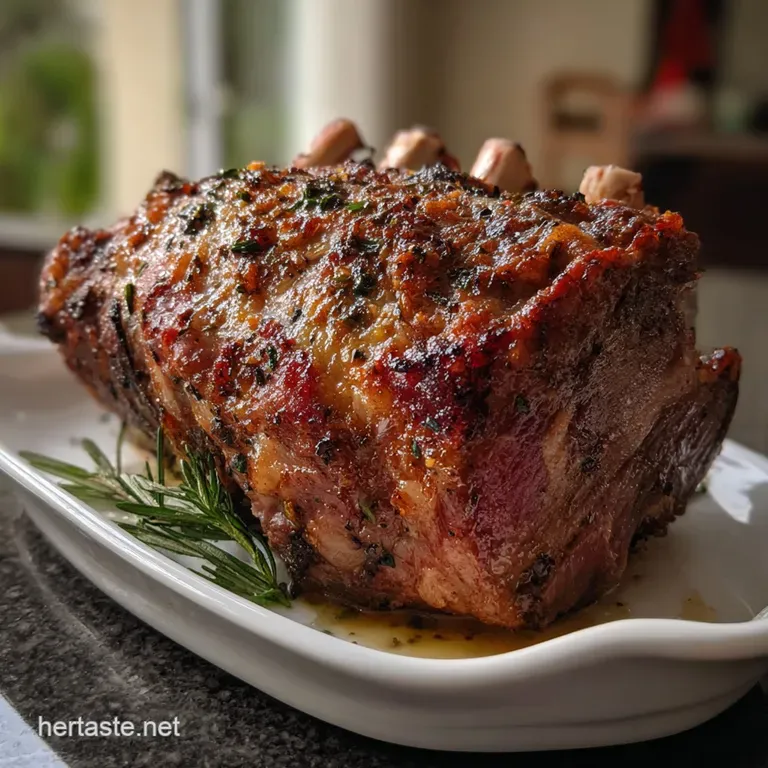
1. Tempering and Seasoning
Remove the 7 lb roast from the fridge 2 hours before cooking until the core temperature reaches 50°F. This prevents "thermal shock," where the outside burns before the inside thaws.
Pat the surface bone dry with paper towels moisture is the enemy of the Maillard reaction.
2. Applying the Herb Crust
In a small bowl, combine 1 cup softened Kerrygold butter, 6 cloves minced garlic, 2 tbsp rosemary, 2 tbsp thyme, and 1 tbsp horseradish. Slather this mixture over the entire roast until the fat cap is completely obscured by a thick, green flecked paste.
3. Low and Slow Roasting
Place the roast in a Lodge Cast Iron pan and slide it into a 250°F (120°C) oven. Roast for approximately 3 hours until the internal temperature hits 115°F for medium rare.
The house will begin to smell of roasted garlic and toasted herbs.
4. The Rest and over High heat Blast
Remove the roast and tent loosely with foil for 30 minutes. Wait until the internal temperature stabilizes and begins to drop slightly. Crank your oven to 500°F (260°C).
Return the roast to the oven for 6–10 minutes until the exterior is mahogany brown and the fat sizzles aggressively.
5. Preparing the Red Wine Au Jus
While the meat rests, place the roasting pan over medium heat. Sauté the minced shallot in the drippings until translucent and fragrant. Deglaze with 1 cup dry red wine, scraping the "fond" (brown bits) from the bottom.
6. The Reduction
Add 2 cups low-sodium beef stock to the pan. Simmer for 10 minutes until the liquid reduces by half and coats the back of a spoon. This concentrate holds all the roasted energy of the beef.
7. Final Carving
Using your Wüsthof slicer, cut the twine and remove the rib bones in one piece. Slice the roast into 1 inch thick portions until you see the edge-to-edge pink perfection.
8. Serving the Feat
Arrange the slices on a warmed platter and pour the au jus into a heated gravy boat. Serve immediately until the steam carries the scent of rosemary to every guest at the table.
Common Mistakes & Solving the Mystery of Gray Meat
Why Your Prime Rib has a Gray Ring
A thick gray ring around the pink center is caused by over high heat cooking from the start. This is the result of protein denaturation occurring too rapidly at the surface. When the exterior hits 140°F+ while the center is still cold, you lose juice and texture.
| Problem | Root Cause | The Fix | Pro Protocol |
|---|---|---|---|
| Tough, chewy meat | Skipped the resting period | Rest for 30+ mins | Use a "warm" rest (wrapped in towels in a cooler) for up to 2 hours. |
| Rub slides off | Surface was too wet | Pat dry with paper towels | Dry-brine with salt 24h ahead to "tack up" the surface proteins. |
| Au Jus is bitter | Burnt shallots or wine | Use lower heat to deglaze | Add a teaspoon of cold butter at the end (monter au beurre) for silkiness. |
Flavor Architecture and Variations for My Best New Years Eve Dinner
While the garlic herb version is a classic, My Best New Years Eve Dinner can be adapted to different flavor profiles. If you’re hosting a larger crowd, consider serving a hearty starter like my Creamy CheddarPotato Soup recipe to keep everyone satisfied while the roast rests.
The Peppercorn Crusted Variation
Replace the herbs with 3 tbsp crushed peppercorns (black, white, and pink). This creates a "steak au poivre" style crust that provides an intense, aromatic heat that pairs beautifully with the Cabernet.
dairy-free Adjustment
If you need to avoid butter, substitute the 1 cup unsalted butter with 1 cup high-quality beef tallow or duck fat. This maintains the fat content required for the crust but adds an even deeper, more savory "animal" note to the exterior.
Keto Friendly Precision
This recipe is naturally keto friendly, containing only 3g of carbohydrates per serving. Ensure the horseradish is "prepared" (just horseradish and vinegar) and not a "horseradish sauce" which often contains hidden sugars or starches.
Maintaining Texture in the Aftermath: Storage & Reheating
Yes, leftovers from My Best New Years Eve Dinner freeze beautifully for up to 3 months if vacuum sealed, though the texture is best within 3 days in the fridge.
- Fridge: Store in an airtight container for 3 4 days.
- Freezing: Wrap tightly in plastic, then foil, then a freezer bag. Note: Slicing before freezing makes for easier portioning later.
- Reheating (The Water Bath Method): To avoid overcooking, place slices in a zip-top bag and submerge in 130°F water for 20 minutes. This brings the meat to temperature without further denaturing the proteins.
- The Oven Method: Place slices in a baking dish with a splash of beef stock, cover with foil, and heat at 250°F until just warm.
💡 ZERO WASTE PHILOSOPHY
Don't discard the rib bones! Transform: Simmer the bones with onion scraps and peppercorns for 6 hours to create a bone broth. Science: The marrow and connective tissue release gelatin and minerals, creating a base far superior to any store-bought stock.
⚗️ The Scaling Lab: The Physics of Quantity
When doubling My Best New Years Eve Dinner for a larger crowd, you must account for the Square Cube Law.
- Flavor Saturation: If cooking two 7 lb roasts, scale the salt and herbs to 1.5x (not 2x). The concentrated surface area means flavor accumulates faster than you expect.
- The Evaporation Paradox: If making a double batch of au jus in the same size pan, reduce the beef stock by 15%. The surface area for evaporation remains constant, so a full 4 cups of stock will take twice as long to reduce, potentially over extracting bitter notes from the shallots.
- Thermal Mass: Two roasts in one oven will significantly drop the ambient temperature. Increase your initial oven temp by 15°F for the first 30 minutes to compensate for the cold mass, then drop back to 250°F.
- Carry Over Cooking: A larger roast (or two roasts side-by-side) retains more heat. Pull the meat at 110°F instead of 115°F, as the internal temperature will climb more aggressively during the rest.
Common Myths about Prime Rib
- Myth: Searing first "locks in" the juices.
Truth: Searing actually causes the surface fibers to contract and squeeze out moisture. Searing at the end (the reverse sear) provides the flavor without the juice loss.
Myth: You must bring the meat to room temperature for 4 hours.
- Truth: A 7 lb roast would take 10+ hours to reach room temp, which is a safety hazard. 2 hours is sufficient to take the "chill" off and allow for even heat penetration.
Whether you're popping champagne or having a quiet night in, My Best New Years Eve Dinner provides the technical foundation for a flawless execution. Trust the thermometer, respect the rest, and enjoy the most succulent roast of your life.
Every bite of this My Best New Years Eve Dinner is a testament to the beauty of slow cooked physics.

Recipe FAQs
What is the best new year dinner?
Herb crusted reverse seared prime rib. This method guarantees an edge-to-edge medium rare center without the common gray band. Mastering the low-and-slow thermal approach used here is key to high stakes holiday hosting.
Can I use store-bought beef stock instead of making my own au jus?
Yes, but reduce concentration heavily. store-bought stocks contain more sodium and flavor compounds, meaning they reduce faster and can become overwhelmingly salty if simmered too long. If you enjoyed mastering the tenderization in this roast, you should explore how the same low-and-slow flavor extraction principle applies when making The Best Traditional Spanish Paella Recipe with Crispy Socarrat.
Why does my prime rib always turn out gray on the outside?
High initial searing denatures proteins too rapidly. Cooking immediately at high heat cooks the outer layer past the ideal internal temperature before the center can warm up; the reverse sear mitigates this by ensuring gradual, even heating.
- Pull meat at 110°F core temp
- Ensure surface is completely dry
- Rest for a minimum of 30 minutes
Is resting the roast for 30 minutes truly necessary?
Resting redistributes internal moisture post cook. Cutting too soon allows pressurized juices to escape rapidly, resulting in drier slices. The fibers need time to relax and reabsorb the moisture gained during the slow heating phase.
Should I use salted or unsalted butter for the herb crust?
Unsalted butter for precision control. Salted brands vary widely in sodium content (sometimes adding 200mg per tablespoon), making it impossible to calculate the correct seasoning for the crust. Unsalted butter allows you to control the salt level based on the dry brine.
Myth: Can I substitute beef tallow for the Kerrygold butter?
Myth: Tallow is interchangeable with butter for crust application. Reality: While tallow works, butter contains milk solids which contribute significantly to the desirable Maillard browning and crust texture during the final 500°F blast.
How do I ensure the interior is perfectly pink if I skip the 24-hour dry brine?
Use a quality instant read thermometer and pull early. If skipping the brine, pull the roast at 110°F, as the surface will be less seasoned and the thermal inertia slightly lower. If you are interested in balancing richer meals with lighter options, consider how the acid balance works in our Best Homemade Carrot Cake Recipe Incredibly Moist Layers Spiced.
Best New Years Eve Dinner
Ingredients:
Instructions:
Nutrition Facts:
| Calories | 785 kcal |
|---|---|
| Protein | 46 g |
| Fat | 64 g |
| Carbs | 3 g |
| Fiber | 0.6 g |
| Sugar | 1.1 g |
| Sodium | 1240 mg |
