Homemade Stuffing: the Ultimate Sage Sourdough Recipe (Properly Baked)
- Why You Need This Ultimate Sage & Sourdough Stuffing
- The Science of Superior Stuffing: Crisp Top, Moist Interior
- Essential Ingredients for the Best Homemade Stuffing
- Step-by-Step Guide to Baking Perfect Stuffing (The Proper Method)
- Mastering Stuffing: Chef's Tips and Avoiding Common Errors
- Preparation, Storage, and Freezing Your Homemade Stuffing
- What to Serve with Classic Sourdough Stuffing
- Recipe FAQs
- 📝 Recipe Card
Why You Need This Ultimate Sage & Sourdough Stuffing
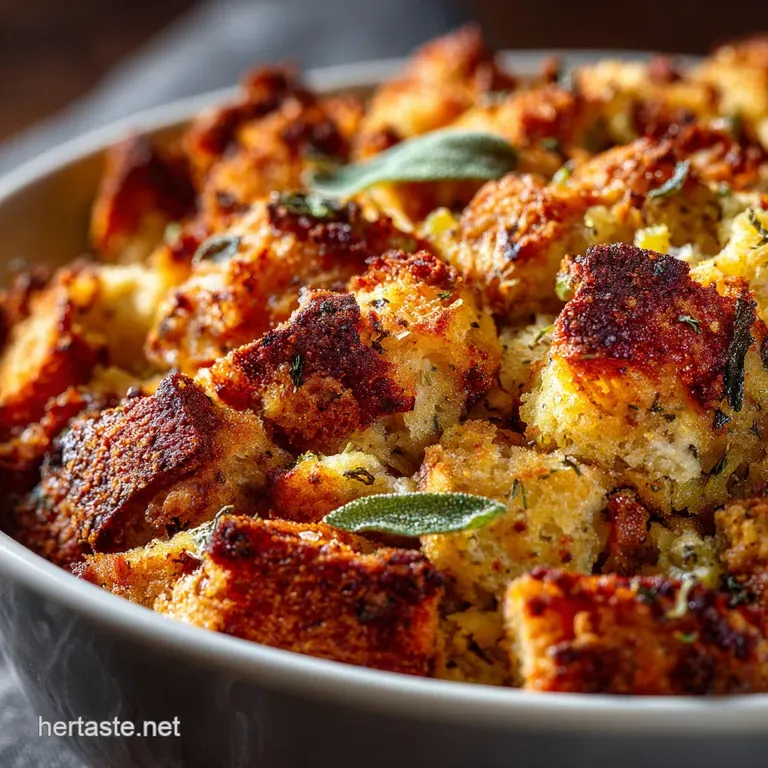
When that glorious aroma hits you that deep, savoury smell of fresh sage sautéed in actual butter you know the holiday is officially underway. It is, without a doubt, the most essential supporting player on the table, offering a texture and richness nothing else can match.
Nothing comes close to the warm comfort of proper, scratch made Homemade Stuffing.
Stop stressing about those dry, disappointing box mixes that taste vaguely of cardboard and regret. This recipe is genuinely simple, relying purely on stellar technique and real ingredients, not complicated steps or expensive tools.
Mastering a few basic steps ensures you never have a dry, crumbly mess again, giving you the confidence to truly shine at your next big gathering.
I’ve personally messed up stuffing in every way imaginable: too gluey, too dry, and criminally bland. Now I'm sharing the method that actually works, guaranteeing a crunchy, golden brown top and a moist, flavour packed interior every single time.
Let’s skip the fuss and learn how to make the best Savory Herb Stuffing you’ve ever tasted.
The Science of Superior Stuffing: Crisp Top, Moist Interior
Homemade Stuffing should be judged on two criteria: maximum crispiness on the top, and maximum tenderness inside. To achieve this culinary duality, we have to respect the components of the dish, especially the structure of the bread and the role of the fat.
This isn't just mixing ingredients; it's a beautiful, buttery chemistry lesson.
Ditching the Box: Why Fresh Bread Makes All the Difference
Boxed stuffing mixes are usually made from pre-ground crumbs, which means they absorb liquid instantly and turn into a sticky paste quickly. We use cubed, crusty sourdough because it maintains its structure, creating pockets that hold the flavourful butter and broth.
These open pockets are what gives you that light, fluffy texture rather than a heavy, dense brick.
The Distinction Between Stuffing and Dressing (And Why We Bake Separately)
Let's clear this up: if it’s cooked inside the bird, it’s stuffing; if it’s cooked separately in a casserole dish, it’s dressing. We are making dressing, but I still call it stuffing because that’s what we all grew up calling it, right?
Crucially, baking it separately allows the top to crisp beautifully, while keeping the interior safe and moist.
The Aromatic Base: Celery, Onion, and Herb Synergy
The holy trinity of onions and celery (often called mirepoix) must be treated gently. We aren't trying to brown them; we are "sweating" them down slowly in a generous amount of butter. This low and slow process releases their natural moisture and sweet flavour, which then infuses completely into the cooking fat.
Achieving the Ideal "Wetness" Ratio
The number one mistake people make is not adding enough liquid, or adding it all too fast. Your dried bread cubes need time to fully hydrate without turning mushy. You are aiming for the texture of a very damp sponge it should be fully saturated, but no liquid should be pooling at the bottom of the bowl.
Why Sourdough is the Gold Standard for Stuffing Structure
Sourdough bread is naturally denser and has a wonderful, uneven crumb structure thanks to its long fermentation. This means the individual cubes won't fall apart under the weight of the broth and butter, holding their shape and ensuring your final Savory Herb Stuffing is light and pleasantly chunky.
You need that stability.
The Role of Butter in Flavor Infusion and Crispness
Butter is not just a flavor agent here; it is the delivery vehicle for those amazing sage and thyme aromas. By sautéing the aromatics in a massive amount of butter (yes, a whole cup!), you create a flavorful coating for every single piece of bread.
The remaining butter drizzled on top before the final uncovered bake is what creates that perfect, mouthwatering, golden crust.
Essential Ingredients for the Best Homemade Stuffing
Selecting and Preparing Your Sourdough Cubes
You need a crusty loaf, preferably one that is a day or two old, and you must cut it into uniform 1 inch cubes. The goal is to ensure consistency, guaranteeing every piece bakes and absorbs moisture at the same rate. Don't worry about pre-toasting if you have time to dry it overnight; air-drying works wonders.
Fresh Herbs vs. Dried: Achieving Peak Fragrance
I am absolutely a zealot for fresh herbs in this recipe especially the sage and thyme. Fresh sage brings a powerful, fragrant punch that dried herbs just cannot match. If you absolutely must substitute, remember the golden rule: use one-third the amount when swapping from fresh to dried herbs.
Building the Liquid Base (Broth Selection Notes)
Always use low-sodium chicken or turkey broth, or even better, homemade bone broth. store-bought, regular sodium broths will make your stuffing excessively salty once the liquid reduces in the oven, which is simply inedible. Warming the broth slightly before combining it with the eggs is a non-negotiable step.
Detailed Notes on Flavor Boosters and Substitutions
| Ingredient | Why We Use It | Substitution Notes |
|---|---|---|
| Sourdough Cubes | Stable structure, slight tang. | Substitute: Challah or Brioche for a sweeter, richer stuffing. |
| Unsalted Butter | Controlled salt level, rich flavor. | Substitute: Ghee or high-quality olive oil if dairy-free (though butter is best). |
| Fresh Sage/Thyme | Aromatic depth and holiday flavor. | Substitute: Dried rubbed sage (use 1/3 the volume) or marjoram. |
| Broth (Low Sodium) | Moisture and savory binder. | Substitute: Vegetable broth for a vegetarian dish. |
step-by-step Guide to Baking Perfect Stuffing (The Proper Method)
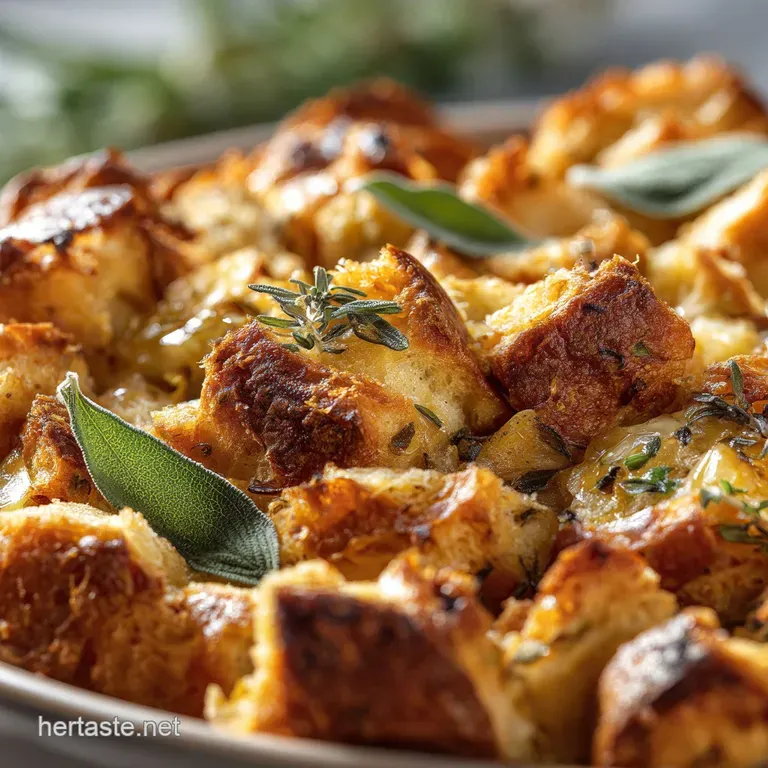
This process is broken down into four manageable stages. Focus on one stage at a time, and you'll nail the texture.
Stage 1: The Toasting and Drying Process
First, cut your sourdough into cubes and lay them out on a sheet pan. I highly recommend letting them sit uncovered on your counter for at least 12 hours.
If time is tight, bake them at 300°F (150°C) for 15 minutes, tossing halfway through, until they feel dry and hard like croutons. Remember, soft bread equals soggy stuffing.
Stage 2: Sautéing the Aromatics (Mirepoix technique)
Melt 3/4 cup of the butter in a massive skillet over medium low heat. Add the diced celery and onions and cook for a full 8 to 10 minutes until they look translucent and tender don't rush this!
Stir in the garlic and fresh herbs, cooking for only 90 seconds until they become super fragrant. Your kitchen should smell absolutely incredible right now.
Stage 3: The Gentle Mixing and Resting Period
Pour the hot butter and aromatic mixture immediately over the dried bread cubes in your largest mixing bowl. Toss this until everything is evenly coated in buttery goodness. Now, whisk your warm broth and eggs together, and pour this liquid gradually over the bread.
Chef's Note: You must use the squeeze test. Gently pick up a small handful of the mixture. If it holds its shape perfectly and feels saturated, you’re done. If it crumbles, add more liquid. If water runs out, you added too much, so toss in a few more dry cubes.
Stage 4: Temperature and Timing for that Golden Crust
Transfer the mixture without pressing it down into a buttered 9x13 inch dish. Cover the dish tightly with foil to trap the steam and ensure the interior cooks evenly, then bake for 25 minutes at 375°F (190°C).
Remove the foil, drizzle the top with the remaining melted butter, and bake uncovered for another 15– 20 minutes until it’s deeply golden brown and crispy at the edges.
Mastering Stuffing: Chef's Tips and Avoiding Common Errors
Troubleshooting Soggy or Dry Stuffing
Soggy stuffing usually means you didn't dry the bread enough or you overmixed it once the liquid was added. Dry stuffing usually means you used too little broth or you overbaked it uncovered.
If it’s still too dry after the initial 25 minutes, add a splash more warm broth right around the edges before the final uncovered bake.
The Critical Importance of Compression (Or Lack Thereof)
Do not, under any circumstances, press the stuffing into the casserole dish. Packing it down eliminates the crucial air pockets, leading to a dense, gluey texture that nobody wants. Scoop it in lightly and spread it, leaving it loose and billowy for maximum air circulation and crispiness.
Should I Use Fresh Eggs?
Yes, absolutely. The eggs act as a necessary binder, holding the savory ingredients together just enough so your stuffing isn't just a pile of crumbs. They are particularly important if you are making this ahead of time, ensuring it slices cleanly when reheated.
make-ahead Strategies for Holiday Cooking
This homemade stuffing is a rock star for make-ahead planning. You can prepare the entire mixture, including the liquid binder, and store it tightly covered in the casserole dish in the fridge for up to 24 hours.
When ready to bake, pull it out 30 minutes early to take the chill off, then proceed with Stage 4 instructions.
Preparation, Storage, and Freezing Your Homemade Stuffing
Best Practices for Refrigerating Leftovers
Leftover Homemade Stuffing should be tightly covered and refrigerated promptly. It will last beautifully for 3 to 4 days. To reheat, sprinkle it with a little extra broth and cover it loosely with foil, warming it in a 350°F (175°C) oven until heated through.
Freezing Baked and Unbaked Stuffing
If you want to freeze it, I suggest baking it completely first, letting it cool, and then wrapping the entire dish (or portions) tightly in plastic wrap and foil. It will keep for up to 3 months.
Thaw overnight in the fridge and reheat as described above, perhaps adding a little extra butter on top for revived crispness.
What to Serve with Classic Sourdough Stuffing
Stuffing is the ultimate supporting player, designed to absorb all the wonderful pan juices and gravies from the main course. It pairs perfectly with anything rich, sharp, or creamy.
Alongside a robust Savory Herb Stuffing, you definitely need a creamy counterpoint, which is why I always serve it next to my Green Bean Casserole: The Ultimate Homemade, Creamy Crispy Recipe . The rich texture of the stuffing is beautifully cut by the crunch of the green beans.
You might also consider serving something lighter and bread based, though not too similar in flavour, like my incredibly soft Garlic Butter Bread Rolls: The Ultimate Fluffy Homemade Dinner Roll . The contrast between the soft rolls and the crusty stuffing is pure magic. And of course, don’t forget a sharp homemade cranberry sauce!
Recipe FAQs
Why is my homemade stuffing dry and crumbly?
This common issue usually stems from not incorporating enough liquid (stock and butter) into the mixture, or from using bread cubes that are too small. Ensure your bread is thoroughly, but gently, saturated before baking, and check that you haven't over baked the dish, which evaporates moisture.
Is it safe to cook this stuffing inside the turkey cavity?
As a professional chef, I strongly advise baking the stuffing separately in a casserole dish for food safety reasons. Stuffing cooked inside the bird must reach a minimum internal temperature of 165°F (74°C), which can often lead to the turkey meat being overcooked and dry while you wait for the stuffing to heat through.
How far in advance can I prepare the stuffing mixture?
You can fully assemble the stuffing combining the bread, aromatics, herbs, and stock up to 24 hours before baking. Store the mixture tightly covered in the refrigerator to prevent bacterial growth. Before baking, let it sit on the counter for about 30 minutes to take the chill off.
Can I freeze leftover homemade stuffing?
Yes, homemade stuffing freezes excellently. Cool the leftovers completely before placing them into an airtight, freezer safe container, where they will keep well for up to three months. Reheat the frozen stuffing, covered loosely with foil, in a 350°F (175°C) oven until it is piping hot throughout.
What is the secret to getting a crispy top but a moist center?
The key is controlling moisture during the cooking process. Bake the stuffing covered tightly with foil for the first 30 minutes to trap steam and ensure the center cooks fully. Then, remove the foil for the last 15 to 20 minutes; this allows the exposed bread cubes on top to achieve that highly desirable golden brown crispness.
Can I adapt this recipe to be vegan or gluten-free?
Absolutely. For a gluten-free version, simply substitute the sourdough with a quality gluten-free sandwich bread and follow the directions for drying the bread. To make it vegan, replace the butter with a high-quality plant based butter substitute and use a flavorful mushroom or vegetable broth instead of chicken stock.
Do I really need to use stale or dried bread for the best results?
Yes, stale or dried bread is essential; fresh bread will turn into a dense, undesirable paste when saturated with stock. If your bread is not already stale, cube it and spread it on a baking sheet, then toast it lightly in a 250°F (120°C) oven for about 15 minutes before proceeding with the recipe.
Ultimate Sage Sourdough Stuffing
Ingredients:
Instructions:
Nutrition Facts:
| Calories | 400 kcal |
|---|---|
| Fat | 22 g |
| Fiber | 3 g |
