Ultimate Southern New Year S Day: Velvety, Smoke-Infused Feast
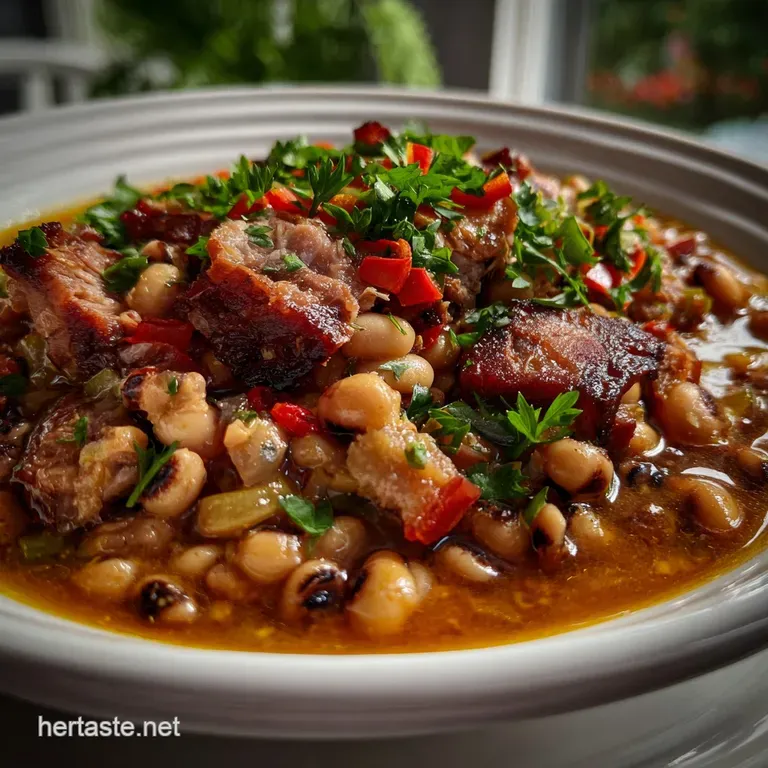
- Effort/Time: 7 hours 20 mins (mostly hands-off)
- Flavor Hook: Deep smoky umami balanced by bright acetic acidity
- Perfect for: Tradition-heavy, crowd-pleasing holiday hosting
- Master the Ultimate Southern New Year s Day for Prosperity
- The Science of Why This Recipe Works
- Timeline and Yield for Your Ultimate Southern New Year s Day
- The Alchemy of Smoke and Earth: Essential Elements
- Technical Tools for Perfect Heat Distribution
- Precision Protocol for Silky Peas and Tender Greens
- Why Your Peas Stay Tough or Turn Mushy
- Flavor Architecture and Dietary Adjustments
- ⚗️ The Scaling Lab: The Physics of Quantity
- Common Southern New Year's Myths
- Preserving Texture and Safety Standards
- Strategic Pairings for a Balanced Southern Plate
- Recipe FAQs
- 📝 Recipe Card
Master the Ultimate Southern New Year s Day for Prosperity
There is nothing more frustrating than waking up on January 1st to a pot of "lucky" peas that have the texture of gravel and the flavor of wet cardboard. I remember one year spending $60 on a heritage ham hock and artisanal greens, only to rush the simmering process; the result was a gritty, metallic mess that no amount of hot sauce could save.
It was a literal waste of money and a depressing start to the year.
I once destroyed a massive batch of New Year's Day Recipes by adding salt too early in the soaking phase, thinking it would "flavor the core" of the bean. Instead, I accidentally reinforced the bean's skin, creating an impenetrable barrier that refused to soften even after eight hours of boiling.
That failure taught me the cold, hard physics of legume cell walls and the importance of chemical timing.
The secret to this Ultimate Southern New Year s Day isn't a "secret ingredient" it's the science of collagen hydrolysis and pectin breakdown. By slow braising 1.5 lbs smoked pork shoulder, we convert tough connective tissue into liquid gelatin, which creates a velvety, lip-smacking mouthfeel in the liquor (pot likker).
Combined with a precise apple cider vinegar addition at the finish to brighten the earthy notes, you get a dish that rings with complex, mahogany colored depth.
The Science of Why This Recipe Works
- Collagen Liquefaction: Simmering the smoked pork for hours converts tough collagen into gelatin, providing a silky body to the chicken stock.
- Pectin Management: Delaying acidic ingredients until the end prevents the bean skins from toughening, ensuring a buttery interior.
- Aromatic Base Layering: Sautéing the "holy trinity" (onion, pepper, celery) triggers the Maillard reaction, creating sulfurous and sweet compounds that ground the dish.
- Osmotic Brining: A pre-soak in salted water allows sodium ions to weaken the pectin in the skins, leading to a "shatter-on-the-tongue" tenderness.
Timeline and Yield for Your Ultimate Southern New Year s Day
| Specification | Detail |
|---|---|
| Total Prep Time | 20 minutes |
| Total Cook Time | 7 hours |
| Total Yield | 8 servings |
| Optimal Pot | 7 quart Lodge Cast Iron Dutch Oven |
The Alchemy of Smoke and Earth: Essential Elements
To achieve the depth required for the Ultimate Southern New Year s Day, ingredient selection must be precise. Using high-quality aromatics and the right cut of pork is the difference between a side dish and a masterpiece.
Ingredient Chemistry Breakdown
| Ingredient | Chemical/Physical Role (Science) | The Pro Secret (Why This Matters) |
|---|---|---|
| 1 lb Dried Black Eyed Peas | Starch gelatinization and protein expansion | Rinsing removes excess surface starch, preventing a gummy, cloudy broth. |
| 1.5 lbs Smoked Pork Shoulder | Collagen-to-gelatin conversion | Provides the "body" and fat-soluble smoke compounds for the liquor. |
| Heinz Apple Cider Vinegar | Acetic acid pH adjustment | Breaks down the cellulose in collard greens and cuts through heavy pork fat. |
| Diamond Crystal Kosher Salt | Osmotic regulator | Denatures proteins in the pea skins during the soak to prevent bursting. |
Ingredients & Substitutions
- 1 lb Dried black eyed peas: Why this? Dried offers superior starch control compared to mushy canned versions.
- Substitute: Dried Crowder peas (Similar starch profile but earthier flavor).
- 1.5 lbs Smoked pork shoulder: Why this? High fat-to-lean ratio ensures the meat doesn't dry out during the 7 hour simmer.
- Substitute: Bone-in ham hock (Heavier smoke, less meat yield).
- 6 cups Swanson Unsalted Chicken Stock: Why this? Allows total control over the sodium levels as the liquid reduces.
- Substitute: Filtered water with 2 tsp bouillon base (Note: Increases sodium significantly).
- 4 cups Fresh collard greens: Why this? Hardy leaves withstand long braising without disintegrating.
- Substitute: Lacinato kale (Cooks faster, softer texture, less "bite").
- 1 tsp Dried thyme: Why this? Thymol provides a floral counter note to the heavy smoke.
- Substitute: 1 tbsp fresh thyme (Brighter, more herbaceous aroma).
- 1/2 tsp Cayenne pepper:
- Substitute: Smoked paprika (Less heat, more color depth).
Technical Tools for Perfect Heat Distribution
Using a heavy bottomed vessel like a Lodge Cast Iron Dutch Oven is non-negotiable for Year s Day Recipes. The thermal mass of cast iron prevents "hot spots" that cause peas at the bottom to scorch while the top remains raw. You will also need a Wüsthof Chef's Knife for the precise dicing of the green bell pepper and onion, ensuring uniform cooking of the aromatics. For another New Year's tradition that requires precise tool usage, you might enjoy exploring my 34 New Year's recipe for party snacks.
Precision Protocol for Silky Peas and Tender Greens
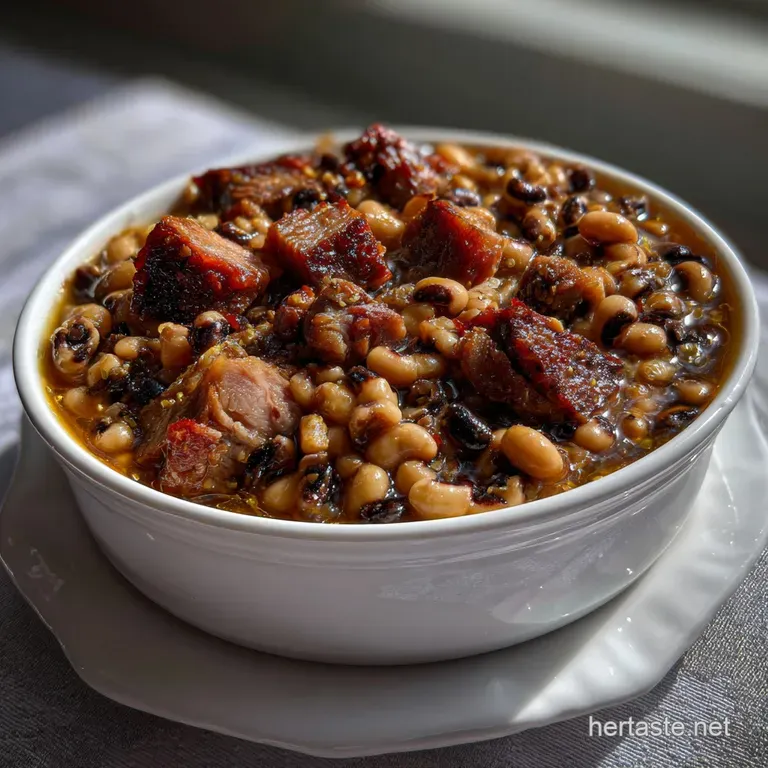
- Sort 1 lb black eyed peas until all stones and shriveled debris are removed.
- Soak peas in 2 quarts filtered water and 2 tbsp Diamond Crystal Kosher salt for 6 hours until skins are smooth and peas have doubled in size. Note: Salt brining the soak water softens the skins via ion exchange.
- Sauté diced onion, celery, and green bell pepper in the Dutch oven over medium heat for 8 minutes until edges are translucent and the "green" smell becomes sweet.
- Add minced garlic, thyme, and cayenne pepper, stirring for 60 seconds until the garlic fragrance is pungent but not browned.
- Pour in 6 cups chicken stock and add the 1.5 lbs smoked pork shoulder until the liquid begins a steady, rolling boil.
- Lower heat to a bare simmer (about 190°F) and cover for 5 hours until pork is fork tender and beginning to shred.
- Drain the soaked peas and add them to the pot until the liquid returns to a gentle bubble.
- Simmer for 1 hour 30 mins until peas are velvety and soft but not exploding.
- Stir in 4 cups chopped collard greens and 1 tbsp Heinz Apple Cider Vinegar until greens wilt and turn a deep forest green.
- Season with salt and black pepper until the smoky and acidic flavors reach a perfect equilibrium.
Why Your Peas Stay Tough or Turn Mushy
Why Your Peas Won't Soften
If your peas remain "crunchy" after hours of boiling, you likely have "hard water" high in calcium. Calcium ions bond with the pectin in the pea's cell walls, creating a reinforced structure that heat cannot easily break.
Plus,, adding acidic ingredients like vinegar or tomatoes too early will freeze the cell structure, preventing hydration.
| Problem | Root Cause | The Fix | Pro Protocol |
|---|---|---|---|
| Crunchy Peas | Hard water or early acid | Add 1/4 tsp baking soda | Use filtered water for the soak and simmer. |
| Mushy "Soup" | Violent boiling | Maintain a bare simmer | Keep temp at 190°F to prevent starch blow out. |
| Bland Liquor | low-fat extraction | Use bone-in pork cuts | Sear the pork before simmering to jumpstart flavor. |
Flavor Architecture and Dietary Adjustments
The Ultimate Southern New Year s Day is a foundation you can build upon. While the smoked pork is traditional, you can modify the protein to suit your dietary needs without losing the soul of the dish.
- The Bourbon Twist: Add 1/4 cup of bourbon during the aromatic sauté. The alcohol acts as a solvent, pulling out fat-soluble flavors from the pork that water alone cannot reach.
- Vegetarian Prosperity Pot: Replace pork with 2 tsp liquid smoke and 1 tbsp miso paste. The miso provides the fermented umami and "body" usually provided by the pork's gelatin.
- Leaner Protein Swap: Use smoked turkey wings instead of pork shoulder. Turkey has less intramuscular fat but provides a distinct, "cleaner" smoky profile. This works well if you're serving a rich dessert later, like a Classic Coca Cola recipe cake.
⚗️ The Scaling Lab: The Physics of Quantity
When doubling the Ultimate Southern New Year s Day for a large party, you must respect the Square Cube Law. Doubling the ingredients in a single pot significantly changes the evaporation rate.
- Liquid Reduction: Do not double the chicken stock to 12 cups. Use 10 cups instead. The surface area of the pot doesn't change, so less water will evaporate relative to the volume of peas.
- The Spice Ceiling: Scale cayenne and thyme by 1.5x, not 2x. Capsaicin and dried herbs can become overwhelming and "muddy" when doubled linearly.
- Thermal Mass: A double batch of cold, soaked peas will drop your stock temperature by 40°F. You must bring the stock to a full boil before adding the peas to ensure the internal temperature doesn't linger in the "danger zone" for too long.
- Carry Over Softening: A larger pot retains heat longer. Pull the peas off the burner when they are just shy of your desired tenderness; they will continue to soften for 20 minutes in the residual heat.
Common Southern New Year's Myths
- Myth: You must soak peas overnight.
- Truth: A 6 hour "power soak" in hot salted water is scientifically superior. Long soaks (12+ hours) can lead to fermentation, which produces off-flavors and gas.
- Myth: You should never salt the peas until they are done.
- Truth: Salting the soak water (brining) actually improves texture. Salting the cooking water mid-way through ensures the flavor penetrates the core of the pea.
Preserving Texture and Safety Standards
Storage: Store leftovers in an airtight container for up to 4 days. The starch in the peas will continue to thicken the liquor as it cools, often turning it into a semi gel. This is a sign of high gelatin content and excellent flavor.
Freezing: This recipe freezes beautifully for up to 6 months. To prevent the greens from becoming slimy, freeze the peas and liquor in heavy duty bags, removing as much air as possible to prevent sublimation (freezer burn).
Reheating: Reheat on the stovetop over low heat. Add 1/4 cup of water or stock to loosen the gelatinized broth. Avoid the microwave, which can "explode" the individual peas, ruining the texture.
Zero Waste Tip: Don't discard the pork bones or skin! Transform: Simmer them for another 2 hours after the meal is done to create a concentrated smoky stock.
Science: The remaining marrow and collagen provide a massive umami boost for future soups or gravies.
Strategic Pairings for a Balanced Southern Plate
The Ultimate Southern New Year s Day requires a textural and acidic contrast to shine. I always serve this with a wedge of cast iron cornbread to soak up every drop of the "pot likker." The sweetness of the corn balances the salt of the pork, while the crunch of the crust offsets the velvety peas.
For a complete New Year s Day Recipes menu, consider a side of bright, vinegar based coleslaw or sliced raw onions. The raw sulfur and acid cut through the richness of the braised greens. If you're looking for drink pairings, a dry sparkling cider or a crisp pilsner provides the carbonation needed to "scrub" the palate between bites of the fatty pork shoulder. For more festive drink ideas, my 15 Eggnog Cocktail recipe guide offers some great winter options, though perhaps a bit heavy for this specific meal save those for the NYE countdown!
This Ultimate Southern New Year s Day isn't just a tradition; it's a lesson in patience and the transformative power of a slow simmer. By following these scientific protocols, you ensure that every bite is a mahogany colored, smoke infused promise of a better year ahead.

Recipe FAQs
What is the primary chemical reason peas require a long, slow simmer?
Heat breaks down the pectin polymer linking the cell walls. Excessive, rapid boiling causes the skin to seal before the interior starch can hydrate, resulting in a tough center.
- Maintain a temperature near 190°F
- Add acid (vinegar) only at the very end
- Use a heavy cast iron vessel for thermal stability
Is it better to use fresh or smoked pork shoulder for flavor depth?
Smoked pork shoulder provides essential lipophilic flavor compounds. The smoking process infuses the fat and connective tissue with aromatic phenols, which are only released during the 7-hour braise.
Unsmoked meat requires adding liquid smoke, which tastes flatter and lacks the depth achieved through slow conversion of collagen.
Can I substitute dried black eyed peas with canned peas?
No. Canned peas lack the necessary starch matrix for good pot likker texture. Canned legumes have already undergone aggressive thermal processing, which blows out their internal starch structure, leading to a thin, watery broth rather than the desired velvety liquor.
What is the ideal method for seasoning the cooking liquid?
Diamond Crystal Kosher salt in the initial soak, then adjust at the finish. Pre-salting the soak water manages osmotic pressure to soften the skins; adding the remaining salt only after the greens wilt ensures you don't over salt before liquid reduction concentrates the sodium.
Should I sear the pork before adding it to the liquid?
No, skip the aggressive sear for this recipe. Searing initiates the Maillard reaction too early, potentially creating bitter, caramelized crusts that can turn acrid over 7 hours of simmering.
Instead, sauté the aromatics first to build the base flavor, then gently add the smoked pork to allow the collagen to break down evenly.
Myth: Adding vinegar early helps tenderize the greens.
Myth: Adding vinegar early helps tenderize the greens. Reality: Acidity sets the pectin in both the peas and greens, preventing cellular breakdown and resulting in tough, chewy textures for both components.
What technique should I use to achieve a silky mouthfeel in the liquor?
You must control the collagen hydrolysis by maintaining a bare simmer. The breakdown of connective tissue into gelatin is the mechanism creating silkiness; if the heat is too high, the proteins coagulate rapidly, creating tough meat and a grainy broth rather than a smooth emulsion.
If you master controlling temperature here, you can apply the same steady heat principle when roasting your centerpiece for a more even final product.
Southern New Year S Masterpiece
Ingredients:
Instructions:
Nutrition Facts:
| Calories | 376 calories |
|---|---|
| Protein | 26.4 g |
| Fat | 11.8 g |
| Carbs | 38.5 g |
| Fiber | 8.8 g |
| Sugar | 3.8 g |
| Sodium | 745 mg |
