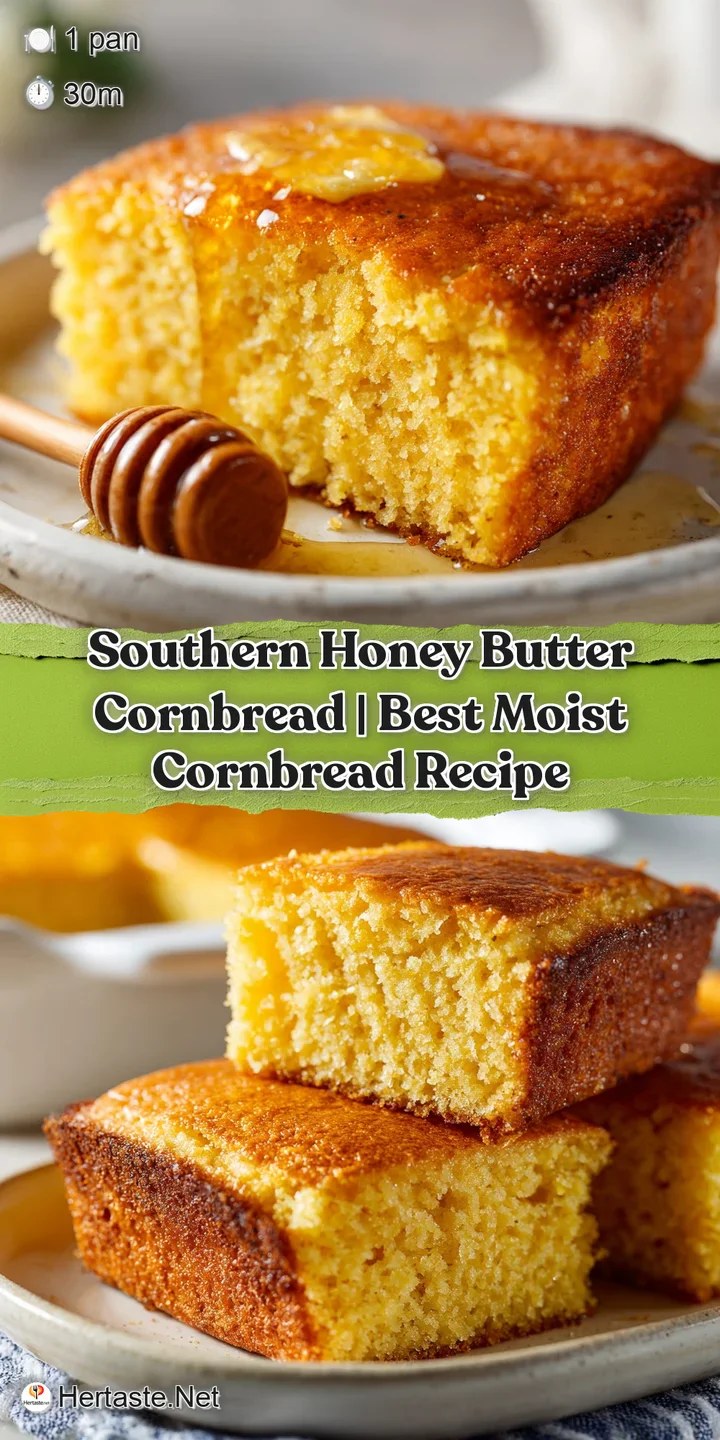
Southern Honey Butter Cornbread
- Time: Active 10 minutes, Passive 20 minutes, Total 30 minutes
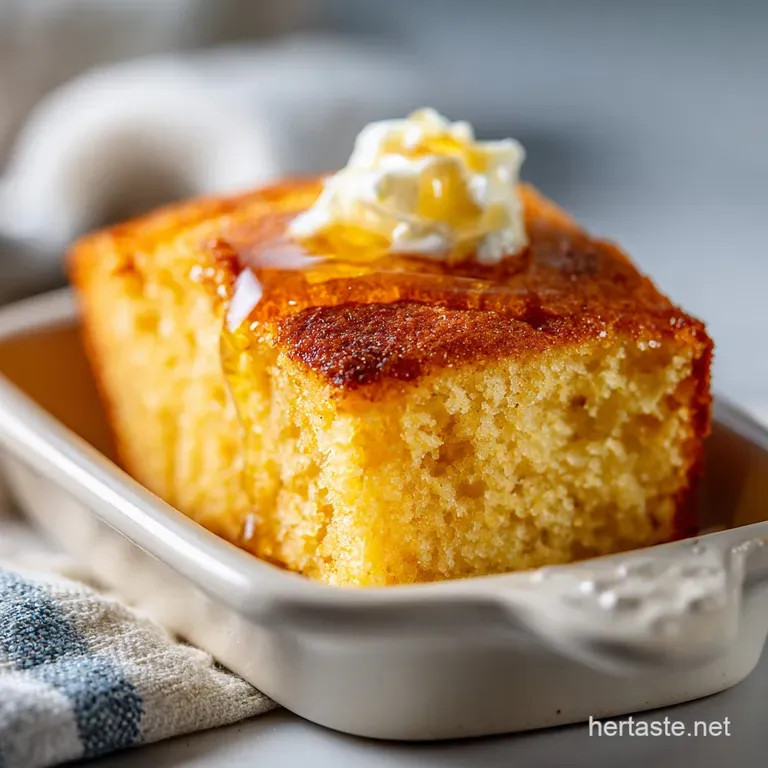
- Flavor/Texture Hook: Sizzling golden edges with a tender, honey glazed crumb
- Perfect for: Cozy autumn dinners, backyard barbecues, or beginner bakers
- Achieving the Perfect Golden Crust with This Cornbread Recipe
- Technical Specs for Your Kitchen Success
- Selecting the Best Components for Peak Flavor
- Essential Tools for a Rustic Texture
- Mixing and Baking for Ultimate Comfort
- Fixing Common Cornbread Baking Hurdles
- Scaling for Large Groups or Small Meals
- Debunking Common Cornbread Assumptions
- Keeping Your Cornbread Fresh and Moist
- Joyful Pairings for Every Seasonal Meal
- Recipe FAQs
- 📝 Recipe Card
Achieving the Perfect Golden Crust with This Cornbread Recipe
Forget everything you have been told about needing a seasoned skillet that is been in your family for three generations to make a decent cornbread. There is a common myth that unless you have a 100 year old cast iron pan and a secret family mantra, your bread will turn out like a dry, crumbly brick.
I used to believe that too, until I realized the magic is not in the age of the pan, but in the temperature of the fat and the balance of the moisture. You don't need magic; you just need a hot pan and the right buttermilk.
The first time I really got this right, the aroma of honey and melting butter filled my kitchen like a warm hug. I remember pulling that heavy skillet out of the oven and hearing the batter sizzle as it hit the hot oil.
That sound is a promise of a crisp, fried bottom that provides the most satisfying contrast to the soft, cake like interior. It is about that dance between the savory grit of the corn and the bright sweetness of the honey glaze.
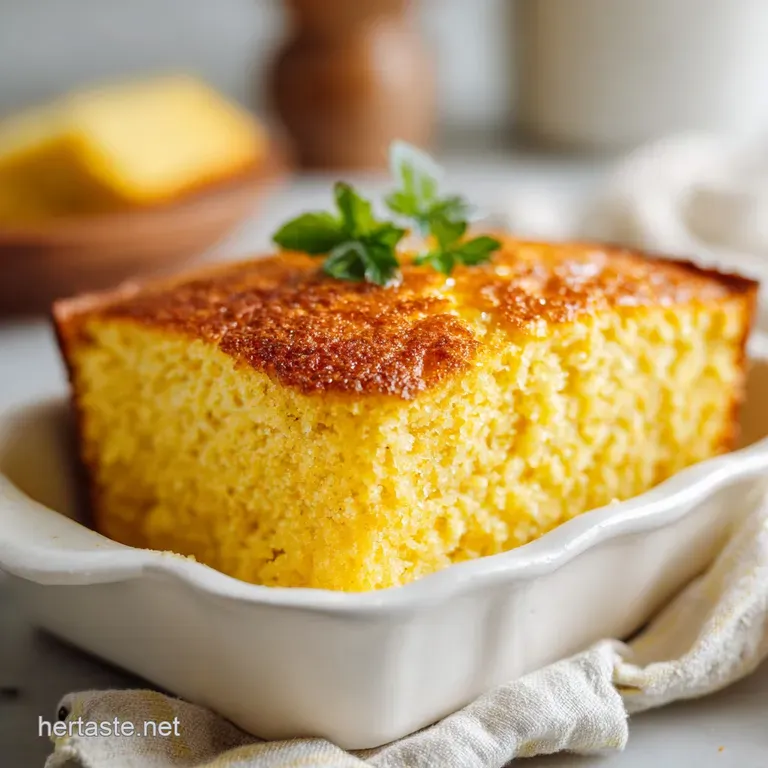
This dish is pure comfort in a pan. We are looking for that specific rustic texture where you can feel the individual grains of cornmeal, but they are wrapped in a velvety crumb that stays moist even the next day. It is a joyful experience, watching the butter bubble around the edges as it bakes.
Whether you are serving this alongside a smoky chili or eating a warm wedge with a drizzle of extra honey, it is designed to bring a bit of sunshine to your table.
Technical Specs for Your Kitchen Success
The Sizzle Factor: Preheating the skillet to 400°F (200°C) with oil ensures the batter fries instantly upon contact, creating a non stick, crackling crust.
Acid Activation: Buttermilk reacts with both baking powder and baking soda to create carbon dioxide bubbles, which provides a significant lift and prevents a dense, heavy texture.
Humectant Balance: Honey and sugar act as humectants, meaning they grab and hold onto water molecules, which keeps the bread moist for days rather than drying out.
Fat Emulsification: Mixing oil and melted butter together gives us the best of both worlds; the butter provides that rich, comforting flavor, while the oil ensures the crumb remains soft even when cold.
| Cooking Method | Total Time | Crust Texture | Best For |
|---|---|---|---|
| Cast Iron Skillet | 30 minutes | Very crispy, fried edges | Maximum flavor and traditional look |
| Standard Cake Pan | 35 minutes | Soft, golden brown | Making sandwiches or uniform squares |
| Muffin Tin | 25 minutes | Entirely golden exterior | Quick individual servings and meal prep |
Getting the right temperature for your dairy is a small step most people skip, but it is vital. When your buttermilk and eggs are at room temperature, they emulsify much better with the melted butter.
If you use cold buttermilk, the melted butter will clump back up into tiny wax like beads, leading to an uneven texture.
Selecting the Best Components for Peak Flavor
| Ingredient | Science Role | Pro Secret |
|---|---|---|
| Full fat Buttermilk | Tenderizer | Shake the carton well to distribute the fat solids before measuring. |
| Fine Cornmeal | Structure | Use "fine ground" to avoid a gritty, sandy mouthfeel that falls apart. |
| Honey | Browning | Honey carmelizes faster than sugar, giving that deep amber hue to the top. |
| Baking Powder | Leavening | Always check the expiration date; old powder is the #1 cause of flat bread. |
To make this cornbread truly shine, I suggest using high-quality ingredients like local honey or farm fresh eggs if you can find them. If you find yourself missing an ingredient, don't panic. For instance, if you are out of buttermilk, you can check out this Cornstarch Substitutes Guide for general thickening tips, though for this recipe, a mixture of milk and lemon juice is your best bet for that acidic tang.
The Buttermilk Soda Reaction
The science here is actually quite fun. Buttermilk is naturally acidic. When it hits the baking soda, it creates an immediate chemical reaction. You will see the wet mixture get slightly frothy or bubbly. This is exactly what we want.
Those bubbles get trapped by the flour and cornmeal structure, expanding in the heat of the oven to give you a light, airy crumb.
The Preheated Vessel Advantage
Why do we put the pan in the oven while it preheats? It is all about thermodynamics. If you pour batter into a cold pan, the outside of the bread has to wait for the pan to get hot before it starts cooking. By the time the edges are crisp, the middle is overcooked.
A hot pan sears the outside immediately, locking in the moisture while the center finishes gently.
Essential Tools for a Rustic Texture
- 9 inch Cast Iron Skillet: This is the gold standard for cornbread. It holds heat like nothing else and gives you that iconic, rustic look. If you don't have one, a 9 inch round cake pan will work, but you will miss that specific fried bottom texture.
- Large and Medium Mixing Bowls: You need two because mixing the wet and dry ingredients separately is the secret to a perfect emulsification.
- Whisk: A sturdy whisk is essential for getting the eggs and buttermilk frothy.
- Silicone Spatula: This allows you to fold the ingredients together gently. Over mixing is the enemy of a tender crumb, and a spatula helps you stop at exactly the right moment.
- Pastry Brush: For that final, glorious honey butter glaze that makes the top shimmer.
For the Dry Base
- 1 ¼ cups (160g) All purpose flour: Provides the necessary gluten to hold the cornmeal together. Why this? It creates a soft, cake like structure instead of a crumbly mess.
- 1 cup (150g) Fine ground yellow cornmeal: The heart of the recipe. Why this? Fine ground ensures a smooth texture that still has that classic corn flavor.
- ½ cup (100g) Granulated sugar: Adds sweetness and helps with the golden brown crust. Why this? Sugar assists in moisture retention through caramelization.
- 1 tbsp Baking powder: The primary lifter for the bread.
- ½ tsp Baking soda: Works with the buttermilk for extra fluffiness.
- 1 tsp Fine sea salt: Balances the sweetness and brings out the corn flavor.
For the Wet Emulsion
- 1 cup (240ml) Full fat buttermilk, room temperature: The acid source for tenderizing. Why this? Full fat provides a richer mouthfeel than low-fat versions.
- 2 Large eggs, room temperature: Binds everything together.
- ½ cup (113g) Unsalted butter, melted and cooled: For that unmistakable rich flavor.
- 2 tbsp Neutral oil (avocado or vegetable oil): Keeps the bread moist for longer.
- 3 tbsp Honey: Adds a floral sweetness and a sticky, delicious texture.
For the Finishing Glaze
- 2 tbsp Unsalted butter (for glaze), melted: Adds a final layer of richness.
- 1 tbsp Honey (for glaze): Creates a sweet, reflective sheen.
- 1 pinch Flaky sea salt: The crucial final touch to highlight the contrast between sweet and savory.
Mixing and Baking for Ultimate Comfort
- Place a 9 inch cast iron skillet into the oven and preheat to 400°F (200°C) for at least 15 minutes to ensure a crispy crust. Note: This ensures the pan is screaming hot when the batter hits it.
- In a large bowl, whisk together the 160g flour, 150g cornmeal, 100g sugar, 1 tbsp baking powder, 1/2 tsp baking soda, and 1 tsp sea salt until thoroughly combined.
- In a separate medium bowl, vigorously whisk the 240ml buttermilk, 2 eggs, 113g melted butter, 2 tbsp oil, and 3 tbsp honey until the mixture is fully emulsified and slightly frothy and pale.
- Create a well in the dry ingredients and pour in the wet mixture. Use a silicone spatula to gently fold the batter until just combined; do not overmix. Note: A few small lumps are perfectly fine and much better than a tough bread.
- Carefully remove the hot skillet from the oven. Pour the batter into the sizzling pan and return to the oven immediately.
- Bake for 20 minutes until the top is golden brown and a toothpick inserted into the center comes out clean.
- Whisk together the remaining 2 tbsp of melted butter and 1 tbsp of honey for the glaze.
- Brush the glaze over the warm cornbread until the surface is glistening and saturated.
- Finish with a pinch of flaky sea salt and let it sit for 5 minutes before slicing.
Fixing Common Cornbread Baking Hurdles
Sometimes things don't go exactly as planned in the kitchen, and that is okay. The most common issue people have with a cornbread recipe is it turning out dry or crumbly. Usually, this is because the batter was over mixed or the cornmeal was too coarse.
If your bread feels like a desert in your mouth, you might have left it in the oven for just a few minutes too long.
Why Your Cornbread Is Crumbly
If your bread falls apart the moment you touch it, you likely didn't have enough gluten development or your ratios were off. Cornmeal has no gluten, so it relies entirely on the all purpose flour to hold it together.
If you measure your flour by "scooping" rather than leveling, you might actually be using too much flour, which dries out the crumb and makes it brittle.
Why Your Cornbread Didn't Rise
If you pull out a flat, dense disc, the culprit is almost always the leavening agents. Baking powder starts to lose its potency after about six months. Also, if you let the batter sit on the counter for too long before putting it in the hot skillet, the initial "burst" of bubbles from the buttermilk soda reaction will dissipate.
| Problem | Root Cause | Solution |
|---|---|---|
| Burnt Bottom | Skillet was too close to the heating element. | Move the oven rack to the middle or top third. |
| Soggy Center | Oven temperature was too low or underbaked. | Check oven with a thermometer; bake 2-3 mins longer. |
| Bitter Aftertaste | Too much baking soda or poorly mixed. | Ensure dry ingredients are whisked very thoroughly. |
Common Mistakes Checklist - ✓ Always use room temperature eggs and buttermilk to prevent butter clumping. - ✓ Do not skip the 15 minute skillet preheat; it is the secret to the crust. - ✓ Measure your flour using the spoon and level method for accuracy.
- ✓ Stop mixing as soon as you see no more dry flour streaks. - ✓ Brush the glaze while the bread is still hot so it sinks into the pores.
Scaling for Large Groups or Small Meals
If you are cooking for a big family gathering, you can easily double this recipe. However, don't just throw everything into a bigger pan. If you double it, use two 9 inch skillets or a large 13x9 inch baking dish. For the large dish, you might need to add about 5-8 minutes to the cook time.
When doubling, I recommend only increasing the salt and spices by 1.5x to avoid overwhelming the flavor.
To scale it down for just two people, you can halve the ingredients. For the 2 eggs, whisk one egg in a small bowl and use half of it. Use a smaller 6 inch skillet and check for doneness around 15 minutes. It is a bit more work to do the math, but the result is just as joyous.
If you are looking for other ways to feed a crowd, this Broccoli Casserole recipe is a fantastic companion. The creamy cheese sauce in that casserole pairs beautifully with the sweet grit of the cornbread.
Debunking Common Cornbread Assumptions
There is a heated debate about whether sugar belongs in cornbread. Traditionalists often say that "real" Southern cornbread should never be sweet. However, adding sugar isn't just about taste; it is about chemistry. Sugar helps with the Maillard reaction (browning) and moisture retention.
Without it, the bread often becomes dry much faster.
Another common thought is that you must use lard to get a good crust. While lard is traditional and delicious, high-quality butter and a bit of neutral oil actually provide a much better flavor profile for a modern kitchen.
The butter gives that comforting, dairy rich aroma, while the oil ensures the bread stays soft the next day. You don't need animal fat to get a world class sizzle.
Keeping Your Cornbread Fresh and Moist
Storage: Store any leftover cornbread in an airtight container at room temperature for up to 3 days. To keep it moist, place a piece of parchment paper between layers.
If you want it to last longer, the fridge will keep it for 1 week, but be sure to wrap it tightly in plastic wrap to prevent it from absorbing fridge odors.
Freezing: This bread freezes beautifully. Wrap individual wedges in plastic wrap, then place them in a freezer safe bag. They will stay fresh for up to 3 months. When you are ready to eat, let them thaw on the counter and pop them in a 350°F (180°C) oven for 5 minutes to restore that crispy exterior.
Zero Waste: If you have stale cornbread, don't throw it away! It makes the best croutons for a spicy salad or can be crumbled and used as a base for a rustic stuffing.
You can even toast stale cubes and serve them in a bowl with cold milk and a drizzle of honey a classic old school snack that is surprisingly comforting.
Joyful Pairings for Every Seasonal Meal
This cornbread is the ultimate sidekick. In the summer, it is perfect with grilled corn on the cob and barbecue ribs. As the weather turns colder, I love serving it alongside a heavy beef stew or a creamy potato soup.
The sweetness of the honey glaze cuts through the richness of savory, salty meats in a way that is incredibly satisfying.
For a fun twist, try serving it as a dessert. A warm wedge of this bread topped with a scoop of vanilla bean ice cream and a little extra honey salt glaze is an unexpected but delightful treat. The contrast between the cold ice cream and the warm, grainy bread is pure magic. You can even serve it alongside some mini corn dogs for a themed "fair food" dinner night at home that the kids will absolutely love.
For a Spicy Kick (Jalapeño Cheddar)
If you want to take this in a savory direction, fold in 1 cup of shredded sharp cheddar cheese and 2 finely diced jalapeños (remove the seeds for less heat) into the batter just before baking. The pockets of melted cheese against the sweet corn are heaven.
For a dairy-free Alternative
You can swap the buttermilk for 1 cup of almond or soy milk mixed with 1 tablespoon of apple cider vinegar. Let it sit for 10 minutes to curdle slightly. Use vegan butter or extra coconut oil in place of the unsalted butter.
The texture will be slightly different, but the honey and cornmeal will still shine through beautifully.
Recipe FAQs
What is the secret to good cornbread?
Preheat your cast iron skillet in a 400°F oven for 15 minutes before adding the batter. This technique ensures the edges immediately begin to crisp and sizzle upon contact, creating that signature golden crust.
What are the four essential base ingredients in cornbread?
The foundation relies on cornmeal, flour, buttermilk, and eggs. These four components create the necessary structure and moisture levels required for a tender, velvety crumb.
Is it true that Southern cornbread must always be savory and never sweet?
No, this is a common misconception. While traditional variations exist across the South, adding honey or sugar provides a delightful balance to the savory cornmeal, and our recipe intentionally uses a honey based glaze to achieve a professional finish.
Is it true I need a secret family heirloom skillet to get the right texture?
No, this is a common misconception. Any 9 inch cast iron pan will perform perfectly as long as it is thoroughly preheated, which allows you to master the thermal conductivity principles used in many classic baking recipes.
How to ensure the center stays moist?
Fold the batter gently until just combined and avoid overmixing. Overworking the flour develops too much gluten, which turns a soft, light cornbread into a dense, chewy loaf.
How to fix cornbread that turned out too dry?
Increase your reliance on the buttermilk and honey glaze next time. These ingredients provide essential fats and sugars that maintain moisture, ensuring the crumb remains soft rather than becoming crumbly or dry.
What is Dolly Parton's favorite cornbread recipe?
There is no official public record of a specific recipe attributed to her. However, the most iconic Southern style cornbread generally mirrors the preparation methods used here, focusing on high heat baking in cast iron and a generous butter honey finish.
Southern Honey Butter Cornbread
Ingredients:
Instructions:
Nutrition Facts:
| Calories | 276 kcal |
|---|---|
| Protein | 4.1 g |
| Fat | 13.3 g |
| Carbs | 34.9 g |
| Fiber | 1.2 g |
| Sugar | 14.1 g |
| Sodium | 316 mg |
