Moist White Cake: the Ultimate Bakery-Style Recipe
- The Queen's Sponge: A Silky, Moist White Layer Cake
- Capturing the Elegance of the Ultimate Moist White Cake
- Essential Ingredients for the Perfect Pure White Cake
- Step-by-Step Guide: Baking Your Queen's Sponge Layer Cake
- The Science of Tenderness: Achieving a Silky Crumb Structure
- Expert Baking Tips and Troubleshooting the White Cake Crumb
- Recipe FAQs
- 📝 Recipe Card
The Queen's Sponge: A Silky, Moist White Layer Cake
The scent of real vanilla and melting butter filling your kitchen that’s where the magic begins. Forget everything you think you know about white cake being dry or boring; this is the recipe that proves those sad experiences were simply mistakes waiting to be corrected.
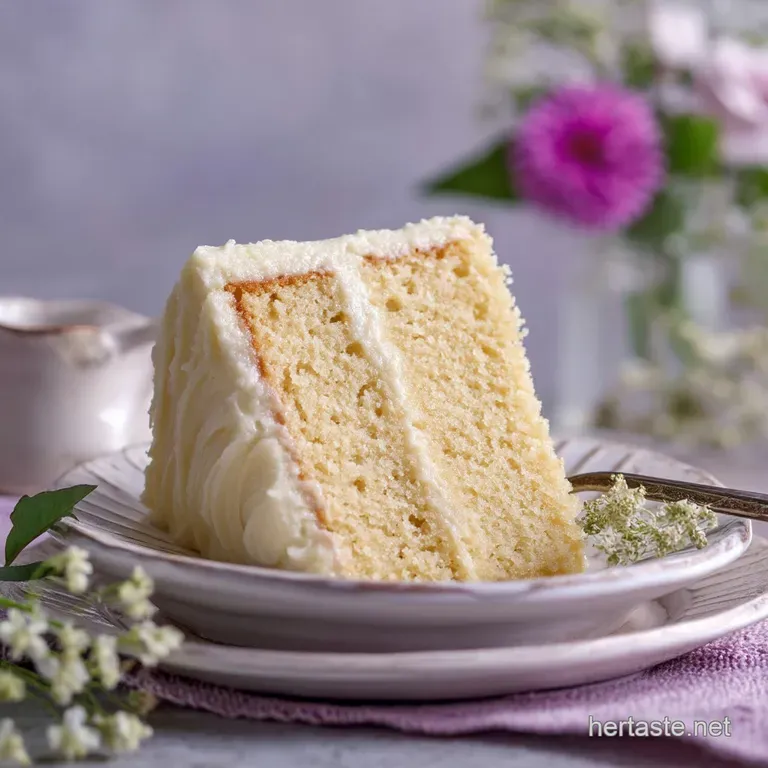
This Moist White Cake is transcendent, featuring a crumb so tender and delicate it feels like biting into a cloud.
For years, I avoided making white cake because it felt like a gamble. Would it rise properly? Would it be tough? This recipe, utilizing a bakery secret called the reverse creaming method, removes all that worry. It’s a reliable, elegant, and surprisingly efficient way to create a classic base for any celebration.
Ready to bake the ultimate celebratory cake? Grab your kitchen scale, get those eggs and butter on the counter, and prepare to elevate your baking game forever. This isn’t just a recipe; it’s the definitive guide to baking the perfect Moist White Cake Recipe every single time.
Capturing the Elegance of the Ultimate Moist White Cake
Why Traditional White Cakes Often Fall Short
Most home recipes fail because they rely on the standard creaming method, which is great for cookies, but not always ideal for a light sponge. When you cream butter and sugar together, then add flour and mix, you’re developing gluten aggressively.
Gluten is the structure, but too much of it makes for a tough, chewy, and ultimately dry cake. Who wants that for their special occasion? Nobody.
A Look Inside the Bakery Style Reverse Creaming Method
The secret sauce here is the reverse creaming method. It fundamentally changes the texture of the finished Moist White Cake . Instead of creaming the butter and sugar, you first coat the flour and sugar with the fat (butter).
This protective layer of fat inhibits gluten development right from the start.
Chef's Note: By coating the flour in fat first, you prevent the liquid (milk/egg whites) from activating the gluten strands too quickly, ensuring the resulting crumb is incredibly soft, tender, and uniquely resistant to drying out. This technique is non-negotiable for achieving the Best Moist White Cake Recipe.
This leads to a higher fat content being incorporated without overmixing, resulting in a cake that is dense in flavor but exceptionally light in texture. It truly is the difference between a decent cake and a professional, Super Moist White Cake Recipe .
Tools and Preparation: Getting Started Right
Baking is precision work. You need the right tools, and you need to pay attention to temperature. I use a stand mixer because it makes the process hands off, allowing me to prep my pans while it does the hard work.
If you are serious about achieving the perfect crumb, you need two 8 inch pans, lined meticulously with parchment paper.
The critical step here, which I cannot stress enough, is temperature control. If your butter is too cold, it won't mix properly. If your eggs and milk are straight from the fridge, they will cool the butter and cause your batter to curdle or break when combined.
Everything must be genuinely, unequivocally at room temperature for the ultimate Moist White Cake .
Essential Ingredients for the Perfect Pure White Cake
Accurate Measurements: Why A Kitchen Scale Is Non-Negotiable
If you want your Moist White Cake to turn out exactly like mine, stop using volume measurements for flour and sugar. Cups are inconsistent. Even professional bakers who scoop and level can be off by 30 grams of flour, which will absolutely ruin your batter consistency and affect the final rise.
I once spent an entire afternoon making a magnificent looking cake only to find the texture dense and squat. My mistake? I scooped the flour straight from the bag packing it down and accidentally adding an extra half cup. Use a kitchen scale, every time.
It is the most important tool you own for baking precision.
Detailed Notes on Flour, Sugar, and Dairy Choices
We must use cake flour for this recipe. It has a lower protein content than all-purpose flour, meaning less potential for gluten development, which translates directly into tenderness.
If you’re in a pinch, you can make your own substitute, but for the true bakery texture of this white layer cake recipe, stick to the real thing.
The dairy is another secret weapon. We use both whole milk and buttermilk. The whole milk provides richness, while the buttermilk adds a necessary touch of acidity and viscosity.
The acid helps activate the baking powder, giving us lift, and the slight sourness guarantees a lovely, sophisticated tang to this otherwise sweet cake. It makes for the most perfect, incredibly Moist White Cake Recipe Sour Cream alternative.
Vanilla Selection: Extract vs. Paste for Flavor Depth
For a cake called "white," we often debate the vanilla. If you want a pristine, snow white crumb, stick to clear vanilla extract. However, I’m a flavor snob, and I prioritize taste over color purity every day of the week.
I recommend using high-quality pure vanilla extract or, even better, vanilla bean paste. The paste adds those beautiful tiny specks of real vanilla bean and provides a much more robust, complex flavor.
Those black specks won’t ruin the white appearance; they just confirm that this is a truly gourmet Moist White Cake .
step-by-step Guide: Baking Your Queen's Sponge Layer Cake
Preparing the Cake Batter using the Reverse Creaming Method
First, whisk your wet ingredients (egg whites, milks, vanilla) gently in a separate bowl. Don’t whip them; just combine until uniform. Then, in your stand mixer, sift together the cake flour, sugar, baking powder, and salt.
Run the mixer on low speed for about thirty seconds to properly distribute all the leavening agents and salt.
Next, add your soft butter, cut into cubes. Mix this low and slow. We’re looking for a texture like wet sand. Keep going until the butter is fully incorporated, coating every single grain of flour. This process is key for a truly silky smooth Moist White Cake From Scratch .
Now for the liquid. Add exactly half of your wet mixture to the bowl. Turn the mixer up to medium speed and beat for a minute and a half. Scrape down the bowl thoroughly. The mixture will look thick, shiny, and almost mousse like. Add the remaining liquid and beat on medium for only 30 45 seconds until just combined.
Stop immediately. That silky texture means the emulsion is perfect.
Oven Setup and The Key to Even Layer Baking
Preheating is essential, of course, but where you place your pans matters immensely. I always bake my layers on the center rack. If you try to stack two pans on the same rack, ensure there is plenty of space between them for air to circulate.
If you must use two racks, stagger them, and swap the layers halfway through the baking time.
For this elegant White Layer Cake Recipe , we want slow, even heat. Baking too hot causes the cake edges to set too fast, forcing the center upward into a dome. You want light golden edges and a tender center.
Testing for Doneness and Cooling the Cake Layers
Start checking your cakes around the 30 minute mark. You are looking for several cues: the edges will start pulling away from the pan slightly, the cake will look set and lightly golden, and when you gently touch the center, it should spring back.
If you insert a wooden skewer, it should come out clean, perhaps with one or two moist crumbs clinging to it that’s the sweet spot for a moist finish. Once out of the oven, let them rest in the pans for 15 minutes. This is crucial settling time.
Then, invert them onto a wire rack, peel off the parchment, and let them cool completely. A warm layer will create steam, potentially drying out the crust, which is the last thing we want after all this precision work on our Moist White Cake .
The Science of Tenderness: Achieving a Silky Crumb Structure
Why does this method yield such a spectacular result? It’s all about minimizing gluten and maximizing fat suspension. When you beat the butter into the flour first, you create thousands of microscopic fat barriers.
When the liquid is finally added, it can’t access all the flour proteins, so the batter develops a tender structure instead of a tough one.
The resulting air pockets are tiny and uniform, leading to that fine, velvety crumb characteristic of a professional Bakery Style White Cake . This stands in stark contrast to oil-based cakes, which often rely on chemical leaveners for rise but can have a slightly greasy mouthfeel.
The butter here provides flavor and structure, making this the preferred foundation for high end celebrations. If you’re aiming for a perfectly elegant, consistently Moist White Cake , this is your gold standard.
Expert Baking Tips and Troubleshooting the White Cake Crumb
Why We Only Use Egg Whites for Purity
The yolk contains fat and color. If you use whole eggs, your beautiful white cake instantly becomes a pale yellow or cream color. For a true white cake, especially a Moist White Cake , we skip the yolk entirely.
The egg whites provide all the necessary protein structure without compromising the pure, snowy hue.
I’ve seen recipes try to use oil and water to avoid egg whites, but the cake loses depth and richness. We need the protein structure, and the Moist White Cake Recipe with Oil alternatives simply lack that delicate, airy quality butter provides.
Optimizing Ingredient Temperature for Maximum Lift
I cannot overemphasize the room temperature requirement. If your butter is too cold, the dry ingredients won't incorporate properly. If the milk is cold, it will solidify the fat in the butter flour mixture, leading to uneven texture and poor emulsification.
The ideal butter should indent easily when poked, but not be greasy or melted. It should be pliable. If you forget to take your butter out, slice it thin and leave it on a warm stovetop (turned off!) for ten minutes. It’s a lifesaver when you need that Easy Moist White Cake Recipe pronto.
The Cake Sank: Identifying and Preventing Under Baking
Sinking is almost always due to under baking or opening the oven door too early. The middle of the cake collapses because the structure hasn't fully set yet. If you see the cake sinking while still in the oven, you probably didn’t bake it long enough.
My mistake was once pulling a cake out just because the edges were turning golden. I thought I'd get a more Moist White Cake . Nope. I got a delicious crater. Trust the spring back test. When you gently touch the center, it should feel firm, not jiggly.
Always ensure your oven temperature is accurate; an oven thermometer is a cheap investment that prevents countless baking disasters.
Achieving Perfectly Flat Cake Layers (No Doming)
If you are obsessed with flat layers (and who isn't?), those damp baking strips mentioned in the outline are fantastic. Wrap them around your prepared pans. They insulate the metal, ensuring the sides don't set faster than the center. This forces the entire cake to rise evenly.
Alternatively, if you don’t have strips, you can always trim the domed top with a long serrated knife once the cake is fully cooled. Use the scraps to make cake pops! Either way, you’re ending up with a stunningly beautiful and Moist White Cake .
How to Properly Store and Freeze Moist White Cake Layers
Baking layers ahead of time is a genius strategy for managing stress before a big event. Once your Moist White Cake Layers are completely cool and I mean completely wrap them tightly in two layers of plastic wrap, then an outer layer of aluminum foil.
For refrigeration, they keep beautifully for up to three days. For freezing, they are safe for up to two months. When ready to use, thaw them overnight in the refrigerator (still wrapped!), and then let them come to room temperature for about 30 minutes before unwrapping and frosting.
This ensures the best texture for your thawed Moist White Cake .
Ideal Frosting and Filling Pairings for a Silky White Cake
Since this cake is a pristine, tender canvas, you have endless options for fillings. Because the crumb is so delicate, I recommend fillings that are not overly heavy or dense.
For ultimate elegance, you simply must pair it with a light, silky buttercream. My absolute favorite is a smooth, stable White Chocolate Frosting: Silky Swiss Meringue Buttercream . The white chocolate subtly complements the vanilla without overpowering the pure flavor of the Moist White Cake .
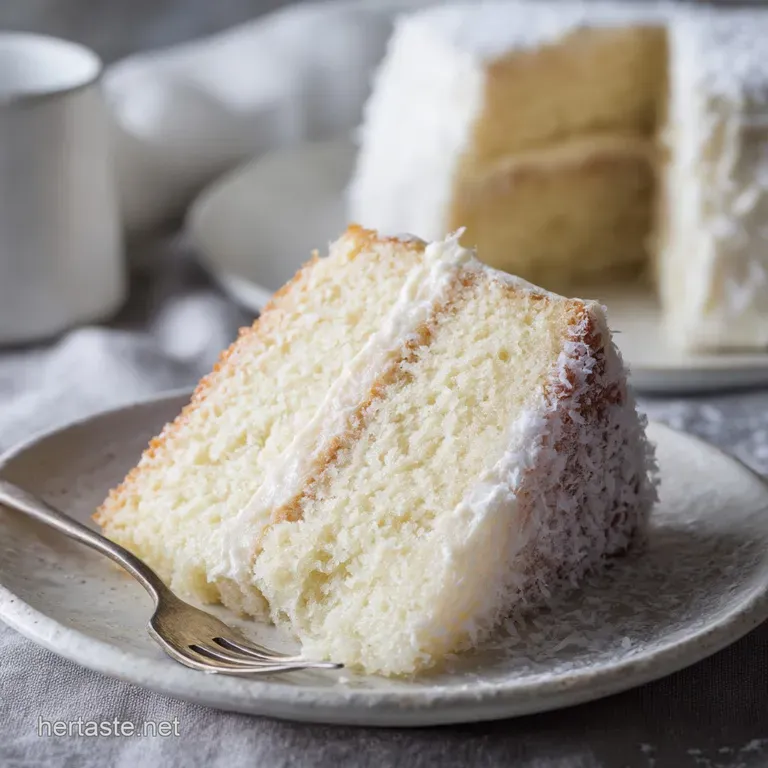
For a truly decadent, yet slightly tropical, experience, try this recipe as the foundation for my Coconut Cake: The Ultimate Cloud Soft Layer Cake Recipe . We're talking fluffy coconut flakes, serious elegance, and intense flavor. Alternatively, classic fresh strawberries and cream cheese frosting (like the one I use for my Strawberry Sheet Cake with Cream Cheese Frosting Recipe ) is always a winner.
This Easy Moist White Cake Recipe delivers versatility and consistent quality, whether you're topping it with fresh fruit, rich caramel, or a bold citrus curd. Make it yours!
I promise you, once you master the reverse creaming method for this Moist White Cake , you will never look back. It takes away the guesswork and delivers a consistent, velvety crumb that earns rave reviews every single time. Stop settling for dry, crumbly white cakes.
You deserve the cake equivalent of a silk dress. Go forth and bake the best Moist White Cake of your life!
Recipe FAQs
Why is my white cake dry, even though the recipe emphasizes moisture?
A dry cake is often caused by overmixing the flour once the liquid ingredients are added, which develops too much gluten and creates a tough texture. Ensure you are weighing your flour precisely (excess flour absorbs too much moisture) and verify that your oven temperature is not running too hot, as high heat dries out the crumb quickly.
What is the benefit of using the "reverse creaming" method for this recipe?
The reverse creaming method coats the flour in fat (butter) before any liquid is introduced, significantly inhibiting gluten development. This technique results in an exceptionally fine, velvety, and tender crumb, making it ideal for high sugar, moist layer cakes like this white sponge.
Why are only egg whites used, instead of whole eggs?
Using only egg whites is essential for achieving a pure, brilliant white color, as the yolks would impart a yellow tint to the final product. Additionally, egg whites contribute to a lighter, airier, and slightly more structured crumb compared to the richer density provided by whole eggs.
Can I substitute the vanilla extract for other flavorings, like almond or lemon?
Absolutely. You can easily substitute the vanilla extract with high-quality extracts such as almond, lemon, coconut, or even a citrus zest. If using zest, incorporate it thoroughly with the sugar and fat during the mixing process to ensure the essential oils are fully released and distributed.
My cake layers domed significantly and cracked on top. What caused this?
Excessive doming and cracking usually indicate that your oven temperature is too high, causing the outer edges to set rapidly while the center continues to rise forcefully. Try lowering your temperature by 15-20°F next time, or ensure the oven is properly calibrated to prevent this uneven baking.
How far in advance can I bake the cake layers, and what is the best way to store them?
Unfrosted cake layers can be baked up to 3 days in advance; wrap them tightly in plastic wrap immediately after cooling completely to lock in moisture. For longer storage, tightly wrapped layers can be frozen for up to 3 months, ideally double wrapped in aluminum foil to prevent freezer burn before thawing overnight in the refrigerator.
Silky Moist White Layer Cake
Ingredients:
Instructions:
Nutrition Facts:
| Calories | 824 kcal |
|---|---|
| Protein | 6.5 g |
| Fat | 46.2 g |
| Carbs | 95.5 g |
