Sausage Stuffing: the Proper Hearty Apple Sage Dressing Recipe
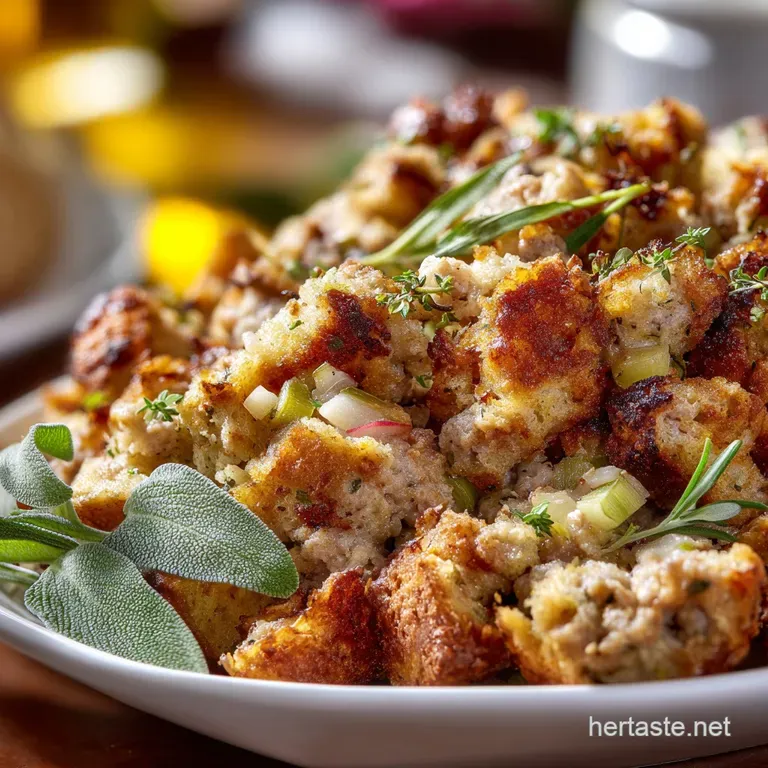
- The Proper Butcher’s Sausage and Apple Stuffing: A Roast Dinner Essential
- The Science of Perfect Sausage Stuffing Texture and Flavor
- Selecting Your Components: Ingredients for Superior Sausage Stuffing
- Step-by-Step: Crafting the Hearty Butcher’s Sausage Stuffing
- Stuffing Mastery: Expert Tips and Troubleshooting Common Issues
- Make-Ahead Strategy and Safe Storage of Sausage Stuffing
- The Perfect Plate: What to Serve Alongside This Classic Dressing
- Recipe FAQs
- 📝 Recipe Card
The Proper Butcher’s Sausage and Apple Stuffing: A Roast Dinner Essential
When the weather turns cool and the oven starts humming, there is one particular aroma that signals comfort and celebration: the deep, savoury scent of fresh sage and caramelized sausage. That perfect smell is what this recipe is all about.
We're chasing the textural dream a robust, crunchy golden top yielding to an interior that is unbelievably moist and utterly packed with flavor.
This isn't just a side dish; this is the cornerstone of any roast dinner, especially if you’re trying to make the [Worlds Best Stuffing Recipe]. Forget the bland, dry packets your aunt used to force on you.
This recipe takes humble, inexpensive ingredients day-old bread and quality pork and turns them into a glorious, unforgettable [Sausage Stuffing Casserole].
I’ve spent years tinkering with ratios and temperatures, and finally, this method delivers perfection every single time. It’s hearty, it’s herbaceous, and it’s non-negotiable for the holidays or even a simple Sunday dinner.
Let’s make the Sausage Stuffing you deserve.
The Science of Perfect Sausage Stuffing Texture and Flavor
Moving Beyond the Packet Mix: Defining True Stuffing
True sausage stuffing is a textural marvel. We are aiming for a beautiful contrast between the crispness of the edges and the pillowy, saturated interior. The single most important element here is making sure your bread is properly dried out, allowing it to soak up all that incredible rendered sausage fat without turning to mush.
If you start with soft, fresh bread, you might as well be making porridge.
The Essential Role of Sausage Stuffing in the Roast Dinner
Stuffing provides the necessary savory density to balance the roast and accompanying vegetables. This mixture, specifically, offers deep, earthy notes from the fresh herbs and rich, umami depth from the pork.
When done right, this [Moist Stuffing Recipes For Thanksgiving] becomes the star, often overshadowing the main protein entirely.
Achieving the Crispy Top and Moist Interior
The secret to this heavenly texture is a two-stage baking process. Baking the dish covered creates a steam pocket, ensuring the center cooks through while staying juicy and soft. Then, in the last 15 minutes, you strip off the foil and blast it with heat to achieve that glorious, non-negotiable crunch on top.
Do not skip the foil step!
The Essential Flavour Pairing: Pork Sausage and Cooking Apples
This is where the magic happens. Pork sausage is rich, deeply savory, and often quite fatty. Adding a finely diced cooking apple, like a tart Granny Smith, cuts through that richness brilliantly.
The apple releases just enough tart juice to moisten the mixture further and adds a layer of complexity without making the stuffing taste sweet. It’s balanced perfection.
Selecting Your Components: Ingredients for Superior Sausage Stuffing
Choosing the Right Sausage Meat (And What to Avoid)
The fat content of your sausage is key when making this [Stuffing Sausage Recipes]. I always choose a traditional, good quality British pork sausage or a mild Italian sausage (casings removed, naturally). Avoid the super lean, diet versions.
You need that glorious rendered fat to coat the bread cubes, which adds unbelievable flavour and richness.
The Best Bread Base: Staling vs. Drying Methods
A sturdy, day-old white loaf is ideal sourdough or a crusty artisan loaf works best. Don't use thinly sliced sandwich bread! It turns to paste instantly. If you don't have day-old bread, cut your cubes and bake them at 300°F (150°C) for 15 minutes until crunchy and dry.
The Critical Difference: Cooking Apples vs. Eating Apples
We aren't making dessert here. We need a sharp apple that holds its shape a little bit and provides acidity. Granny Smith or Bramley apples are perfect. If you use a sweet eating apple (like Gala), it will disintegrate and make the whole dish taste too saccharine.
Substitutions for Sage and Onion Flavour Profile
Fresh herbs are always the best choice for intensity. This classic flavour profile relies on generous amounts of fresh sage and thyme, which really define that holiday taste. If you're making this for [Sausage Stuffing For Thanksgiving] and you run out of fresh herbs, use the dried version but remember to rub them between your palms before adding them to the hot pan to release their essential oils.
| Ingredient | Viable Substitute |
|---|---|
| Pork Sausage | Ground Turkey or Chicken Sausage (Add 3 extra Tbsp of butter!) |
| Chicken Stock | Vegetable Stock or water mixed with good quality bouillon |
| Granny Smith Apple | Firm, tart pear or 1/2 cup dried cranberries (soaked) |
| Fresh Sage | 1 tsp dried sage, "bloomed" in hot fat |
step-by-step: Crafting the Hearty Butcher’s Sausage Stuffing
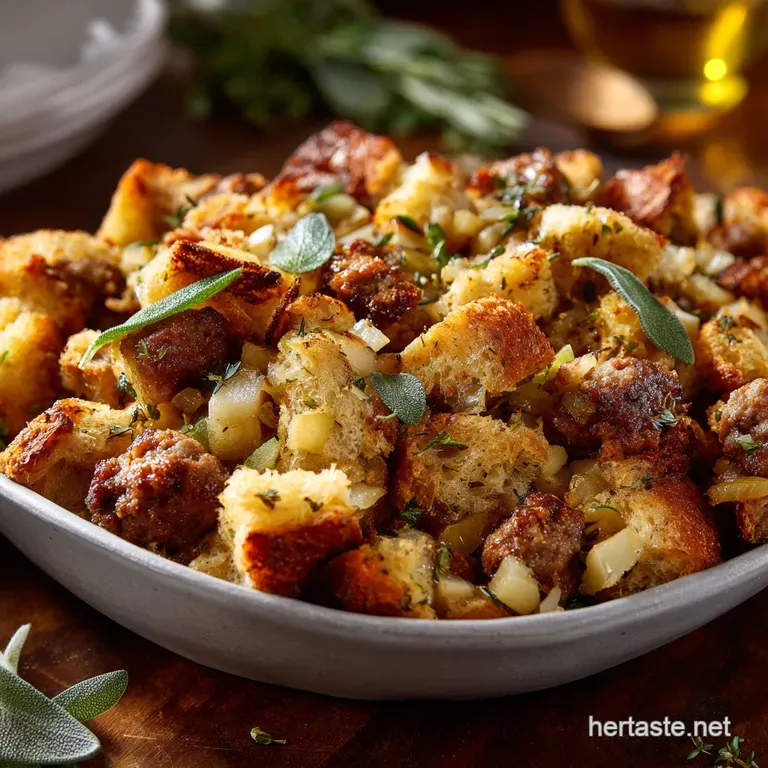
Preparing the Foundation: Sautéing Aromatics and Sausage Meat
First, melt the butter and brown the sausage meat in a large skillet over medium high heat. Break it up well as you go. Cook it until you start seeing crunchy browned bits forming, which is pure flavor gold. Drain off the sausage, but do not discard the rendered fat.
That fat is your liquid gold for coating the bread. Add your finely diced onion and celery to the remaining hot fat and sauté until they are sweet and translucent, smelling absolutely divine (about 7 minutes).
Stir in the diced apple, sage, and thyme, cooking for just 3 minutes until the apple starts to soften slightly.
Combining and Resting the Stuffing Mix
Tip the hot aromatic mixture (fat and all!) directly over the dried bread cubes and cooked sausage in your mixing bowl. Toss thoroughly; you want every bread cube coated in that flavorful fat. Next, pour in the whisked eggs and fresh parsley, tossing again.
Chef’s Note: Now comes the stock. Add the warm chicken stock slowly, about 1/2 cup at a time. The mixture should be thoroughly moistened not soaking but soft enough that if you perform the "squeeze test," a clump holds its shape beautifully in your hand.
This is the crucial stage for avoiding a dry or dense bake.
Baking Times and Temperature for Optimal Results
Lightly grease a 9x13 inch casserole dish and transfer the stuffing mixture. Press it down very gently; remember, over packing is the enemy of a moist center. Cover the dish tightly with aluminum foil. Bake at 375°F (190°C) for 30 minutes to allow the center to cook and steam.
This technique is similar to what I use in my [Homemade Stuffing Recipe: Ultimate Sage Sourdough for a Crisp Crust].
Testing for Doneness: Achieving the Ideal Internal Temperature
Remove the foil and bake for another 10 to 15 minutes until the top is deeply golden brown and crispy. Because we’re using raw eggs and pork sausage, we must be safe. Use a thermometer to ensure the center registers 165°F (74°C).
If it’s brown but not hot enough inside, cover it loosely and bake for a few more minutes.
Stuffing Mastery: Expert Tips and Troubleshooting Common Issues
The Density Trap: Avoiding a Hard, Cakey Result
The number one mistake people make is treating stuffing like meatloaf. If you mix too vigorously, or if you press it into the baking dish too tightly, the bread compresses, and you get a hard, cakey result.
Always toss gently until just combined and press into the dish lightly enough to form a level surface, nothing more.
How to Fix Under Seasoned or Bland Stuffing
If you taste the raw mixture and it’s just... meh, you need salt. Salt brings out the savory depth of the pork. Don't be shy; add salt, pepper, and maybe a dash of fresh garlic powder if needed. Another fix for dullness? Acidity.
Try adding a squeeze of fresh lemon juice or a tiny splash of apple cider vinegar right before baking.
make-ahead Strategy and Safe Storage of Sausage Stuffing
Freezing Raw vs. Cooked Sausage Stuffing
You absolutely can (and should) make this ahead of time. However, I strongly recommend making, baking, and then freezing the cooked stuffing. Allow it to cool completely, wrap it tightly, and freeze for up to three months.
Due to the eggs and raw sausage interacting with the stock, freezing the raw mixture is generally risky business from a food safety standpoint.
Reheating Instructions for Maximum Crispness
To regain that amazing textural contrast, thaw your cooked [Sausage Stuffing] overnight in the fridge. Reheat in a 350°F (175°C) oven, covered, for about 20 minutes until piping hot throughout. Then, remove the foil and bake uncovered for the last 5 to 10 minutes.
This blast of dry heat revitalizes the crisp crust instantly.
The Perfect Plate: What to Serve Alongside This Classic Dressing
Complementary Roasts and Vegetable Pairings
This rich, classic stuffing pairs beautifully with nearly any roasted meat. It’s perfect with turkey (especially if you also love my [Thanksgiving Stuffing: Ultimate Sage Thyme Casserole Recipe]) or roasted pork tenderloin.
To cut the richness of the pork, serve alongside something tart and bright, like homemade cranberry sauce or sharp, roasted Brussels sprouts.
Gravy Pairings: Enriching the Overall Dish
Please, for the love of all that is holy, do not serve this glorious dish with thin, watery gravy. A rich, deeply flavored pan gravy made from the drippings of your accompanying roast is essential.
If you want to make this into individual [Sausage Stuffing Bites] for an appetizer, serve the rich gravy in a small ramekin for dipping. It’s a total game changer.
Recipe FAQs
Why is my sausage stuffing always dry and crumbly?
Dryness is often due to insufficient fat or liquid absorption by the bread cubes. Ensure you use enough melted butter and stock to fully saturate the bread; the mixture should look sticky, not just moistened, before baking. Additionally, avoid over baking, which evaporates essential moisture.
Can I prepare this sausage stuffing ahead of time and freeze it?
Absolutely. You can prepare the complete, unbaked stuffing mixture and freeze it airtight for up to three months. Alternatively, bake the stuffing completely, cool it, and freeze the finished block, which makes reheating faster and reduces preparation stress on the day.
What type of sausage meat provides the best flavor and texture?
For a robust stuffing, always opt for high-quality, high fat content pork sausage meat, such as a traditional Cumberland or a proper Butcher’s blend. The fat content is crucial as it renders during baking, distributing flavor and keeping the bread element moist.
I don't have fresh cooking apples. Can I omit them or use dried fruit instead?
The apple is vital for balancing the richness of the sausage, providing necessary moisture and a hint of sweetness. If you must omit fresh apples, consider adding a tablespoon of apple sauce or substitute with dried cranberries or apricots that have been soaked in sherry or hot water to plump them up.
Should I add an egg to the stuffing mixture?
Adding a large beaten egg acts as an excellent binder, especially if you plan on serving the stuffing sliced from a tray. While not mandatory, the egg ensures the stuffing holds its structure beautifully rather than crumbling apart when you cut or serve it.
I want a crisp top crust. How do I ensure the outside gets golden brown?
To achieve a proper, crisp crust, ensure the stuffing is baked in a wide, shallow dish rather than a deep one. For the last 15 minutes of baking, increase the oven temperature slightly to 400°F (200°C) and drizzle a small amount of extra melted butter over the exposed surface.
Can I use this recipe to stuff a chicken or turkey safely?
For safety, always stuff poultry immediately before cooking, never the night before. Be aware that stuffing lengthens the cooking time considerably; ensure the internal temperature of the stuffing reaches 165°F (74°C) before considering the bird cooked, using a meat thermometer placed deep into the center.
Proper Sausage And Apple Stuffing
Ingredients:
Instructions:
Nutrition Facts:
| Calories | 157 kcal |
|---|---|
| Protein | 4.0 g |
| Fat | 4.0 g |
| Carbs | 30.0 g |
