Sausage Stuffing: the Proper Pub-Style Recipe (A Roast Dinner Essential)
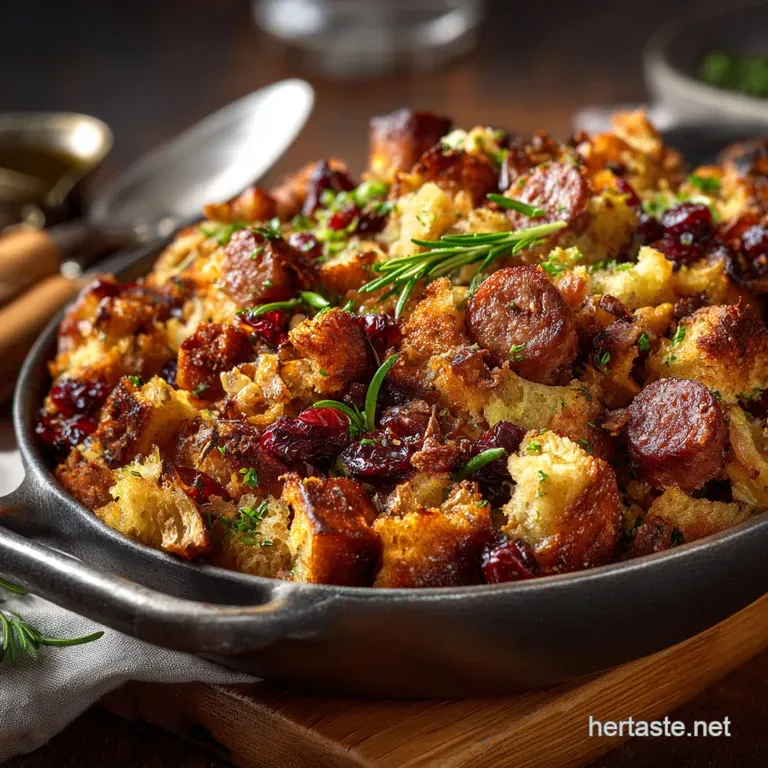
- Introducing the Ultimate Pub-Style Sausage Stuffing: A Roast Dinner Essential
- Ingredients for Essential Sausage Stuffing: Selection and Preparation Notes
- Step-by-Step Guide: How to Assemble and Bake Perfect Sausage Stuffing
- Troubleshooting Your Sausage Stuffing: Expert Tips and Avoiding Common Errors
- make-ahead Methods and Safe Storage for Your Stuffing
- Serving the Finished Dish: Pairing Suggestions Beyond Roast Turkey
- Recipe FAQs
- 📝 Recipe Card
Introducing the Ultimate Pub-Style Sausage Stuffing: A Roast Dinner Essential
Oh, hi! Seriously, if you're reading this, you probably already know that stuffing is the actual best part of the holiday table. That smell, right? It's the ultimate sensory signal that comfort food is coming.
We are talking about unbelievably fragrant browning sausage, sweet caramelized celery, and earthy, pungent sage all baking together.
This isn't some fiddly, dry afterthought; this is a side dish that absolutely refuses to be ignored. It’s a total lifesaver because you can prep most of it ahead of time, meaning less stress on the big cooking day. Plus, it only uses cheap, simple ingredients, but tastes profoundly expensive and complex.
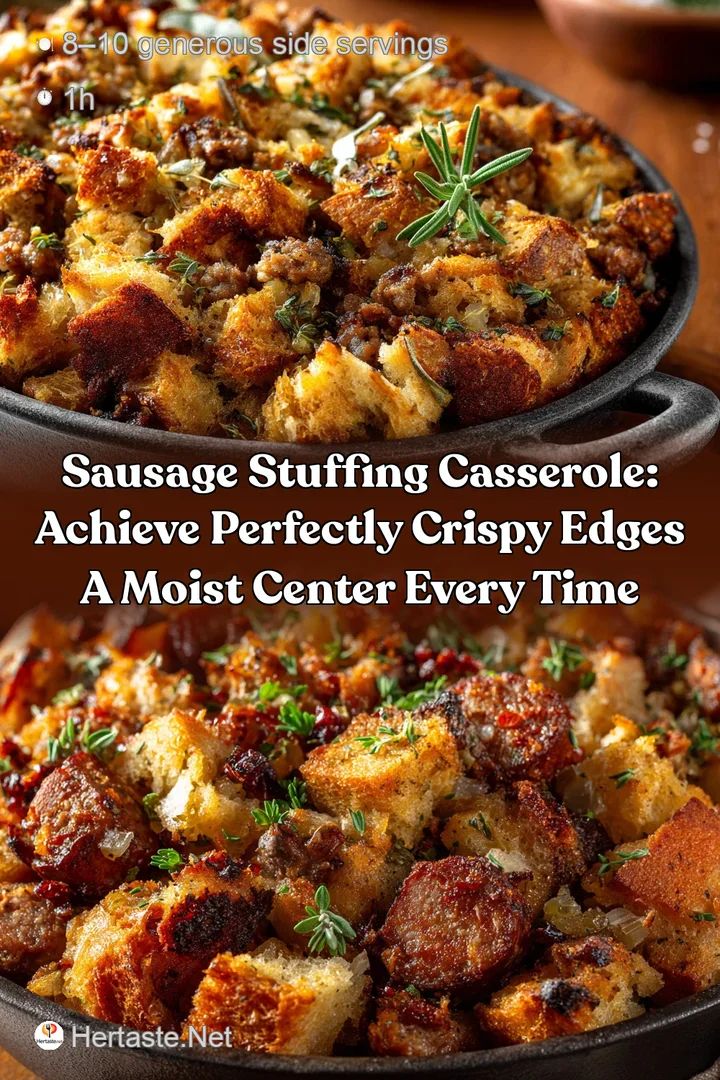
Forget those sad, soggy versions you’ve had before. This recipe delivers a proper, sturdy texture with a delightfully crisp, golden brown crust and a moist, flavour packed interior. Let’s crack on and make the absolute best Sausage Stuffing Recipe your family has ever tasted! (If you love big flavour variations, you might also want to check out my take on Sausage Apple and Cranberry Stuffing: The Awesome 5 Star Holiday Recipe later.)
Why Stuffing is the Unsung Hero of the Main Course
We rely on the sausage in this stuffing to do all the heavy lifting, flavour wise. Using a high-quality bulk pork sausage means you get both flavour and the fat needed to moisten the bread cubes thoroughly. That fat is your flavour carrier, ensuring every bite is rich and savoury.
The other secret is the bread. You must use old, stale bread not soft, fresh slices so it can absorb the moisture without turning into a dreadful paste. The moisture ratio here is key, resulting in a Sausage Stuffing Casserole that holds its shape but melts in your mouth.
Defining 'Proper' Stuffing: The Perfect Flavour and Texture Balance
For me, "proper" means balancing the savoury, meaty filling with enough moisture to bind it all together, but not so much that it gets heavy. The bread should swell and soften without disintegrating.
You want little pockets of air inside, which is why we press the mixture lightly into the pan, not compress it like concrete.
The high heat at the end gives you that killer crisp top, perfect for absorbing a little gravy. This is the foundational method that makes the best versions, including my favourite Pioneer Woman Sausage Stuffing: Best Hearty Sage Stuffing Recipe and others.
Stuffing vs. Dressing: Clarifying the Terms for This Recipe
Okay, the quick version: Stuffing is traditionally cooked inside the bird; dressing is cooked outside the bird in a dish. Safety wise, most home cooks now bake it separately, which is why we’re using a baking dish today.
We still call it stuffing, though, because it's stuffed full of sausage and flavour!
Chef’s Note: Stuffing cooked inside a bird must reach 165°F (74°C) to be safe, which often means the bird is overcooked. Baking it separately, as we are doing here, is genuinely safer and gives you those crunchy edges we crave.
Ingredients for Essential Sausage Stuffing: Selection and Preparation Notes
Choosing the Right Sausage Meat (Fat Content and Flavour Profile)
Don't skimp here; the quality of your sausage is the quality of your stuffing. Look for a bulk pork sausage labeled "mild Italian" or standard breakfast sausage, as they usually contain great seasoning like fennel or sage already. Crucially, we need that fat content.
If you use super lean sausage, you will end up with dry stuffing, so please don't drain every drop of fat off after browning the meat.
The Superiority of Fresh Sage and Thyme Over Dried Herbs
Dried herbs are fine in a pinch, but fresh herbs make this dish sing, especially sage. Fresh sage has an aromatic, almost peppery oiliness that permeates the entire dish in a way dried sage just can't match.
When you add the fresh herbs to the hot skillet, cook them for just 60 seconds; this "blooming" process maximizes their flavour release.
Prepping the Aromatic Base: Fine Dicing Onions and Celery
We call these aromatics the mirepoix , and they are vital for depth. Make sure your onion and celery are diced finely we don't want massive chunks disrupting the smooth texture of the stuffing.
We are cooking them until they are softened and translucent, which adds a subtle sweetness to balance the salty sausage.
| Ingredient | Substitution Tip | Reason |
|---|---|---|
| Bulk Pork Sausage | Mild/Hot Italian Sausage | Provides similar necessary fat content and seasoning (fennel/sage). |
| Sourdough Bread | Cubed French Baguette or Ciabatta | Needs to be sturdy and crusty; avoid soft sandwich bread. |
| Fresh Sage/Thyme | Dried Herbs | Use 1/3 the amount of dried herbs, ensuring they are very fresh (not dusty old ones). |
| Chicken Stock | Vegetable Stock or Water + Butter | Vegetable stock is a good neutral liquid, or water adds moisture if butter/sausage fat compensates for richness. |
| Eggs | 1/2 Cup Milk or Cream | Eggs bind, but milk/cream provides moisture and richness while keeping the stuffing less firm. |
step-by-step Guide: How to Assemble and Bake Perfect Sausage Stuffing
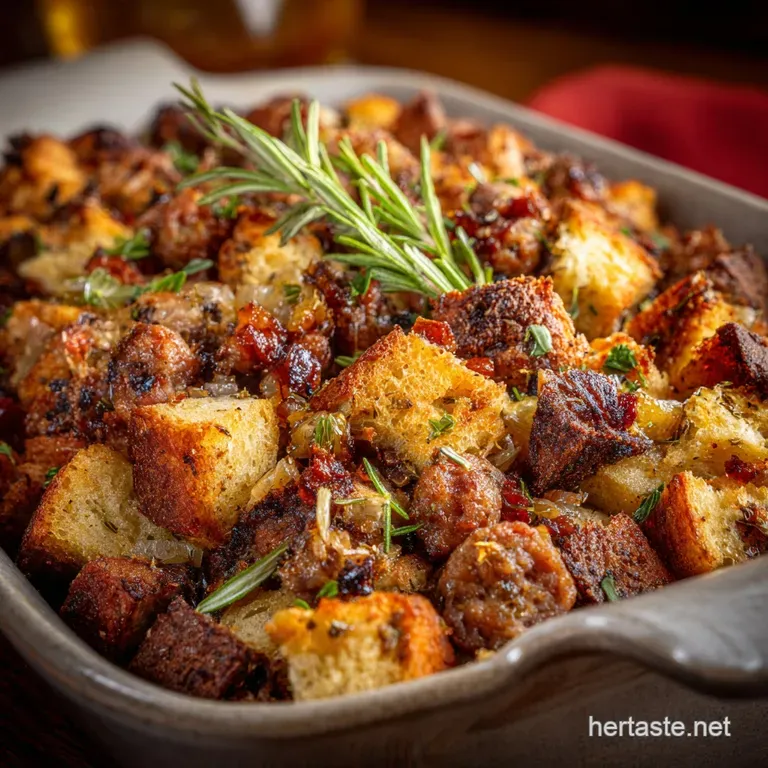
Stage 1: Building the Flavour Foundation (Browning and Deglazing)
Start by making sure your oven is preheated to 375°F (190°C), and your bread is ready and dry. Heat your skillet over medium high heat. Add your bulk sausage and break it up vigorously using a wooden spoon while browning.
Once cooked through, lightly drain only the excess fat; leave about 2 tablespoons in the pan for the vegetables. Add the butter, then the diced onion and celery, cooking until soft and nutty in aroma, about 7 minutes.
Now, stir in your fresh herbs, salt, and pepper and cook for just 1 minute until fragrant.
Stage 2: Thorough Mixing and Resting the Stuffing Base
Pour that gloriously flavourful sausage mixture immediately over your dried bread cubes in a large bowl. Toss everything gently but thoroughly until the bread is coated in fat and herbs. Next, whisk your warm stock and beaten eggs together.
Pour this binder over the coated bread, tossing again very carefully until moistened. This step is crucial: the mixture should look saturated but not have liquid pooling at the bottom of the bowl. Stop adding stock if you hit that point!
Let it rest for 5 minutes; this is when the bread really soaks up the liquid.
Stage 3: Baking Method for Maximum Crispness and Internal Doneness
Transfer the rested stuffing into your prepared 9x13 dish. You want to spread it out evenly, pressing down gently, maybe just enough to level the top. Bake uncovered at 375°F (190°C) for 30 minutes. The top should be lightly golden.
For that professional, super crispy top, crank the oven up to 400°F (200°C) for the last 10 minutes. The internal temperature needs to be 165°F (74°C) to ensure the egg binder is cooked through. Let it cool slightly before serving; the flavour intensifies as it sets.
Troubleshooting Your Sausage Stuffing: Expert Tips and Avoiding Common Errors
Preventing a Dense Texture: The Danger of Over Mixing
People often mistake the stuffing mixture for cake batter and stir, stir, stir. Stop doing that! Over mixing develops gluten in the bread pieces, which makes the whole dish heavy, chewy, and dense, like a brick. Mix only until combined.
Use a gentle folding motion with a spatula, just enough to distribute the liquids evenly.
The Foil Rule: When to Cover and When to Crisp the Top
If you find your stuffing edges are getting too dark before the center is cooked, you can loosely tent the dish with foil. This traps moisture and slows surface browning. Always remove the foil for the final 10– 15 minutes if you want that desirable, crunchy, golden crust.
make-ahead Methods and Safe Storage for Your Stuffing
How Long Can Stuffing Be Prepared and Refrigerated In Advance?
Stuffing is an excellent make-ahead side dish. You can fully assemble the raw stuffing (Steps 1 9) up to 2 days in advance . Cover the baking dish tightly with foil and refrigerate.
When ready to bake, let it sit on the counter for 30 minutes to take the chill off, then bake as directed, possibly adding 5– 10 minutes to the total baking time since it’s starting cold.
The Best Way to Freeze and Reheat Cooked Stuffing
Cooked sausage stuffing freezes beautifully. Once cooled completely, cut it into individual servings or wrap the whole slab tightly in plastic wrap, then foil. It will last in the freezer for up to 3 months. To reheat, thaw overnight in the fridge.
Place the thawed stuffing in an oven safe dish, cover loosely with foil, and heat at 350°F (175°C) until piping hot throughout (about 20– 25 minutes).
Serving the Finished Dish: Pairing Suggestions Beyond Roast Turkey
The Ideal Gravy Pairing for This Savoury Dish
Because this Sausage Herb Stuffing is so rich, you need a powerful gravy to match it. A classic turkey or beef pan gravy is always a winner. If you're looking for something simpler, a good red wine reduction sauce cuts through the fat wonderfully.
Creative Uses for Sausage Stuffing Leftovers (Repurposing Ideas)
Please, never waste leftover stuffing! My favorite way to use this Family Favorite Stuffing is for "Stuffing Waffles." Press the cold leftovers into a waffle iron and cook until crispy and hot. Serve with a fried egg and cranberry sauce for a killer breakfast hash.
You can also form the leftovers into small Sausage Stuffing Balls or patties and pan-fry them the next day for a brilliant appetizer.
Recipe FAQs
Is this considered an old-fashioned or traditional sausage stuffing recipe?
Yes, this recipe is deeply rooted in traditional European holiday cooking, relying on simple, high-quality ingredients like cured pork, stale bread, and classic poultry herbs. Unlike modern versions, it steers clear of high sugar content and heavy fruit additions, sticking strictly to savory depth and texture.
My stuffing came out dry and crumbly. What did I do wrong?
Stuffing dryness is usually caused by insufficient liquid (stock or butter) or overbaking. Ensure your bread cubes are fully saturated before baking; they should resemble a thick porridge rather than dry cubes mixed with meat.
If using a very lean sausage, adding extra melted butter or a bit of beaten egg can help bind moisture.
How can I adapt this to create a classic "Irish" style stuffing?
To give it an Irish twist, consider swapping out some of the bread cubes for mashed potatoes or finely chopped cooking apples, which add essential moistness and complexity. A small amount of rolled oats or oatmeal can also be stirred in to achieve that specific dense texture found in classic traditional Irish recipes.
How does this recipe compare to common store-bought mixes like Jimmy Dean sausage stuffing?
While similar in core ingredients (sausage, bread), this pub-style recipe emphasizes using high-quality fresh, aromatic herbs like sage and thyme rather than relying solely on pre-seasoned sausage mixes.
This approach allows for greater control over the seasoning profile, resulting in a significantly richer and fresher flavor profile.
Can I prepare this sausage stuffing mixture ahead of time?
Absolutely. You can prepare the entire mixture cooking the sausage, mixing in the bread and herbs up to 24 hours in advance and store it tightly covered in the refrigerator.
Just be sure to add a splash of extra liquid (stock or melted butter) right before baking, as the bread tends to absorb remaining moisture overnight.
What is the secret to making this the absolute "best" stuffing?
The secret lies in balancing texture and moisture: use stale or toasted bread for structure and generous amounts of rendered fat and stock for flavor. Baking the stuffing separately in a shallow dish (not inside the bird) allows for maximum surface area, guaranteeing those desirable crisp, golden brown edges.
How long can I safely store or freeze leftover sausage stuffing?
Cooked stuffing can be safely stored in an airtight container in the refrigerator for 3 to 4 days, provided it was cooked to the correct internal temperature of 165°F (74°C).
For longer storage, portioned stuffing freezes exceptionally well; wrap tightly and freeze for up to 3 months, reheating until piping hot throughout.
Proper Pub Style Sausage Stuffing
Ingredients:
Instructions:
Nutrition Facts:
| Calories | 969 kcal |
|---|---|
| Protein | 36.1 g |
| Fat | 55.8 g |
| Carbs | 61.5 g |
