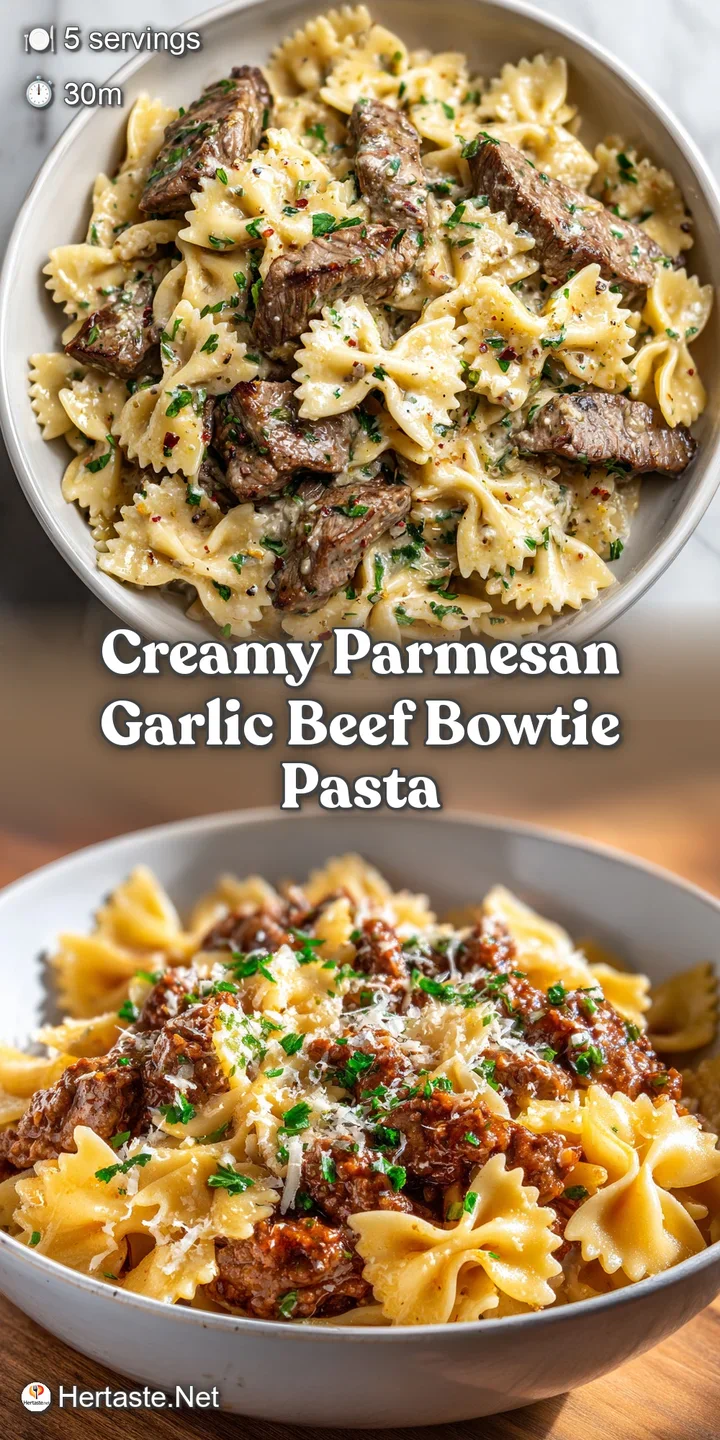
Creamy Parmesan Garlic Beef Bowtie Pasta
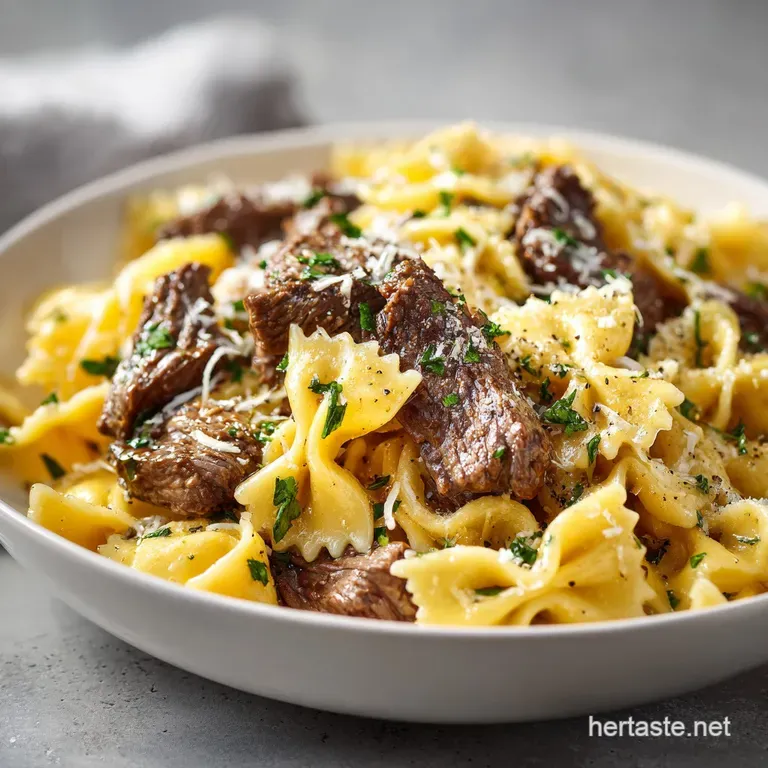
- Time: Active 10 minutes, Passive 20 minutes, Total 30 minutes
- Flavor/Texture Hook: Velvety cream sauce with savory garlic notes
- Perfect for: Busy weeknights or beginner cooks craving comfort food
- Master the Ultimate Creamy Parmesan Garlic Beef Bowtie Pasta
- The Chemistry of a Perfectly Stable Cream Sauce
- Deep Dive into Component Functionality
- Essential Elements for Your Beef Bowtie Pasta
- Critical Equipment for Sauce Mastery
- Executing the Perfect Garlic Beef Pasta
- Resolving Texture and Flavor Hurdles
- Smart Adjustments for Different Crowd Sizes
- Debunking Pasta and Cream Myths
- Long Term Care and Waste Reduction
- Strategic Pairing for a Balanced Plate
- High in Sodium (⚠️)
- Recipe FAQs
- 📝 Recipe Card
Master the Ultimate Creamy Parmesan Garlic Beef Bowtie Pasta
The kitchen starts to hum the second that lean ground beef hits the hot stainless steel. There is a specific, rhythmic sizzle that tells you the Maillard reaction is doing its heavy lifting, turning simple protein into a goldmine of flavor.
I remember the first time I tried making this for a group of friends on a Tuesday night. I was frantically trying to balance a budget while wanting something that felt like a splurge, and the aroma of five garlic cloves hitting that rendered beef fat changed the entire vibe of my tiny apartment.
We've all been there staring at a pound of ground beef and a box of pasta, wondering how to make it feel like something other than "just another meat sauce." The secret isn't in expensive ingredients; it is in the timing and the "forging" of a proper emulsion.
By the time you fold in those vibrant green ribbons of baby spinach and watch them wilt into the velvety parmesan sauce, you'll realize you have created something far better than any boxed helper.
This dish is about the contrast between the ridges of the bowtie pasta, which act like little scoops for the garlic infused cream, and the savory bits of beef that cling to every curve. It is innovative because it treats humble ingredients with the respect of a high end bistro dish.
You are going to love how the red pepper flakes add just a whisper of heat to cut through the richness of the heavy cream and parmesan cheese.
The Chemistry of a Perfectly Stable Cream Sauce
Emulsification Stability: The fats in the heavy cream and the proteins in the finely grated parmesan are bound together by the starch released from the pasta, preventing the sauce from breaking or becoming oily.
This creates a cohesive coating that sticks to the bowties rather than pooling at the bottom of the bowl.
| Feature | Fast Stovetop Method | Classic Slow Ragu |
|---|---|---|
| Total Time | 30 minutes | 4 hours |
| Primary Texture | Velvety and creamy | Thick and chunky |
| Best For | Tuesday night rush | Sunday family dinners |
Building a meal that feels expensive on a budget requires understanding where to spend and where to save. We are using lean beef to minimize grease, which keeps the flavors clean and the texture light. If you are looking for more ways to use ground beef efficiently, my How to Make recipe offers another brilliant take on transforming pasta into a family favorite.
Deep Dive into Component Functionality
Understanding why we use specific elements helps you become a more intuitive cook. It is about forging a balance between salt, fat, and acid.
| Ingredient | Science Role | Pro Secret |
|---|---|---|
| Ground Beef (90/10) | Protein structure | Brown it undisturbed for 3 minutes to maximize flavor |
| Heavy Cream | Fat based emulsifier | Room temperature cream incorporates faster without curdling |
| Parmesan Cheese | Protein & Umami | Grate it yourself for a "shatter" effect and better melt |
Small adjustments in technique can lead to massive shifts in the final result. For instance, the way the garlic is handled determines whether the dish is sweet and fragrant or bitter and overpowering. If you enjoy the marriage of garlic and cream, you should definitely try the technique in my Juicy Steak with recipe, where aromatics take center stage.
Essential Elements for Your Beef Bowtie Pasta
- 1 lb Lean Ground Beef (90/10): This ratio ensures enough fat for flavor without leaving a lake of oil in your pan.
- Substitute: Ground turkey or chicken (add 1 tbsp olive oil to compensate for lower fat).
- Why this? Lean beef keeps the cream sauce from separating and becoming overly greasy.
- 1 small Yellow Onion: Finely diced to melt into the sauce.
- Substitute: Shallots for a more delicate, garlicky sweetness.
- 5 cloves Fresh Garlic: Minced finely. Please don't use the jarred stuff; it lacks the necessary pungency.
- Substitute: 1.5 tsp garlic powder (only in a pinch).
- 2 cups Low sodium Beef Broth: This provides the savory liquid base.
- Substitute: Chicken broth or vegetable stock.
- 1 cup Heavy Cream: This is the heart of the "velvety" texture.
- Substitute: Half and half (the sauce will be slightly thinner).
- 1.5 cups Freshly Grated Parmesan Cheese: Real Parmigiano Reggiano makes a world of difference.
- Substitute: Pecorino Romano for a saltier, sharper bite.
- 12 oz Dried Bowtie Pasta: Also known as Farfalle.
- Substitute: Penne or Rotini (anything with ridges to catch the sauce).
- 2 cups Fresh Baby Spinach: For color, fiber, and a fresh earthy finish.
- Substitute: Chopped kale or Swiss chard.
- Spices: 1 tsp Kosher Salt, 1/2 tsp Coarsely Ground Black Pepper, 1 tsp Italian Seasoning, 1/2 tsp Red Pepper Flakes.
Critical Equipment for Sauce Mastery
To get that restaurant style finish, you need a large, deep skillet or a heavy bottomed Dutch oven. A 12 inch cast iron skillet (like a Lodge) works beautifully here because it holds heat consistently, allowing the beef to brown deeply without the pan temperature dropping.
You will also need a sturdy wooden spoon or a heat resistant spatula to scrape up the "fond" those little brown bits stuck to the bottom of the pan after searing the meat. That's pure flavor gold. A box grater is also mandatory.
Please, for the love of all things holy, stop buying the pre shredded cheese in the green can or plastic bags. Those are coated in potato starch to prevent clumping, which is exactly what will make your sauce grainy.
Executing the Perfect Garlic Beef Pasta
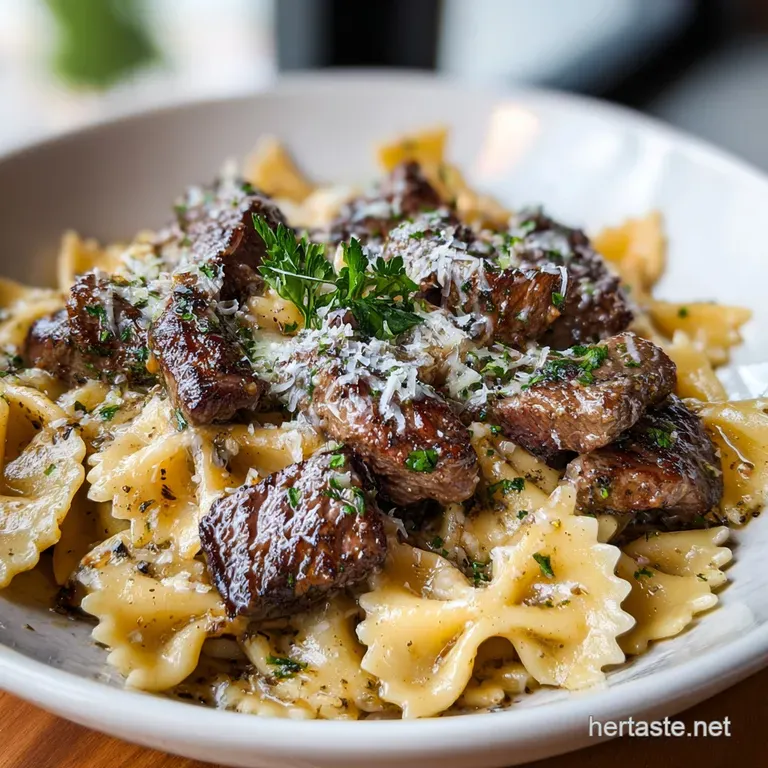
- Searing the beef. Place the 1 lb ground beef in a large skillet over medium high heat. Cook 5-7 minutes until deeply browned and no pink remains.Note: Don't break it up too much at first; let it crust.
- Sautéing the aromatics. Add the diced yellow onion to the beef. Cook 3-4 minutes until the onions are translucent.
- Blooming the spices. Stir in the 5 cloves of minced garlic, salt, pepper, Italian seasoning, and red pepper flakes. Sauté for 60 seconds until the garlic is fragrant.Note: Garlic burns fast, so keep it moving.
- Deglazing the pan. Pour in the 2 cups of beef broth. Scrape the bottom of the pan to release all the browned bits.
- Boiling the pasta. While the sauce base starts, cook the 12 oz bowtie pasta in a separate pot of salted water. Boil 2 minutes less than the package directions for perfect al dente.
- Creating the cream base. Lower the heat to medium and stir in the 1 cup of heavy cream. Simmer for 5 minutes until the liquid reduces slightly.
- Emulsifying the cheese. Gradually whisk in the 1.5 cups of parmesan cheese. Stir constantly until the sauce is smooth and glossy.
- Integrating the greens. Fold in the 2 cups of fresh baby spinach. Stir for 1-2 minutes until the leaves are wilted and vibrant.
- The final toss. Add the cooked bowtie pasta directly into the skillet. Toss thoroughly until every noodle is coated in the velvety sauce.
- Resting the dish. Turn off the heat and let it sit for 2 minutes. The sauce will thicken and cling to the pasta during this brief rest.
Resolving Texture and Flavor Hurdles
Sometimes the kitchen doesn't cooperate, but almost every mistake in a cream based pasta is fixable. The most common issue is a sauce that looks more like soup than a coating.
Why Your Sauce Is Too Runny
If your sauce isn't clinging to the bowties, it usually means the liquid wasn't reduced enough before adding the cheese, or the pasta carried too much water into the pan. You can fix this by simmering the dish on low for another 2 or 3 minutes.
The starch from the pasta will naturally thicken the liquid.
Grainy Parmesan Sauce Solutions
If your sauce looks "broken" or gritty, it is likely because the heat was too high when the cheese was added, or you used pre shredded cheese. To fix this, remove the pan from the heat and add a splash of warm heavy cream, whisking vigorously to bring the emulsion back together.
| Problem | Root Cause | Solution |
|---|---|---|
| Thin Sauce | Not enough reduction | Simmer 3 mins; pasta starch will thicken it |
| Bland Flavor | Lack of salt or acidity | Add a pinch of salt or a squeeze of lemon |
| Oily Finish | Beef wasn't drained well | Blot excess oil with a paper towel before adding broth |
Common Mistakes Checklist ✓ Grate your parmesan from a block (avoid pre shredded to prevent graininess). ✓ Do not overcook the pasta in the water (it finishes cooking in the sauce). ✓ Sauté garlic for only 60 seconds (burnt garlic ruins the entire batch).
✓ Use room temperature cream to prevent the sauce from "shocking" and curdling. ✓ Drain the beef if using a higher fat percentage than 90/10.
Smart Adjustments for Different Crowd Sizes
When you need to feed a crowd or just yourself, the ratios for this Creamy Parmesan Garlic Beef Bowtie Pasta change slightly. For a half batch, use a smaller 8 inch skillet and reduce the simmering time by about 20% to prevent the sauce from evaporating too quickly.
If you are doubling the recipe for a party, work in batches when browning the beef. Overcrowding the pan leads to steaming rather than searing, and you'll lose that "innovative" depth of flavor.
For the sauce, don't double the salt immediately; start with 1.5x the salt and adjust at the end, as the parmesan and beef broth already carry significant sodium.
- If you want a thicker sauce, add an extra 1/4 cup of parmesan.
- If you want more volume, add a can of drained diced tomatoes with the broth.
- If you want a lighter feel, substitute half the pasta with steamed broccoli florets.
Debunking Pasta and Cream Myths
One of the biggest misconceptions is that you need to rinse your pasta after boiling. This is actually the worst thing you can do! Rinsing removes the precious starch that helps the parmesan and cream adhere to the bowties. Keep that starch on the noodle for a "velvety" finish.
Another myth is that heavy cream will curdle if boiled. While high heat can be tricky for lower fat milks, heavy cream is remarkably stable due to its high fat content. You can simmer it confidently to reduce and thicken the sauce without fear of it breaking, provided you don't keep it at a rolling boil for extended periods.
Long Term Care and Waste Reduction
Storage Guidelines: This pasta keeps beautifully in the fridge for up to 3 to 4 days. Store it in an airtight glass container to keep the flavors fresh. When reheating, the sauce will have thickened significantly in the cold.
Add a splash of milk or beef broth before microwaving or heating on the stovetop to loosen it back into its silky state.
Freezing: I don't generally recommend freezing cream based pastas, as the dairy tends to separate and the pasta can become mushy upon thawing. However, you can freeze the cooked beef and onion mixture separately for up to 3 months.
Zero Waste Tips: Don't toss those parmesan rinds! Keep them in a bag in your freezer. The next time you make a soup or a "Meat Stock recipe", throw the rind in the pot. It adds an incredible depth of umami and saltiness that you just can't get from salt alone.
If you have leftover spinach that is starting to wilt, sauté it down with a bit of garlic and store it to toss into eggs the next morning.
Strategic Pairing for a Balanced Plate
Since this dish is rich and savory, you want something bright and acidic to balance the palate. A crisp arugula salad with a simple lemon vinaigrette is the perfect "personal touch" to cut through the garlic and cream.
For a more substantial side, roasted asparagus or broccolini with a sprinkle of red pepper flakes complements the flavors of the beef bowtie pasta perfectly. If you are feeling extra, a piece of crusty sourdough bread is essential for mopping up every last drop of that parmesan garlic sauce.
Trust me, you won't want to leave a single drop behind in the pan.
High in Sodium (⚠️)
1040 mg mg of sodium per serving (45% of daily value)
The American Heart Association recommends limiting sodium intake to about 2,300mg per day.
Tips to Reduce Sodium in Your Beef and Pasta Dish:
-
Broth Swap-30%
Replace the 2 cups of low-sodium beef broth with no-sodium beef broth. This simple substitution can significantly lower the sodium content.
-
Cheese Wisely-15%
Reduce the amount of Parmesan cheese used. Try using only 3/4 cup or choose a lower sodium cheese alternative. A little goes a long way!
-
Salt Control-25%
Eliminate the added kosher salt entirely and rely on the other seasonings. Taste the dish before adding any salt at all.
-
Flavor Boost
Enhance the flavor with fresh herbs like parsley, basil, or oregano. These add depth without any sodium.
-
Homemade Alternative-20%
Make your own beef broth. You can control the ingredients and sodium level by using beef bones and aromatic vegetables.
-
Rinse & Reduce-10%
Rinse the cooked pasta with water after draining. This can wash away some excess starch and sodium.
Recipe FAQs
Can I substitute the ground beef with leaner meat like 95/5 or ground turkey?
No, use 90/10 or slightly higher fat content beef. Leaner meats, like 95/5 beef or turkey, do not render enough fat to properly build the flavor foundation with the aromatics.
How to make the sauce less runny if it looks too thin after adding the pasta?
Simmer gently on low heat for 3 more minutes, stirring constantly. The starch released from the pasta will help emulsify and thicken the liquid quickly.
Is it true that using pre-shredded parmesan causes the sauce to turn grainy?
Yes, that is the leading cause of grainy texture in this dish. Pre-shredded cheese contains anti caking agents like cellulose which prevent smooth melting into the cream base.
How to prevent the garlic from tasting bitter during the sauté step?
Sauté the minced garlic for exactly 60 seconds before adding liquid. Keep it moving constantly over medium heat to bloom the flavor without letting the sugars scorch and turn bitter.
What is the best way to reheat leftovers without the sauce separating?
Reheat slowly on the stovetop, adding a splash of milk or broth first. The liquid rehydrates the sauce structure, preventing the dairy fats from separating out when warmed.
Do I need to use bowtie pasta, or can I substitute it with another shape?
No, substitutions are easy, but aim for ridged shapes. Shapes like penne or rotini work well because their crevices capture the velvety sauce, similar to how the ridges hold up the sauce in my roast chicken recipe.
How can I make this dish ahead of time for easier weeknight meals?
Brown the beef and sauté the onions/garlic up to two days ahead of time. Store the mixture separately from the cooked pasta and sauce components, combining them fresh when serving.
Parmesan Garlic Beef Bowtie
Ingredients:
Instructions:
Nutrition Facts:
| Calories | 651 calories |
|---|---|
| Protein | 38 g |
| Fat | 32 g |
| Carbs | 54 g |
| Fiber | 3 g |
| Sugar | 4 g |
| Sodium | 1040 mg |
