Mini Christmas Fruitcakes: Little Puddings, Big Cheer (The Maturing Recipe)
- Embracing the Tradition: Why Bake Mini Christmas Fruitcakes This Year?
- Essential Components for Ultimate Mini Christmas Fruitcakes
- Step-by-Step: Crafting and Maturing Your Individual Christmas Fruitcakes
- The Science of Sticky: Why This Maturing Recipe Delivers Complex Flavor
- Troubleshooting and Chef’s Notes for Flawless Holiday Baking
- Preparing for the Holidays: Storage and Preservation Guide
- Perfect Pairings: Serving Your Finished Mini Christmas Fruitcakes
- Recipe FAQs
- 📝 Recipe Card
Embracing the Tradition: Why Bake Mini Christmas Fruitcakes This Year?
When that first wave of holiday spice hits the oven, everything changes. You get that deep, sticky molasses scent mixed with warmed brandy and sharp citrus peel it’s pure Christmas magic.
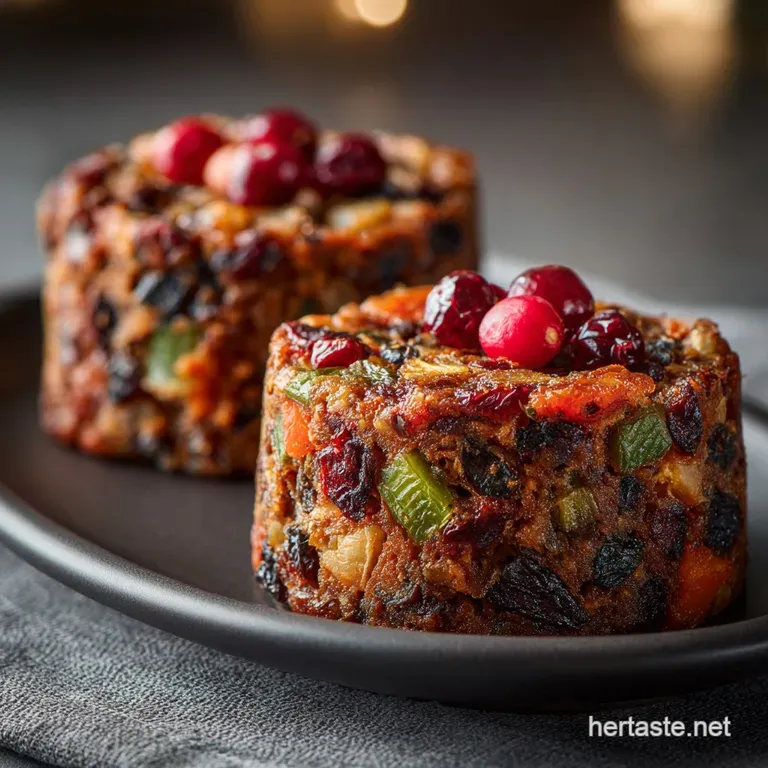
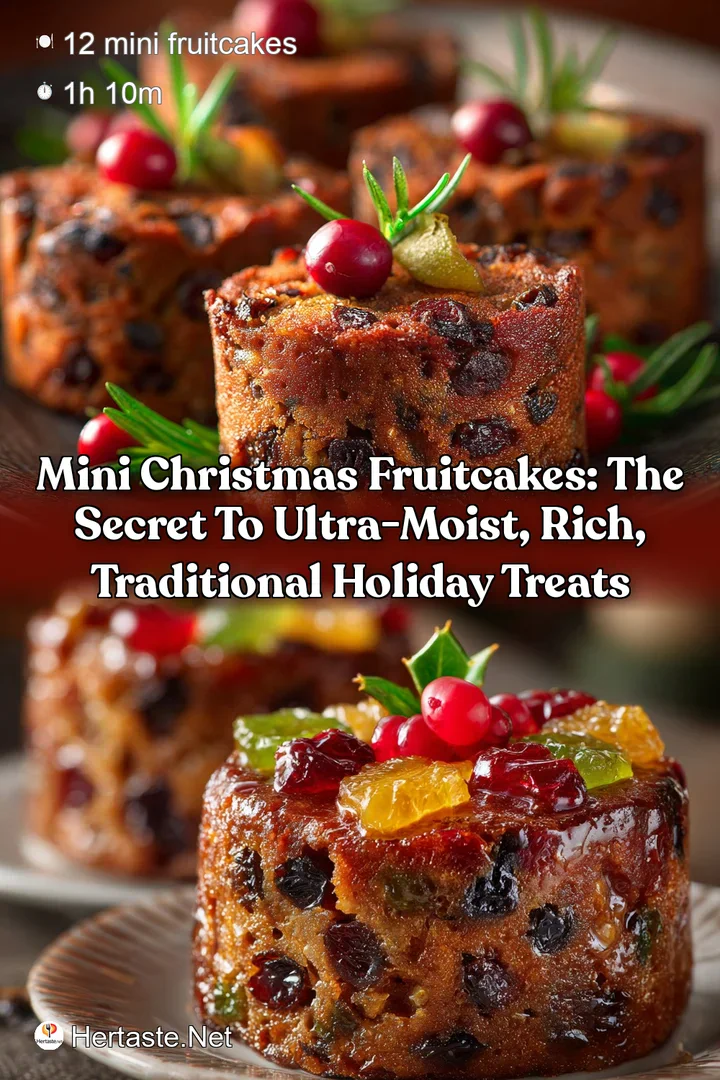
These rich, dense, mini Christmas fruitcakes are tiny slices of winter tradition, perfectly dark, deeply spiced, and unbelievably moist.
Let's be real, a massive 10 inch fruitcake is intimidating to bake and even harder to slice evenly. These clever individual Christmas fruit cakes, baked in standard muffin tins, are ready much faster and solve the whole issue of portion control.
They are absolutely perfect for last minute handmade gifts or for stashing in the freezer for unexpected visitors.
Forget the dry, doorstop fruitcakes of your childhood; we are making the good kind. We’ll use a low, slow bake and a secret maturation process to guarantee a truly festive fruitcake dessert that stays sticky and rich for weeks.
Get your spirits ready, because this is how you make proper, traditional holiday fruitcake effortlessly.
The Magic of Maturing: Feeding Your Fruitcakes for Superior Moisture.
This recipe uses the "feeding" method, which is non-negotiable for a truly superior fruitcake. Alcohol isn't just for flavor here; it acts as a preservative and a humectant. It pulls moisture from the air and into the cake, ensuring these delicious mini fruit cakes never, ever dry out.
Trust me, this weekly ritual is the key to deep, complex flavors.
Portion Control and Perfect Gifting: The Appeal of Individual Cakes.
Trying to convince a group of people to cut into a huge, highly decorated cake can be a pain. Baking them in individual portions means zero fuss! They slip easily into cellophane bags, they look adorable decorated with a little bow, and they travel beautifully.
Plus, if you’re trying to bake several types of mini christmas treats for a party, these are much faster to cool and store than a large cake.
Demystifying Fruitcake: A Quick Guide to Rich, Sticky Perfection.
Why do people fail at fruitcake? Usually, it's impatience or dry fruit. This recipe guarantees success because we soak the fruit before we even start mixing the batter. This ensures the fruit is soft and plump, not stealing moisture from your flour and butter mixture.
We also use a low baking temperature, which is essential for dense, high sugar batters.
Essential Components for Ultimate Mini Christmas Fruitcakes
The Dried Fruit Medley: Achieving Balance in Texture and Sweetness.
A successful fruitcake needs variety; relying solely on raisins makes it boring. I always use a mix of sultanas, dark raisins, and currants for a triple punch of texture. Adding glacé cherries and citrus peel brings necessary color and that slightly bitter tang to balance the sweetness.
| Ingredient You Need | Why It Works | Substitution Idea |
|---|---|---|
| Mixed Dried Fruit | Provides the necessary body and sweetness. | Try dried cranberries, chopped apricots, or figs for variety. |
| Glacé Cherries | Visual appeal and a soft chew. | Candied orange slices or dried cranberries soaked in orange juice. |
| Black Treacle (Molasses) | Gives that deep, traditional dark color and complexity. | Substitute with golden syrup, though the color will be lighter. |
Choosing Your Spirit: Brandy, Rum, or Non-Alcoholic Alternatives.
You need a good quality spirit here because you will taste it. Dark rum, particularly spiced varieties, offers warming notes that pair wonderfully with cinnamon. My absolute favourite, though, is a quality Brandy; it has a smoothness that really shines as the cake matures.
If you are skipping the alcohol, you must use strong black tea or concentrated orange juice to achieve the deep flavor, and then feed the cakes weekly with simple syrup.
The Spice Cabinet Strategy: Layering Warmth (Clove, Cinnamon, Nutmeg).
Don’t skimp on the spices! Fruitcake isn't about one dominant flavor; it’s about a chorus. We layer in cinnamon, nutmeg, and mixed spice (which usually contains cloves and allspice). Always use freshly grated nutmeg if you can, it makes a huge difference to the aroma.
Flour and Fat Focus: Ensuring a Tender Crumb.
We use softened butter, not melted, to achieve that light, fluffy base when we cream it with the sugar. A brilliant trick is adding ground almonds (almond meal) to the dry mix. It adds fat and moisture, guaranteeing a tender crumb structure that holds up beautifully to the heavy, sticky fruit.
step-by-step: Crafting and Maturing Your Individual Christmas Fruitcakes
Phase I: Soaking the Fruit Base (Immediate Flavor Infusion).
This is the most critical first step. Combine your dried fruits, spices, and half of your chosen spirit with the water or tea in a saucepan. Heat it just until it starts to simmer and the fruit plumps up. Turn off the heat immediately and let it sit for at least an hour.
The fruit must be completely cool before adding it to the batter.
Phase II: The Creaming and Mixing Method.
Creaming the butter and brown sugar until pale and fluffy incorporates essential air, preventing a rock hard cake. Add your eggs one at a time, mixing well. My mistake once was adding the eggs too fast, and the batter looked curdled it was a disaster!
Sift your flour and baking powder together, then gently fold in the fruit before adding the rest of the flour. This technique helps distribute the heavy fruit evenly.
Baking the Minis: Adapting Temperature and Time for Muffin Tins.
We bake these mini fruitcakes at a low 300°F (150°C). Since they are dense, a high heat will burn the outside before the centre cooks. Lining your muffin tins properly with paper liners or small parchment circles is key for easy removal.
Bake for about 45– 50 minutes until a skewer comes out clean.
Phase III: The Maturing Process (The Weekly Feeding Schedule).
Once they are cool, grab your pastry brush. Use a skewer or fork to poke holes all over the top of each little cake. Now, lightly brush the tops with your reserved spirit. Wrap them tightly parchment, then foil and tuck them away in an airtight container in a cool place.
Repeat this feeding process once a week, minimum of four times, for the best result.
The Science of Sticky: Why This Maturing Recipe Delivers Complex Flavor
Optimal Crumb Structure: Avoiding a Dense or Dry Finish.
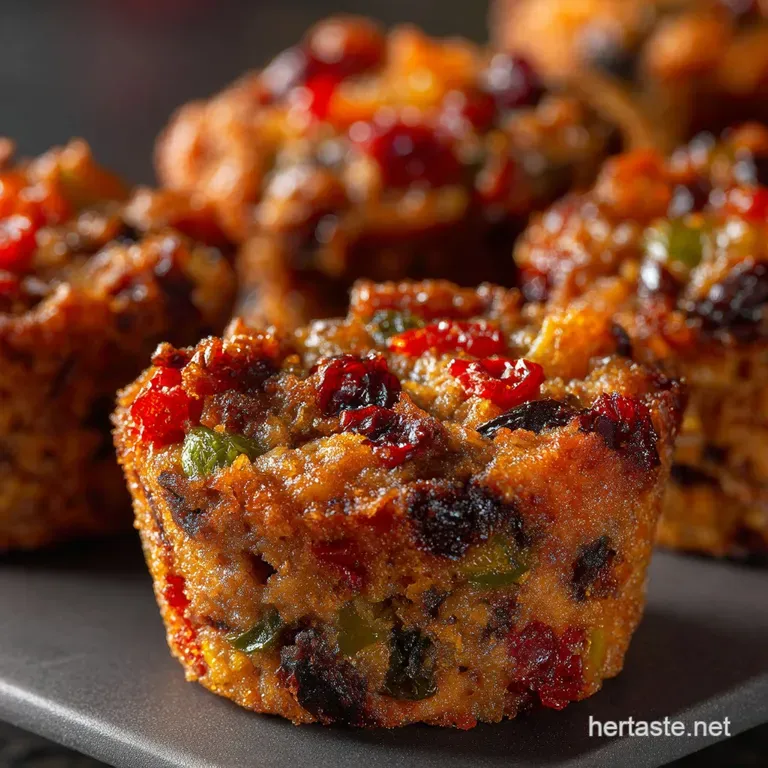
When we pre-soak the fruit, we prevent the fruit from drawing moisture out of the flour mixture during the bake. This maintains the tender, moist crumb structure. If your cake turns out dry, the fruit was likely not adequately plumped before baking.
Humectancy and Preservation: How Spirits Keep Cakes Moist.
Alcohol is a phenomenal humectant, meaning it helps the food retain moisture. The slow introduction of spirits over several weeks allows the alcohol to seep in deeply and evenly. This stops mold growth and ensures the individual fruit cakes stay deliciously sticky for months, if they last that long!
The Maillard Reaction and Long Term Flavor Development.
The long, cool storage time allows the complex sugars in the dried fruit and the alcohol to interact and break down. This slow chemical process, similar to aging wine, develops deep, almost toffee like, nutty flavors that you simply cannot replicate with a same day bake.
Troubleshooting and Chef’s Notes for Flawless Holiday Baking
Preventing Sinking Fruit: The Dusting Technique.
If you struggle with heavy fruit sinking to the bottom, lightly toss your pre-soaked fruit (after draining any excess liquid) in 1 tablespoon of flour before folding it into the batter. This thin coating creates friction, helping the fruit suspend more evenly in the dense batter.
Testing for Doneness in Dense, Small Cakes.
Because these cakes are so dark and dense, the visual cue isn't enough. Always use the skewer test. Insert it directly into the center; it should come out clean, perhaps with a crumb or two sticking to it, but definitely not wet batter.
Chef’s Note: If you notice the edges are darkening too quickly, loosely tent the entire muffin tin with a piece of aluminum foil for the remaining bake time. Low and slow is the fruitcake motto!
Preparing for the Holidays: Storage and Preservation Guide
These festive fruitcake desserts keep wonderfully, which is why they are ideal for baking far ahead of time.
- Maturing Storage: Store wrapped and fed cakes in a cool, dark place (like a pantry) in an airtight tin for up to three months. They do not need refrigeration during the maturation phase.
- Refrigeration: Once matured, if you prefer to stop the feeding process, you can refrigerate them for extra security for up to four months.
- Freezing: Yes, they freeze brilliantly! After the initial maturation period, wrap each cake tightly in plastic wrap, then foil, and freeze for up to 6 months. To reheat, simply thaw overnight on the counter. Do not microwave; it changes the texture.
Perfect Pairings: Serving Your Finished Mini Christmas Fruitcakes
These little puddings deserve a special presentation, especially if they’ve been maturing for weeks!
- Marzipan Toppers: The most traditional way is to top them with a thin layer of almond paste or marzipan before glazing.
- Cheese Board Complement: Serve small wedges alongside hard, sharp cheeses. If you’re planning a holiday spread with classics like Christmas Eve Appetizers: Elegant, Flaky Brie Rolls Made Easy , these fruitcakes offer a perfect sweet contrast.
- Warming Drinks: A proper slice needs a proper drink. They pair beautifully with a festive hot drink like Christmas Punch: Best Easy Spiced Cordial Recipe for a Crowd . The spices just meld together perfectly.
Recipe FAQs
Q1: Why are my Mini Fruitcakes dry, even though they have been 'fed'?
Dryness is usually caused by slight overbaking or insufficient liquid in the batter initially. Ensure you use an oven thermometer, as high heat can prematurely dry out the fruit. If the cakes are already baked, increase the frequency of your feeding process slightly, making sure the cakes are thoroughly wrapped between applications to trap the moisture inside.
Q2: Can I make this recipe entirely non-alcoholic, replacing the spirits used for feeding?
Yes, you can substitute the brandy or rum with strongly brewed black tea, orange juice, or apple juice. However, you must be aware that alcohol acts as a powerful preservative, so the non-alcoholic cakes will require refrigeration after 10 days to prevent spoilage.
Only moisten them weekly, rather than bi-weekly, to avoid sogginess.
Q3: What is the best method for storing the Mini Fruitcakes, and how long do they last?
Once fully matured (fed for 3 4 weeks), wrap each mini cake tightly in parchment paper, then foil, and store them in an airtight container in a cool, dark pantry. Properly "fed" cakes can last 2 to 3 months at cool room temperature.
For longer storage, you can freeze the tightly wrapped cakes for up to 6 months; just thaw them overnight before consumption.
Q4: My fruitcakes cracked on top during baking. What caused this, and how can I prevent it?
Cracking is a common sign that the oven temperature was slightly too high, causing the exterior crust to set before the center had finished rising. To prevent this, reduce your oven temperature by 10°F (about 5°C) and consider placing a small, heatproof tray of water on the bottom rack of your oven to introduce a little steam.
Q5: Can I prepare the dried fruit mixture ahead of time, and should I soak it before adding it to the batter?
Absolutely, preparing the fruit mixture days in advance is highly recommended. Soaking the dried fruit in the required amount of liquid (alcohol or juice) overnight, or even for 24 hours, is crucial.
This plumps the fruit, preventing it from absorbing moisture from the cake batter during the baking process, resulting in a much moister cake.
Q6: Can I bake this batter as a single large fruitcake instead of individual mini cakes?
While possible, the baking time and temperature must be drastically adjusted. A single cake made from this recipe would require baking at a lower temperature (around 300°F/150°C) for 3 to 4 hours.
You must line the pan walls with a double layer of parchment paper to prevent the edges from scorching before the center cooks through.
Q7: I need a gluten-free version. Does the structure of this dense cake support flour substitutions?
Yes, this fruitcake is highly adaptable to gluten-free baking due to its dense structure and high fruit content. Substitute the all-purpose flour with a high-quality 1:1 gluten-free baking blend that contains xanthan gum for stability. No other modifications to the recipe should be necessary for a successful result.
Mini Christmas Fruitcakes For Gifting
Ingredients:
Instructions:
Nutrition Facts:
| Calories | 84 kcal |
|---|---|
| Protein | 1.0 g |
| Fat | 2.0 g |
| Carbs | 18.0 g |
