Honey Glaze
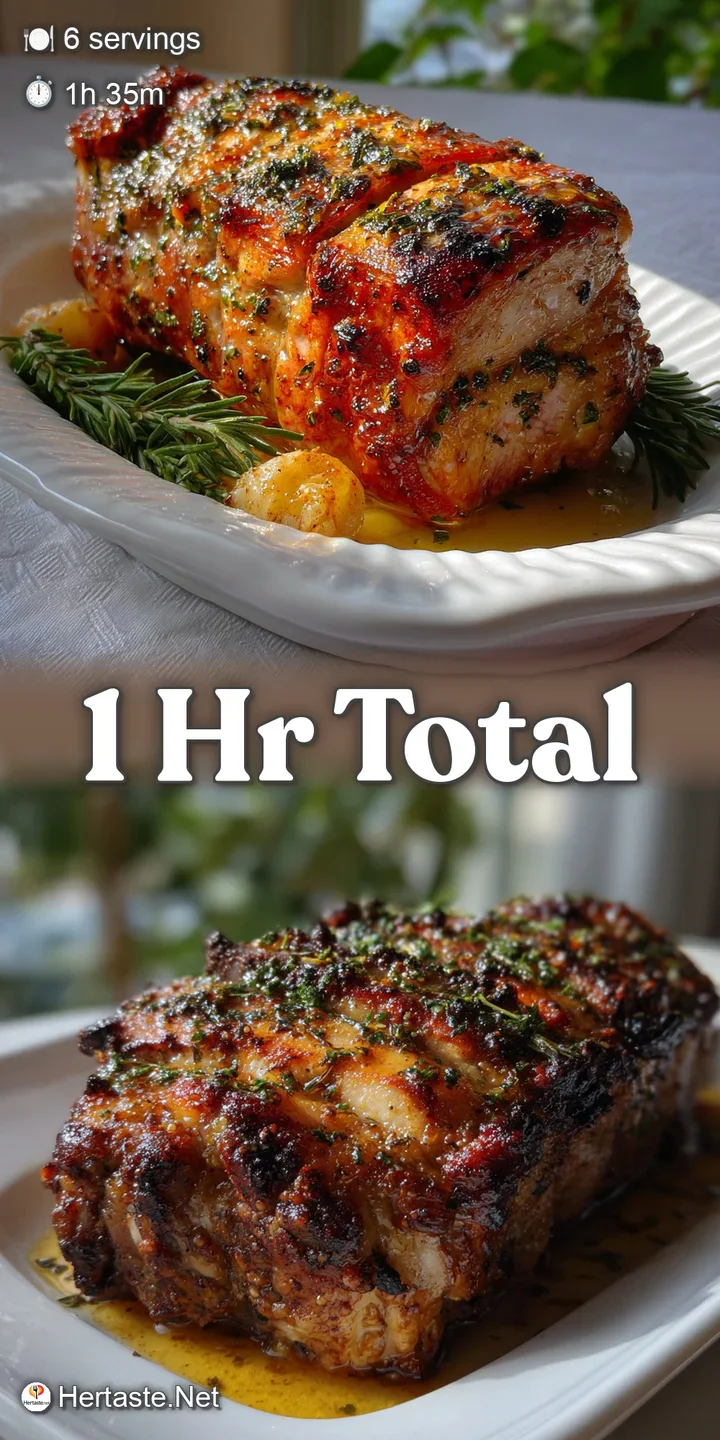
- Effort/Time: 1 hour 35 mins total-time
- Flavor Hook: Contrast-heavy profile featuring mahogany-crusted pork and bright, crisp-tender apples
- Perfect for: Low-stress holiday hosting and traditional good-luck-themed dinners
- Master the Ultimate New Years Day Easy Dinner Idea with Roasted Pork
- The Culinary Physics of Brining and Heat Transfer
- Precision Metrics for Your Holiday Roasting Protocol
- The Flavor Architecture: Selecting Your Seasonal Elements
- Essential Tools for Achieving Technical Mastery
- Phase-Based Assembly for a Harmonious Flavor Map
- Why Your Pork is Dry: Solving Texture Failures
- Forging Your Own Path with Flavor Twists
- ⚗️ The Scaling Lab: The Physics of Quantity
- Common Myths Debunked
- Preservation Strategies and Thermal Mass Reheating
- Curating the Plate with Textural Contrasts
- Recipe FAQs
- 📝 Recipe Card
The Diamond Hook: From Dry Disaster to Succulent Success
There is nothing more demoralizing than presenting a centerpiece roast that has the structural integrity of a chalkboard eraser. I remember my first solo New Year's dinner; I spent forty dollars on a beautiful loin, followed the "standard" over high heat instructions, and ended up serving slices of gray, moisture depleted protein that required a gallon of water to swallow.
It wasn't just a waste of a premium cut; it felt like a failure of hospitality. That expensive nightmare taught me that roasting is not a "set it and forget it" game it is a study in heat transfer and moisture management.
I once thought that "more heat equals better crust," but I destroyed three different roasts before realizing that the Maillard reaction doesn't require a blowtorch. I was rushing the process, pulling the meat out the moment the timer beeped rather than listening to the internal physics of the muscle fibers.
This taught me that the difference between a "good" dinner and a masterclass level meal lies in the nuances of protein denaturation and the strategic application of acids to break down connective tissue.
The secret to this New Years Day Easy Dinner Idea with Roasted Pork isn't a complex spice blend; it's the scientific interplay between the osmotic pressure of the salt and the enzymatic breakdown provided by the apple cider.
We aren't just cooking meat; we are engineering a texture that is simultaneously shattering on the exterior and velvety within. This method ensures that the lean pork loin remains plump with its own juices, while the surrounding aromatics transform into a caramelized landscape of salt, fat, and acid.
Master the Ultimate New Years Day Easy Dinner Idea with Roasted Pork
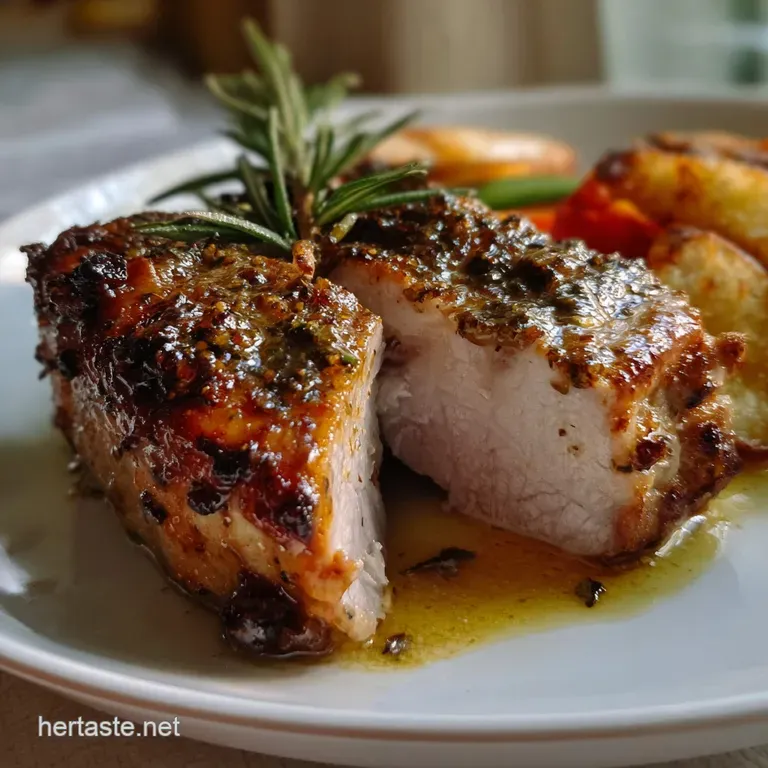
This simple recipe provides a delicious and easy dinner idea for New Year's Day featuring roasted pork. We focus on a contrast story: the sharp, fermented tang of the sauerkraut meeting the floral sweetness of honey.
This isn't your grandmother’s mushy pot roast; it’s a vibrant, texture focused meal that brings a fresh perspective to holiday traditions. By using a boneless pork loin, we have a uniform canvas that allows for precise temperature control, ensuring every slice is as succulent as the center.
The Science of Why it Works
Protein Denaturation Control: Slow roasting at a moderate temperature prevents the muscle fibers from contracting too violently, which would otherwise squeeze out internal moisture like a wrung out sponge.
Maillard Glaze Synergism: The glucose in the honey reacts with the pork’s surface amino acids at 140°C, creating a mahogany crust and complex aromatic compounds that add depth without long term braising.
The Culinary Physics of Brining and Heat Transfer
The success of this dish relies on managing the "thermal mass" of the 1.36 kg (3 lbs) pork loin. Because the loin is a lean muscle, it lacks the internal marbling of a shoulder cut. This means we must rely on external fats and "osmotic seasoning" to keep the interior hydrated.
When we apply the Diamond Crystal Kosher Salt, it initially draws moisture out, but given 20 minutes, that salty brine is reabsorbed into the fibers, seasoning the meat deeply and altering the protein structure to hold more water during the roasting process.
When we introduce the sauerkraut and honeycrisp apple bed, we aren't just adding flavor; we are creating a "moisture controlled micro environment." The steam rising from the apple cider and the natural juices of the onion prevent the bottom of the roast from scorching.
This stovetop-to-oven transition allows us to build a foundation of fond (those brown bits on the bottom of the pan) that eventually emulsifies with the honey and Dijon to create a self basting lacquer.
| Ingredient | Chemical/Physical Role (Science) | The Pro Secret (Why This Matters) |
|---|---|---|
| 3 lbs Pork Loin | Myofibrillar protein structure | Requires pull temp of 145°F to avoid "sawdust" texture |
| Apple Cider | Acetic acid and fructose catalyst | Breaks down surface proteins while accelerating browning |
| Sauerkraut | Lactic acid fermentation | Acts as a palate cleanser against the rich pork fat |
| Honey | Hygroscopic sugar source | Attracts and holds moisture while creating a sticky, lacquered finish |
Precision Metrics for Your Holiday Roasting Protocol
To achieve a masterclass result, we must respect the timeline of heat. This recipe yields 6 servings and requires a total of 1 hour 35 mins. The 20 minutes of prep time is non-negotiable; this is where the "dry brining" happens.
If you skip this, the salt will only sit on the surface, leaving the center bland. The 1 hour 15 mins of cook time is a guideline your true north must be a digital meat thermometer.
Chef's Tip: Freeze your honey for 5 minutes before measuring. It will stay more viscous, allowing you to coat the pork with a thicker layer that won't immediately slide off into the pan during the initial heat blast.
The Flavor Map
- Richness: Pork fat, extra virgin olive oil
- Brightness: Apple cider, Maille Dijon Mustard
- Crunch: Shattering pork crust, honeycrisp apples
- Umami: Sautéed onions, fermented sauerkraut
The Flavor Architecture: Selecting Your Seasonal Elements
Choosing the right components for your New Years Day Easy Dinner Idea with Roasted Pork is the difference between a mediocre meal and a storytelling experience. We avoid basic ingredients in favor of those that offer specific chemical advantages.
- 3 lbs boneless pork loin roast: Why this? Lean but uniform shape allows for even heat distribution.
- 3 tbsp extra virgin olive oil: Why this? High smoke point for searing while adding polyphenols.
- 4 cloves garlic, minced: Why this? Sulfur compounds create a pungent aromatic base.
- 1 tbsp fresh rosemary, finely chopped: Why this? Woodsy oils stand up to long roasting times.
- 1 tbsp fresh thyme, finely chopped: Why this? Adds a floral top note to the heavy meat.
- 2 tsp Diamond Crystal Kosher Salt: Why this? Large flakes allow for better coverage and gradual dissolving.
- 1 tsp black pepper, freshly cracked: Provides heat and texture.
- 1/4 cup apple cider: Why this? Malic acid provides a brighter tang than white vinegar.
- 2 tbsp honey: Provides the sugar for the Maillard reaction.
- 1 tbsp Maille Dijon Mustard: Why this? Contains mucilage which acts as a stabilizer for the glaze.
- 2 cups sauerkraut, drained: The traditional "good luck" fermented element.
- 1 medium sweet onion, sliced into rounds: Creates a natural roasting rack.
- 1 large honeycrisp apple, sliced: Holds its shape under high heat.
| Original Ingredient | Substitute | Why It Works |
|---|---|---|
| Apple Cider | Unfiltered Apple Juice | Similar sugar content, though slightly less acidic. |
| Sauerkraut | Shredded Cabbage + 1 tbsp Vinegar | Mimics the crunch and acidity without fermentation notes. |
| Honey | Maple Syrup | Different flavor profile but similar sugar concentration for browning. |
| Fresh Rosemary | Dried Rosemary (use 1 tsp) | Concentrated oils, though less vibrant than fresh. |
Essential Tools for Achieving Technical Mastery
For this New Years Day Easy Dinner Idea with Roasted Pork, equipment choice is a matter of thermal mass. A flimsy roasting pan will warp and cause uneven cooking. I highly recommend using a Lodge 12 inch Cast Iron Skillet.
The heavy iron retains heat, which means when you place the room temperature pork into the pan, the temperature doesn't plummet. This prevents the meat from "stewing" in its juices and ensures a proper sear.
If you don't have cast iron, a Le Creuset Dutch Oven is an excellent alternative. The high walls help contain the splatter of the searing process and create a small convection oven effect within your actual oven. You will also need a Thermapen Digital Thermometer.
Without it, you are essentially gambling with your $40 roast.
Phase Based Assembly for a Harmonious Flavor Map
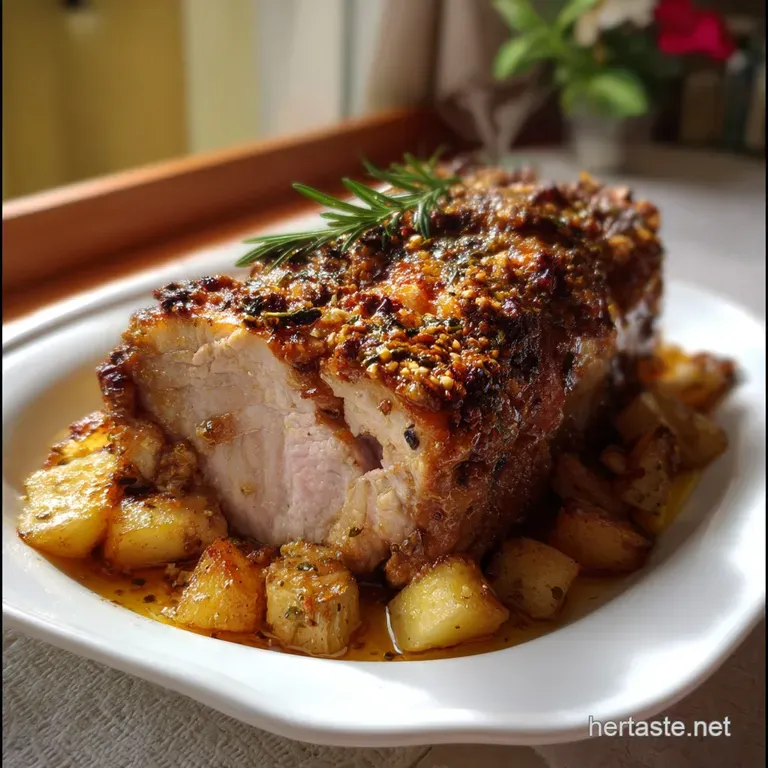
- Pat the 3 lbs pork loin completely dry with paper towels. Note: Surface moisture creates steam, which prevents the Maillard reaction from occurring.
- Combine 2 tsp kosher salt, 1 tsp pepper, minced garlic, rosemary, and thyme in a small bowl.
- Rub the herb mixture over the entire surface of the pork until every inch is coated in a green speckled crust.
- Heat 3 tbsp olive oil in your Lodge skillet over medium high heat until the oil shimmers and a faint wisp of smoke appears.
- Sear the pork loin for 3 minutes per side until a deep mahogany crust forms and the meat releases easily from the pan.
- Whisk the apple cider, honey, and Maille Dijon mustard until the emulsion is smooth and pale gold.
- Remove the pork briefly and layer the onion rounds, sauerkraut, and honeycrisp apple slices in the pan.
- Place the pork back on top of the vegetables until it sits securely like a crown on a bed of greens.
- Pour the cider honey mixture over the pork until the glaze clings to the seared crust.
- Roast at 375°F (190°C) for 1 hour 15 mins until the internal temperature hits 145°F and the apples look translucent and soft.
- Rest the meat on a cutting board for 15 minutes until the juices redistribute and the "hissing" sound of the internal steam subsides.
The 3 Bullet Decision Shortcut
- If you want maximum crunch, sear the pork for an extra 2 minutes on the fat cap side.
- If you want softer sauerkraut, add an extra 1/4 cup of cider halfway through roasting.
- If you want a thicker glaze, whisk 1 tsp of cornstarch into the cider mixture before pouring.
Why Your Pork is Dry: Solving Texture Failures
The most common issue with a New Years Day Easy Dinner Idea with Roasted Pork is the dreaded "overcook." Pork loin has very little connective tissue, meaning once you pass 155°F (68°C), the protein fibers tighten permanently, squeezing out all juiciness.
This is often exacerbated by "carry over cooking," where the internal temperature continues to rise after the meat is removed from the oven.
Troubleshooting Your Roast
| Problem | Root Cause | The Fix | Pro Protocol |
|---|---|---|---|
| Meat is tough/dry | Internal temp exceeded 150°F | Pull at 145°F exactly | Use a probe thermometer set to alert at 143°F. |
| Glaze is burnt | Sugar scorched at high heat | Add 2 tbsp water to the pan | Tent with foil if browning occurs too quickly. |
| Sauerkraut is mushy | Excessive liquid/over cooking | Drain sauerkraut thoroughly | Add apples halfway through to maintain texture. |
Forging Your Own Path with Flavor Twists
While this recipe is built on the contrast of honey and mustard, you can forge your own path by altering the aromatic profile. If you find the sauerkraut too aggressive, you might pair the pork with a side that has a different textural profile, such as this Eggplant Parmesan recipe which offers a crispy, non-greasy alternative for your New Year's spread.
Stovetop vs. Oven Comparison
| Feature | Stovetop Searing | Oven Roasting |
|---|---|---|
| Heat Source | Direct (Conduction) | Indirect (Convection) |
| Primary Goal | Maillard Reaction/Crust | Even Core Cooking |
| Time | 10 12 minutes | 1 hour 15 mins |
⚗️ The Scaling Lab: The Physics of Quantity
When you decide to double this New Years Day Easy Dinner Idea with Roasted Pork for a larger crowd, the laws of physics change. You cannot simply double the heat or the time.
- The Square Cube Law: A 6 lb roast is not just twice as long; it is twice as thick. This means the center will take significantly longer to reach 145°F while the outside risks becoming "jerky." Fix: Reduce the oven temperature to 350°F and increase time by 40%.
- Pan Crowding (Maillard Killer): Putting two large roasts in one skillet will drop the pan temperature instantly. The meat will steam in its own moisture rather than searing. Mandatory instruction: Sear in two separate batches or use two separate skillets.
- Flavor Saturation: For spices and salt, scale to 1.5x rather than 2x. Concentrated aromatics like rosemary can become medicinal if doubled strictly by weight.
Common Myths Debunked
Myth: You must cook pork until the juices run clear (or it’s white throughout). Truth: Modern pork is safe at 145°F (medium rare to medium). A slight blush of pink is the sign of a succulent, scientifically perfect roast.
Myth: Searing "locks in" the juices. Truth: Searing creates flavor via the Maillard reaction but actually causes the surface to lose moisture. The "juiciness" comes from proper resting and not overcooking the core.
Preservation Strategies and Thermal Mass Reheating
To keep your New Years Day Easy Dinner Idea with Roasted Pork tasting fresh on January 2nd, you must prevent oxidation. Slice only what you need. Keeping the roast whole preserves the internal moisture. For a festive follow-up, these leftovers go beautifully alongside a SugarFree Caramel Sauce recipe drizzled over baked apples, or even as a savory counterpoint to Homemade Apple Pie Bars recipe.
- Storage: Store in an airtight container for up to 4 days. Wrap tightly in foil before placing in the container to minimize air contact.
- Freezing: Slice the pork, wrap individual portions in plastic wrap, and freeze for up to 3 months.
- Reheating: Avoid the microwave; it turns pork into rubber. Place slices in a pan with a splash of apple cider, cover, and heat on low until just warmed through (approx. 120°F).
💡 ZERO WASTE PHILOSOPHY
Don't discard the onion skins or apple cores. Transform: Simmer them with the pork trimmings and some water for 2 hours to create a quick pork stock.
Science: The pectin in the apple cores and the tannins in the onion skins add body and a deep amber color to future soups or gravies.
Curating the Plate with Textural Contrasts
When serving this New Years Day Easy Dinner Idea with Roasted Pork, the goal is to highlight the contrast between the velvety meat and the bright, acidic crunch of the sauerkraut. Plate a thick slice of pork atop a generous heap of the warm cabbage and onions.
To round out the meal, consider starting with some 34 New Year's recipe snacks to keep guests occupied while the roast performs its final 15 minute rest. The resting phase is the most difficult part of the recipe the aroma will be intoxicating but it is the final technical hurdle to ensuring your New Year starts with a meal that is as innovative as it is traditional.
Precision Checkpoints
- Internal Temp: Pull the pork at exactly 145°F (63°C).
- Resting Time: A minimum of 15 minutes to allow fibers to relax.
- Sear Color: Aim for "G6" on a browning scale a deep, dark mahogany, not pale tan.
Recipe FAQs
What is the target internal temperature for the roasted pork loin?
Pull the pork at 145°F (63°C). This temperature ensures the meat is cooked safely while retaining maximum succulence by preventing excessive protein contraction.
Can I substitute maple syrup for the honey in the glaze?
Yes, use maple syrup as a substitute. Maple syrup has a different flavor profile but similar sugar concentration needed to promote the Maillard reaction on the crust.
Why did my roast turn out dry despite following the timing instructions?
Internal temperature exceeded 150°F, causing fiber contraction. Carry over cooking causes the core temperature to rise 5-10 degrees after removal, leading to moisture loss.
- Use a digital probe thermometer
- Rest the meat for a minimum of 15 minutes
- Use a heavier cast iron pan for stable heat
Should I sear the pork before roasting it in the oven?
Yes, searing provides the Maillard crust. Direct heat creates complex flavor compounds on the surface, which is superior to the indirect heat of roasting for crust formation.
Is resting the pork loin for 15 minutes truly necessary?
Resting is mandatory for juice redistribution. This time allows the muscle fibers, which tightened under heat, to relax and reabsorb the internal moisture released during cooking.
Does searing the meat really lock in the juices?
Myth: Searing locks in juices. Truth: Searing promotes flavor via the Maillard reaction but actually causes initial surface dehydration; juiciness is determined by the final core temperature.
What is the best way to reheat leftovers without drying them out?
Cover slices in a pan with added apple cider. Avoid the microwave; instead, gently warm covered over low heat until the internal temperature just reaches 120°F to prevent protein tightening.
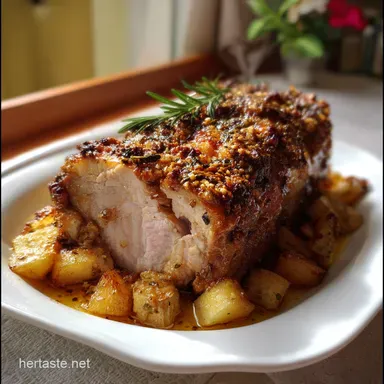
Easy Roasted Pork Dinner
Ingredients:
Instructions:
Nutrition Facts:
| Calories | 462 kcal |
|---|---|
| Protein | 49.6 g |
| Fat | 21.2 g |
| Carbs | 18.4 g |
| Fiber | 3.2 g |
| Sugar | 11.8 g |
| Sodium | 1055 mg |
