Dutch Baby Pancake: Tangy Lemon Powdered Sugar Finish
- Introduction & Overview — Dutch Baby Pancake
- Quick Facts: Time, Yield & Difficulty
- Ingredients & Substitutions — Dutch Baby Pancake
- Measuring and ingredient prep
- Flavor variations and thoughtful add-ins
- Step-by-Step Instructions — Dutch Baby Pancake
- Equipment and pan choice
- Finishing touches and plating
- Why This Recipe Works
- Chef's Tips & Common Mistakes
- Storage & Freezing — Dutch Baby Pancake
- Serving Suggestions
- Recipe FAQs
- 📝 Recipe Card
Introduction & Overview Dutch Baby Pancake
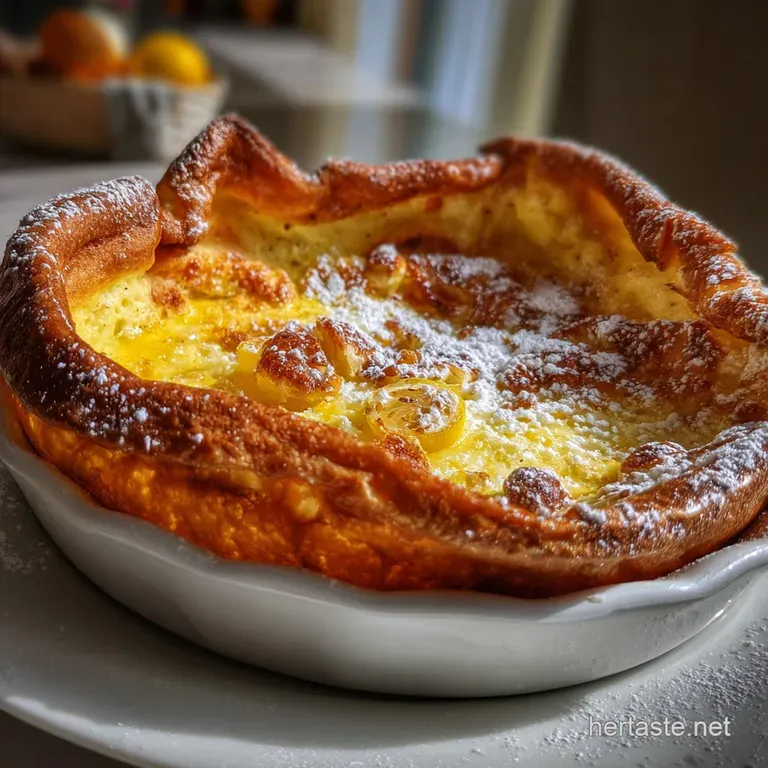
This Dutch Baby Pancake puffs up like a golden flower, the edges crackling with a buttery shatter and the center sighing into a tender, custardy pillow. I still get that warm, citrusy steam when I dust it with powdered sugar and squeeze lemon over the top.
This Baby (German Pancake) recipe is a lifesaver on lazy weekends and surprise guests alike it’s fast, cheap, and looks like you spent hours. Seriously, you blend, heat a skillet, pour, and bake; the rest is dramatic steam and applause.
So let’s crack on. Below is the complete Dutch Baby Pancake (German Pancake) Recipe with exact steps, sensory cues, swaps, and the little mistakes I learned the hard way.
Quick Facts: Time, Yield & Difficulty
Dutch Baby Pancake cooks quickly and makes a lovely centerpiece for brunch.
- Prep: 10 minutes active (plus 10 minutes resting optional)
- Cook: 20– 25 minutes (bake until deeply puffed and golden)
- Total: 40– 45 minutes including optional rest and plating
- Yield: Serves 4 generous portions from a 10 12 inch skillet
- Difficulty: Easy Medium (hot pan and fast serving are the two tricks)
Introduction Detail 1
Dutch Baby Pancake needs a screaming hot skillet for the puff and crispy edges.
Short batter rest helps. It smooths lumps and gives a silkier texture.
Introduction Detail 2
Dutch Baby Pancake shines with minimal toppings powdered sugar and lemon are classic.
But it's forgiving with berries or a drizzle of maple syrup too.
Ingredients & Substitutions Dutch Baby Pancake
Dutch Baby Pancake batter is ridiculously short and forgiving. Use these and you’ll be fine.
- 3 large eggs, room temperature — substitute: 3 large pasteurized eggs (same volume), or 2 large eggs + 1 egg white for lighter rise.
- 3/4 cup (180 ml) whole milk — substitute: 2% milk, or unsweetened almond/oat milk (texture slightly lighter).
- 3/4 cup (95 g) all-purpose flour, sifted — substitute: 1:1 gluten-free blend (results more delicate), or up to 25% whole wheat pastry for nuttier flavor.
- 2 tablespoons (25 g) granulated sugar — substitute: coconut sugar or omit for savory versions.
- 1/4 teaspoon fine sea salt — substitute: regular table salt (use slightly less).
- 1 teaspoon pure vanilla extract (optional) — substitute: lemon zest for citrus notes instead.
- 4 tablespoons (60 g) unsalted butter total (2 tbsp for batter/pan each) — substitute: ghee or clarified butter for higher smoke point, or neutral oil like avocado oil.
- Zest of 1 lemon (optional) — substitute: 1/2 teaspoon cinnamon for warmth or omit.
Chef's Note: If you’re avoiding dairy, use a high fat oat milk and ghee substitute; the rise will be slightly gentler but still very tasty.
| Ingredient | Quick Substitute |
|---|---|
| Whole milk | 2% milk or unsweetened almond/oat milk |
| All-purpose flour | 1:1 gluten-free blend or whole wheat pastry (25%) |
| Butter | Ghee or neutral oil (avocado) |
Measuring and ingredient prep
Dutch Baby Pancake benefits from room temperature eggs and accurately measured flour.
I always whisk the flour a little to remove clumps. The batter should pour like heavy cream.
Flavor variations and thoughtful add-ins
Dutch Baby Pancake can swing sweet or savory with tiny swaps.
- For sweet: stir in lemon zest to the batter and top with powdered sugar and fresh berries.
- For savory: omit sugar and vanilla, add 1/2 cup grated cheese and a tablespoon of chopped herbs.
Ingredients Detail 1
Dutch Baby Pancake with lemon and powdered sugar is the classic.
It’s bright, tart, and somehow nostalgic in every bite.
Ingredients Detail 2
Dutch Baby Pancake can handle fruit folded on top after baking or thin apple slices sautéed beforehand.
Try warm apples tossed in butter and brown sugar for a cinnamon apple spin (I adore the linked version).
(See my linked Showstopping Cinnamon Apple Dutch Baby: Showstopping Cinnamon Apple Dutch Baby The Ultimate Puff Pancake Recipe )
step-by-step Instructions Dutch Baby Pancake

Dutch Baby Pancake is about timing: hot pan, thin batter, and no peeking while it bakes.
- Preheat oven to 425°F (220°C). Place a 10 12 inch ovenproof skillet on the center rack while the oven heats. Wait until the skillet is screaming hot.
- In a blender, combine 3 eggs, 3/4 cup milk, 3/4 cup flour, 2 tbsp sugar, 1/4 tsp salt, and 1 tsp vanilla. Blend 20 30 seconds until silky. Batter should be thin and pourable.
- Optional: let the batter rest 10 minutes for extra smoothness. It will relax and lose tiny bubbles.
- Carefully remove the hot skillet (use mitts). Add 2 tbsp butter and swirl until foamy and slightly browning — smells nutty and buttery .
- Pour batter into the sizzling pan; you’ll hear a soft sizzle as it hits. Immediately return to oven on a baking sheet.
- Bake 20– 25 minutes without opening the door. Visual cues: deep golden edges, dramatic puff, and a center that’s set but jiggles slightly.
- Remove it will deflate quickly. Drizzle with 1 tbsp lemon juice if using, dust with powdered sugar through a sieve, add berries, slice, and serve hot.
Equipment and pan choice
Dutch Baby Pancake puffs best in cast iron because it holds heat evenly and creates that caramelized edge.
If you use a nonstick ovenproof skillet, watch the butter so it doesn’t burn;
ghee helps
.
Finishing touches and plating
Dutch Baby Pancake wants immediate love: powdered sugar, lemon, and fresh berries are all you need.
Slice into wedges and serve right away for maximum contrast: crisp rim, soft center.
Instructions Detail 1
Dutch Baby Pancake looks dramatic right out of the oven but deflates in minutes.
Serve it at once; the contrast of textures is the whole point.
Instructions Detail 2
Dutch Baby Pancake pairs beautifully with a simple bowl of fruit or a dollop of yogurt.
The tartness of lemon cuts through richness like a tiny orchestra conductor.
Why This Recipe Works
Dutch Baby Pancake rises because hot pan + steam = lift. Eggs provide structure; milk thins the batter so steam can inflate it. Using melted butter and a screaming hot skillet encourages immediate edge set and browning, which traps steam and creates the tall, crisp rims.
Blending the batter removes lumps and incorporates air smoothly, giving a shiny, custardy center instead of a gummy one.
Chef's Tips & Common Mistakes
Dutch Baby Pancake often fails if one of three things goes wrong: pan not hot enough, batter too thick, or serving too late.
Fixes:
preheat the pan well, thin batter with a splash more milk if needed, and plan to serve straight from the oven.
- Mistake 1: Pouring into a lukewarm pan results in limp edges. Always heat skillet until very hot.
- Mistake 2: Overmixing with a whisk until foamy that can make the pancake dense. Blend briefly or whisk gently.
- Mistake 3: Waiting to serve it deflates fast. Plate and eat immediately.
Storage & Freezing Dutch Baby Pancake
Dutch Baby Pancake is best eaten fresh, but you can store leftovers.
- Fridge: Cool completely, wrap tightly, and refrigerate up to 3 days.
- Freezing: For best results, slice into wedges, flash freeze on a tray until firm, then bag. Freeze up to 1 month.
- Reheat: Reheat frozen or refrigerated slices in a 350°F (175°C) oven on a baking sheet for 8– 12 minutes until crisp again. Avoid the microwave unless you don’t mind soggy edges.
Serving Suggestions
Dutch Baby Pancake is charming with simple, fresh accompaniments. Try fresh berries, a pot of strong coffee, or a glass of sparkling wine for brunch.
If you want other breakfast-y inspirations, peek at my savory and sweet pancake cousins like my Uttapam for a quicker savory flip.
Additional_Info Detail 1
Dutch Baby Pancake with fresh berries and lemon is classic and unfussy.
A dusting of powdered sugar makes the presentation feel celebratory.
Additional_Info Detail 2
If you love variations, check out the cinnamon apple version I linked earlier and my quick savory pancakes for contrast.
See:
My GoTo Instant Rava Uttapam Quick Sooji Savoury Pancake No Faff
and
Instant Rava Uttapam Recipe Suji Fluffy South Indian Savory Pancakes
.
Delicious Dutch Baby (German Pancake) Recipe try this Dutch Baby Pancake with lemon and powdered sugar for the easiest, most impressive brunch you’ll make this month.

Recipe FAQs
Why didn't my Dutch Baby rise or puff up?
A properly puffed Dutch Baby needs a very hot skillet and oven so the batter sets quickly and steam drives the rise; preheat the skillet in the oven for at least 10 minutes. Also make sure the eggs are well beaten and avoid opening the oven door during baking, which lets heat escape and prevents full puffing.
Why is the center soggy or undercooked?
A soggy center usually means it was underbaked or the oven temperature was too low, so return it to the oven for a few more minutes until the center is set and slightly jiggly but not liquid.
Using a cold or underheated skillet or adding too much liquid to the batter can also cause a wet center, so follow the recipe ratios and preheat equipment.
Why did my Dutch Baby turn out dry or rubbery?
Dryness or rubbery texture is usually from overbaking, too much flour, or overmixing the batter, which develops gluten; reduce bake time slightly and mix only until combined. Using very lean milk or skipping the butter in the skillet can also make it drier, so use a bit of butter and follow the liquid ratios.
Can I make this Dutch Baby vegan?
A true Dutch Baby relies on eggs for the dramatic puff, so vegan versions won’t puff identically, but you can approximate it using aquafaba (chickpea liquid), silken tofu blended with plant milk, or commercial egg replacers plus a bit of baking powder.
Expect a denser, less lofty result and use a neutral oil instead of butter for the skillet to keep the flavor balanced.
How should I store leftovers and can I freeze them?
Dutch Babies are best eaten immediately, but leftovers can be stored in an airtight container in the refrigerator for up to 48 hours and reheated in a 325 350°F oven to restore some crispness.
You can freeze individual slices wrapped tightly for up to a month and reheat from frozen in the oven, though texture will be less crisp than freshly baked.
Can I use different flours or milk substitutes?
All-purpose flour gives the lightest texture; whole wheat will yield a denser, nuttier pancake and gluten-free blends can work but may require slightly more liquid and produce a different crumb.
Plant milks (soy, oat, almond) work fine choose a full-fat or barista style variety for the richest result and keep the batter consistency similar to the original recipe.
Why does the Dutch Baby deflate quickly and how should I serve it?
It’s normal for a Dutch Baby to deflate as it cools because the steam that created the rise escapes, but it will still taste excellent once it settles. Serve immediately straight from the skillet with lemon and powdered sugar or your favorite toppings to showcase the crisp edges and custardy center before it softens too much.
Dutch Baby Pancake

Ingredients:
Instructions:
Nutrition Facts:
| Calories | 245 kcal |
|---|---|
| Protein | 6.9 g |
| Fat | 18.6 g |
| Carbs | 12.7 g |
