Rustic Basque Cheesecake Recipe
- Time: Active 15 minutes, Passive 1 hours, Total 1 hours 15 mins
- Flavor/Texture Hook: Velvety center with a caramelized, smoky crust
- Perfect for: Dinner parties or anyone who finds traditional baking too fussy
- Authentic Caramelized Basque Cheesecake Recipe Guide
- Essential Recipe Specifications
- The Essential Flavor Blocks
- Necessary Kitchen Equipment
- The Detailed Baking Process
- Common Pitfalls and Fixes
- Simple Flavor Swaps
- Scaling and Adjustments
- Storage and Waste Tips
- Perfect Seasonal Pairings
- Recipe FAQs
- 📝 Recipe Card
Authentic Caramelized Basque Cheesecake Recipe Guide
The first time I pulled this cake out of the oven, I actually gasped in horror. The top was dark nearly black and the center jiggled so violently I was certain I’d created a soup. I’d spent a small fortune on 900g of cream cheese and was ready to cry.
But as the room filled with the aroma of toasted sugar and scorched cream, I realized this wasn't a mistake. It was intentional, rustic, and honestly, the most joyous thing I’d ever baked.
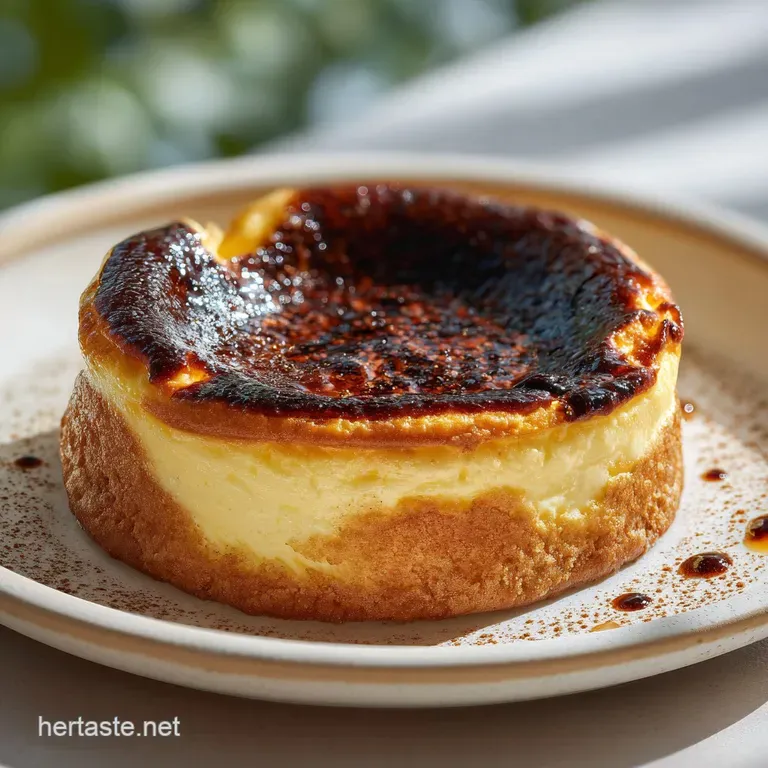
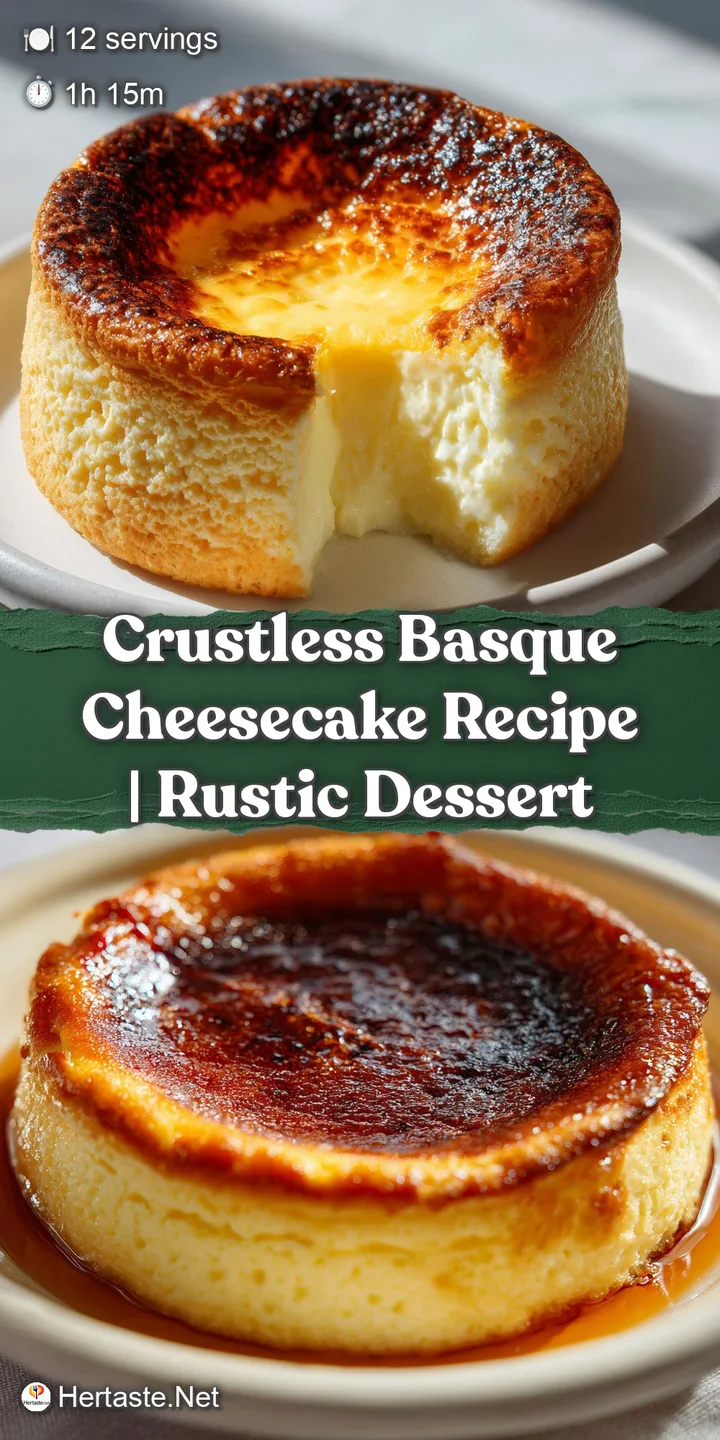
Unlike the stiff, pristine cakes we usually see, this one is all about the layers of flavor that come from controlled destruction. You aren't looking for a smooth, white surface. You want deep mahogany ridges and a center that feels like it might collapse at any moment.
It’s the kind of comfort food that looks like it belongs in a sun drenched Spanish cafe, sitting on a wooden counter with a bottle of sherry nearby.
We're going to lean into the mess here. Don't worry about perfect edges or smooth parchment. The beauty of this dish is in the crags and the scorched bits. It is a bold, unapologetic celebration of fat, sugar, and heat. Let’s get into how we build those layers of flavor without losing our minds over a water bath.
Essential Recipe Specifications
The Science of the Char
Maillard Reaction: High heat transforms the sugars and proteins in the cream into a complex, bitter sweet crust that contrasts the sweet interior. Structural Suspension: The eggs and heavy cream create a temporary emulsion that sets into a velvety custard as it cools, rather than a dense cake.
| Method | Cook Time | Top Texture | Center Consistency | Best For |
|---|---|---|---|---|
| Basque (Oven) | 60 mins | Scorched & Bitter sweet | Molten / Custard like | Rustic dinner parties |
| Standard (Oven) | 90 mins | Pale & Smooth | Dense / Fine crumb | Classic celebrations |
| Stovetop (Water bath) | 75 mins | Moist & Soft | Silky / Uniform | over Low heat consistency |
When you bake this at 200°C, you are essentially racing against time. You want the outside to brown before the inside has a chance to fully solidify. If you've ever tried a more traditional method, like the one in The Classic New recipe, you'll know that standard cakes crave gentle heat. This recipe is the exact opposite. It thrives on the blast of the oven.
The Essential Flavor Blocks
To get that specific rustic feel, we need to understand what each component brings to the party. This isn't just about mixing ingredients; it's about how they interact under extreme temperatures.
The 480ml of heavy cream is non negotiable it provides the fat needed to prevent the cake from becoming rubbery when it hits that high heat.
| Component | Science Role | Pro Secret |
|---|---|---|
| Cream Cheese | Provides the structural base and lactic tang | Use full fat blocks only for that specific melt |
| Heavy Cream | Lowers the coagulation temp of egg proteins | Minimum 35% fat creates the velvety mouthfeel |
| Large Eggs | Act as the primary binder and leavening | Add one-by-one to ensure a stable emulsion |
| Granulated Sugar | Powers the surface caramelization | Sift with the flour to avoid sugar pockets |
For the best results, every single one of these items must be at room temperature. Cold cream cheese will result in tiny white lumps that no amount of whisking can fix. I usually leave my 900g of cream cheese on the counter for at least 4 hours before I even think about preheating the oven.
Necessary Kitchen Equipment
You don't need a lot of gadgets for this, but the few you use matter. A 23cm (9 inch) springform pan is the gold standard here. It needs to be deep because this cake rises like a souffle before it eventually collapses back into its dense, rich self.
Preparing the Parchment Cradle
Don't bother trying to cut a perfect circle for the bottom of your pan. Take two large sheets of parchment paper, crumble them up into a ball, and then flatten them out. This makes the paper pliable. Push both sheets into the pan, letting the excess hang over the edges in messy, jagged points.
This "cradle" gives the cake its signature rustic, pleated sides.
Chef's Tip: Use a stand mixer with the paddle attachment rather than a whisk. We want to combine the ingredients without whipping too much air into the batter. Air bubbles will cause the cake to crack and rise unevenly.
The Detailed Baking Process
- Preheat the oven. Set your oven to 200°C. Note: This high heat is vital for the scorched top.
- Cream the base. Beat 900g cream cheese and 300g sugar until silky and smooth.
- Incorporate eggs. Add 6 large eggs one at a time, mixing well after each addition.
- Stream in liquids. Slowly pour in 480ml heavy cream, 1 tbsp vanilla, and 1 tsp sea salt.
- Sift the binder. Fold in 30g all purpose flour until no white streaks remain.
- Fill the pan. Pour the batter into your prepared parchment lined 23cm pan.
- Bake the cake. Place in the oven for 1 hours until the top is dark brown and the center jiggles.
- Monitor the jiggle. The cake should move like set jelly, not like liquid.
- Cool in pan. Let the cake sit on a wire rack until it reaches room temperature.
- Chill thoroughly. Refrigerate for at least 6 hours until the texture sets completely.
Achieving the Maillard Reaction
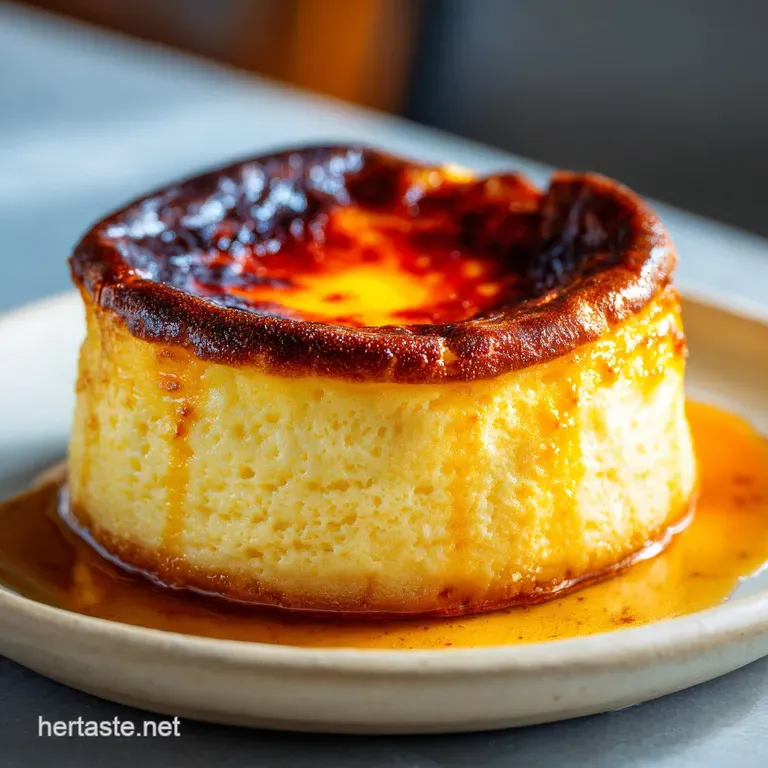
The magic happens in the last 15 minutes of baking. You'll see the top turn from a golden tan to a deep, dark mahogany. Don't be afraid! That dark color is where all the flavor lives. If you pull it out too early, you'll miss out on the smoky notes that define this style.
Ensuring Structural Integrity
Because this is a crustless cheesecake recipe, the edges need to be baked enough to stand on their own. The high heat sets the outer ring firmly while the center remains soft. As it cools, the cake will sink, creating a natural rim that holds any toppings you might want to add later, like a spoonful of Homemade Pumpkin Pie recipe for a seasonal twist.
Common Pitfalls and Fixes
One of the most frequent issues people have is the "leaky pan" syndrome. Because the batter is quite thin, it can sometimes find its way through the bottom of a springform pan. This is why the double layer of parchment is so critical it acts as a secondary seal.
Preventing a Grainy Interior
A grainy texture usually comes from two things: cold ingredients or over mixing the eggs. If the fat in the cream cheese is cold, it won't emulsify with the eggs. You'll end up with a texture that feels like wet sand instead of velvet.
| Problem | Root Cause | Solution |
|---|---|---|
| Lumpy Batter | Cold cream cheese | Microwave cheese in 10 sec bursts to soften |
| Pale Surface | Oven temp too low | Increase to 210°C for the last 5 mins |
| Leaking Base | Parchment gaps | Use two overlapping sheets of paper |
Common Mistakes Checklist
- ✓ Forgetting to room temp the eggs (causes the fat to seize)
- ✓ Using a whisk instead of a paddle (incorporates too much air)
- ✓ Peeking at the oven too often (drops the temperature drastically)
- ✓ Slicing the cake while it's still warm (it will literally run off the plate)
- ✓ Using low-fat cream cheese (it lacks the structure to set)
Simple Flavor Swaps
While the original version is world class on its own, I often play around with the aromatics depending on what's in my pantry. If you're looking for a basque cheesecake recipe no flour version, you can actually swap the 30g of all purpose flour for cornstarch or even almond flour.
| Original Ingredient | Substitute | Why It Works |
|---|---|---|
| All purpose Flour | Cornstarch (20g) | Creates a lighter, almost souffle like texture |
| Vanilla Extract | Almond Extract (1/2 tsp) | Adds a nutty, floral depth that pairs with the char |
| Granulated Sugar | Brown Sugar | Note: Adds molasses notes but darkens the cake faster |
If you want to go gluten-free, the cornstarch swap is my favorite. It makes the interior even more delicate. Just be careful when un molding, as it will be slightly more fragile than the flour based version.
Scaling and Adjustments
Scaling this cake requires a bit of math because of the pan volume. If you want to cut the recipe in half for a 15cm (6 inch) pan, you’ll need to be precise.
- To Scale Down (1/2): Use 450g cream cheese and 3 eggs. Reduce the bake time by about 20 minutes. Use a smaller pan to maintain the height.
- To Scale Up (2x): It is better to bake two separate cakes. If you must use one giant pan, only increase the salt and vanilla by 1.5x. Increase the bake time by 15-20 minutes and watch the top carefully.
- High Altitude: Increase the flour by 1 tablespoon to help the structure hold as it rises and falls.
Storage and Waste Tips
This cake is a dream for make-ahead prep. In fact, I think it tastes better on day two once the flavors have had time to settle and the moisture has redistributed.
- Storage: Keep it in the fridge, tightly wrapped or in an airtight container, for up to 5 days.
- Freezing: You can freeze slices! Wrap them individually in plastic wrap and then foil. They stay good for 2 months. Thaw in the fridge overnight.
- Zero Waste: If you have scorched bits of parchment with cake stuck to them, don't toss them! Scrape the remains into a bowl and mix with a little Greek yogurt for a chef's snack. Also, the eggshells are great for your garden compost.
Perfect Seasonal Pairings
Since this cake has such a rustic, charred flavor, it pairs beautifully with high acid fruits or smoky accompaniments. In the summer, I love serving it with macerated strawberries and a crack of black pepper. The pepper highlights the bitter notes of the crust.
In the autumn, a dollop of spiced fruit butter or a handful of toasted hazelnuts adds a lovely crunch to the velvety center. Because the cake is so rich, you really want something to cut through the fat. A glass of cold, dry sherry or a very strong espresso is the traditional way to enjoy this in its homeland.
Debunking the Burnt Myth
One common misconception is that the top of the cake will taste like charcoal. It won't. Because of the high sugar content, the "burn" is actually a deep caramelization. It tastes like the top of a creme brulee that has been pushed just a little further.
It provides a necessary bitterness that balances the 300g of sugar in the batter. Without that dark top, the cake would be cloyingly sweet and one dimensional. Trust the heat!
Recipe FAQs
What is the difference between a regular cheesecake and a Basque cheesecake?
High heat and lack of crust. A regular cheesecake is baked low and slow, often in a water bath, resulting in a pale, dense texture, whereas the Basque style uses very high heat to achieve a deeply caramelized, almost burnt exterior and a molten center.
What kind of cheese do you use for Basque cheesecake?
Full fat block cream cheese. You must use the full fat variety, typically sold in blocks, ensuring it is fully softened to room temperature before mixing. This fat content is crucial for developing the signature velvety interior texture.
Is Basque cheesecake difficult to make?
No, it is surprisingly forgiving. The difficulty lies mostly in trusting the high heat and accepting the intentionally rustic, dark appearance of the final product, unlike the precise temperature management required for a The Cornerstone Classic Baked Cheesecake Recipe Smooth No Crack.
What is so special about Basque cheesecake?
The dramatic contrast in texture and flavor. The signature element is the deeply browned, slightly bitter crust created by the Maillard reaction battling the sweet, creamy, near liquid custard center.
How do I prevent the batter from leaking through the bottom of the springform pan?
Crumple two large sheets of parchment paper, flatten them, and layer them in the pan. This creates a natural, protective cradle that handles the high heat and contains the thin batter better than a single, carefully cut sheet.
Should I use a stand mixer or a hand mixer for this batter?
Use the paddle attachment on a stand mixer. You want to combine the ingredients thoroughly without whipping in too much air, which can cause uneven rising and cracking; this gentle blending technique is similar to what we focus on when ensuring smooth fats in layered recipes like [Best Homemade Carrot
Cake Recipe Incredibly Moist Layers Spiced].
Can I achieve the signature dark top without burning the inside?
Yes, by preheating the oven very high, typically 200°C (400°F) or higher. The high temperature forces the exterior sugars to caramelize rapidly, while the high fat content of the batter insulates the interior long enough for it to set into a custard.
Crustless Basque Cheesecake
Ingredients:
Instructions:
Nutrition Facts:
| Calories | 534 calories |
|---|---|
| Protein | 8.6 g |
| Fat | 42.3 g |
| Carbs | 31.2 g |
| Fiber | 0.1 g |
| Sugar | 27.5 g |
| Sodium | 425 mg |
