Fruit Jellies: Classic Pâtes De Fruits Perfection
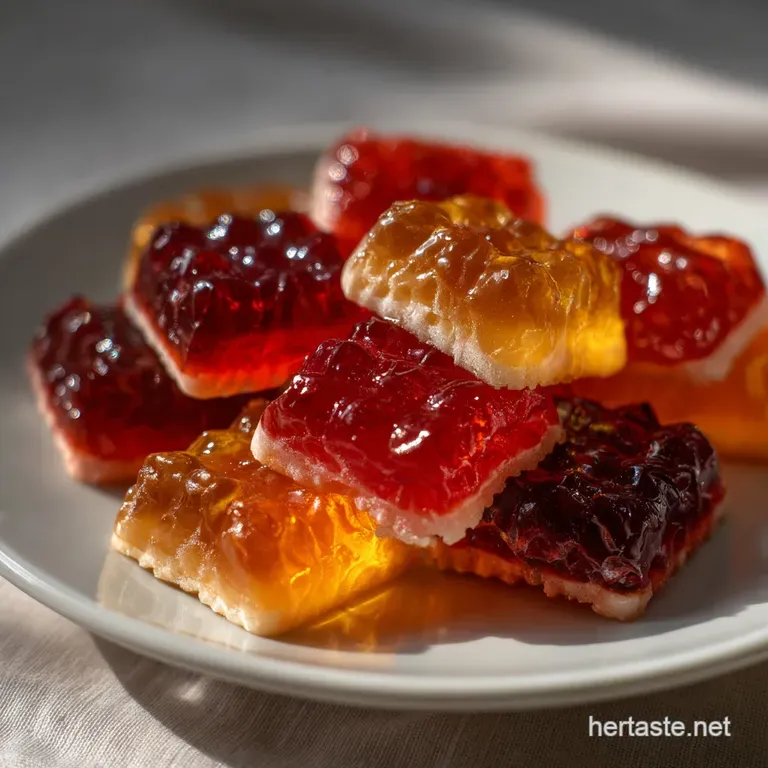
- Unlocking the Secret to Intense Fruit Jellies: Pâtes de Fruits Defined
- The Alchemy of Texture: Pectin, Acid, and the Perfect Chew
- Sourcing the Essential Toolkit for Gourmet Jellies
- Crafting Your Jellies: A Confectioner’s Guide to the Cooking Stage
- Solving Common Pâtes de Fruits Problems: Troubleshooting Guide
- Extending the Life and Enjoyment of Your Confectionery
- Recipe FAQs
- 📝 Recipe Card
Unlocking the Secret to Intense Fruit Jellies: Pâtes de Fruits Defined
Stop right there! Forget those rubbery supermarket sweets, because we are making proper, intensely flavored Fruit Jellies today. They are bright, translucent jewels that taste exactly like biting into a cloud of pure summer fruit, delivering that perfect, soft chewy texture that just melts away.
Seriously, the aroma alone when these are setting will make your entire kitchen smell like a professional pâtisserie.
Why bother making these little beauties at home? Well, homemade Pâtes de Fruits are a serious lifesaver when you need a sophisticated, impressive gift that is also naturally vegan and gluten-free.
They are inexpensive to make in bulk, store beautifully, and elevate any cheese board or dessert platter instantly. Plus, once you master the technique, you realize making gourmet Fruit Jellies is mostly just about being patient and owning a reliable thermometer.
I know, "confectionery" sounds intimidating, but trust me, we are going to nail this together. I’ve made all the common mistakes sticky sugar coatings, grainy textures, jellies that just won’t set so I can show you exactly how to avoid them.
Get ready to create the best Fruit Jellies you’ve ever tasted.
The Alchemy of Texture: Pectin, Acid, and the Perfect Chew
Defining the Difference: Gummy vs. Gourmet Jelly
The difference between a chewy gummy bear and a refined Pâtes de Fruits lies entirely in the structure. Gummy candy usually relies on gelatin, which gives it that bouncy, sometimes rubbery, texture.
Classic French Fruit Jellies rely on high methoxyl pectin, which creates a softer, more breakable short chew. It releases the concentrated fruit flavor instantly. We are aiming for something that looks beautiful and bursts with flavor, not something that sticks to your teeth forever.
Why This Medium Difficulty Recipe is Worth the Effort
I’ll be honest: this isn't a dump and stir recipe. It requires a thermometer, and you absolutely must weigh your ingredients. However, the result is so wildly superior to store-bought versions, you’ll be hooked. You get total control over the intensity of the flavor.
Do you want sharp raspberry or luscious strawberry? You decide! Achieving the perfect set for these homemade Fruit Jellies is entirely down to precision, and once you hit that temperature, the hard part is over.
Difficulty Rating and Preparation Timeline
This recipe clocks in at a medium difficulty level simply because accuracy is key.
| Stage | Duration | Notes |
|---|---|---|
| Prep Time | 15 minutes | Straining purée, measuring ingredients, lining pan. |
| Cook Time | 20 minutes | Active boiling and stirring to reach the required temperature. |
| Setting Time (Inactive) | 3 hours minimum | Room temperature set. Overnight is ideal. |
The Role of High Methoxyl Pectin (HMP)
Pectin is a type of starch found naturally in fruit. HMP (High Methoxyl Pectin) is the specific variety we need because it requires high sugar and high heat to activate. Low-sugar pectin, the kind you might use for sugar-free jam, won't work here; your mixture will never solidify enough to cut into squares.
Using the right type of pectin is the single most important step in guaranteeing professional grade Fruit Jellies .
Balancing Acidity for Optimal Gelation
Pectin is lazy. It won't set properly unless it gets a little acidic kick in the pants. Lemon juice, or a solution of citric acid, provides this necessary acidity. The magic here is the timing: we add the acid after we’ve hit the high sugar concentration point.
Adding it too soon can cause your pectin to set prematurely I learned that the hard way when I ended up with a rock solid, unusable mass stuck to the bottom of my pan!
Reaching the Confectioner's Critical Temperature
We are aiming for 107°C (225°F). This temperature, known as the "soft ball stage" (or slightly past it), is the critical point where the water content in your purée has reduced sufficiently and the sugar concentration is high enough to ensure a stable, firm set.
If you pull it off the heat too soon, your Fruit Jellies will be gooey and sticky. If you go too high, they will be hard and crystalline. A reliable digital thermometer is your best friend here.
Sourcing the Essential Toolkit for Gourmet Jellies
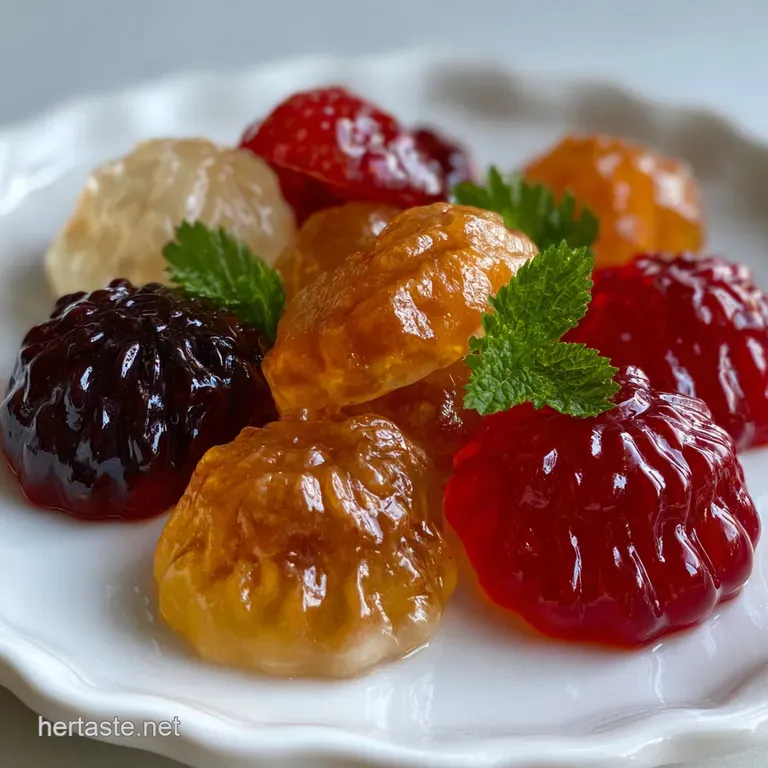
Detailed Ingredient List and Precise Measurements
If you ever decide to go rogue and eyeball sugar in a jam recipe, fine. But when making classic French Fruit Jellies , precision is mandatory. Weighing ingredients ensures the critical sugar-to-pectin ratio is perfect for gelation. This recipe uses high sugar set pectin (HMP).
| Ingredient | Role | Substitute/Notes |
|---|---|---|
| Fruit Purée | Flavor & Water Base | Must be strained. Can use frozen fruit, thawed and reduced. |
| High Methoxyl Pectin | Setting Agent | NO SUBSTITUTE (unless using gelatin, see below). Must be HMP. |
| Granulated Sugar | Structure & Preservation | Essential for pectin activation; can swap 50% for corn syrup for texture. |
| Lemon Juice | Acidity | Use ¼ tsp Citric Acid dissolved in 1 Tbsp water. |
Fruit Purée Selection: Best Berries for Intensity
I highly recommend starting with highly pigmented, intense fruits like raspberries, blackcurrants, or passion fruit. They hold their flavor beautifully under the intense heat required for these gourmet Fruit Jellies .
If you’re using frozen berries, thaw them fully, purée them, and then pass them through a fine mesh sieve to remove every trace of seed or pulp. You want a smooth, vibrant liquid, not a textured pulp.
Substitutions for Sugar and Other Sweeteners
The granulated sugar is not just for sweetness; it’s a necessary component for the pectin to function. If you swap it out entirely for alternative sweeteners, the jellies will likely fail to set.
However, if you are worried about crystallization (that grainy texture that sometimes develops), swap up to 50% of the bulk sugar (Sugar 3) for liquid glucose or light corn syrup. This ensures beautifully smooth Fruit Jellies .
Understanding Pectin Types: Which One Works Best?
As mentioned, HMP is the winner. Do not try to make this with liquid pectin, Certo, or low-sugar jelling mixes. Those products are designed for different moisture and sugar levels.
We need a pectin that can handle 65% 70% sugar content to achieve the signature firm chew of these magnificent Fruit Jellies . Look specifically for products labelled "High Methoxyl Pectin" or "Classic Jam Pectin."
Crafting Your Jellies: A Confectioner’s Guide to the Cooking Stage
Prepping the Mold and Combining Dry Ingredients
Grab your 8x8 pan and line it with parchment paper, leaving generous overhangs. This is crucial. Those overhangs are your handles for lifting the whole block out later. Give the paper a quick, light spritz of oil.
Now, the dry ingredients: in a small, dry bowl, vigorously whisk the HMP pectin with a small portion of the sugar (Sugar 2). This prevents those nasty, undissolved gelatinous clumps from forming when it hits the wet purée.
The Boiling Process: Achieving the Target Brix Level
Pour the purée and Sugar 1 into your heavy bottomed pan. Bring it to a rapid simmer, stirring often until Sugar 1 dissolves. Now, whisk in the pectin/sugar mix and boil hard for 60 seconds. This is the blooming time. Next, pour in the bulk of the sugar (Sugar 3).
Stir continuously until it is completely dissolved and the mixture returns to a rolling boil. Insert your thermometer and watch it climb. The mixture will look thick and glossy, coating the back of your spoon. This concentration stage determines the final texture of your classic Fruit Jellies .
Crucial Chef’s Note: Keep stirring, especially once the mixture thickens, but watch the temperature. When it hits 106°C (223°F), pull it off the heat immediately.
Pouring, Setting, and Cooling Protocol
Once off the heat at 106°C, stir in the lemon juice quickly. This acid flash activates the pectin. Return the pan to the heat and cook, stirring constantly, for just 30 60 seconds, until the mixture hits 107°C (225° F) exactly. Now, work fast!
Pour the hot, shimmering mass into your prepared pan. Do not scrape the sides of the saucepan. Sugar crystals clinging to the side can contaminate your batch and cause crystallization later. Just pour and walk away. Leave your slab of jelly undisturbed at room temperature, ideally overnight.
Cutting and Finishing: The Final Sugar Dust
Once your block of jelly is firm (it shouldn't be sticky to the touch), use those parchment handles to lift it onto a clean cutting board. Slice into perfect little squares using a sharp knife lightly coated in neutral oil (this prevents sticking). Now for the critical step: the cure.
Place these beautiful homemade Fruit Jellies on a wire rack, uncovered, for 12 to 24 hours. They need that time to form a dry, protective skin. Skip the cure, and when you roll them in the sugar, that sugar will dissolve instantly.
Finally, mix your granulated and caster sugar, and generously roll each cured square until totally coated.
Solving Common Pâtes de Fruits Problems: Troubleshooting Guide
Why Your Jellies Won't Set (Pectin Failure)
If your jellies are soft, gloopy, and never become firm enough to cut, there are two common culprits. First, you didn't reach the target temperature of 107°C. The water content remained too high, and the sugar concentration was too low. Second, you didn't use enough acid, or you added it too early.
Pectin needs that final acid boost to lock the structure in place. Get a better thermometer, or check the calibration of your current one; it is essential for amazing Fruit Jellies .
Preventing Crystallization and Graininess
Crystallization is the bane of the confectioner’s existence. It happens when undissolved sugar particles act as seeds, causing the whole batch to turn grainy. To prevent this, ensure all the sugar is completely dissolved before you start the hard boil.
If sugar splashes onto the side of the pan during the boil, brush it down immediately using a pastry brush dipped in water. And remember that golden rule: do not scrape the pan when pouring!
The Best Way to Test the Setting Point Without a Thermometer
Okay, if you absolutely must fly blind (I don't recommend it for these delicate Fruit Jellies ), you can use the cold plate test. Drop a tiny spoonful of the cooked jelly onto a plate chilled in the freezer. Let it cool for 30 seconds.
If it holds its shape and has a soft, chewy texture when you push it, it's ready. If it flattens and sticks, keep boiling. But seriously, just buy the thermometer. It makes making gourmet Fruit Jellies stress free.
Extending the Life and Enjoyment of Your Confectionery
Proper Storage Conditions for Maximum Shelf Life
Once cured and dusted in sugar, your classic Fruit Jellies should be stored in a cool, dark, and airtight container. They do not belong in the fridge, as the moisture will cause the sugar coating to dissolve, turning them into sticky puddles.
Stored properly at room temperature, they will keep their beautiful texture and flavour for up to four weeks.
Can You Freeze Pâtes de Fruits?
Technically, yes, you can freeze them, but I wouldn't. The freezing and thawing process introduces moisture, which ruins the cured, dry exterior and melts the sugar coating. If you absolutely need to store them longer, cure and store the block before cutting and coating.
When ready to serve, thaw the block overnight in the fridge, let it come to room temp for an hour, then cut and sugar coat immediately before serving. This is the only way to retain the perfect texture of these amazing Fruit Jellies .
Serving Ideas: Cheese Boards and Dessert Accents
These sophisticated little sweets are amazing when served alongside coffee or incorporated into a larger dessert spread. I love adding a few vibrant squares of intense raspberry alongside a selection of salty, nutty cheeses they offer a beautiful counterpoint to the savory notes. They also look phenomenal when arranged with other small fruit based desserts, perhaps next to a rich Mini Christmas Fruitcakes: Moist, Traditional Holiday Fruitcake Recipe or served after a refreshing Pornstar Martini The Perfect Passion Fruit Cocktail Recipe . These French Fruit Jellies are truly versatile, adding a pop of color and flavour to any gathering.
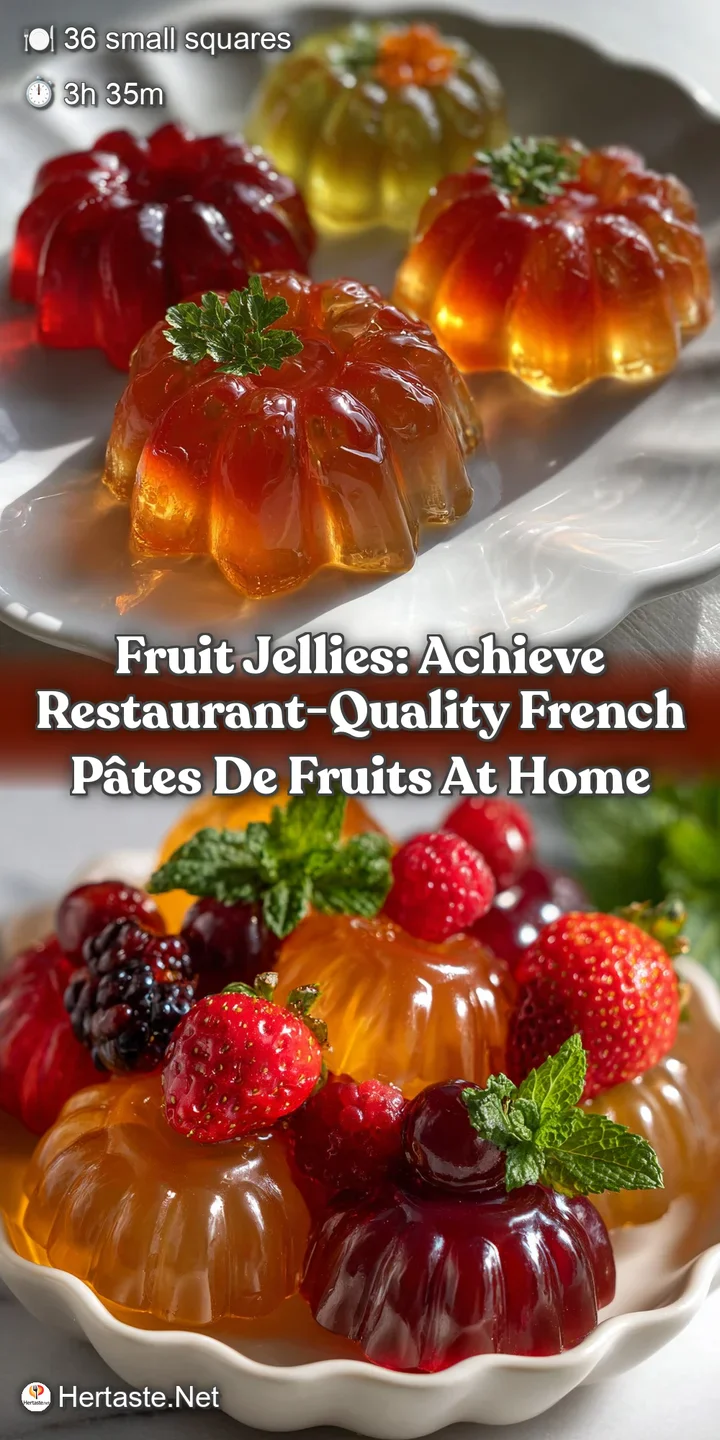
Recipe FAQs
Why did my fruit jellies fail to set properly, and how can I fix it?
Setting failure usually stems from insufficient boiling time or a lack of acid necessary to activate the pectin. Ensure the mixture reaches the required temperature (223 225°F or 106 107°C) to concentrate the sugars adequately, which is critical for the final texture.
If the batch remains soft, you can attempt to re-boil it, ensuring you add a small pinch of fresh pectin mixed with sugar and verify the acid content.
Can I use regular supermarket pectin (like Sure Jell) for this recipe?
No, this recipe specifically requires high methoxyl (HM) pectin designed for concentrated confectionery, not the general purpose pectin sold for jams. Supermarket brands are formulated for lower sugar ratios and often contain added ingredients that prevent the firm, chewy structure characteristic of Pâtes de Fruits.
Using the wrong type will result in a soft, jam-like set.
Why are my finished jellies grainy or cloudy instead of being clear and translucent?
Graininess typically indicates sugar crystallization caused by undissolved sugar particles in the final product. To prevent this, ensure you stir vigorously only until the sugar is fully dissolved, and avoid scraping the sides of the pot once the mixture reaches boiling temperature.
Cloudiness sometimes happens if the initial fruit purée was not properly strained and contained too many fibrous solids.
How do I prevent my coated Pâtes de Fruits from weeping or getting sticky after a few days?
Weeping is caused by high humidity and the candy absorbing moisture (hygroscopicity). After slicing the jellies, allow them to air-dry uncovered for 12 24 hours at cool room temperature to develop a slight skin before coating them in sugar.
Store them in an airtight container away from heat or refrigeration, which can introduce too much moisture.
Can I adapt this recipe for fruits known to be high in enzymes, such as pineapple or kiwi?
Yes, but those fruits contain enzymes (bromelain/actinidin) that actively degrade pectin, preventing a proper set. You must first briefly cook or boil the purée for a few minutes before measuring and adding the pectin to deactivate these enzymes.
This quick heat treatment will ensure the pectin remains stable and allows the jelly to set successfully.
What is the best way to store Pâtes de Fruits, and what is their shelf life?
Pâtes de Fruits should be stored in an airtight container at cool room temperature (ideally below 70°F). Avoid the refrigerator entirely, as the fluctuating cold temperatures and high humidity will cause them to sweat rapidly.
When properly stored and well coated, they maintain their quality for 3 4 weeks.
Classic Pectin Fruit Jellies
Ingredients:
Instructions:
Nutrition Facts:
| Calories | 692 kcal |
|---|---|
| Protein | 0.2 g |
| Fat | 0.1 g |
| Carbs | 184.0 g |
