Cold Brew Espresso: the Velvet Kick Concentrate
- Unlocking The Velvet Kick: Why Ultra-Concentrated Cold Brew is the New Espresso
- The Science of Concentration: Achieving Espresso Flavor Without Heat or Pressure
- Essential Components for the Perfect Cold Brew Concentrate
- The Master Method: Brewing Your Ultra-Concentrated Cold Brew Espresso Base
- Chef's Notes: Troubleshooting Bitterness and Maximizing Extraction
- Preservation and Prep: Maximizing the Shelf Life of Your Concentrate
- Beyond the Shot: Sophisticated Drinks Built on Cold Brew Concentrate
- Recipe FAQs
- 📝 Recipe Card
Unlocking The Velvet Kick: Why Ultra Concentrated Cold Brew is the New Espresso
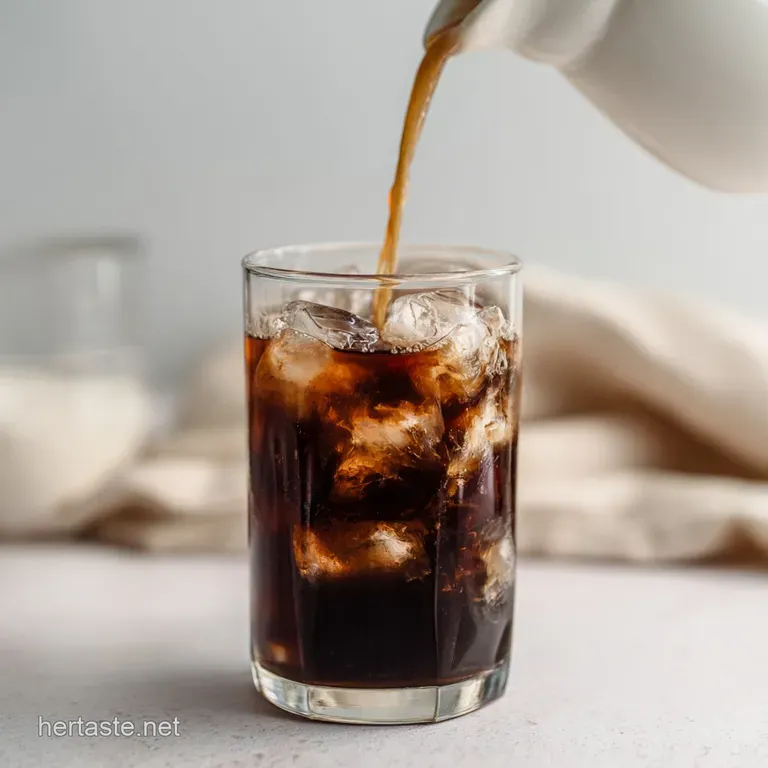
That thick, velvet mouthfeel and the heady, chocolate dark aroma that’s what we are chasing. Forget the noisy machine, the complex pressure gauges, and the inevitable messy portafilter cleanup.
We are going to achieve that intense flavor and depth, that signature crema like viscosity, using nothing but time and temperature. This method produces the purest, smoothest Cold Brew Espresso you have ever tasted.
I know, I know, calling it "espresso" might feel like culinary sacrilege to some coffee snobs, but trust me, this concentrate delivers the same power, intensity, and foundational flavor profile.
It’s a total lifesaver for busy mornings because you literally just pour a shot, splash in your milk, and fly out the door. Plus, making your own Cold Brew Espresso base saves you a fortune compared to daily trips to the café.
I used to think the only way to get a real kick was through heat and pressure, but I was so wrong. This recipe is the secret weapon of home baristas who refuse to compromise on strength or flavor. Let’s crack on and figure out exactly how we get that perfect, ultra concentrated flavor into your glass.
The Science of Concentration: Achieving Espresso Flavor Without Heat or Pressure
This entire endeavor works because cold water extracts very different compounds than hot water does. Hot brewing extracts oils and acidic compounds rapidly, which is why standard espresso can sometimes taste harsh or slightly burnt if pulled incorrectly. Cold extraction, however, is slow and steady.
It pulls out the maximum sugar and flavor compounds while leaving behind the harsh acids and oils, giving us that signature low-acid profile we crave. This is essential for a true Cold Brew Espresso experience.
Defining Cold Brew Espresso vs. Standard Cold Brew
The difference here is simple: ratio. Standard cold brew uses a ratio of about 1:8 or 1:10 (coffee to water), which yields a strong, ready-to-drink coffee or a mildly concentrated one that is still easily drinkable straight.
When we talk about Cold Brew Espresso , we are talking about extreme concentration a ratio of 1:4. This ultra rich base is far too strong to drink straight (trust me, I tried it once, my hands shook for hours!).
It must be diluted, just like a hot espresso shot is diluted with water for an Americano or milk for a latte.
The Secret to Zero Bitterness
Bitterness primarily comes from two things: excessive heat (burning the grounds) and over extraction of fine particles. Since we eliminate heat entirely, we only need to control particle size and steeping time.
By using a coarser grind and adhering strictly to the 16 hour window, we prevent those unpleasant, bitter compounds from entering the brew. The resulting concentrate is intensely flavorful and unbelievably smooth, making it the perfect foundation for amazing Cold Brew Espresso Drinks .
Quick Overview of Required Gear
You don't need steam wands or pumps, but precision gear matters greatly. A good digital kitchen scale is the absolute cornerstone of this recipe; eyeballing your beans is a recipe for inconsistency, and nobody has time for that.
While a simple jar and cheesecloth work fine, if you already own a French Press, it makes the initial separation phase much tidier. It’s all about consistency and cleanliness when brewing concentrated beverages.
Controlling the Grind: Why Particle Size Matters for Strength
This is where many people mess up their first batch of Cold Brew Espresso . If you grind your beans too finely (like table salt or espresso fine), the surface area is too large.
This causes massive over extraction in 16 hours, resulting in chalky bitterness and a cup full of sludge. You must aim for a medium coarse grind, closer to coarse sea salt or large breadcrumbs.
This ensures the 16 hour cold steep extracts cleanly and efficiently without turning bitter.
The Crucial Role of Brew Ratio (The 1:4 Focus)
The 1:4 ratio (1 part coffee grounds to 4 parts water, by weight) is not a suggestion; it’s a mandate for achieving true espresso like strength. Our 200g of coffee to 800g (800ml) of water is exactly 1:4.
Deviating too far means your concentrate will either be too weak to stand up to milk, or unnecessarily sludgy if you try to pack too many grounds in. When mastering Cold Brew Espresso , the scale is your best friend.
Minimizing Acidity for a Smoother Finish
The natural chemical process of cold brewing fundamentally eliminates a massive amount of the acidity found in hot coffee. If you start with high-quality beans and pure filtered water, the result is nearly neutral on the pH scale compared to a traditional hot brew.
This is why this particular concentrate is so fantastic for sensitive stomachs and why it tastes so ridiculously smooth and clean.
Essential Components for the Perfect Cold Brew Concentrate
Perfection in beverages starts with obsession over your inputs. You wouldn’t make a Homemade Pizza Dough: The Ultimate Cold Fermentation Recipe without specific flour, so don’t skimp here.
Selecting the Right Roast (Darker Beans for Depth)
For a powerful Cold Brew Espresso , you generally want a darker or medium dark roast. Why? Dark roasts have more developed, deep chocolate, caramel, and nutty notes which stand up better to dilution.
Light roasts are delicious, but their subtle floral and fruity notes can easily get lost when mixed into milk or used as a shot. Trust me, buy fresh beans; they are worth the splurge.
| Ingredient | Specification | Viable Substitution |
|---|---|---|
| Coffee Beans | Dark or Medium Dark Roast (Whole Bean) | Use high-quality decaf beans (Swiss Water Process preferred) if avoiding caffeine. |
| Filtered Water | Cold, highly filtered, or spring bottled water. | Use purified tap water if a high-quality filter is unavailable, but avoid straight unfiltered tap water. |
| Pinch of Salt | Standard Sea Salt | Skip entirely if preferred, but it truly enhances the dark flavor profile. |
Water Quality: Filtration Is Non-Negotiable
Coffee is, overwhelmingly, water. If your water tastes metallic or chlorinated, your Cold Brew Espresso Concentrate will taste exactly the same. Invest in a good pitcher filter or, honestly, just buy a gallon of good spring water.
You are investing 16 hours in this brew; don’t let bad water ruin your efforts.
Recommended Tools for High Ratio Brewing
While I listed the essentials above, a burr grinder is absolutely crucial for consistency. Blade grinders chop inconsistently, creating both fine powder (bitterness) and large chunks (under extraction) simultaneously.
To nail that perfect, consistent extraction needed for a concentrated Cold Brew Espresso Shot , you need uniform particle size.
Optimizing Coffee to Water Proportions
Again, 1:4 by weight. Don't measure by volume! Coffee density varies wildly based on roast level and grind size. Use the scale. It ensures that every time you make a batch of your magnificent Cold Brew Espresso , it comes out identical in strength and flavor.
Consistency is key for repeatability.
The Master Method: Brewing Your Ultra Concentrated Cold Brew Espresso Base

This is the non-negotiable step-by-step guide to achieving coffee nirvana. Follow it precisely.
Phase 1: Immersion and the 16 Hour Wait
Start by weighing your 200g of beans and grinding them medium coarse. Immediately place the grounds into your steeping vessel. Pour the 800ml of cold, filtered water over the top. Give it one or two gentle stirs just to make sure all the grounds are saturated and the "bloom" has settled.
The goal here is complete, gentle saturation. Cover the jar and get it into the fridge immediately; 16 hours is the sweet spot for the best Cold Brew Espresso .
Chef’s Note: Do not stir during the steeping period. Agitating the mixture after the initial saturation releases unnecessary fines and risks premature extraction, leading to bitterness. Just let it sit in peace.
Phase 2: Double Filtering for Clarity (Avoiding Sludge)
This is the step that separates the amateurs from the velvet kick professionals. After 16 hours, the coffee will look muddy and dark.
- Primary Filter: Use a French Press to plunge slowly, or pour the entire mixture through a fine mesh sieve. This removes the bulk of the spent grounds. Discard the chunky sludge.
- Secondary Filter: Now, you need to polish the brew. Set up a second filter this can be two layers of cheesecloth, a paper coffee filter, or a reusable filter. Pour the liquid that came out of the primary filter through this second stage. It will drip slowly, but this step removes the fine silt that causes a gritty texture. This process gives your finished Cold Brew Espresso Concentrate that desirable smooth, clean mouthfeel.
Safely Decanting and Measuring Your Yield
Once the filtering is complete, you should have around 750ml (25 fl oz) of beautiful, dark concentrate. Pour this liquid into a clean, airtight bottle. It should look clear, intensely dark, and slightly viscous. Label it with the date and put it straight into the fridge. Now you have a professional grade base for all your Espresso Drinks: Master Extraction Classic Café Recipes .
Chef's Notes: Troubleshooting Bitterness and Maximizing Extraction
Listen, I have made terrible, murky, bitter coffee in my time. The key is admitting where things went wrong.
Why Your Concentrate Tastes Weak (The Dilution Factor)
If your finished Cold Brew Espresso tastes weak, you likely either used a lighter roast that couldn't stand up to dilution, or you didn't adhere to the 1:4 ratio. Sometimes people forget they need to dilute this concentrate.
If you are drinking it straight and it tastes weak, your grounds-to-water ratio was definitely off. Go back, check your scale calibration, and remeasure.
Common Grind Mistakes to Avoid
My biggest mistake was thinking a finer grind meant stronger coffee. Wrong. A finer grind just means faster extraction, which in a long 16 hour steep, means over -extraction and a horrible, dusty finish. If your concentrate is silty or bitter, the grind was too fine.
If your Cold Brew Espresso lacks punch, the grind was too coarse. It’s a learning curve, so stick to that medium coarse target.
Adjusting Steeping Time for Optimal Flavor
If you brew for less than 12 hours, you get under extracted, weak coffee. If you go past 18 hours, you risk over extraction and that chalky, stale flavor that can ruin even the best beans.
I have found 16 hours in the refrigerator delivers the best, most consistent flavor for this specific Ultra Concentrated Cold Brew Espresso recipe.
Preservation and Prep: Maximizing the Shelf Life of Your Concentrate
You've just brewed a liquid gold reservoir; let’s make sure it lasts.
Refrigeration Guidelines for Peak Freshness
Your properly filtered Cold Brew Espresso Concentrate will stay fresh and potent for up to two weeks when sealed in an airtight container and kept in the main body of your refrigerator.
While it won't necessarily spoil much faster, the flavor and vibrancy will definitely decline after the 14 day mark. I usually aim to use a batch within 7 to 10 days.
Ice Cubes vs. Freezing the Concentrate
Does it freeze well? You bet it does! This is my favorite meal prep trick. Instead of freezing the large batch, pour the concentrate into silicone ice cube trays. Once frozen, pop them into a zip-top bag. These cubes are fantastic for making iced coffee without diluting your drink with regular water ice.
They last indefinitely in the freezer, keeping your supply of Cold Brew Espresso ready year round.
Beyond the Shot: Sophisticated Drinks Built on Cold Brew Concentrate
This concentrate is the powerhouse base for almost any iced coffee drink you can dream up. It’s even better than the intense base used for something simple like Never Bitter Strawberry Lemonade Sun Tea The Perfect Summer Brew .
Crafting the Ultimate Iced Latte
This is where the concentration truly shines. Since the concentrate is so potent, you only need a small amount, allowing the milk to dominate the texture while the coffee provides a massive flavor punch. For a perfect 8oz latte, use 3oz of your concentrate and 5oz of your favorite milk (oat milk is incredible here).
Add a pump of simple syrup or vanilla if you like a touch of sweetness. This high ratio makes for a rich, deep flavored drink, perfect for those mornings that require a serious jolt. Using this intense Cold Brew Espresso base means you never have to settle for watery iced coffee again.

Recipe FAQs
Why must the coffee grind be coarse, and can I use standard pre-ground coffee?
A coarse, uniform grind is essential to prevent over extraction, which causes bitterness, and ensures the resulting liquid is clear, not muddy. Pre-ground coffee, usually designed for drip machines, is too fine for cold brewing and will lead to an extremely slow, difficult filtration process.
What is the optimal steeping time, and what happens if I steep the cold brew too long?
The optimal time for this concentrated recipe is between 18 and 24 hours. Steeping significantly longer, particularly past 30 hours, can start to extract bitter, astringent compounds hidden deep within the beans, spoiling the velvet texture.
Since this is an ultra concentrate, how should I properly dilute or use it for standard drinks?
Because this recipe is designed to be potent, start with a 1:1 ratio of concentrate to water, milk, or desired mixer. For a standard iced Americano or weaker iced latte, you may prefer a 1 part concentrate to 2 parts mixer ratio; always adjust based on your personal strength preference.
How long can I safely store the concentrated cold brew espresso, and how should it be kept?
Stored in an airtight glass container in the refrigerator, the concentrate will maintain its peak flavour characteristics for 7 to 10 days. While it remains safe to drink past two weeks, the flavour profile starts to flatten and oxidize after the 10-day mark.
Why did my final batch taste weak or watery, even though I followed the 24-hour steeping time?
Weakness often results from poor water quality (using hard water can inhibit extraction) or coffee beans that are too old and have lost their essential oils. Ensure you are using fresh, high-quality beans and filtered water at room temperature initially for best extraction rates.
Do I need to use coffee beans labeled specifically as 'espresso roast'?
You do not need beans explicitly labeled for espresso; the critical factor is using high-quality medium dark or dark roast beans that naturally carry notes of chocolate or caramel. The term "espresso" in the title refers only to the high level of concentration achieved, not the required bean type.
Can I speed up the process by using slightly warmer water for the initial soak?
It is strongly advised to avoid warmer water, as cold brew’s primary benefit is extracting flavour without high heat. Using warmer water even briefly will pull unwanted acid and bitterness from the grounds, sacrificing the desired ultra smooth, low-acid profile.
Chefs Cold Brew Espresso Recipe
Ingredients:
Instructions:
Nutrition Facts:
| Calories | 3 kcal |
|---|---|
| Protein | 0.1 g |
| Fat | 0.0 g |
| Carbs | 0.7 g |
