Traditional Sicilian Caponata Recipe
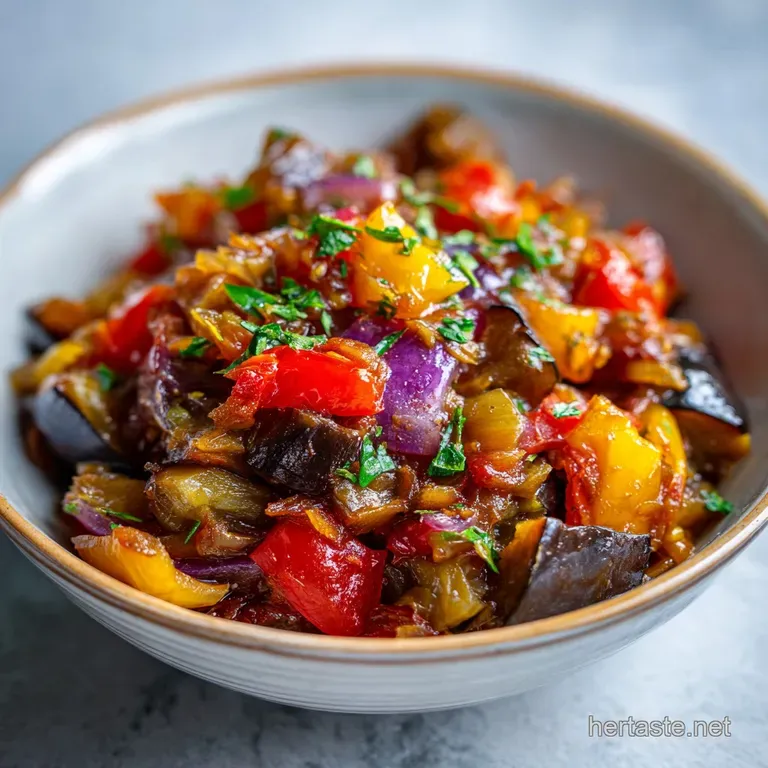
- Time: Active 15 minutes, Passive 30 minutes, Total 45 minutes
- Flavor/Texture Hook: Velvety eggplant with a briny, agrodolce finish
- Perfect for: Weekend meal prep or a rustic dinner party starter
- Mastering the Authentic Sicilian Caponata Recipe at Home
- Why This Agrodolce Balance Works
- The Architecture of a Sicilian Classic
- Minimal Tools for the Best Caponata Recipe
- Step-by-Step Instructions to Kitchen Success
- Avoiding Common Kitchen Disasters
- Troubleshooting Common Issues
- Adjusting the Scale for Any Crowd
- Debunking Common Kitchen Myths
- Practical Storage and Zero Waste Ideas
- Best Ways to Serve Your Creation
- Caponata Recipe FAQs
- 📝 Recipe Card
Mastering the Authentic Sicilian Caponata Recipe at Home
I still remember the first time I tried to make this in my cramped apartment kitchen. The moment that sharp red wine vinegar hit the hot pan of sautéed onions, my eyes watered, and I thought I’d ruined everything.
But then, as the sugar dissolved and the tomato purée began to bubble and darken, that harsh sting turned into something magnetic. It’s a scent that fills the house with a specific kind of warmth halfway between a summer garden and a Mediterranean coastal breeze.
Getting a caponata recipe right isn't about fancy tools; it’s about patience and trusting the "agrodolce" (sweet and sour) process. I used to think I could just throw everything in a pot and call it a day, but I quickly learned that the order of operations matters.
You want the eggplant to hold its shape while becoming creamy inside, not a mushy pile of grey veg.
We're going to use the most basic tools a large skillet and a sharp knife to create something that tastes like it came out of a professional Sicilian kitchen. Forget about complicated gadgets; this is all about the sizzle of the eggplant and the slow reduction of the sauce.
Trust me, once you see how those golden raisins plump up in the vinegar, you'll never look at eggplant the same way again.
Why This Agrodolce Balance Works
The magic of this dish lies in the chemistry between high acid vinegar and the natural sugars of the vegetables. While many recipes just toss things together, this method relies on specific reactions to ensure the textures remain distinct.
- The Maillard Reaction: over High heat searing of the eggplant cubes creates a browned crust that prevents them from dissolving into the sauce later.
- Osmotic Extraction: Salting the eggplant draws out moisture and collapses air pockets, meaning it absorbs less oil and stays firm.
- Acetic Reduction: Boiling the red wine vinegar with sugar creates a syrupy glaze that coats the vegetables rather than making them soggy.
| Method | Time | Texture | Best For |
|---|---|---|---|
| Traditional Stovetop | 30 minutes | Velvety and deeply integrated | Maximum flavor development |
| oven-roasted | 40 minutes | Slightly charred and firmer | Large batches with less active time |
| Slow Cooker | 4 hours | Soft and very jammy | Deeply infused, spread like consistency |
Choosing the stovetop method allows you to control the evaporation of the vinegar, which is crucial for getting that perfect consistency. If you're a fan of Italian inspired vegetable dishes, you might notice some similarities in prep to a classic Eggplant Parmesan recipe, though the final flavor profile here is much more vibrant and tangy.
The Architecture of a Sicilian Classic
Understanding what each component brings to the pan is the secret to moving from a "good" cook to one who understands the soul of a dish. We aren't just adding ingredients; we are building layers of flavor.
| Component | Science Role | Pro Secret |
|---|---|---|
| Globe Eggplant | Bulk & Texture | Use heavy, firm fruit; larger seeds indicate older, more bitter eggplant. |
| Red Wine Vinegar | Acidic Backbone | Always add it to a hot pan to "cook off" the harsh raw alcohol scent. |
| Golden Raisins | Sweet Contrast | Soak them in warm water for 5 minutes before adding to make them extra juicy. |
| Capers & Olives | Briny Umami | Rinse the capers thoroughly to control the salt level of the final sauce. |
When you select your 2 large Globe Eggplants, look for skin that is shiny and tight. If you press it with your thumb and it leaves a deep dent, it’s past its prime. You want it to bounce back.
The interplay between the vinegar and sugar is what makes this a true caponata, providing a bright counterpoint to the rich, fried eggplant.
Minimal Tools for the Best Caponata Recipe
You don't need a kitchen full of copper pots for this. In fact, using too many pans just creates more cleanup and splits your attention. A single, large heavy bottomed skillet (like a 12 inch cast iron or stainless steel pan) is your best friend here.
It provides enough surface area for the eggplant to sear without steaming.
You'll also need a sharp chef's knife. Cutting the eggplant into consistent 1 inch cubes ensures they all cook at the same rate. I’ve made the mistake of "eyeballing" it before, ending up with some pieces that were raw and others that had turned to mush.
Use a colander to drain the salted eggplant and a wooden spoon to scrape up all those browned bits (fond) from the bottom of the pan that’s where the real flavor hides.
The Foundation
Start with your base aromatics. You'll need that 1 large yellow onion finely diced and 3 stalks of celery cut into half moons. The celery is non negotiable; it provides a necessary crunch against the soft eggplant.
The Agrodolce Sweet and Sour
This is the heart of the recipe. The 1/3 cup red wine vinegar and 2 tbsp granulated sugar combine with 1/2 cup tomato purée to create a thick, glossy sauce that binds everything together.
The Briny Pop & Crunch
Finally, the 3 tbsp salted capers and 1/2 cup Castelvetrano olives bring the salt, while 1/4 cup toasted pine nuts add a buttery finish. If you like bold flavors, you could even serve this alongside a zesty Aji Verde Recipe for a fusion twist, though the traditional version is plenty flavorful on its own.
step-by-step Instructions to Kitchen Success
- Prep the eggplant. Toss the 2 lbs of cubed eggplant with 1/2 tsp sea salt in a colander. Note: This draws out excess moisture so the cubes fry instead of steam.
- Sauté the aromatics. Heat 2 tbsp of the olive oil in your skillet over medium high heat. Add the onion and celery, cooking for 8 minutes until the onions are translucent and slightly golden.
- Fry the eggplant. Remove the aromatics and add the remaining 1/3 cup olive oil. Add the eggplant in batches, cooking for 10 minutes until the edges are browned and the centers are tender.
- Deglaze the pan. Pour in the 1/3 cup red wine vinegar and 2 tbsp sugar. Scrape the bottom of the pan until the liquid begins to bubble and thicken slightly.
- Build the sauce. Stir in the 1/2 cup tomato purée and 1/4 cup golden raisins. Note: The raisins will absorb the vinegar and plump up beautifully.
- Add the brine. Fold in the 3 tbsp rinsed capers and 1/2 cup halved olives. Lower the heat to medium low.
- Simmer and meld. Let the mixture cook gently for 10 minutes until the sauce is thick enough to coat the back of a spoon.
- The final touch. Stir in 1/4 cup toasted pine nuts and 1/4 tsp cracked black pepper. Remove from heat.
- Rest and ripen. Allow the dish to cool to room temperature. Fold in a handful of fresh torn basil until the aroma of the herbs fills the air.
Chef's Tip: To toast your pine nuts without burning them, put them in a dry pan over medium heat for just 2-3 minutes. Shake the pan constantly; they go from white to burnt in a split second!
| Original Ingredient | Substitute | Why It Works |
|---|---|---|
| Red Wine Vinegar | Apple Cider Vinegar | Similar acidity but slightly fruitier; won't change the color as much. |
| Pine Nuts | Slivered Almonds | Provides a similar crunch at a lower price point. Note: Toast them longer than pine nuts. |
| Golden Raisins | Dried Currants | Smaller and more tart, offering a less intense sweetness. |
Avoiding Common Kitchen Disasters
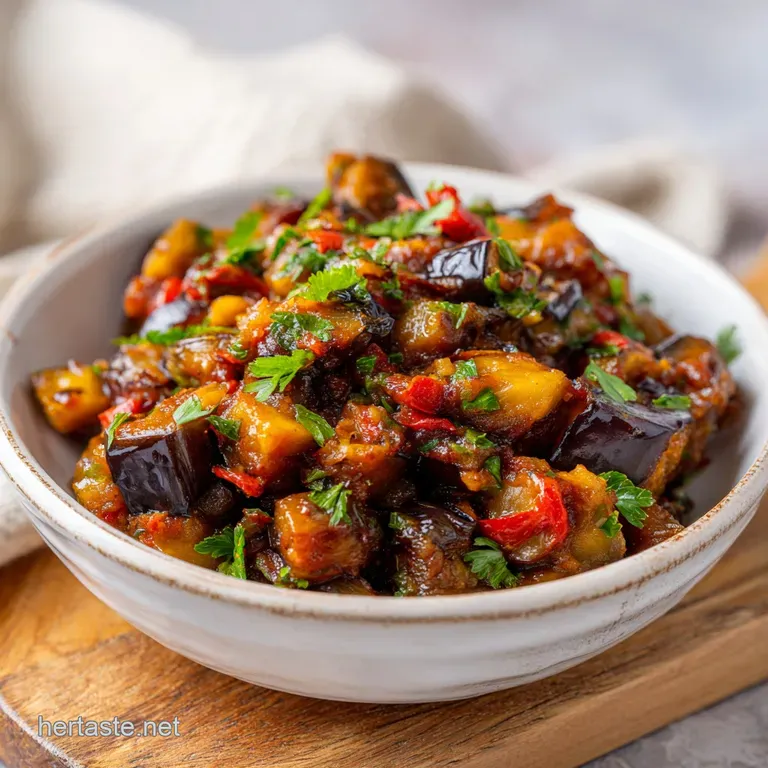
Even the best cooks run into trouble with eggplant. It’s a vegetable that acts like a sponge, soaking up every drop of fat it touches. If you find your pan looks bone dry two minutes after adding the oil, resist the urge to keep pouring in more.
The eggplant will eventually release that oil back into the pan as it softens.
Troubleshooting Common Issues
| Issue | Solution |
|---|---|
| Why Your Caponata Is Oily | If the final dish feels greasy on the tongue, it’s usually because the oil wasn't hot enough when the eggplant was added. Cold oil gets absorbed into the flesh rather than searing the outside. |
| The Vinegar Is Too Sharp | Sometimes a vinegar can be more potent than expected. If your first taste makes you pucker aggressively, don't panic. You can balance it by adding an extra teaspoon of sugar or a splash of water and s |
| Celery Still Crunchy | Caponata should have a variety of textures, but the celery shouldn't be raw. If it’s too hard, it means it didn't spend enough time in the initial sauté. Make sure it’s softened before you ever add th |
Adjusting the Scale for Any Crowd
When you're cooking for a big family gathering, you might want to double this recipe. Because of the volume of the 2 lbs of eggplant, doubling it means you definitely need to work in batches. If you try to fry 4 lbs of eggplant in one skillet at once, they will just steam and turn grey.
If you are scaling down for a solo meal, you can easily halve everything. For the eggplants, just use one large one and reduce the oil slightly. Since the "agrodolce" sauce is the most important part, I usually make the full amount of sauce even for a half batch of veg it's that good.
| Servings | Eggplant Amount | Pan Size | Cook Time |
|---|---|---|---|
| 2-3 People | 1 lb | 10 inch skillet | 25 minutes |
| 6 People | 2 lbs | 12 inch skillet | 30 minutes |
| 12 People | 4 lbs | 2 large skillets | 45 minutes |
For those looking to save a few dollars without sacrificing the soul of the dish, there are plenty of smart swaps you can make early in the process.
| Premium | Budget | Flavor Impact | Savings |
|---|---|---|---|
| Pine Nuts | Sunflower Seeds | Nutty but less "buttery" | Save $5-7 |
| Castelvetrano Olives | Generic Green Olives | Saltier and less meaty | Save $3-4 |
| Saffron (Optional add) | Turmeric (Pinch) | Earthy but lacks floral notes | Save $10+ |
Debunking Common Kitchen Myths
One of the biggest myths is that you must peel the eggplant. In reality, the skin provides essential structure and fiber. Unless the eggplant is ancient and the skin feels like leather, leave it on. It becomes tender during the simmering process and holds the cubes together.
Another misconception is that caponata is just a "cold ratatouille." While they share some ingredients, the cooking techniques are entirely different. Ratatouille is a stew of vegetables cooked in their own juices, while caponata is a fried vegetable salad preserved in a sweet and sour syrup.
The "preservation" aspect of the vinegar is what allows caponata to sit on the counter or in the fridge for days while getting better and better.
Practical Storage and Zero Waste Ideas
This is one of those rare dishes that is actually better on day two or three. The vinegar has time to penetrate deep into the eggplant fibers, and the raisins fully hydrate.
- Storage: Keep it in an airtight glass container in the fridge for up to 5 days. I don't recommend freezing it, as the cellular structure of the eggplant breaks down when frozen, resulting in a grainy texture upon thawing.
- Zero Waste: If you have leftover celery leaves, don't toss them! Finely chop them and mix them with the fresh basil at the end for an extra punch of herbal flavor.
- Reheating: While it can be eaten cold, I prefer it at room temperature. Take it out of the fridge 30 minutes before serving. If you must heat it, do so gently in a pan with a tiny splash of water.
Best Ways to Serve Your Creation
Traditionally, this is an antipasto served with crusty bread or crostini. The acidity makes it a perfect palate cleanser before a heavy pasta meal. However, I’ve found it’s incredibly versatile as a modern main dish too.
- The Classic Antipasto: Pile it high on toasted sourdough that has been rubbed with a raw garlic clove. The crunch of the bread against the velvety eggplant is a sensory dream.
- The Modern Main: Serve a large scoop of room temperature caponata over a piece of seared white fish or grilled chicken. The "agrodolce" acts as both a side dish and a sauce.
- The Grain Bowl: Toss leftovers with cold farro or quinoa and a squeeze of fresh lemon for an easy, high fiber lunch.
If you want the ultimate experience, try serving it alongside a chilled glass of Sicilian white wine. The crispness of the wine cuts through the richness of the olive oil and balances the tang of the vinegar perfectly. It’s a simple, honest meal that feels like a celebration.
Caponata Recipe FAQs
What ingredients are in caponata?
Eggplant, celery, onions, tomato, capers, olives, raisins, and vinegar are essential. This Sicilian preparation hinges on the sweet and sour (agrodolce) balance provided by sugar and red wine vinegar meeting the vegetables.
Is caponata healthy?
Yes, it is generally very healthy as a vegetable dish. It is rich in fiber and antioxidants, though the final health score depends on the amount of olive oil used for frying the eggplant.
What does caponata mean in Italian?
The exact origin is debated, but it translates roughly to "a mishmash" or "a composed dish." Historically, it might have referred to the way the ingredients were cooked together, similar to the verb "caponare" (to arrange).
What is a Sicilian caponata?
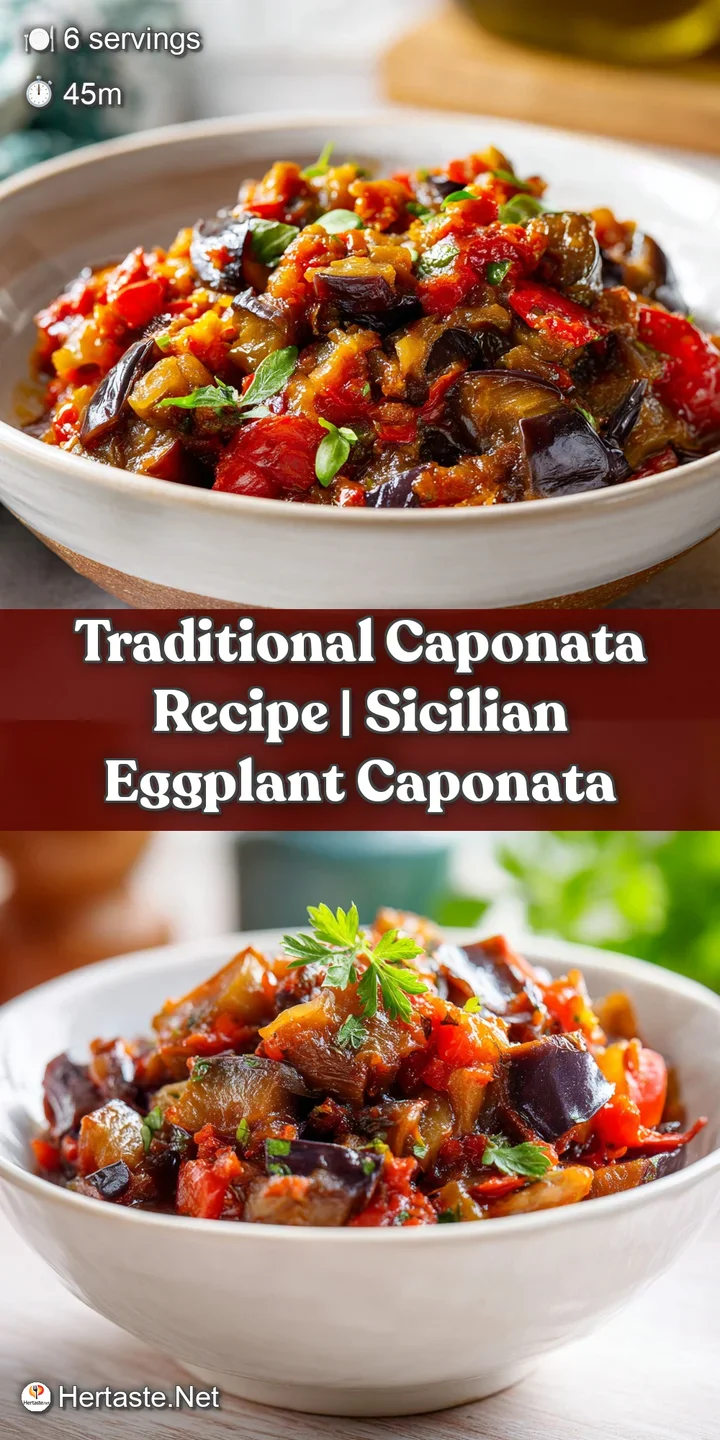
It is a classic Sicilian cooked salad or relish featuring fried eggplant as the star. Unlike a simple stew, it must achieve the distinct sweet sour contrast (agrodolce) that sets it apart from other vegetable preparations.
How do I prevent my eggplant cubes from turning mushy?
Salt the eggplant cubes first, let them drain for 30 minutes, then pat them very dry. This draws out moisture so they absorb less oil and sear properly when frying, maintaining their shape.
How long should caponata rest before serving for the best flavor?
Allow it to rest for at least four hours, but ideally overnight in the refrigerator. The flavors need time to meld and mellow; this infusion process is key to the dish’s signature complexity, much like in complex slow cooked sides such as our Green Bean Casserole Recipe.
Can I substitute the red wine vinegar for a different acid?
No, you should stick to red wine vinegar or a very mild sherry vinegar for authenticity. The specific flavor profile of red wine vinegar is crucial to balance the sweetness; using a harsher vinegar like distilled white will overpower the dish.
Authentic Caponata Recipe
Ingredients:
Instructions:
Nutrition Facts:
| Calories | 268 kcal |
|---|---|
| Protein | 3.7 g |
| Fat | 18.5 g |
| Carbs | 25.3 g |
| Fiber | 6.7 g |
| Sugar | 10.8 g |
| Sodium | 442 mg |
